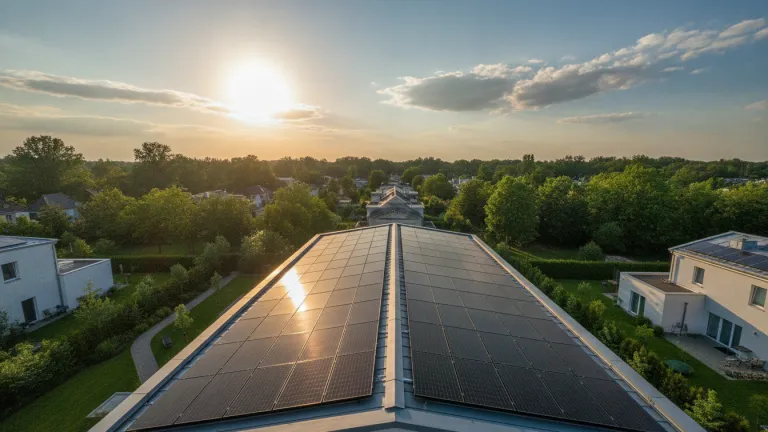
The electricity bill arrived, and once again, it gave that sinking feeling. If you’ve ever thought about installing solar panels but were unsure if the investment really pays off, know that you’re not alone. This is one of the most frequent questions I receive from readers — and the answer, fortunately, is quite encouraging.
Photovoltaic solar energy is no longer a privilege for those with a lot of spare money. In recent years, installation costs have dropped significantly in Brazil, and the country has become one of the largest solar markets in the world — something that makes perfect sense for a nation with one of the highest solar radiation incidences on the planet. But between the enthusiasm and the reality of your monthly bill, there are important details that need to be understood before you make any decision.
In this article, we will demystify residential solar energy in an honest and practical way: how much you can really save, what costs are involved, how long it takes for the system to pay for itself, and what to consider before hiring an installation. No exaggerated promises, no invented numbers — just what really matters for your wallet and the planet.
The Context of Solar Energy in Brazil in 2026
Brazil holds a prominent global position in the photovoltaic solar energy sector. According to data from ANEEL (National Electric Energy Agency), distributed generation — which includes residential and small commercial systems — has consistently grown over the past few years, making solar energy the most installed distributed generation source in the country.
The Brazilian Photovoltaic Solar Energy Association (ABSOLAR) monitors this growth and points out that Brazil accumulates a considerable installed capacity both in large plants and smaller systems, spread across residential and commercial rooftops. The average solar irradiation in Brazilian territory is significantly higher than that of European countries that are references in solar energy, such as Germany and Spain — which puts Brazil in a privileged position to take advantage of this technology.
A factor that further boosted the sector was the Legal Framework for Microgeneration and Minigeneration Distributed (Law No. 14.300/2022), which established clearer rules for those who generate their own energy and inject the surplus into the power grid. Understanding this law is essential to calculate your real savings.
How Savings on the Electricity Bill Really Work
Here’s the point that many solar company advertisements do not explain properly: you do not stop paying the electricity bill completely. What happens is an energy compensation.
The system works like this: during the day, your panels generate energy. If you generate more than you consume at that moment, the surplus is injected into the distributor’s grid, generating credits. At night, or on cloudy days, you consume energy from the grid and these credits are deducted from your bill.
What does not disappear from your bill is the so-called “availability tariff” or system availability cost — a minimum fee that all consumers connected to the grid pay, regardless of how much they generate. For single-phase consumers (most smaller households), this amount is equivalent to 30 kWh per month; for two-phase, 50 kWh; and for three-phase, 100 kWh. In other words, even with solar panels, you will always have some value on the bill.
That said, for most households with average or high consumption, the reduction in the bill can be very significant — often between 70% and 95% of what you would pay without the solar system, depending on the correct sizing of the project.
How Much Does It Cost to Install a Residential Solar System
Costs vary greatly depending on the size of the system, the region of the country, the brand of the equipment, and the installing company. Generally, the price is calculated per kilowatt-peak (kWp) installed.
Some factors that directly influence the cost:
- System size: determined by your average monthly consumption in kWh
- Roof type: ceramic, metal, or slab roofs have different installation costs
- Location: affects both the labor cost and the estimated production of the system
- Equipment quality: inverters and panels from recognized brands cost more but tend to offer more durability and warranty
- Need for electrical adaptation: older installations may need wiring adjustments
It is essential to request quotes from at least three certified companies and check if the installer is registered with CREA or CFT and if the company is authorized by the local distributor to connect to the grid.
What is the Payback Period
The payback — the time needed for the accumulated savings to pay off the initial investment — is one of the most important data for your decision. It varies according to:
- The value of your electricity tariff
- The size and efficiency of the installed system
- The solar irradiation of your region
- Whether you financed the system or paid upfront
Qualitatively, well-sized systems in regions with good solar irradiation and higher tariffs tend to have shorter paybacks. Regions like the Northeast, with very high solar incidence, usually present faster returns than Southern regions, although even there the systems are viable.
Modern solar panels have an estimated lifespan of 25 to 30 years, with a performance guarantee usually of 25 years by manufacturers. This means that after the payback, you will have many years of almost free generation — minus only occasional maintenance costs.
Step by Step: How to Evaluate if Solar Energy is Worth It for You
If you are considering installing a solar system, follow this guide before signing any contract:
- Gather your electricity bills from the last 12 months. Calculate the average monthly consumption in kWh. This number is the basis of any serious solar project.
- Check the tariff you pay per kWh. This information is on your bill. The higher the tariff, the faster the return on investment.
- Evaluate your roof. Ideally, it should have suitable inclination and orientation (in Brazil, roofs facing north receive more sun), be in good structural condition, and have enough space for the panels.
- Request at least three quotes. Ask each company to present the estimated annual generation of the system, the proposed sizing, and the estimated payback based on your actual bills.
- Research the companies. Check reviews, market longevity, if they have certifications, and if they offer post-sale support. A poorly done installation can cause serious problems.
- Understand the connection contract with the distributor. The installing company should handle this process, but it’s important that you understand the deadlines and conditions.
- Consider financing. Several Brazilian banks offer specific credit lines for solar energy with lower interest rates than common personal credit. Banco do Brasil, Caixa Econômica Federal, and other financial agents have been operating with these lines. Compare if the financing installment is less than your estimated monthly savings — if so, the system pays for itself while you’re still paying for it.
Benefits Beyond Financial Savings
The reduction in the electricity bill is the most visible benefit, but it is far from the only one:
- Reduction of carbon footprint: generating your own clean energy reduces dependence on fossil and thermoelectric sources that Brazil activates in periods of water scarcity
- Property appreciation: Brazilian real estate market studies indicate that properties with solar systems tend to have higher sale value and greater liquidity
- Protection against tariff increases: with self-generation, you are less exposed to periodic tariff adjustments, which historically exceed inflation
- Partial energy independence: in cases of blackouts or network instabilities, systems with batteries (still more expensive, but increasingly accessible) can ensure essential energy supply
For those who want to go further in the sustainability journey, combining solar energy with other conscious practices makes a real difference. Check out our Sustainable Living Checklist for Beginners for more practical and actionable ideas.
And What About Apartment Dwellers? Options Are Available Too
Many people believe that solar energy is exclusive to those with a house with a roof — but this is no longer true. There are at least two ways for apartment dwellers to benefit from solar energy:
- Shared generation in a condominium: the condominium installs panels in common areas or on the building’s roof, and the credits generated are shared among residents
- Solar energy cooperatives and consortia: you participate in a remote solar plant and receive energy credits on your bill, without needing any panels on your property
These modalities were strengthened by the 2022 Legal Framework and are becoming increasingly common in major Brazilian cities. To better understand how this works in practice, read our full article on Solar Energy in Apartments: Learn How It Works.
Conclusion: It’s Worth It, But Requires Research
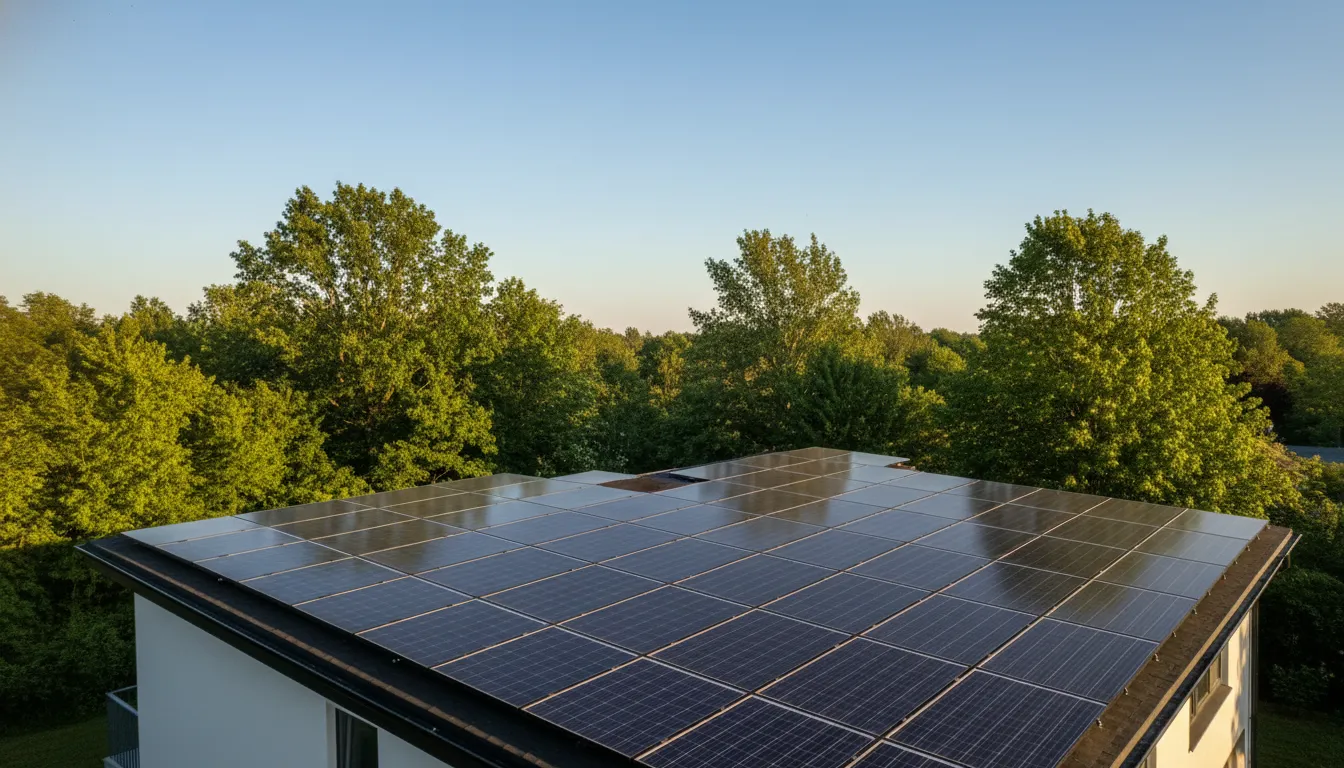
The short answer is: yes, solar energy can significantly reduce your electricity bill — but the result depends on a well-sized project, a reliable company, and an honest analysis of your consumption and property conditions.
There is no magic solution, and be wary of promises of “guaranteed zero bill” without any caveats. What exists is a mature technology, with increasingly affordable costs, consolidated regulatory incentives, and a country with an abundance of sun — ideal conditions for those who want to save and, at the same time, contribute to a cleaner energy system.
The first step is within your reach today: grab your last electricity bill, note your average consumption, and start requesting quotes. This simple action already puts you on the path to a well-informed decision — both for your wallet and for the planet.
- Solar energy cooperatives and consortia: you participate in a remote solar plant and receive energy credits on your bill, without needing any panels on your property
- Property appreciation: Brazilian real estate market studies indicate that properties with solar systems tend to have higher sale value and greater liquidity
- Reduction of carbon footprint: generating your own clean energy reduces dependence on fossil and thermoelectric sources that Brazil activates in periods of water scarcity
- Consider financing. Several Brazilian banks offer specific credit lines for solar energy with lower interest rates than common personal credit. Banco do Brasil, Caixa Econômica Federal, and other financial agents have been operating with these lines. Compare if the financing installment is less than your estimated monthly savings — if so, the system pays for itself while you’re still paying for it.
- Understand the connection contract with the distributor. The installing company should handle this process, but it’s important that you understand the deadlines and conditions.
- Research the companies. Check reviews, market longevity, if they have certifications, and if they offer post-sale support. A poorly done installation can cause serious problems.
- Request at least three quotes. Ask each company to present the estimated annual generation of the system, the proposed sizing, and the estimated payback based on your actual bills.
- Evaluate your roof. Ideally, it should have suitable inclination and orientation (in Brazil, roofs facing north receive more sun), be in good structural condition, and have enough space for the panels.
- Check the tariff you pay per kWh. This information is on your bill. The higher the tariff, the faster the return on investment.
- Gather your electricity bills from the last 12 months. Calculate the average monthly consumption in kWh. This number is the basis of any serious solar project.
- Roof type: ceramic, metal, or slab roofs have different installation costs
