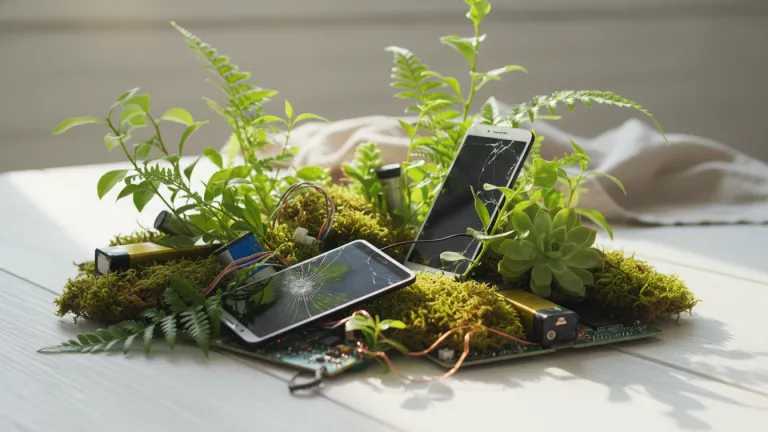
Have you ever wondered what happens to that AA battery that just leaked in the drawer, or the old phone gathering dust at the back of the closet? Most people simply throw these items in the regular trash — and that’s exactly where a silent but very serious environmental problem begins. Incorrectly discarded batteries and electronics release heavy metals like lead, mercury, cadmium, and lithium into the soil and groundwater, contaminating entire ecosystems and eventually entering our food chain.
Brazil is one of the largest producers of electronic waste in Latin America. According to data from the Global E-waste Monitor, published by the UN, the world generated over 62 million tons of electronic waste in 2022 — and the trend is increasing every year. Nationally, the National Solid Waste Policy (Law No. 12,305/2010) already provides for shared responsibility for the product life cycle, including manufacturers, distributors, retailers, and consumers. But in practice, many people still don’t know how to act.
The good news is that disposing of batteries and electronics correctly is simpler than it seems. This guide was created to show you, in a practical and uncomplicated way, where to deliver these materials, how to prepare your devices before disposal, and why every action counts. Shall we go together?
Why Proper Disposal of Batteries and Electronics Is So Important
The real risks of heavy metals in the environment
Batteries and accumulators contain substances that do not decompose naturally — they accumulate. Mercury, present in some types of older batteries, can cause severe neurological damage in humans and animals when it contaminates water sources. Cadmium, common in NiCd rechargeable batteries, is classified as carcinogenic and persists in the soil for decades. Lead, found in lead-acid batteries used in vehicles and uninterruptible power supplies, affects child development and the nervous system.
When these materials go to regular landfills — or worse, open dumps — rain leaches these substances into the soil and groundwater. Contamination can reach rivers, gardens, and wells, often without the community realizing it until the damage is done.
The hidden value in electronic waste
Besides the environmental risk, there is a frequently overlooked angle: discarded electronics contain valuable materials that can be recovered. Gold, silver, copper, palladium, and rare earths are present in circuit boards, connectors, and chips. Recycling these components reduces the need for primary mining — an activity with a very high environmental impact — and creates jobs in the recycling chain. Throwing a smartphone in the trash is literally wasting precious resources.
Types of Waste: Know What You Have at Home
Batteries and accumulators: basic classification
Not all batteries are the same, and understanding the difference helps choose the right collection point:
- Alkaline and zinc-carbon batteries (AA, AAA, C, D, 9V): the most common in remote controls and toys. Since 2001, Brazilian legislation has banned the use of mercury and cadmium above certain limits in these batteries, making them less toxic — but they must still be disposed of correctly.
- Lithium and lithium-ion batteries: found in cell phones, laptops, tablets, and cameras. Highly reactive, they can cause fires if damaged or improperly disposed of.
- Lead-acid batteries: used in cars, motorcycles, and uninterruptible power supplies. Highly toxic and with specific legislation for disposal.
- NiMH and NiCd batteries: found in power tools and some older electronics.
Electronics: what falls into the e-waste category
- Cell phones, smartphones, and tablets
- Computers, laptops, and monitors
- Printers, scanners, and routers
- Televisions (especially CRTs with lead in the glass)
- Small appliances (blenders, mixers, hair dryers)
- Cables, chargers, and electronic accessories
Where to Dispose: Collection Points Across Brazil
Mandatory reverse logistics programs
Brazilian legislation requires manufacturers and importers of batteries and electronics to maintain reverse logistics systems. In practice, this means you have the right to return these products at points of sale — that is, in the same stores where you purchased the product or in stores in the same sector.
How to find a collection point near you:
- Visit the SINIR (National Solid Waste Management Information System) website, maintained by the Ministry of the Environment, at sinir.gov.br
- Look for the reverse logistics tab and filter by type of waste
- Large retail chains like Casas Bahia, Magazine Luiza, Lojas Americanas, and telecom operators often have collectors in their physical stores
- Medium and large supermarkets often have battery collectors at the entrance or checkout
Municipal programs and voluntary delivery points
Many Brazilian municipalities maintain Voluntary Delivery Points (PEVs) where you can dispose of electronics at no cost. Some city halls also conduct periodic electronic waste collection campaigns — it’s worth following the social media and website of your city’s government.
Additionally, initiatives like the Abradisti Institute and Green Eletron operate collection networks in various states. Green Eletron, for example, is an accredited reverse logistics manager that can be consulted online to locate battery and electronics collection points.
How to Prepare Your Electronics Before Disposal
Step-by-step to safely dispose of a cell phone or tablet
Before handing over your device, follow these steps to protect your data and ensure responsible disposal:
- Back up all important data such as photos, contacts, documents, and apps. Use cloud services (Google Drive, iCloud) or transfer to another device.
- Log out of all accounts — Google, Apple ID, social networks, banking apps. This prevents unauthorized access and facilitates device reuse.
- Perform a factory reset. On Android: Settings > General Management > Reset > Factory Data Reset. On iPhone: Settings > General > Transfer or Reset iPhone > Erase All Content and Settings.
- Remove the SIM card and memory card before handing it over.
- Check if the battery is intact: swollen batteries pose a fire risk. If the device has a damaged battery, inform the collection point.
Step-by-step for notebooks and computers
- Back up all important files
- Disconnect and log out of all accounts (email, streaming services, etc.)
- Use a secure data cleaning program, such as DBAN (Darik’s Boot and Nuke) for HDDs — it overwrites data making it unrecoverable
- For SSDs, use the “Secure Erase” function available in manufacturer tools or operating system settings
- Remove notebook batteries if possible and deliver separately, as per the collection point’s guidance
Alternatives to Disposal: Reuse Before Recycling
When the equipment still works
Before disposing, ask yourself: can this equipment have a second life? An old phone can become a smart home remote, security camera, music player, or a gift for someone in need. Slow laptops can be revitalized with lighter operating systems, like Linux distributions (Ubuntu, Mint), and donated to schools, NGOs, or low-income families.
Organizations like Computers for Inclusion, a federal government initiative, receive used equipment for refurbishment and donation to underserved communities. Additionally, platforms like OLX and Facebook technology groups often have people looking for parts or devices to recover.
Reduce consumption: the best recycling starts before purchase
Adopting a more conscious approach when buying also makes a difference. Before replacing your phone or buying a new appliance, ask yourself if repair might be a viable option. The repair culture is growing in Brazil, with spaces like Repair Cafés in São Paulo, Rio de Janeiro, and other cities where volunteers help repair electronics for free.
If you want to dive deeper into this journey of conscious consumption, the Sustainable Living Checklist for Beginners from the Help the Planet blog is an excellent starting point with practical actions for everyday life.
Quick and Actionable Tips for Today
A straightforward list for you to start now:
- Create a “battery jar” at home — a box or bag where you gather used batteries until you have enough to take to the collection point
- Identify the nearest collection point to your home or work today, via the SINIR website or Google Maps by searching “battery disposal” + your city
- Never put batteries in the fire — the explosion releases toxic gases
- Do not dismantle lithium batteries on your own; the fire risk is real
- Keep appliance receipts: they facilitate warranty claims and responsible disposal at the end of their life
- Photograph the serial number before recycling — useful for tax and control purposes
- Learn about your mobile operator’s recycling program: Vivo, Claro, TIM, and others have initiatives for collecting used devices
Brazilian Legislation: Your Rights and Duties
The National Solid Waste Policy (PNRS), Law No. 12,305/2010, is the central legal framework on this topic. It establishes shared responsibility and the obligation of reverse logistics for batteries, electronics, and other products. In practical terms, this means:
- Manufacturers and importers are legally required to collect and provide environmentally appropriate disposal for post-consumer products
- Distributors and retailers must accept the return of the products they sell
- Consumers have the right to return at no additional cost
If an establishment refuses to accept your product for correct disposal, you can file a complaint with the Procon in your city or the Ministry of the Environment’s ombudsman. Knowing your rights is part of conscious consumption.
Caring for the correct disposal of batteries and electronics does not require great sacrifices — it only requires a little attention and habit. Each battery that goes to the right collector, each phone delivered to a reverse logistics point, represents a choice that protects the soil, water, and the health of people around. They are small gestures, but with an effect that multiplies when an entire community adopts the same behavior.
If you’ve come this far, you’re already ahead of most. Now, the next step is simple: choose one of the actions from the list above and do it today. Separate those batteries from the drawer, research the nearest collection point, or organize that box of old electronics. The planet thanks you — and you’ll feel good about it.
- Distributors and retailers must accept the return of the products they sell
- Identify the nearest collection point to your home or work today, via the SINIR website or Google Maps by searching “battery disposal” + your city
- Log out of all accounts — Google, Apple ID, social networks, banking apps. This prevents unauthorized access and facilitates device reuse.
- Visit the SINIR (National Solid Waste Management Information System) website, maintained by the Ministry of the Environment, at sinir.gov.br
- Lithium and lithium-ion batteries: found in cell phones, laptops, tablets, and cameras. Highly reactive, they can cause fires if damaged or improperly disposed of.
