Climate Change in Brazil: The Real Impacts Already Transforming Our Lives
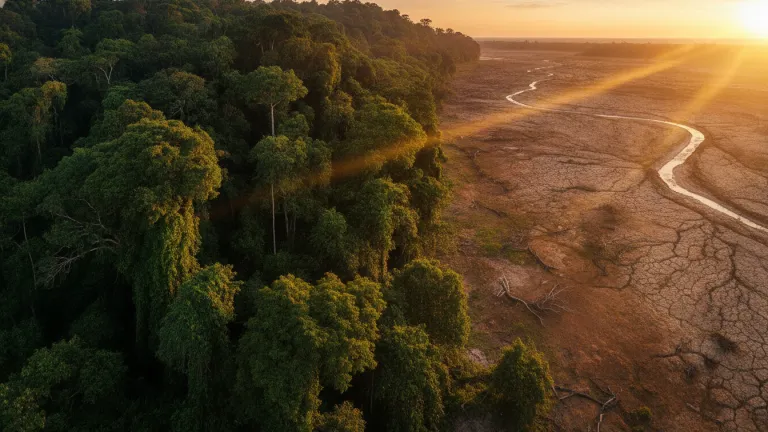
Brazil no longer needs to imagine the future of climate change. It has already arrived — manifesting in floods that destroy entire neighborhoods in Rio Grande do Sul, droughts that halt hydroelectric plants in the Amazon, and heat waves that turn cities like São Paulo and Rio de Janeiro into open-air ovens. What once seemed like a distant threat, reserved for documentaries and scientific reports, now knocks on the doors of millions of Brazilians.
According to the Intergovernmental Panel on Climate Change (IPCC), the global average temperature has already increased by about 1.1°C compared to pre-industrial levels. In Brazil, this warming translates into increasingly frequent and intense extreme weather events. The country, which hosts the world’s largest tropical forest and one of the planet’s greatest biodiversities, is on the front lines of climate consequences — and also plays a fundamental role in the solutions.
This article compiles the real impacts that climate change is already causing on Brazilian territory, with verifiable data and, most importantly, a focus on what each of us can do. Because understanding the problem is the first step toward action.
Extreme Weather Events: Brazil in a State of Permanent Alert
In recent decades, Brazil has recorded a significant increase in climate-related natural disasters. The torrential rains that hit Rio Grande do Sul in April and May 2024 were considered the largest climate disaster in the state’s history, causing more than 150 deaths, displacing hundreds of thousands of people, and generating billions in losses — with effects still being felt in 2026.
Droughts and Floods: Two Extremes Growing Together
It seems contradictory, but a warmer climate intensifies both droughts and floods. Heat evaporates more water from soil and forests, creating periods of severe drought. When rain finally arrives, it comes in concentrated and violent bursts, since a warmer atmosphere holds more water vapor.
The São Francisco River basin, which supplies millions of people in the Northeast, suffers from historic reductions in flow. The Pantanal, the world’s largest continental wetland, has faced record-breaking fires in recent years, consuming significant portions of its territory. These are not isolated events — they are symptoms of an unbalanced climate system.
The Amazon: Brazil’s Climate Thermometer
The Amazon regulates the climate of much of South America through so-called “flying rivers” — aerial currents of water vapor that travel thousands of kilometers and feed rainfall in the Central-West, Southeast, and even the Río de la Plata region. When the forest is deforested, this system fragments.
Deforestation and the Risk of the Point of No Return
Scientists from the National Institute for Space Research (INPE) and Brazilian universities have warned for years about the concept of the Amazon’s “point of no return”: a deforestation threshold beyond which the forest can no longer regenerate and begins to transform into savanna. Studies published in leading scientific journals indicate that parts of eastern and southeastern Amazon already exhibit behavior closer to savanna than tropical forest.
Accumulated deforestation over decades — combined with wildfires, illegal exploitation, and changes in rainfall patterns — puts the forest in an increasingly vulnerable situation. The Amazon, one of the planet’s largest carbon sinks, could become a carbon source if this cycle is not reversed.
Impacts on Food Security and Brazilian Agriculture
Brazil is one of the world’s largest agricultural powers, and agribusiness accounts for a significant share of the national GDP. But climate change is already directly affecting food production — and this trend is expected to deepen in the coming decades.
Crops at Risk with Rising Temperatures
Embrapa (Brazilian Agricultural Research Corporation) has been conducting studies on the effects of global warming on Brazil’s main crops. The company’s projections indicate that crops such as coffee, soybeans, and beans may have their suitable cultivation areas significantly reduced in some regions, depending on global greenhouse gas emission scenarios.
Arabica coffee, for example, is extremely sensitive to temperature variations. Traditional cultivation regions in Minas Gerais and São Paulo may become less suitable for the crop in the coming decades, requiring adaptation of varieties and agricultural practices.
Furthermore, events such as unseasonable frosts, irregular rainfall, and heat waves already cause considerable economic losses to small and medium-sized farmers, who have fewer resources to adapt.
Public Health: The Human Cost of Climate Collapse
Climate change is not just an environmental issue — it’s a public health problem. Rising temperatures, the proliferation of disease vectors, and degradation of air and water quality directly affect the health of the Brazilian population.
Diseases, Heat, and Air Quality
- Dengue, chikungunya, and Zika: the Aedes aegypti mosquito thrives better at higher temperatures and in environments with standing water. With warmer winters and more intense rains, conditions for vector reproduction become more favorable in regions that previously had natural climate protection.
- Respiratory diseases: wildfires in the Amazon, Cerrado, and Pantanal release tons of fine particles into the atmosphere, increasing cases of asthma, bronchitis, and other respiratory problems.
- Heat-related deaths: extreme heat waves especially affect the elderly, children, and outdoor workers. Mortality from cardiovascular diseases tends to increase during periods of intense heat.
- Water insecurity: reduced water availability affects basic sanitation, especially in peripheral and rural communities, increasing the risk of waterborne diseases.
Energy and Water Resources: A System Under Pressure
Brazil has an electricity matrix with strong participation from renewable sources, especially hydroelectricity. According to data from ANEEL (National Electric Energy Agency), hydroelectric plants account for a significant portion of national electricity generation. But this model has a weak point: it depends on rain.
Hydroelectric Plants and the Climate Vulnerability of the Energy Matrix
When reservoirs dry up — as occurred critically during the 2021 water crisis — the country needs to activate thermoelectric plants powered by fossil fuels, increasing emissions and costs for consumers. Diversifying the energy matrix, with expansion of solar and wind energy, is one of the most important structural responses to this challenge.
The good news is that Brazil has been advancing in this direction. Solar photovoltaic generation has grown significantly in recent years, and the country has one of the best wind potentials in the world, especially in the Northeast. Investing in these alternatives is both a climate response and an energy security strategy.
What You Can Do Today: Practical and Accessible Actions
Faced with a global-scale problem, it’s easy to feel powerless. But climate change is made of choices — and each individual choice, added to millions of others, has real weight. Here are concrete actions anyone can adopt:
- Reduce beef consumption: livestock is one of the largest sources of greenhouse gas emissions in Brazil. Reducing consumption already makes a difference.
- Prefer public transportation, cycling, or walking: the transportation sector is one of the largest CO₂ emitters in Brazilian cities.
- Save water and energy at home: shorter showers, unplugged appliances, and LED bulbs are simple measures with real impact.
- Consume consciously: local and seasonal products have a lower carbon footprint. Support local fairs and producers.
- Reduce plastic waste: plastic production consumes energy and generates emissions; improper disposal contaminates soils and rivers. Learn more about the risks of microplastics to health and the environment.
- Plant trees or support reforestation: even in pots or small backyards, urban trees help regulate local temperature.
- Participate and demand action: vote for candidates with serious climate agendas. Sign petitions. Participate in local organizations. Citizen pressure matters.
- Talk about the subject: normalizing conversations about climate with family, at work, and on social media helps build the culture of collective responsibility that this moment demands.
Conclusion: Brazil Can Be Part of the Solution
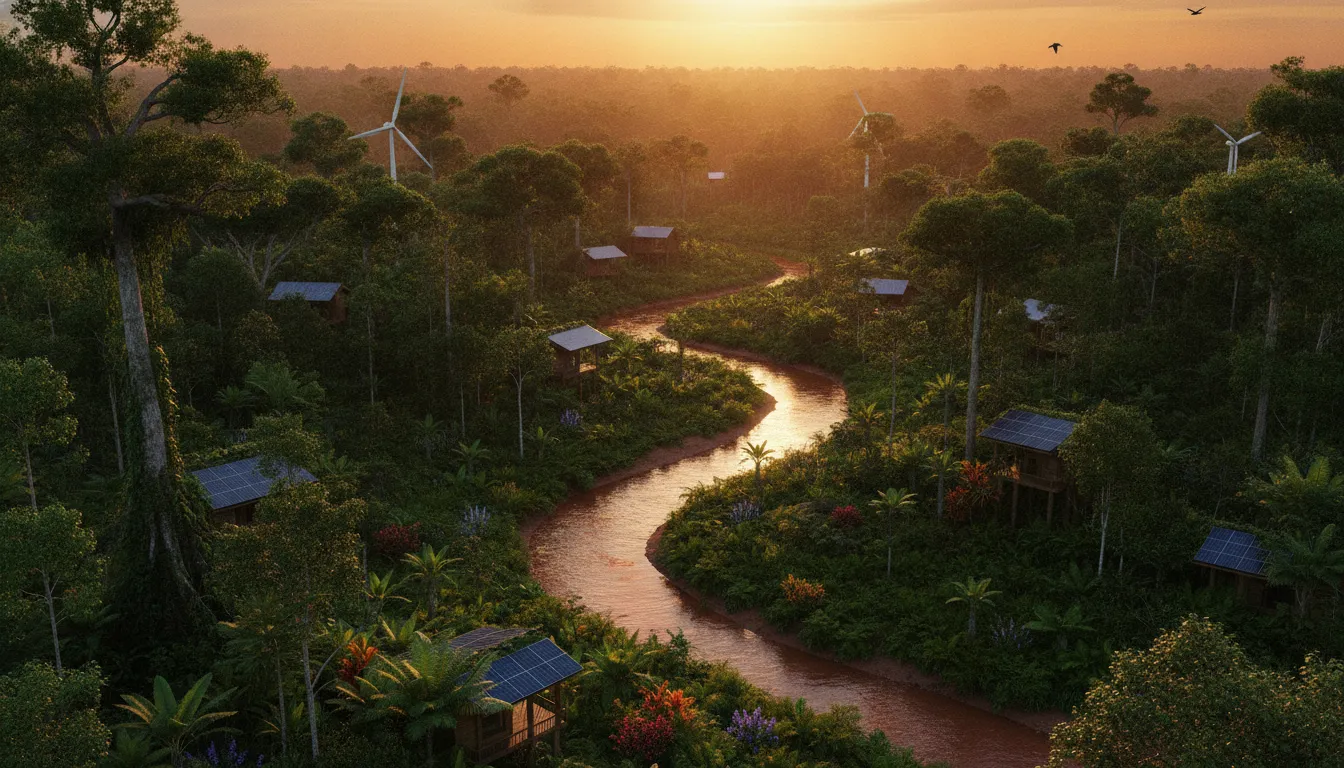
Climate change in Brazil is a present reality, not a future threat. The impacts are already manifesting in lost lives, destroyed harvests, empty reservoirs, and degraded ecosystems. But Brazil also has extraordinary potential to lead climate responses: forest to preserve and restore, abundant sun and wind, biodiversity to protect, and an increasingly engaged civil society.
The transition to a more sustainable development model is not only necessary — it’s possible. And it begins with everyday choices that, together, form a movement. Every tree planted, every bus trip instead of a car ride, every conversation about climate with someone who hadn’t thought about the subject yet counts.
The planet doesn’t ask for perfection. It asks for commitment. And you’ve already taken an important step by being here, informed and willing to act. The next step is yours.
