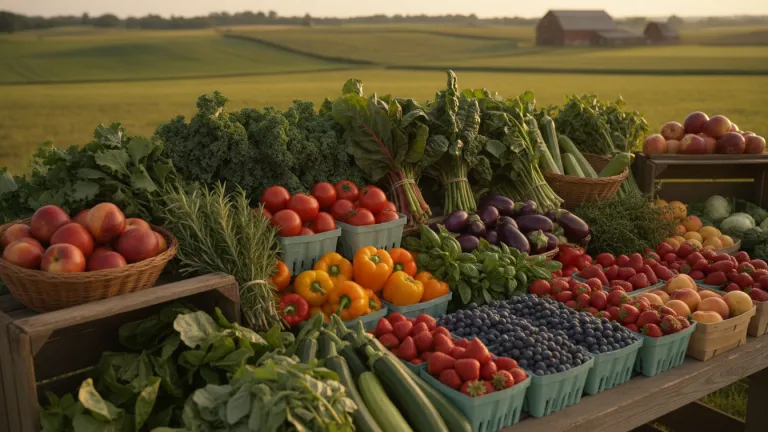
Why Buying from Local Producers Makes a Real Difference
Have you ever stopped to think about where the tomato in your fridge came from? Or the cheese you bought at the supermarket last week? In many cases, these foods have traveled hundreds—or even thousands—of kilometers before reaching your table, passing through cold storage, plastic packaging, distribution centers, and fleets of trucks. Each step of this journey has an environmental cost that rarely appears on the price tag.
The good news is that there is an increasingly accessible and vibrant alternative: buying from local producers. Farmers’ markets, collective buying groups, subscription boxes, and community markets are growing throughout Brazil, and choosing to consume what is produced close to home has impacts that go far beyond the freshness of the food. It strengthens regional economies, reduces carbon emissions, preserves agricultural biodiversity, and even connects people to a more conscious relationship with food.
In this article, we will explore why this choice is valuable from both an environmental and human perspective—and how you can start practicing it simply, even today.
The Invisible Problem of Long Supply Chains
The global food system is responsible for a significant share of greenhouse gas emissions. According to the Intergovernmental Panel on Climate Change (IPCC), food systems as a whole—including production, processing, transportation, and waste—account for about 21% to 37% of global GHG emissions, depending on the methodology used (IPCC, AR6 Report, 2021–2022).
Food transportation is a significant slice of this total. When a product travels long distances in diesel trucks or cargo planes, each kilometer adds carbon to the atmosphere. Additionally, the need for preservation during long transport requires constant refrigeration, more plastic packaging, and greater use of preservatives.
There is also the problem of waste: foods that travel long distances arrive with less shelf life, increasing losses in retail and homes. The Food and Agriculture Organization (FAO) estimates that about one-third of all food produced in the world for human consumption is lost or wasted—and a considerable part of this loss occurs precisely in the logistics chain.
What Are “Local Producers” and Where to Find Them
The term “local producer” can vary greatly depending on the context, but generally refers to farmers, breeders, food artisans, and cooperatives that produce on a regional scale—usually within a radius of up to 200 kilometers from the consumer, although this limit is flexible depending on the territory.
In Brazil, the main access channels to these producers include:
- Farmers’ markets and organic markets—present in practically all medium and large cities
- Subscription boxes (CSA—Community Supported Agriculture)—a model where the consumer pays in advance and receives a weekly box directly from the producer
- Collective buying groups—organized by neighborhoods or condominiums, usually via messaging apps
- Digital platforms for local products—such as Raízs, Confraria do Campo, and others that connect producers and consumers directly
- Independent markets and emporiums—that prioritize regional suppliers
- Municipal rural producers’ markets—often supported by city halls or the National School Feeding Program (PNAE)
Embrapa and the Ministry of Agrarian Development have been investing in mapping and strengthening these networks, especially in the context of family farming, which according to the 2017 IBGE Agricultural Census—still the most recent reference available—accounted for about 77% of the country’s agricultural establishments and was responsible for much of the beans, cassava, vegetables, and milk consumed by Brazilians.
Tangible Environmental Benefits of Buying Local
Reducing Emissions in Food Transportation
When you buy from a producer who is just a few kilometers away, the “transport footprint” of the food drops drastically. This is especially relevant for perishable products like greens, fruits, and dairy, which in long chains require active refrigeration for hours or days.
Furthermore, many local markets already operate with smaller, electric, or gas-powered vehicles, and consumers themselves often walk or bike—eliminating even more emissions in the “last mile” of the chain.
Preservation of Agricultural Biodiversity
Local producers, especially those in family and agroecological farming, often cultivate traditional and heirloom varieties that are not found on supermarket shelves. These varieties are enormously important for the resilience of the food system in the face of climate change, as they carry genetic adaptations to specific soils and climates.
The loss of agricultural diversity is a real threat: the FAO estimates that about 75% of the genetic diversity of cultivated plants was lost during the 20th century, precisely due to agro-industrial standardization. Buying from local producers who cultivate these varieties is a concrete way to help preserve them.
Less Packaging and Waste
Markets and direct deliveries from producers tend to generate much less plastic waste than industrialized products packaged to withstand long journeys. You can bring your own bag, jar, or box—and many producers already actively encourage this.
Economic and Social Benefits: Money That Stays in the Community
When you buy from a small local producer, a much larger portion of the amount paid reaches the hands of those who produced it—instead of being diluted among intermediaries, distributors, and large retail chains. This effect, known in economics as the local multiplier, means that money circulates more times within the community itself, generating jobs, income, and regional economic dynamism.
Family farming in Brazil directly employs a significant portion of the rural population. Strengthening these producers with your purchasing choice is also a way to support decent working conditions and the permanence of families in the countryside—which, in turn, reduces pressure for deforestation in new areas.
How to Start: Step by Step to Include Local Producers in Your Daily Life
You don’t need to change everything at once. Small gradual changes already make a difference and become lasting habits.
- Identify the markets in your neighborhood or city. A simple Google Maps search with “organic market [your city]” or “farmers’ market [your neighborhood]” already reveals nearby options. Many city halls have official market calendars.
- Choose one or two items to replace first. Don’t try to change your entire purchase at once. Start with seasonal vegetables and fruits—usually the easiest to find in local markets and competitively priced.
- Research CSA groups or subscription boxes in your city. The Ecovida Network website (mainly in the South and Southeast) and the ANA (National Agroecology Articulation) portal have maps of organized producers and groups.
- Talk to the producer. One of the greatest advantages of markets is direct contact. Ask how it was grown, if pesticides were used, what the harvest season is. This conversation builds trust and helps you better understand what you are buying.
- Plan your meals based on what is locally available. Instead of deciding the menu and then looking for the ingredients, try the reverse: see what’s in season and create recipes from there. Besides being tasty, it’s cheaper.
- Recommend to friends and neighbors. Local producers grow through word of mouth. Your recommendation can make a real difference to a family’s income.
What to Buy from Local Producers (and What Remains Difficult)
Not everything is feasible to buy locally—and it’s okay to recognize that. The table below helps guide your choices:
| Category | Definitely worth buying local | Observation |
|---|---|---|
| Vegetables and greens | ✅ Yes | Unmatched freshness and flavor |
| Seasonal fruits | ✅ Yes | Usually cheaper at the market |
| Eggs and dairy | ✅ Yes | Check provenance and traceability |
| Honey and propolis | ✅ Yes | Preserved regional biodiversity |
| Grains and flours | ✅ Yes | Heirloom varieties are a differential |
| Meats | ⚠️ With caution | Check sanitary certification and animal welfare |
| Coffee and cocoa | ✅ Yes | Brazil has excellent regional production |
| Processed products | ❌ Difficult | Few local producers operate in this niche |
Myths Preventing People from Buying Local
“Buying from local producers is more expensive.” Not always. Seasonal vegetables at markets are often cheaper than in supermarkets, especially when you buy directly from the producer, without intermediaries. What may seem expensive in the immediate comparison often includes more nutritional quality, freshness, and less waste at home.
“It’s hard to access.” With the expansion of digital platforms and collective buying groups, it is now possible to receive a basket of local products at home in many Brazilian cities with just a few clicks.
“There isn’t enough variety.” Regular farmers’ market-goers know that the variety—especially of fruits and vegetables—often surprises, precisely because it includes items that the supermarket does not offer.
Conclusion: A Choice That Nourishes Much More Than the Body
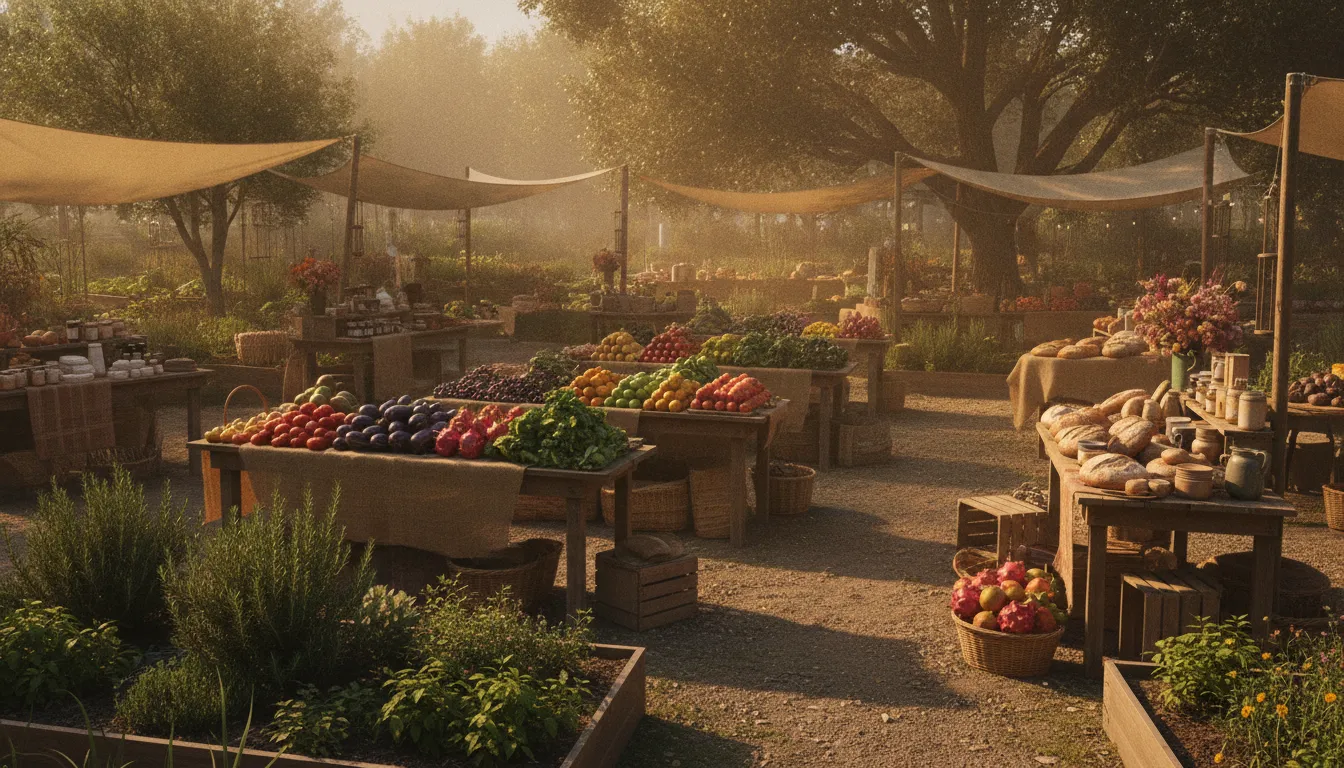
Buying from local producers is one of the most practical, accessible, and impactful actions anyone can take today—without needing major lifestyle changes or investments. It is a choice that feeds rural families, strengthens communities, reduces emissions, preserves seeds, and reconnects you with the origin of what you eat.
If you are already interested in reducing your environmental footprint in daily life, this is a step that complements other sustainable practices well—such as learning to make your own products, for example, with recipes like homemade natural deodorant, or understanding how rainwater harvesting works for small gardens and home gardens.
Start small. Visit a market near you this weekend. Talk to a producer. Try a fruit you’ve never seen before. Each conscious purchase is a vote for the type of food system—and world—you want to help build.
