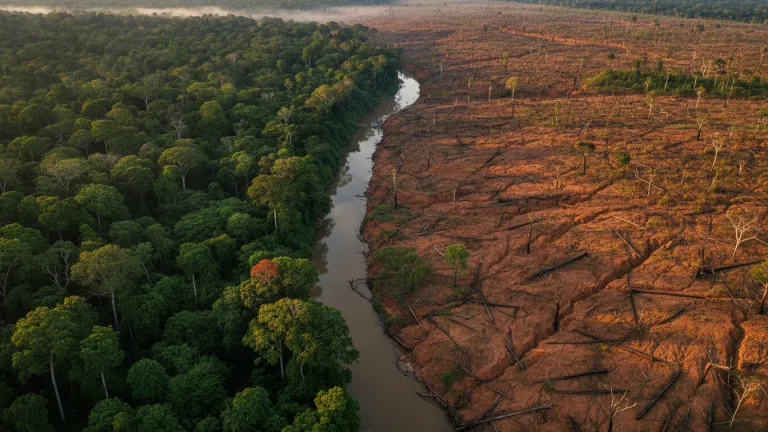
The Alarm That Cannot Be Ignored
The Amazon is often called the “lungs of the world” — and that’s no exaggeration. The planet’s largest tropical rainforest regulates the climate, harbors unparalleled biodiversity, and stores billions of tons of carbon that, if released, would drastically accelerate global climate change. But this green giant faces constant pressure, and the latest data from INPE (Brazil’s National Institute for Space Research) shows that the fight for its preservation is far from won.
Over recent decades, deforestation in the Brazilian Amazon has gone through cycles of rise and fall, responding directly to public policies, environmental enforcement, and economic pressures on the region. In 2025, preliminary data from the PRODES system indicated a significant drop compared to the peaks recorded between 2019 and 2021 — positive news, but it doesn’t eliminate the urgency of the problem. After all, even with recent progress, the forest continues to lose area every year, and the accumulated damage has already compromised essential ecological functions.
Understanding what’s at stake with Amazon deforestation goes far beyond numbers and satellite maps. It’s a matter of water security for Brazilian cities, climate stability for all of South America, indigenous peoples’ rights, and ultimately, our collective ability to inhabit this planet sustainably. This article explains the causes, the consequences, and — most importantly — what each of us can do.
The Causes of Amazon Deforestation: What’s Behind the Destruction
Before seeking solutions, we need to understand the roots of the problem. Deforestation in the Amazon doesn’t happen by chance: it’s driven by economic, political, and social forces well identified by researchers and organizations like Imazon and MapBiomas.
Agriculture as the Main Driver of Deforestation
The expansion of extensive cattle ranching and agriculture — especially soybeans — has historically accounted for most of the Amazon’s deforestation. MapBiomas surveys show that pastures occupy an enormous portion of the already converted biome, representing the dominant land use in deforested areas. The logic is simple: deforested land is worth more in the rural real estate market, creating a perverse incentive to clear the forest.
Land Grabbing, Mining, and Infrastructure
Other relevant drivers include:
- Public land grabbing, a practice where federal lands are illegally appropriated and then deforested to increase their value
- Illegal gold mining, which besides causing deforestation, contaminates rivers with mercury — as extensively documented in Yanomami territories
- Road construction and infrastructure, which facilitates access to remote areas and opens secondary deforestation fronts
What Real Data Tells Us About Deforestation
It’s important to work with verifiable information. INPE operates the PRODES system, which monitors clear-cutting in the Legal Amazon through satellite imagery, and DETER, which issues near-real-time alerts. These are the official and internationally recognized reference systems.
According to consolidated historical PRODES data, annual deforestation in the Amazon reached alarming peaks in the early 2000s — exceeding 27,000 km² in 2004 — and then progressively fell to around 4,000 to 5,000 km² in the early 2010s, as a result of strengthening the Forest Code, IBAMA enforcement, and policies like the Action Plan for Prevention and Control of Deforestation in the Amazon (PPCDAm).
Starting in 2019, the numbers rose again worryingly. In 2021, PRODES recorded approximately 13,235 km² of deforestation — the highest rate in over a decade. The following years showed a declining trajectory, but 2024 data and projections for 2025, released by INPE, still indicate that the zero deforestation goal by 2030, which Brazil committed to in international agreements, requires continuous and increasing effort.
What’s at Stake: Real Consequences of Deforestation
Risk to Regional and Global Climate
The Amazon is not just a forest: it’s an active rain-producing system. Tree evapotranspiration generates so-called “flying rivers” — moisture currents that feed rainfall in Brazil’s Central-West, Southeast, and even Southern regions. Researchers like Antonio Donato Nobre from INPE have extensively documented this mechanism. When the forest is cleared, this cycle is interrupted, contributing to droughts, reduced agricultural production, and water crises in cities far from the Amazon.
On a global scale, deforestation releases carbon stored in forest biomass and soil, accelerating warming. The IPCC (Intergovernmental Panel on Climate Change) recognizes the protection of tropical forests as one of the most cost-effective climate mitigation strategies available today.
Threatened Biodiversity
The Amazon harbors one of the planet’s greatest biodiversities. According to the IUCN (International Union for Conservation of Nature), hundreds of Amazonian species appear in different threat categories on the Red List, and many have yet to be cataloged by science. Each deforested hectare may mean the silent extinction of species we will never know.
Direct Impact on Indigenous Peoples
More than 300 indigenous peoples live in the Brazilian Amazon, according to FUNAI. Deforestation and illegal mining advance into demarcated territories, destroying ways of life, contaminating water sources, and generating violent conflicts. Protecting the forest is, therefore, also a human rights issue.
Points of No Return: The Concept of “Savannization”
One of the most serious warnings in scientific literature is the risk of “savannization” of the Amazon — a process by which parts of the forest, under combined pressure from deforestation and climate change, would lose their ability to regenerate and begin behaving like a savanna.
Scientists from the Amazon Environmental Research Institute (IPAM) and the Stockholm Resilience Centre have been discussing this critical threshold for years. Estimates vary, but there is consensus that accumulated deforestation — already exceeding 20% of the original biome, according to MapBiomas — dangerously approaches a tipping point that would be difficult or impossible to reverse. Once this threshold is crossed, no public policy would be sufficient to restore what was lost.
What’s Being Done: Ongoing Initiatives and Policies
Despite the serious scenario, there are real reasons for hope — as long as efforts are maintained and expanded.
- The PPCDAm, reactivated and updated by the Brazilian federal government, establishes deforestation reduction targets with integrated actions across ministries
- The Amazon Fund, managed by BNDES with contributions from Norway and Germany, finances monitoring projects, enforcement, and sustainable productive activities for local communities
- The Arc of the Future program and Ministry of Environment initiatives focus on land regularization as a way to reduce conflicts and pressure on the forest
- Organizations like WWF Brazil, ISA (Socio-Environmental Institute), and TNC Brazil work on monitoring, advocacy, and support for indigenous peoples and traditional communities
Internationally, Brazil has reaffirmed in recent climate negotiations its commitment to zero illegal deforestation in the Amazon by 2030 — an ambitious goal that depends on sustained political will and adequate resources.
What You Can Do: Practical and Real Actions
It may seem that Amazon deforestation is a problem too big for an ordinary person to influence. But individual consumption patterns, when combined, carry real weight. Here’s what’s within your reach:
- Reduce beef consumption, especially from sources without socio-environmental traceability. Extensive cattle ranching is the main driver of deforestation, and every change on your plate counts
- Choose products with certification seals, like Rainforest Alliance or products from traceable supply chains that guarantee deforestation-free origins
- Support reliable organizations working in the Amazon — whether through donations or social media amplification
- Apply political pressure: vote for candidates with verifiable environmental records, sign petitions, participate in public hearings
- Reduce your food waste: much of deforestation serves to produce food that ends up in the trash
- Get informed through reliable sources, such as INPE, MapBiomas, IPAM, and specialized news outlets, avoiding misinformation on the subject
- Share knowledge with family and friends — awareness at scale is a real transformative force
You can also go further in your daily life. Adopting lower environmental impact habits across various areas contributes to a lifestyle more consistent with preservation. For example, preserve the environment with simple choices in your daily routine — and inspire those around you to do the same. Every action counts when added to millions of others.
Conclusion: The Amazon Needs Us — and We Need It
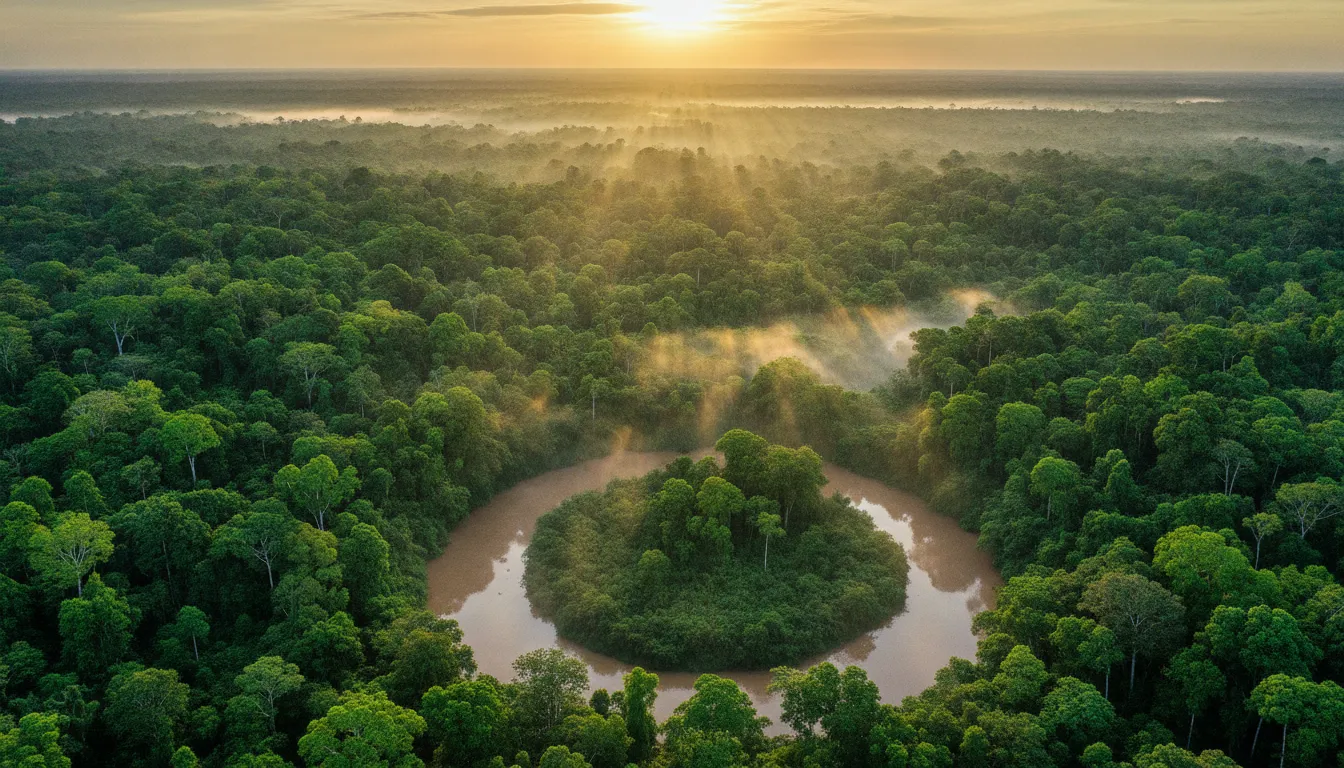
Amazon deforestation is one of the most urgent environmental challenges of our time, but it’s not a problem without solutions. The historic drop in rates between 2004 and 2012 proved that consistent public policies, effective enforcement, and civil society engagement work. The challenge is to maintain this effort on a lasting basis — and amplify it in the face of new pressures.
In 2026, Brazil is at a key moment: international climate targets are approaching, satellite monitoring is more sophisticated than ever, and public awareness on the topic has grown. This creates a real window of opportunity.
The Amazon rainforest is not just the heritage of Brazilians — it’s a global asset. But Brazilians are the ones with the power and responsibility to protect it, both through the policies they support and the choices they make every day. Start with what’s within your reach today: get informed, consume consciously, and use your voice. Small actions, multiplied by millions of people, change the course of great stories.
