Types of Renewable Energy That Exist Today — and How They’re Transforming the World
The way the world produces and consumes energy is undergoing one of the greatest transformations in human history. After more than a century of depending almost exclusively on fossil fuels — oil, coal, and natural gas — humanity has finally accelerated the transition to sources that renew naturally and do not exhaust the planet’s resources. This change is not just necessary from an environmental standpoint; it’s also proving to be economically advantageous and technically viable on a global scale.
If you’ve heard about solar or wind energy but don’t quite know how they work — or are unaware of other sources that exist beyond these two — this article was made for you. We’ll go through the main types of renewable energy available today, explain how each one works, and show where Brazil and the world stand in this journey. Because understanding what’s happening is the first step to being part of the solution.
What Is Renewable Energy and Why Does It Matter
Renewable energy is energy generated from natural sources that regenerate at a much faster rate than they are consumed. The sun rises every day, the wind blows continuously, rivers flow, and the Earth’s interior radiates heat for billions of years. Unlike oil or coal, which took millions of years to form and deplete when extracted, these sources are always available — provided they are used wisely.
In addition to being inexhaustible, renewable energies emit far fewer greenhouse gases than fossil fuels throughout their lifecycle. This is fundamental in a context where the IPCC (Intergovernmental Panel on Climate Change) reinforces, in its most recent reports, that limiting global warming requires deep and urgent decarbonization of the energy sector.
Solar Energy: The Most Democratic and Fastest-Growing Source
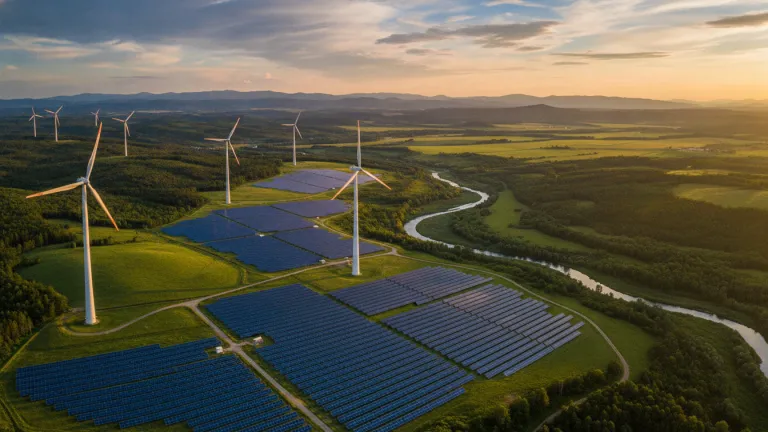
Solar energy is the fastest-growing renewable source in the world today. It can be captured in two main ways:
- Photovoltaic (PV): solar panels convert sunlight directly into electricity through the photovoltaic effect. It’s the technology found on residential and business rooftops and in large power plants.
- Concentrated solar power (CSP): mirrors or lenses concentrate solar radiation to heat a fluid and generate steam, which drives turbines. Still less common, but efficient for large installations in very sunny regions.
Brazil is one of the countries with the greatest solar potential in the world, favored by its geographic location. According to data from ANEEL (National Electric Energy Agency), distributed solar generation — that installed in residences and small businesses — has grown significantly in recent years, and the country has accumulated one of the largest installed solar energy capacities in Latin America.
For the average consumer, installing solar panels at home has become increasingly accessible. The payback period (time to recover the investment) varies, on average, between 4 and 7 years depending on the region and consumption, according to industry estimates.
Wind Energy: Wind as an Ally for Electricity Generation
Wind energy transforms the movement of wind into electricity through turbines. When the wind rotates the rotor blades, this mechanical energy is converted into electrical energy by an attached generator.
Brazil has one of the best wind profiles in the world, especially in the Northeast, where wind blows with speed and regularity throughout the year. The region hosts the majority of Brazilian wind farms, and the country has become an international reference in this sector.
There are two main types of wind installation:
- Onshore (on land): this is the most common and cheapest model. Parks are located in open areas, usually in rural or coastal zones.
- Offshore (at sea): turbines are installed on ocean platforms, where wind tends to be stronger and more constant. Still expanding in Brazil, but with great potential, especially off the northeastern and southern coasts.
Hydroelectric Energy: The Foundation of Brazil’s Energy Mix
Hydroelectricity is generated by harnessing the force of moving water — typically from rivers dammed by dams. Water falls and drives turbines, which generate electricity.
Brazil has one of the most renewable electricity matrices in the world, and hydroelectricity is historically its largest source of generation. Power plants such as Itaipu (shared with Paraguay) and Belo Monte are among the largest in the world in installed capacity.
Although renewable, hydroelectricity is not without impacts: large dams alter river ecosystems, affect riverside communities, and can emit methane from reservoirs with large amounts of organic matter. For this reason, the sector increasingly seeks alternatives such as small hydroelectric power plants (PCHs) and run-of-river power plants, which do not form large reservoirs and have reduced environmental impact.
Biomass and Biogas: Energy from Organic Matter
Bioenergy encompasses different forms of energy generation from biological material — agricultural and forest waste, urban waste, animal manure, and energy crops such as sugarcane.
Main Forms of Bioenergy
- Ethanol: Brazil is a world reference in ethanol production from sugarcane, a fuel that powers flex vehicles and reduces emissions compared to gasoline.
- Solid biomass: waste such as sugarcane bagasse, eucalyptus, and rice straw are burned to generate heat and electricity in biomass thermal power plants.
- Biogas and biomethane: produced by anaerobic decomposition (without oxygen) of organic waste — such as manure, urban garbage, and industrial effluent. They can be used to generate electricity, heat, or as a vehicle fuel. Embrapa has developed important research on biogas utilization in Brazilian family farming.
Bioenergy has the major advantage of being a way to utilize waste that would otherwise be discarded, turning a problem into a resource. It can also complement intermittent sources like solar and wind, as it can be stored and activated when needed.
Geothermal Energy: The Heat from Earth’s Depths
Geothermal energy harnesses the natural heat of the Earth’s interior. In volcanically active regions — such as Iceland, Kenya, Indonesia, and parts of the United States — it’s possible to access this heat relatively easily and use it to generate electricity or for direct heating of buildings.
In Brazil, geothermal potential is more limited than in countries with active volcanism, but research explores the use of low-enthalpy geothermal systems — systems that exploit the relatively stable temperature of the subsurface for heating and cooling spaces, especially in buildings. It’s not the most relevant source for the Brazilian context at the moment, but deserves attention as a complementary technology.
Tidal and Wave Energy: The Potential of the Ocean
Still in less advanced stages of development and large-scale deployment, marine energies harness the movement of the oceans:
- Tidal energy: generated by tidal variations. It works similarly to a hydroelectric dam, but powered by tides.
- Wave energy: converts wave motion into electricity through floating or coastal-mounted devices.
- Ocean thermal energy conversion (OTEC): exploits the temperature difference between the surface and deep ocean layers.
Brazil has an extensive coastline and waves with good energy potential, placing these technologies on the radar of researchers and the electrical sector for the medium and long term.
How Brazil Is Positioned in the Energy Transition
Brazil has a privileged position in this transition. Its electricity matrix is already predominantly renewable — dominated by hydroelectrics, with significant growth in solar and wind. This structural advantage is rare in the global context and represents a real opportunity for the country to lead decarbonization.
Yet the total energy matrix — which includes transportation, industry, and heating — still depends significantly on fossil fuels, especially in the transportation sector. Decarbonization of these sectors is the next major challenge.
What You Can Do Now
The energy transition doesn’t depend only on governments and large companies. Each person can contribute concretely:
- Consider installing solar panels on your residence or condominium. Today there are facilitated financing options and solar energy cooperatives.
- Opt for electric or hybrid vehicles when renewing your transportation, especially if powered by renewable energy.
- Reduce energy consumption at home: switch to LED bulbs, turn off devices on standby, and use energy-efficient appliances.
- Support companies with real energy commitment, verifying whether they use certified renewable energy sources.
- Pay attention to energy rates and the free energy market, which already allows consumers to choose suppliers with 100% renewable generation.
- Reduce food waste, since producing food that goes into the trash also wastes all the energy used in the process — and properly managed organic waste can become biogas.
If you want to go further in your sustainability journey, there are other daily choices that make a real difference: cycling instead of driving is one of them, combining health, savings, and emissions reduction in a single decision.
Conclusion: The Energy of the Future Is Already Here
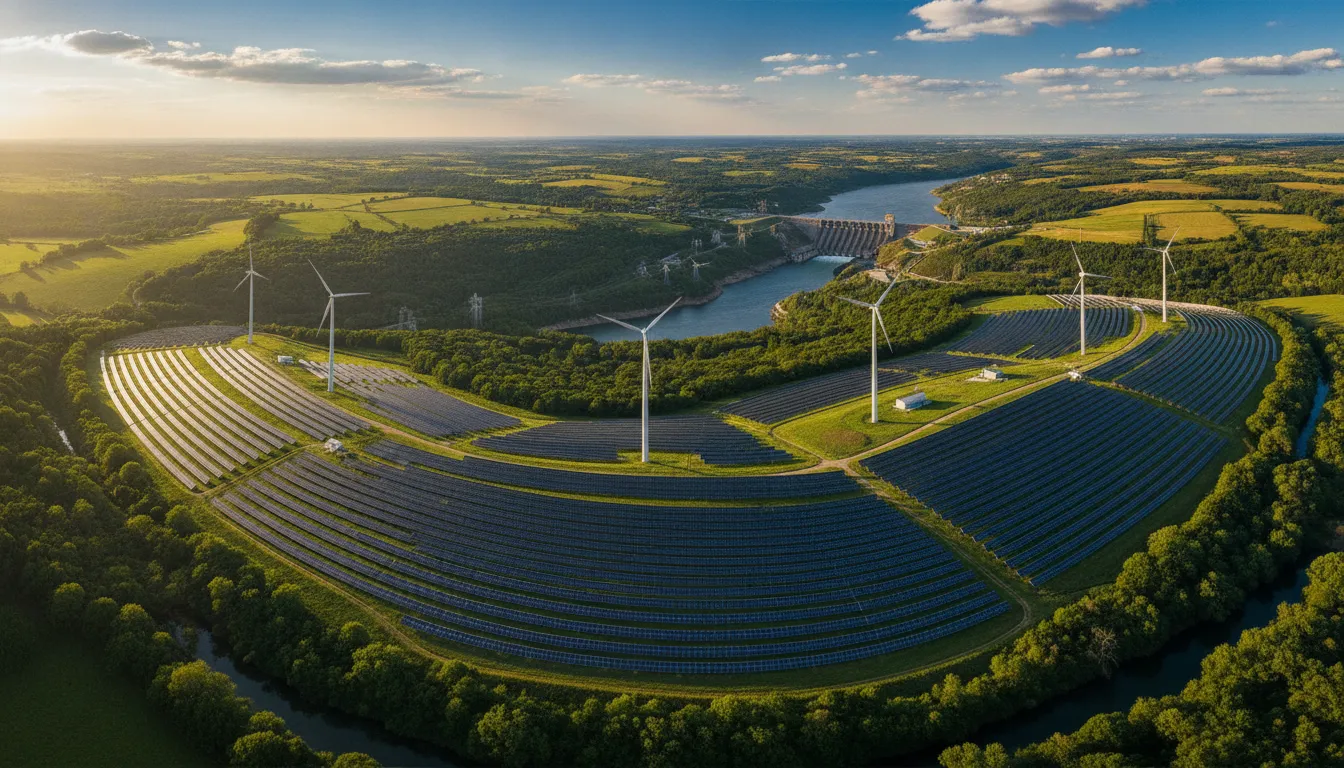
The good news is that we’re not waiting for miraculous technologies that don’t yet exist. Solar, wind, hydroelectric, biomass, geothermal — these sources are already a reality, already working, and already proving that clean energy generation at scale is possible. The challenge now is to expand, democratize, and integrate these solutions intelligently.
Every choice you make — whether installing a solar panel, opting for a green energy company, reducing consumption at home, or simply learning about the subject and sharing it with others — is a vote in favor of a cleaner and fairer energy system. The transition is happening. And you can be part of it today.
