Have you ever stopped to think that one of the most powerful decisions you make for the planet happens three times a day, on your plate? Food is one of the sectors with the greatest environmental impact in the world, and meat consumption — especially beef — is at the center of this equation. It’s not about guilt, but about a real opportunity for change.
The good news is that you don’t need to become vegan overnight to make a difference. Eating less meat, even gradually and imperfectly, already has measurable impact. The challenge is knowing where to really start, without fads, without lists of expensive foods, and without giving up the pleasure of eating well.
This article was written for those who want to act but feel lost among so much contradictory information. We’ll go from real context to practical step-by-step, with tips that fit into the routine and budget of most Brazilians.
Why eating less meat matters so much for the planet
The global food system is responsible for a significant portion of greenhouse gas emissions. According to the Intergovernmental Panel on Climate Change (IPCC), agriculture, deforestation associated with land use, and food transport account for about one-third of global greenhouse gas emissions, and livestock occupies a central position in this calculation.
In Brazil, livestock has even greater weight. The country has the world’s largest commercial cattle herd, with more than 200 million head according to Embrapa and IBGE data. Deforestation of the Amazon and Cerrado is directly linked to the expansion of pastures and the production of soybeans used in animal feed. This means that each kilogram of beef produced carries a chain of impacts that goes far beyond the slaughterhouse.
Beyond climate, there are pressures on water resources, biodiversity, and land use. Reducing meat consumption — especially red meat and industrially-produced meat — is one of the individual actions with the greatest potential to reduce environmental impact, according to studies reviewed by the IPCC itself. But pay attention: reducing is not the same as eliminating, and every step counts.
What science says about plant-based diets
Research published in leading scientific journals consistently shows that diets with a lower proportion of animal products have a lower environmental footprint. A widely cited analysis, published in Nature Food by researchers from the University of Oxford, indicates that vegan and vegetarian diets can reduce food-related emissions by more than 50% compared to meat-heavy diets.
But the transition doesn’t need to be radical to be effective. Nutritional science itself supports a flexible approach. The so-called flexitarian eating pattern — which keeps meat occasional but prioritizes plant proteins on a daily basis — has been studied as an effective strategy for both human health and planetary health.
It’s also important to understand the differences between types of meat. Beef is generally the most emission-intensive. Chicken and pork have considerably lower carbon footprints. Fish varies widely depending on origin and catch method. This doesn’t mean one option is “perfect,” but it helps make more informed choices within your own routine.
Start with the right strategy: the gradual method works
One of the biggest mistakes people make when trying to change their diet is trying to do everything at once. The psychology of eating behavior shows that abrupt changes are usually abandoned quickly. The secret is in gradual progression.
See a possible path in stages:
- Week 1-2 — Observe your current habits. Keep track for a week of how many times a day you consume some type of meat. Don’t change anything yet. Just observe.
- Week 3-4 — Choose a meat-free day. Monday is the most common (the “Meatless Monday” movement has been around in Brazil for years and has free materials available online). On that day, replace animal protein with eggs, legumes, tofu, or cheeses, according to your preference.
- Month 2 — Add another day. With one day already established, add another. The goal is not perfection, but consistency.
- Month 3 onward — Reduce portions on other days. Instead of eliminating, serve smaller portions of meat and increase plant-based accompaniments. A 200 g portion can become 100 g with more beans, lentils, or chickpeas on your plate.
- Advanced step — Prioritize substitutes in main meals. When cooking at home, try a new recipe each week using plant protein. Black bean burger, mushroom stroganoff, chickpea curry. The Brazilian internet is full of accessible recipes.
This model works because it doesn’t require cultural abandonment. You don’t need to give up Sunday feijoada or birthday barbecue. The impact comes from reduced frequency, not absolute prohibition.
Plant proteins worth knowing about (and already at your market)
Many people still associate protein exclusively with meat. But Brazil has one of the world’s richest cuisines in terms of accessible plant proteins. See some options you probably already have access to:
- Beans and lentils: pillars of Brazilian diet, cheap, versatile, and rich in protein and fiber
- Chickpeas: great for stir-fries, salads, and pastes (hummus became popular for good reasons)
- Tofu: absorbs seasonings easily; works well in frying, stews, and on the grill
- Eggs: technically animal-derived, but with much lower environmental footprint than red meat
- Peanuts and peanut butter: quality protein, cheap, and widely available
- Mushrooms: not high in protein, but have texture and flavor that well substitute for meat in many recipes
- Quinoa and amaranth: grains with complete protein profile, increasingly accessible in Brazil
- Soy and soy products: beyond tofu, textured soy (TSP) is cheap and easy to prepare
The combination of cereals and legumes in the same meal — like rice and beans — provides a complete amino acid profile, which is one of the most poorly explained points about lower-meat diets. Brazilian food tradition has known this for centuries.
How to reduce waste while eating less meat
There’s an important connection between meat consumption and food waste. Many families buy more meat than they consume, and some ends up being thrown away. By reducing the amount of meat on your shopping list, you can save money and still waste less.
Some practices that help:
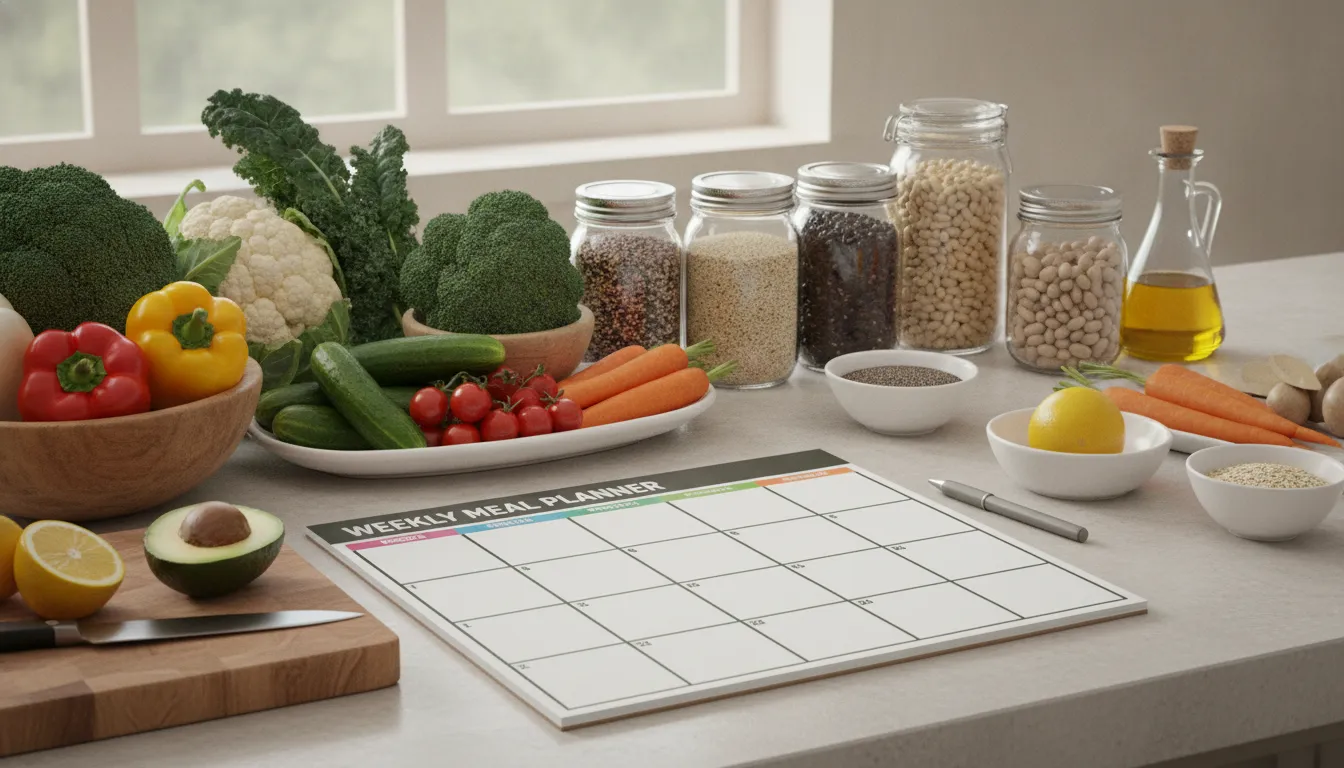
- Plan your weekly menu before going to the market. Define which days will have meat and which won’t, and buy only what you need.
- Use the freezer to your advantage. Cooked plant proteins (beans, lentils, chickpeas) freeze very well and save time during the week.
- Use stems, peels, and leaves. As you increase the proportion of vegetables on your plate, you can also explore parts that are normally discarded.
If you want to dive deeper into the waste topic, check out the article Less food waste starts in your kitchen, with practical strategies for your routine.
The social factor: how to navigate family, restaurants, and parties
One of the biggest barriers to eating less meat is not hunger or taste — it’s social context. In Brazil, meat is deeply rooted in social rituals: weekend barbecue, family lunch, restaurants with coworkers.
Here are some approaches that work in practice:
- Don’t say “I’m on a diet,” say “I’m experimenting.” This reduces social pressure and keeps the conversation open.
- At barbecues, bring something you want to eat. Grilled vegetables, garlic bread, hearty salads — your presence doesn’t need to depend on meat.
- At restaurants, explore the menu beforehand. Most establishments have good plant-based options, and planning ahead avoids the impulse to order the same thing.
- In family, don’t impose. Personal changes don’t need to become rules for everyone. Cooking something everyone likes and that has less meat is more effective than any speech.
The key is to keep pleasure as an ally, not an enemy of change.
How much real impact does your change generate
It’s natural to question whether individual action has real weight against such a big problem. The honest answer is: yes, it does — especially when it happens at scale.
Based on lifecycle analyses published by researchers like those in Joseph Poore’s group (Oxford), it’s estimated that producing 1 kg of beef generates on average more than 20 kg of CO₂ equivalent, while legumes like lentils generate less than 1 kg per kg produced. These numbers vary considerably depending on the production system, but the order of magnitude is consistent in the scientific literature.
On an individual level, a family that reduces beef consumption by half over a year can reduce its food-related carbon footprint in a meaningful way — comparable, in some models, to the impact of switching a car for public transportation.
Furthermore, the collective effect of individual choices influences markets. When demand for plant proteins grows, supply expands, prices fall, and the food system as a whole faces pressure to adapt. Your choice at the supermarket sends a real economic signal.
Start today: a list of actions for this week
To leave this article with something concrete in hand:
- [ ] Write down what you ate today and identify where meat was
- [ ] Choose a day this week to go without red meat
- [ ] Set aside a new recipe with plant protein to try this weekend
- [ ] On your next shopping trip, add a package of lentils or chickpeas to your list
- [ ] Talk to someone close about what you’re experimenting with
Eating less meat doesn’t require you to be perfect. It only requires that you start. The planet doesn’t need one perfect person — it needs many people making choices a little bit better, with consistency and without excessive guilt.
The table can continue to be a place of pleasure, affection, and culture. And with some smart swaps, it can also be a place of responsibility. This balance is within reach of anyone willing to try — including you.
