Why reusing packaging is one of the most powerful actions you can take
Have you ever stopped to count how many packages you discard in a week? Yogurt containers, cardboard boxes, plastic bottles, olive oil cans, jam jars… The list grows quickly and, most of the time, everything goes straight to the trash. The problem is that much of this material takes decades — or centuries — to decompose in the environment. Conventional plastic, for example, can take more than 400 years to degrade completely, and even then releases microparticles that contaminate soils, rivers, and oceans.
Brazil is one of the largest generators of solid waste in Latin America. According to data from the Panorama of Solid Waste in Brazil, published by the Brazilian Association of Public Cleaning and Special Waste Companies (Abrelpe), the country generated more than 80 million tons of urban solid waste in 2023. Of this total, a significant portion consists of packaging that could be reused before reaching recycling or landfills. Reusing is not just a matter of household economics — it is a concrete act of reducing environmental impact.
The good news is that you don’t need special skills, lots of money, or much time to start. In this article, we’ve gathered creative, simple, and truly applicable ideas to transform common packaging into useful objects inside and outside your home. Shall we go?
First, understand the waste hierarchy
To act intelligently, it’s worth understanding a fundamental concept: the waste hierarchy, adopted by environmental laws in several countries, including Brazil in the National Solid Waste Policy (Law No. 12,305/2010). The order of priority is:
- Don’t generate — reduce consumption from the source
- Reuse — give the object new life before discarding it
- Recycle — transform the material into new raw material
- Recover energy — as a last resort, extract energy value
- Discard — sanitary landfill as the last option
Reusing ranks second in this hierarchy — above recycling. This is because recycling also consumes energy, water, and generates emissions. When you reuse an olive jar as a pencil holder, you’re preventing a new object from being manufactured and the glass from going through the industrial recycling process. The environmental gain is twofold.
Glass packaging: versatility that never goes out of style
Glass containers are champions of reuse. They’re easy to sanitize, don’t absorb odors, don’t release chemical substances into food, and have an attractive appearance that suits any environment.
Practical ideas for glass jars and bottles
- Storage of bulk foods: beans, rice, lentils, oats, seeds, and spices look great in sealed glass jars. This also reduces the use of plastic bags inside the pantry.
- Food storage in the refrigerator: leftovers, homemade broths, and sauces last longer and stay organized in jars with lids.
- Vase for plants and vertical garden: tomato sauce bottles or preserve jars become charming small pots for aromatic herbs like basil, chives, and mint. If you want to explore this idea further, the article Planting at home: easy guide for beginners has a complete step-by-step.
- Cups and drink holders: juice or wine bottles cut (with proper technique) become rustic glasses widely used in decoration.
- Bathroom and office organizers: toothbrushes, pens, makeup brushes, and scissors have a perfect home in glass jars.
- Lamps and candle holders: with an LED string or wax candle, any transparent glass becomes a cozy decorative item.
Cleaning tip: Wash thoroughly with hot water and neutral detergent, let dry completely before using for food, and if you wish to sterilize, boil the glass for 10 minutes (without the metal lid, which can rust).
Plastic packaging: pay attention to the type before reusing
With plastic, you need to be extra careful: not all plastic is suitable for reuse with food. The resin identification code (that triangle with a number on the bottom of the package) helps guide you:
| Code | Material | Safe to reuse with food? |
|---|---|---|
| 1 – PET | Soda bottles | Occasional use; don’t reheat |
| 2 – HDPE | Gallons, milk packaging | Generally safe |
| 5 – PP | Margarine and yogurt containers | Generally safe |
| 3, 6, 7 | PVC, PS, others | Avoid for food |
For non-food uses, almost all plastic can be reused safely.
Creative ideas for plastic packaging
- PET bottles as watering cans: cut the top, make small holes in the lid, and you have a perfect watering can for indoor plants.
- Ice cream and margarine containers as organizers: store screws, buttons, seeds, small toys, or sewing supplies.
- Milk cartons as storage boxes: when washed and dried, they serve to organize drawers, store charging cables, or separate socks.
- Fruit trays as molds: clean foam trays can serve as molds for homemade soap or to organize seeds in the garden.
- Plastic caps for art and education: accumulate colorful caps for activities with children — mosaics, counting, memory games.
Cardboard boxes and paper: more resistant than they seem
Cardboard is one of the most versatile materials for creative reuse. In addition to being easy to cut and glue, it has good structural resistance when used in layers.
How to transform cardboard boxes into organizers
- Choose boxes of varying sizes — shoe boxes, medicine boxes, cereal boxes.
- Cover with kraft paper, fabric, or old magazine pages using diluted white glue.
- Cut internal dividers with strips of cardboard to create personalized compartments.
- Use as a drawer organizer, shelf storage, or to file documents.
Other ideas:
- Improvised seedbed for plants: small milk cartons or small cardboard boxes are great for germinating seeds before transplanting to soil.
- Protection during moves: keep electronics packaging to protect equipment in future moves or shipments.
- Base for composting: cardboard boxes without plastic or paint can be used as a carbon layer in home composters.
Metal cans: durability in your favor
Olive oil cans, preserve cans, cocoa powder cans, and paint cans have impressive durability and are extremely versatile.
Practical uses for cans in everyday life
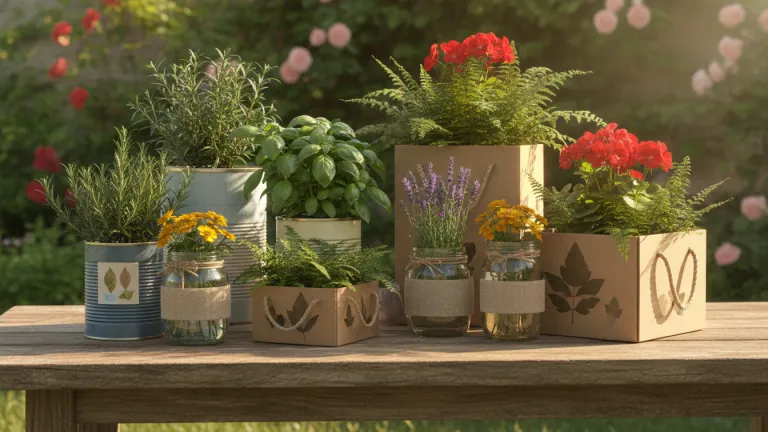
- Plant pots: with drainage holes in the bottom, cans of any size become charming pots. Large powdered milk cans are perfect for herbs and even small vegetables.
- Kitchen utensil holders: spatulas, wooden spoons, and whips look good in larger cans near the stove.
- Pencils and school supplies: medium-sized cans are ideal for organizing study or work space.
- Artistic storage containers: with spray paint or decoupage, cans become unique decorative pieces.
Attention: sand the cut edges of cans well to prevent cuts. Fine sandpaper or thick adhesive tape on the edges solves the problem safely.
Packaging in the sustainable kitchen: connection with conscious consumption
Reusing packaging goes hand in hand with more conscious food choices. When you store bulk ingredients in glass jars, you naturally start buying from farmers markets and stores that sell without disposable packaging. This virtuous cycle reduces waste generated before you even need to reuse or recycle anything.
If you want to deepen this connection between diet and sustainability, it’s worth reading about sustainable diet: what it is and why adopt it, which explores how our food choices directly impact the planet.
How to create the habit of reusing: small steps that work
Changing habits is the biggest challenge. We’ve separated some strategies based on gradual behavioral changes:
- Create a “treasure box”: reserve a corner in your kitchen or pantry to store clean, dry packaging before deciding what to do with it. This prevents you from discarding on impulse.
- Start with one type of material: don’t try to reuse everything at once. Start with just glass bottles, for example, for a month. When that becomes routine, add cardboard.
- Involve family or colleagues: collective challenges work. Propose a month without buying any new organizers — just using reused packaging.
- Document and share: photographing your creations and sharing on social media reinforces the habit and inspires other people.
- Evaluate what you really use: keep only what you’ll use soon. Accumulating packages with no clear purpose creates disorder and frustration.
Conclusion: small actions, real impact
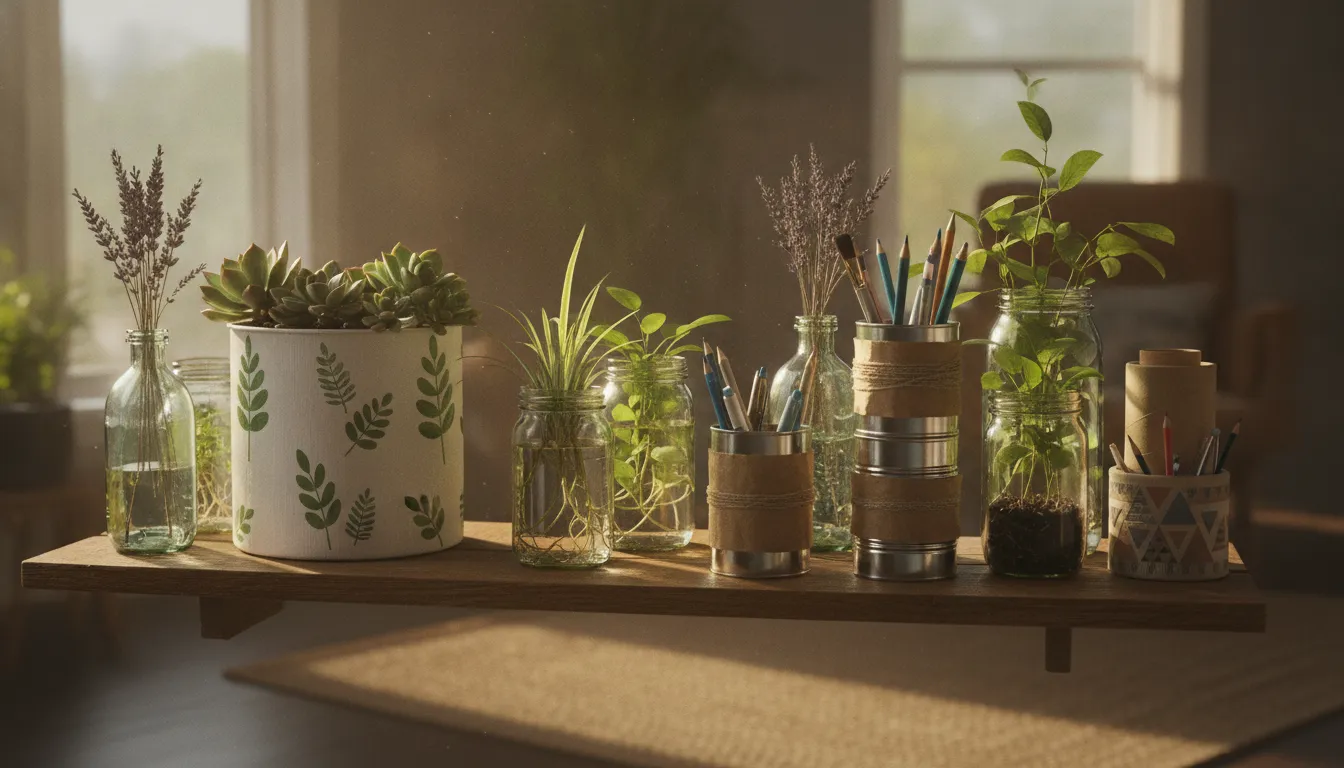
Reusing packaging won’t solve the solid waste crisis on its own — that requires deep structural changes in public policy, in the industrial model, and in the reverse logistics system. But each jam jar transformed into a small pot, each cardboard box turned into an organizer, and each can converted into a pencil holder represents a conscious choice that matters.
These gestures have value because they create habits, because they save resources, and because they show, in practice, that it’s possible to live well while consuming less. And the more people adopt these choices, the more collective pressure exists for companies and governments to also move in the right direction.
Start today with what you have at home. Choose a package, think of a new function for it, and put the idea into practice. The planet will thank you — and you’ll probably be surprised at how much creativity exists inside a simple cardboard box.
