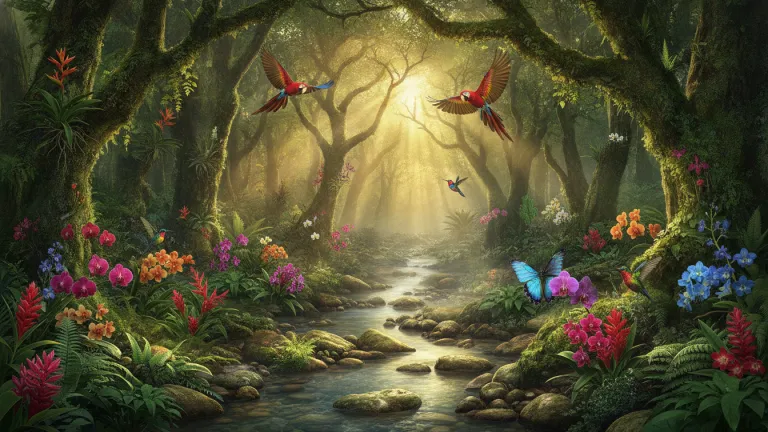
Imagine waking up one day and realizing that bees have disappeared. Without them, flowers aren’t pollinated, fruits don’t form, crops wither — and the chain begins to collapse in silence. This scenario isn’t science fiction: it’s the kind of domino effect that scientists around the world warn about when discussing the loss of biodiversity. And the problem is already underway.
Biodiversity is, in essence, the web of life. It represents the variety of living organisms on Earth — from microscopic bacteria to blue whales, from soil fungi to tropical forests — and the complex interactions that keep them in balance. Without this richness, the systems that sustain our food, our health, and even the climate we breathe begin to unravel. It’s no exaggeration to say that protecting biodiversity is protecting the basic conditions for human life.
But what exactly is biodiversity? Why is it threatened? And, more importantly: what can each of us do? In this article, we’ll explore these questions clearly and practically, because understanding the problem is the first step to being part of the solution.
What is Biodiversity: Much More Than “Many Animals”
The term biodiversity — a contraction of “biological diversity” — was popularized in the 1980s and today is used by science to describe three distinct levels of life diversity:
- Species diversity: the variety of plants, animals, fungi, and microorganisms that inhabit an ecosystem or the planet.
- Genetic diversity: variations in genetic material within the same species. It’s what allows some plants to resist a pest while others succumb.
- Ecosystem diversity: the variety of natural environments — forests, rivers, mangroves, savannas, coral reefs — each functioning as a different gear in the machine of life.
These three levels are interdependent. When one species disappears, it can drag others with it. When an ecosystem is destroyed, hundreds of species simultaneously lose their habitat. And when genetic diversity decreases, entire populations become vulnerable to disease and climate change.
Why Biodiversity Matters: Services Nature Provides (for Free)
Biodiversity isn’t just beautiful or interesting from a scientific perspective. It provides ecosystem services — functions that nature performs and that would be impossible or incredibly expensive to replicate artificially. Among the main ones:
Pollination and Food Security
About 75% of the world’s food crops depend, to some extent, on pollinators such as bees, moths, bats, and birds, according to data from the United Nations Food and Agriculture Organization (FAO). Without them, the production of fruits, vegetables, oil crops, and many other crops would be severely compromised.
Climate and Carbon Regulation
Forests, soils rich in organic matter, and oceans with healthy phytoplankton act as gigantic carbon reservoirs. The Amazon, for example, stores immeasurable amounts of carbon in its biomass — and when burned, releases that carbon into the atmosphere, accelerating climate change. The loss of biodiversity and climate change are, therefore, deeply connected crises.
Water and Air Purification
Plants filter pollutants, roots hold soil and prevent river sedimentation, mangroves function as natural barriers against floods. All of this is biodiversity working for free — and silently.
Medicine and Science
Much of modern medicine originates from natural compounds. Aspirin was inspired by substances found in willow bark; penicillin comes from fungi. Species not yet cataloged may contain the active ingredients for future treatments for diseases that have no cure today.
The Current State of Global Biodiversity: A Worrying Picture
The Intergovernmental Platform on Biodiversity and Ecosystem Services (IPBES) has published global assessments indicating that biodiversity is being lost at an unprecedented rate in recent human history. The Red List of the International Union for Conservation of Nature (IUCN) monitors the conservation status of species around the world and, in recent assessments, indicates that thousands of species are in different threat categories — from “vulnerable” to “critically endangered”.
The main drivers of this loss are well documented:
- Habitat destruction and fragmentation — mainly from deforestation for agriculture and urban expansion.
- Overexploitation — overfishing, illegal hunting, and uncontrolled resource extraction.
- Pollution — from plastics in the oceans to pesticides in soils and rivers.
- Invasive species — organisms introduced into ecosystems where they didn’t evolve, disrupting local relationships.
- Climate change — which alters temperature, rainfall patterns, and food availability at an accelerated pace.
In Brazil, the situation deserves special attention. The country is home to one of the world’s greatest biodiversities, with the Amazon, the Cerrado (considered one of the world’s most threatened biodiversity hotspots), the Atlantic Forest, the Pantanal, and other unique biomes. The Atlantic Forest, for example, has had more than 85% of its original coverage deforested over the centuries.
Biodiversity in Brazil: Wealth We Need to Protect
Brazil is considered a megadiverse country — one of 17 nations that together concentrate the majority of terrestrial and aquatic biodiversity on the planet. This wealth brings a proportional responsibility.
The Cerrado deserves special attention: it is Brazil’s second-largest biome, home to species like the maned wolf, the Spix’s macaw, and countless endemic medicinal plants. It’s also fundamental to the country’s hydrological cycles, feeding springs of important river basins such as the São Francisco, the Tocantins, and the Paraná. Despite this, the Cerrado receives less legal protection and public attention than the Amazon, and continues to be deforested at an accelerated rate.
The good news is that Brazil has a robust legal framework for environmental protection — including the Forest Code, the National System of Conservation Units (SNUC), and legislation on threatened species — and world-class research institutions, such as INPA (National Institute of Amazonian Research) and Embrapa, which develops technologies for sustainable use of biomes.
How Biodiversity Loss Affects Your Daily Life
It may seem distant, but biodiversity appears in your daily life in very concrete ways:
- Your breakfast depends on pollinators for your coffee, fruit, and honey.
- The medicines you take may have origins in natural compounds.
- The water you drink was filtered through soils and forests before reaching your glass.
- The climate in your city is regulated, in part, by vegetation around it — urban heat islands are more intense where there’s little vegetation.
- The price of food is affected by pests and extreme weather events, both worsened by biodiversity loss.
In other words: this isn’t a distant issue, reserved for biologists and environmentalists. It’s a matter of public health, food security, and economics.
What You Can Do to Protect Biodiversity: Practical Actions
The good news is that there are many ways to contribute — from small habit changes to more structural choices. See a practical and actionable list:
- Prefer sustainably sourced food. Give preference to local, organic producers who use practices that preserve soil and water. A sustainable diet is one of the choices with the greatest individual impact.
- Reduce meat consumption, especially beef. Extensive livestock farming is one of the main causes of deforestation and habitat loss in Brazil and worldwide.
- Avoid products with ingredients associated with deforestation. Check certification seals on products containing soy, palm oil, and wood.
- Care for pollinators. Avoid pesticides in your garden, plant native flowers, and leave small spaces with water and shelter for insects.
- Create a garden with native plants. Native plants provide food and habitat for local species of insects, birds, and other animals.
- Properly dispose of waste and packaging. Improperly discarded plastics reach rivers and oceans, affecting aquatic biodiversity.
- Support conservation organizations. Entities such as the Instituto Socioambiental (ISA), SOS Mata Atlântica, WWF-Brazil, and Conservation International work directly on protecting habitats and species.
- Educate and share. Talking about the subject with family and friends amplifies the impact of your individual choices.
- Hold political representatives accountable. Vote and pressure for solid environmental policies — conservation units, deforestation enforcement, and incentives for regenerative agriculture.
Conclusion: Biodiversity is Life — and Protecting It is Within Your Reach
Biodiversity isn’t a topic reserved for specialists or National Geographic documentaries. It’s the invisible foundation of everything we consider essential: food, water, health, stable climate. Losing it means weakening the pillars of our own existence.
The crisis is real, but despair is not the right answer. Throughout history, when societies decided to act — creating protected areas, restoring forests, banning substances that destroyed the ozone layer — the results were concrete and inspiring. Nature has an extraordinary ability to recover when we give it a chance.
Every choice you make at the market, in your garden, on your plate, and at the polls is a vote for a more or less diverse planet. Start small: plant a native flower, reduce food waste, share this article. The sum of individual actions, when multiplied by millions of conscious people, has the power to change trajectories.
Biodiversity needs allies. And you can be one — right now.
