Solar Energy in Apartments: Is Installation Possible?
Living in an apartment and wanting to contribute to clean energy might seem like a contradiction. After all, the roof isn’t yours, the facade belongs to the condominium, and collective decisions tend to take time. But the good news is that, yes, it’s entirely possible to generate or consume solar energy while living in an apartment — and the options available in 2026 have made this path more accessible than ever.
Brazil is one of the countries with the greatest solar potential in the world. According to ANEEL (National Electric Energy Agency), distributed solar energy generation has grown significantly in recent years, with millions of consumer units connected to the system. Apartments still represent a smaller share of this universe, but this is changing rapidly, driven by new regulations, cheaper technology, and a growing environmental awareness among urban residents.
If you live in an apartment and want to reduce your electricity bill, decrease your carbon footprint, and participate in the energy transition, this guide was made for you. We’ll explore the real options available today, what Brazilian legislation says, how it works in practice, and where to start.
What the Law Says: Solar Energy in Condominiums in Brazil
The main legal reference for distributed generation in Brazil is Law No. 14,300, of January 6, 2022, known as the Legal Framework for Micro and Mini Distributed Generation. It consolidated the rules for those who generate renewable energy and inject the surplus into the electrical grid, receiving credits to deduct from their electricity bill.
This law was an important milestone because:
- It provided greater legal security for consumers and investors
- It established clear rules for shared generation and remote self-consumption — two models especially relevant for apartments
- It defined a gradual tariff transition schedule for the coming years
- It allowed condominiums to organize as a collective generating unit
In practice, this means that a condominium can install solar panels on the roof or in common areas and distribute energy credits among the units, as long as it follows the rules of the local utility company and ANEEL resolutions.
Solar Energy Options Available for Apartments
There are three main paths for apartment dwellers who want to take advantage of solar energy. Each has different characteristics, costs, and degrees of autonomy.
Shared Generation in the Condominium
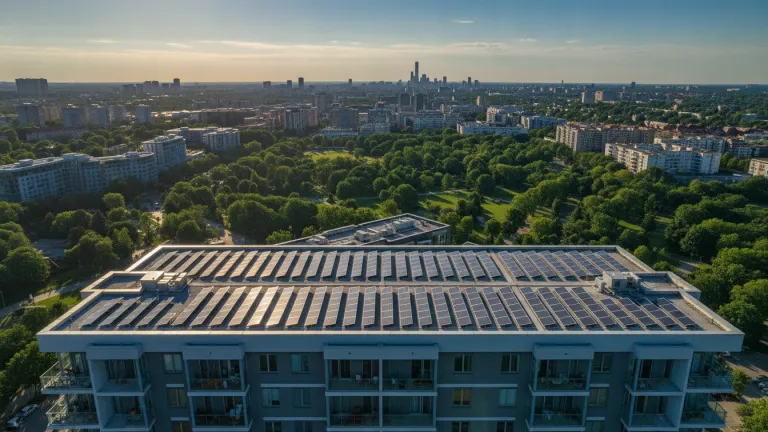
In this option, the condominium installs solar panels in common areas — roof, rooftop, covered parking — and the energy generated can be used to reduce costs for common areas (lighting, elevators, water pumps) or distributed proportionally among apartments, through a collective agreement.
It’s the most efficient solution in terms of utilization, but it requires approval at a condominium meeting and a more substantial collective investment. Generally, the return on investment usually occurs within a few years, depending on the system size and the condominium’s consumption.
Remote Self-Consumption (Solar Farm Outside the Condominium)
In this option, the resident or a group of residents invests in shares of a solar farm located elsewhere — it could be in a rural or industrial area — and receives energy credits on their bill, as if the energy were being generated right there.
Specialized companies offer this service through monthly subscriptions or share purchases. The resident doesn’t need to install anything in the apartment: they simply see a discount on their utility bill.
Solar Energy Subscription (Solar Energy by Subscription)
This is the simplest option and requires no significant initial investment. The resident signs up for a plan with a solar energy company that already has installed farms and distributes credits among its subscribers. The discount on the electricity bill usually ranges between 10% and 20%, depending on the company and plan.
In 2026, this market has grown considerably in Brazil, with several companies operating in different states. It’s worth researching the options available in your region and comparing conditions.
How to Install Solar Energy in Your Condominium: Step by Step
If you want to lead the initiative in your condominium, here’s a practical roadmap:
- Survey the condominium’s energy consumption: request from the building manager the latest energy bills for common areas and, if possible, individual units. This helps size the ideal system.
- Conduct a feasibility study: contact at least three companies specializing in solar energy to receive quotes and technical studies. Many do this assessment for free.
- Check the roof structure: not every roof is in condition to receive panels. The installation company should conduct a technical inspection to evaluate orientation, slope, available area, and structural load capacity.
- Present the proposal at a meeting: prepare a clear presentation with costs, expected return, and rules for distributing credits among units. Approval generally requires a qualified majority, as provided in the condominium bylaws.
- Hire the company and obtain approvals from the utility: after approval, the installation company handles the grid connection process with the local utility, following ANEEL standards.
- Monitor installation and activation: the approval and installation process can take several months, depending on the utility and system size.
- Monitor generation: most modern systems have apps that allow real-time monitoring of energy generation and accumulated credits.
Individual Solar Panels in Apartments: What’s Possible
A common question is: can I install panels in my apartment individually, without depending on the condominium?
The honest answer is: it depends — and in many cases, options are limited. Some points to consider:
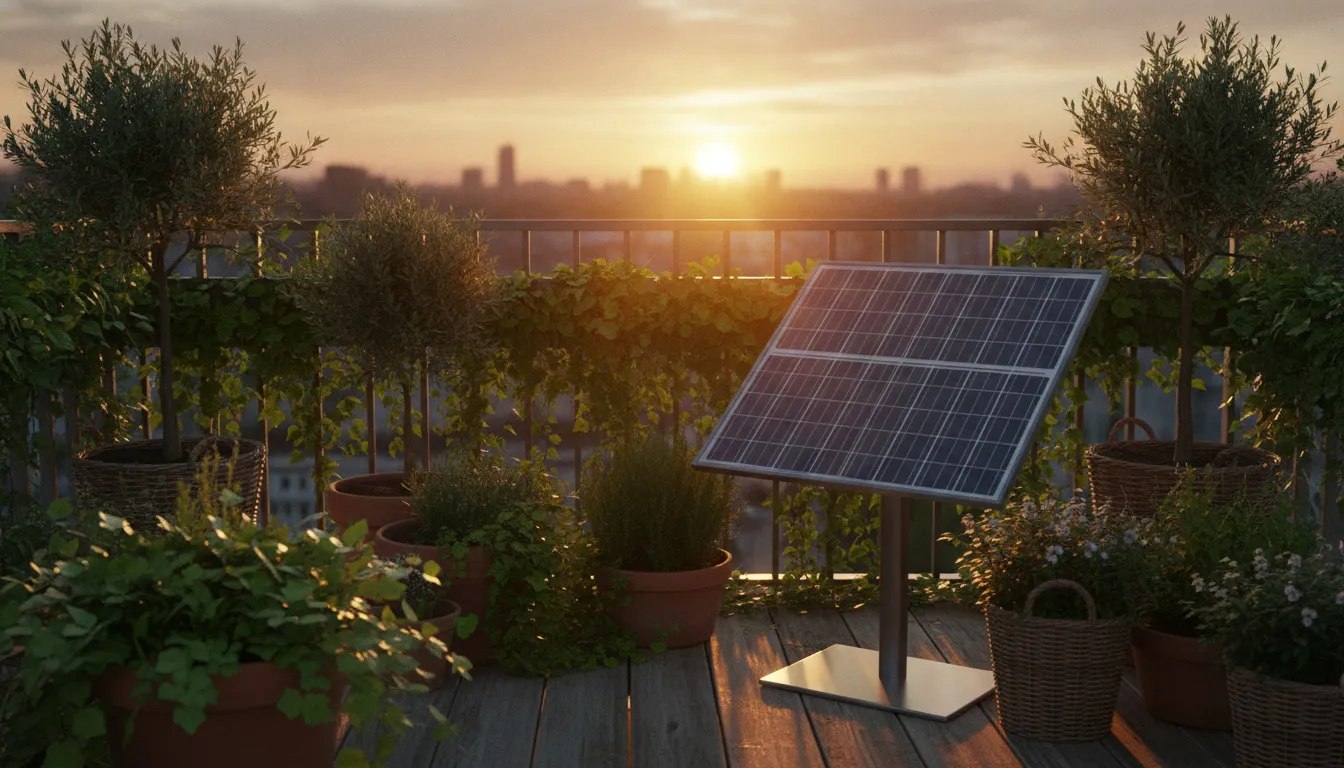
- Balcony and windows: there are flexible solar panels and small-scale solutions that can be installed on balconies or windows. However, the generation is very small, sufficient only to charge devices or power low-consumption items.
- Plug-and-play solar: in some countries, “plug and play” micro-generation solutions allow connecting small panels directly to an outlet. In Brazil, this option still faces regulatory and technical restrictions that limit its widespread use.
- Condominium approval for facade changes: any visible installation on the exterior of the apartment generally requires condominium approval, as it affects the building’s aesthetics.
For apartment dwellers who want an individual solution without bureaucracy, remote solar energy subscription remains the simplest and most immediate path.
Environmental and Economic Advantages of Adopting Solar Energy
Investing in solar energy — whether collectively or by subscription — brings concrete benefits:
- Reduced electricity bill: depending on the chosen option, savings can be significant over months and years.
- Less dependence on non-renewable sources: although Brazil has an electrical grid with strong hydroelectric participation, reservoirs suffer during drought periods, and solar energy complements this grid efficiently.
- Reduced carbon footprint: solar generation doesn’t emit greenhouse gases during operation, contributing to the country’s climate goals.
- Property appreciation: properties with solar energy systems or linked to condominiums with their own generation tend to be more valued in the market.
- Support for the clean energy market: each adoption strengthens the ecosystem of companies and professionals specializing in renewable energy in Brazil.
Adopting sustainable habits goes beyond energy. Just as small changes in electricity consumption make a difference, other daily choices also build a more conscious lifestyle — such as learning to keep fresh food longer without wasting, reducing waste and the environmental impact of food.
What to Ask Before Hiring a Solar Energy Company
Whether for the condominium or an individual subscription, ask these questions before signing any contract:
- Is the company accredited by ANEEL or does it operate according to local utility standards?
- What is the estimated timeframe for credits to start appearing on the bill?
- How does generation monitoring work?
- What happens if the farm or system has technical problems?
- Is there a minimum contract commitment? What are the cancellation conditions?
- Do credits expire? After how long?
- Does the company offer a warranty on equipment and installation?
Researching complaints on your city’s Procon website and on Reclame Aqui is also good practice before signing any contract.
Conclusion: Your Next Action Can Start Today
Living in an apartment is no excuse to stay out of the solar energy revolution. Options exist, legislation has evolved, and the market is increasingly accessible. Whether leading an initiative in your condominium, signing up for a remote solar energy plan, or simply presenting the idea to the building manager, you have the power to take the first step now.
Start by researching solar energy subscription companies available in your city. If you prefer the collective path, schedule a conversation with the building manager and see if other residents are interested. Every conscious choice, no matter how small it seems, adds up to a much larger movement.
The energy transition doesn’t happen only in large power plants or government decisions — it also happens in every apartment, in every condominium meeting, in every bill with an earned discount. And it starts with information and the will to act.
