Why public transit is one of the environment’s greatest allies
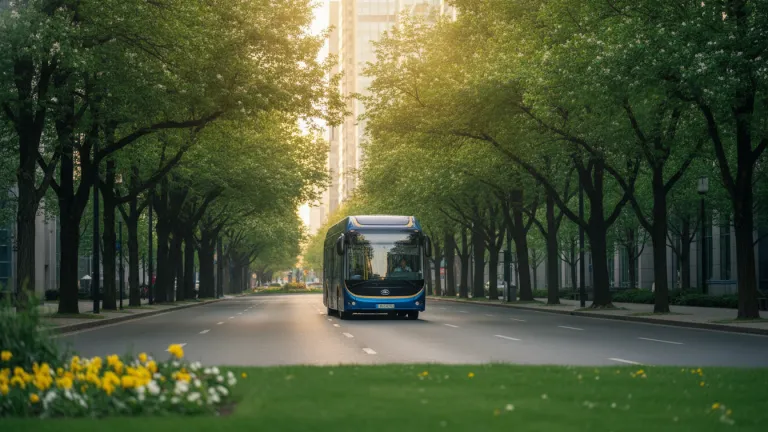
Picture this scenario: it’s 8 AM, and millions of commuters are stuck in traffic, each in their own car, burning fuel and releasing gases into the atmosphere. Meanwhile, a single articulated bus transports up to 160 passengers at once, occupying a fraction of the space and emitting a minimal portion of what all those individual vehicles would emit combined. This simple comparison summarizes one of the most powerful arguments for public transit: it is, in essence, a technology of efficiency — both energy-wise and environmentally.
The transportation sector is one of the largest contributors to greenhouse gas emissions worldwide. According to data from the Intergovernmental Panel on Climate Change (IPCC), transportation accounts for approximately 16% of global CO₂ emissions, with passenger road transport representing a significant share of that total. In Brazil, the picture is no different: according to the Greenhouse Gas Emissions and Removals Estimation System (SEEG), the energy sector — which includes transportation — is one of the main sources of national emissions, competing with deforestation.
The good news is that every mobility choice we make has a real impact. Using public transit more frequently is one of the concrete actions anyone can take today to reduce their carbon footprint. And throughout this article, you’ll understand exactly why — and how to get started.
The environmental impact of private cars in Brazil
The private car is undoubtedly a symbol of freedom and convenience in the Brazilian mindset. But its environmental costs are high. The fleet of light vehicles in Brazil has surpassed 40 million units in recent years, according to historical data from the National Traffic Department (Denatran/Senatran). Most of this fleet still runs on combustion engines, burning gasoline or ethanol.
Beyond CO₂ emissions, individual vehicles release particulate matter, nitrogen oxides (NOx), and volatile organic compounds, which directly harm air quality in urban centers. São Paulo, for example, ranks among the Brazilian cities with the highest levels of air pollution, and motor vehicles are identified as one of the central causes of this problem.
There’s also the cascade effect: more cars require more roads, more parking lots, and more horizontal urban expansion — processes that consume land, fragment ecosystems, and increase stormwater runoff, worsening floods.
How public transit reduces emissions: the numbers behind the efficiency
The environmental logic of public transit lies in the dilution of emissions per passenger. When a single bus replaces dozens of private cars, the volume of fuel burned per person drops dramatically.
The International Association of Public Transport (UITP) documents that public transit is significantly more efficient in terms of emissions per passenger-kilometer than private automobiles. Electric metros, in turn, emit virtually zero CO₂ at the point of use — especially in countries where the electrical grid is cleaner, as is the case in Brazil, with its strong participation of hydroelectric, wind, and solar power.
| Mode of transport | Relative emission per passenger |
|---|---|
| Private car (combustion engine) | High |
| Conventional bus with passengers | Moderate to low |
| Electric or natural gas bus | Low |
| Metro / electric train | Very low to zero (at point of use) |
Note: values vary according to average occupancy, vehicle technology, and electricity source used.
Beyond emissions, public transit occupies much less space per passenger transported. A BRT (Bus Rapid Transit) corridor can move tens of thousands of people per hour in a single lane — something impossible for individual cars.
Electric public transit: the greenest frontier of urban mobility
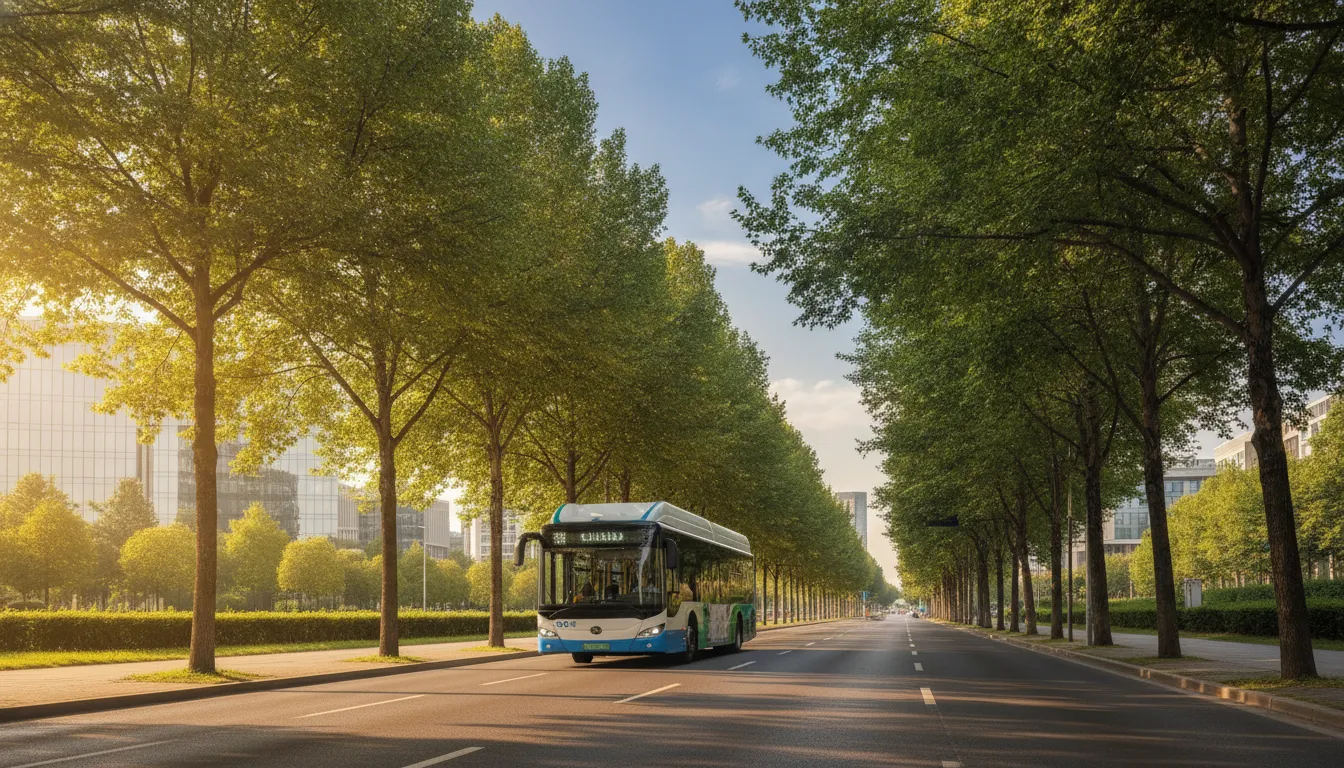
One of the most promising transformations underway in Brazil and worldwide is the electrification of public transit. Cities like São Paulo and Belo Horizonte already operate fleets of electric buses in pilot programs and gradual expansion. Globally, cities like Shenzhen, China, electrified virtually their entire bus fleet in the previous decade.
In Brazil, the combination of electric transport with the predominantly renewable energy matrix creates a powerful synergy: when an electric bus runs on energy generated by hydroelectric, wind, or solar plants, emissions throughout the entire lifecycle of transport fall significantly.
Metro expansion is also strategic. Investing in metro lines in medium and large cities is one of the most effective ways to remove cars from the streets and reduce emissions structurally — not just temporarily.
Benefits beyond climate: clean air, less noise, and better quality of life
The environmental argument for public transit goes beyond CO₂. There are direct and immediate benefits for public health and urban well-being:
- Improved air quality: fewer vehicles in circulation means less particulate matter and NOx, pollutants associated with respiratory and cardiovascular diseases.
- Reduced noise pollution: heavy traffic is one of the main sources of urban noise, with proven impacts on mental health and sleep.
- More space for green areas: cities with good public transit tend to invest less in road infrastructure and more in parks and sidewalks — contributing to urban biodiversity.
- Less soil impermeabilization: parking lots and roads occupy enormous impermeable areas; reducing the need for these structures helps balance the urban hydrological cycle.
Just as understanding what Amazon deforestation is destroying helps us value intact ecosystems, understanding the environmental cost of our mobility model helps us make more conscious daily decisions.
How to use public transit more: a practical step-by-step guide
Changing mobility habits may seem complicated, but with simple planning, it’s more feasible than it appears. Here’s how to start:
- Map your routine: identify which trips you make most frequently — work, school, shopping. These are the priority targets for replacing the car.
- Explore mobility apps: apps like Moovit, Google Maps, and municipal apps show routes, schedules, and connections in real time. Test before relying on them in practice.
- Start with one day a week: you don’t need to be radical. Replacing the car with a bus or metro once or twice a week already makes a difference and helps you build the habit.
- Combine transport modes: bicycle + metro, walking + bus. Intermodality is your ally. Many Brazilian cities have bike parking at metro and train stations.
- Plan ahead: check departure times with extra time. The biggest obstacle to public transit is usually the feeling of uncertainty — and planning solves that.
- Know the economic benefits: beyond environmental gains, you save on fuel, maintenance, insurance, and parking. The cost of public transit is, on average, much lower than the real cost of keeping a car running.
- Share the experience: encourage coworkers to take the same bus or metro route together. Positive social pressure is one of the most effective ways to change collective behaviors.
What cities and public policies need to do
Environmental responsibility doesn’t fall solely on individuals. For public transit to truly be a viable alternative for most of the population, there must be structural investment and consistent public policies.
Some measures that make a real difference:
- Expansion of metro and BRT networks in medium and large cities
- Progressive electrification of municipal bus fleets
- Fare integration between different transport modes
- Creation of exclusive bus lanes on congested corridors
- Subsidies and tax incentives for public transit companies that adopt cleaner technologies
- Urban planning oriented toward public transit (more compact cities with mixed land use)
As citizens, we can push for these changes by voting for candidates committed to sustainable mobility, participating in public hearings, and supporting local urban mobility initiatives.
Conclusion: every bus ride is an environmental act
Using public transit isn’t just a matter of convenience or savings — it’s a choice with real consequences for the climate, for the air we breathe, and for the type of city we want to live in. In 2026, with evidence about the climate crisis more consolidated than ever, every mobility decision matters.
You don’t need to sell your car tomorrow. Start small: try a week with more metro, more bus, more bicycle. Notice how you feel, how much you save, and how much you contribute. Small individual changes, multiplied by millions of people, build real collective transformations.
And if you want to continue exploring ways to reduce your environmental impact in daily life, also check out our guide on how to start planting at home today — another simple, accessible action with tangible positive impact for the planet.
The environment needs allies. And public transit is already waiting for you at the next stop.
