
Every year, tons of batteries and electronic devices are thrown into regular trash in Brazil — mixed with food scraps, paper, and plastic, as if they were just another disposable everyday item. The problem is that these waste materials contain substances like mercury, lead, cadmium, and lithium, which can contaminate soil and groundwater for decades. When these materials leak in landfills, the damage reaches the food chain, the water we drink, and the biodiversity that sustains ecosystems.
The good news is that there’s a regulated, accessible solution that’s becoming increasingly available in Brazilian cities: reverse logistics. And the best part is that you don’t need any special equipment, technical knowledge, or much time to do your part. You just need to know where to take items, what to separate, and how to organize this habit into your daily routine.
This article is a practical guide for anyone who wants to dispose of batteries and electronics responsibly — without guilt, without complications, and with real impact in the real world.
Why batteries and electronics are so dangerous in regular trash
When a common alkaline battery ends up in household trash and then in a landfill, it begins to deteriorate over time. Its internal components — including manganese dioxide, zinc, and in some older types, mercury — can leak into the soil. Mercury, even in small amounts, is a severe neurotoxin: it affects the central nervous system of humans and animals and accumulates in the food chain through a process called bioaccumulation.
Lithium batteries, found in cell phones, laptops, and electric vehicles, have a different risk profile: besides chemical contamination, they can cause fires when damaged or improperly stored. This type of accident has been recorded at sorting centers and collection trucks in different countries, representing a growing risk as portable device consumption increases.
Larger electronic equipment — televisions, computers, tablets, printers — are called WEEE (Waste Electrical and Electronic Equipment) or simply e-waste. According to data from the United Nations Environment Programme (UNEP), the world generates tens of millions of tons of e-waste per year, and only a small fraction is properly recycled. Brazil is one of the largest e-waste generators in Latin America, a scenario that makes individual and collective action even more urgent.
What Brazilian law says about electronic disposal
Brazil has one of the most advanced legislations in Latin America on this topic. The National Solid Waste Policy (PNRS), established by Law No. 12,305/2010, created the mandatory reverse logistics system for a series of products, including batteries, tires, lubricating oils, pesticides, and electronics.
In practice, this means that manufacturers and importers are legally responsible for taking back the products they sell at the end of their useful life. They must create or participate in collection and proper disposal systems. Consumers, in turn, have the right — and responsibility — to deliver these items to accredited collection points, instead of throwing them in regular trash.
In 2025, the federal government reinforced the goals of the National Reverse Logistics Plan, expanding the requirement for collection points and traceability of hazardous waste. This means that in 2026, the number of locations for proper disposal is greater than in previous years — which makes it much easier for those who want to do the right thing.
How to properly dispose of batteries: step by step
- Separate batteries from regular trash as soon as you notice they no longer work. Store them in a closed container (a small cardboard box or a jar with a lid works well).
- Don’t crush, puncture, or expose them to heat. Damaged batteries can leak or, in the case of lithium ones, catch fire.
- Locate the nearest collection point. You can use the website or app of the Descarte Correto Program (www.descartecorreto.com.br) or search on the Brazilian Consumer Defense Institute (Idec) map. Supermarkets, pharmacies, electronics stores (like Magazine Luiza, Casas Bahia, Fast Shop), and hardware stores usually have collectors.
- Deliver the batteries to the identified collector. No registration or payment is required — it’s a free service mandated by law.
- Repeat the habit. Keep the collection container in a visible place in your home to remember to always separate them.
How to dispose of electronics: guide for each situation
Devices that still work
Before disposing, think: the device can have a second life. Cell phones, tablets, and laptops in good condition can be donated to public schools, charities, social projects, or sold on used goods platforms. This extends the product’s life cycle and reduces demand for manufacturing new devices.
Devices that no longer work
For broken or obsolete equipment, follow these steps:
- Back up and delete your personal data before anything else. On cell phones, use the “factory reset” option. On computers, format the hard drive.
- Remove the batteries, if possible, and dispose of them separately in the battery collector.
- Look for manufacturer take-back programs. Samsung, Apple, Dell, LG, and other brands have their own return and recycling programs. Check the brand’s official website.
- Search for e-waste collection points. Green Eletron (www.greeneletron.org.br) is one of the main reverse logistics managers for electronics in Brazil and provides a map with drop-off points throughout the country.
- Look for local recycling cooperatives. Many urban cooperatives accept electronics and have partnerships with certified disassembly companies.
- Check your municipality’s calendar. Many city halls hold periodic e-waste collection drives. It’s worth following the city hall’s social media profiles so you don’t miss them.
Where to find collection points: practical resources
| Type of waste | Where to find collection points |
|---|---|
| Small batteries | Supermarkets, pharmacies, electronics stores, stationery shops |
| Cell phone and laptop batteries | Carrier stores, technical assistance centers, computer stores |
| Cell phones and tablets | Brand take-back programs, Green Eletron, municipal collection drives |
| Computers and peripherals | Green Eletron, recycling cooperatives, municipal collection drives |
| Appliances (TVs, refrigerators) | Manufacturer disposal programs, technical assistance centers, collection drives |
Practical tip: before leaving home with your electronic device, call or send a message to the collection point to confirm they still accept that type of item. Policies may vary.
Common myths about battery and electronics disposal
- “Regular alkaline batteries aren’t harmful.” They are. Even without mercury (which was eliminated from Brazilian alkaline batteries decades ago), modern batteries contain zinc and manganese that contaminate soil as they decompose. Proper disposal is still necessary.
- “My device is too old to recycle.” No electronic is too old for recycling. Even the oldest components contain recoverable metals like copper, gold, aluminum, and silver.
- “Recycling electronics is expensive and complicated.” For consumers, it’s free at most collection points. The complexity falls on companies and cooperatives, not on those who deliver.
- “Throwing it in recyclable trash solves it.” It doesn’t. Conventional recyclable waste (paper, plastic, glass, metal) is not processed the same way as electronics. Batteries and electronics need specialized treatment.
Reduce before disposing: the best waste is waste that doesn’t exist
Proper disposal is essential, but the best strategy starts earlier: reducing consumption and extending the lifespan of devices. Some simple actions make a big difference:
- Prefer rechargeable batteries for remote controls, toys, and other frequent uses. They last hundreds of cycles and drastically reduce the amount of waste generated.
- Repair before replacing. Independent repair shops can fix cell phones with cracked screens, weak batteries, or defective buttons for a fraction of the cost of a new device.
- Don’t upgrade on impulse. Keeping a functional cell phone for one or two more years has a real environmental impact, as most carbon emissions from a smartphone occur during manufacturing, not during use.
- Choose brands with solid sustainability and repair programs that offer longer technical support and accessible replacement parts.
Just as buying from local producers is worthwhile when thinking about sustainable food, choosing durable products with post-consumer responsibility is a powerful way to vote with your money for a fairer system.
Conclusion: your action matters — and it’s easier than it seems
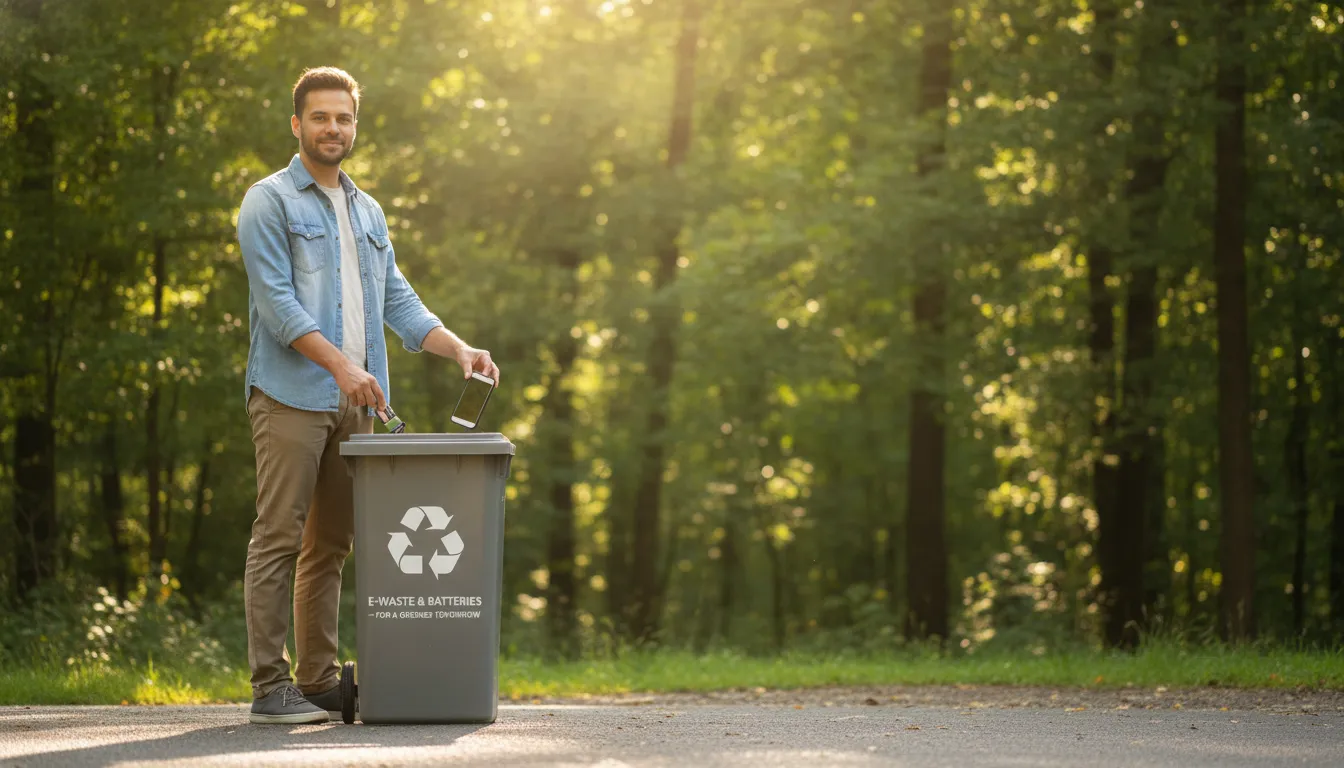
Properly disposing of batteries and electronics doesn’t require sacrifice. It mainly requires information and a small habit adjustment: storing used batteries in a small container, stopping by a collector on the way to the supermarket, checking the return program before buying a new device.
Every gesture counts. When multiplied by millions of people, this gesture transforms into tons of hazardous material that don’t reach the soil, water, or air. It transforms into copper, gold, and aluminum recovered and reinserted into the production chain without needing new mining. It transforms into healthier communities and less pressured ecosystems.
The choice is within your reach — literally. Next time a battery runs out, don’t throw it in the trash. Save it. Take it. Make a difference.
