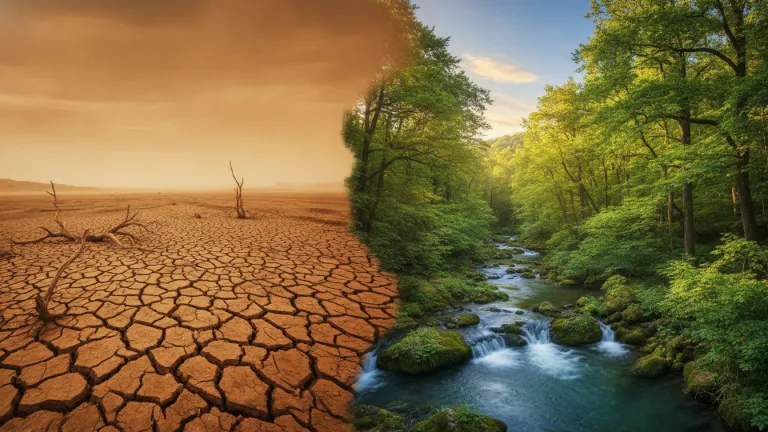
Have you ever noticed how these two terms appear together in the news, almost always used as synonyms? “Global warming is melting the polar ice caps.” “Climate change causes historic droughts.” In practice, most people use both expressions interchangeably — and that’s understandable. But there is a real difference between them, and understanding it isn’t just a matter of linguistic precision: it’s the first step toward better comprehending what’s happening to our planet and what we can do about it.
The confusion between these two concepts is longstanding and has roots even in scientific communication. For decades, “global warming” was the preferred term among researchers and the media to describe the phenomenon they were observing. Over time, it became clear that the problem was broader, more complex, and harder to summarize in two words. That’s where “climate change” comes in — a term that carries more nuances and is now preferred by the world’s leading scientific bodies, including the Intergovernmental Panel on Climate Change (IPCC).
In this article, we’ll break down each of these concepts, explain why the difference matters in everyday life, and most importantly, show how this understanding can guide more conscious choices and real actions. Because ultimately, understanding the problem is the first step to being part of the solution.
Global Warming: what exactly is this phenomenon?
Global warming refers specifically to the increase in Earth’s average surface temperature over time, caused mainly by the rise in concentration of greenhouse gases (GHGs) in the atmosphere — such as carbon dioxide (CO₂), methane (CH₄), and nitrous oxide (N₂O).
These gases function like a blanket around the Earth: they allow solar energy to enter but make it difficult for heat to escape back into space. The more GHGs in the atmosphere, the thicker this “blanket” becomes — and the more the planet warms.
According to the IPCC, in its Sixth Assessment Report (AR6), the global average temperature has already increased approximately 1.1°C to 1.2°C compared to pre-industrial levels (second half of the 19th century). This number may seem small, but it represents an enormous change for the planet’s climate, ecological, and social systems.
The main cause of this warming is human activity — especially the burning of fossil fuels (coal, oil, and natural gas), deforestation, and certain agricultural and industrial practices. This isn’t speculation: it’s scientific consensus, supported by decades of research and data collected worldwide.
Climate Change: a broader and more complete concept
If global warming is the cause (or rather, one of the main symptoms of GHG emissions), climate change is the set of effects that this warming causes on Earth’s climate systems over time.
Climate change encompasses:
- Increase in global and regional average temperature
- Changes in rainfall and drought patterns
- Sea level rise
- Melting of glaciers and polar ice caps
- Increase in frequency and intensity of extreme weather events (hurricanes, heat waves, floods)
- Ocean acidification
- Displacement of climate zones and impacts on biodiversity
In other words: global warming is one of the mechanisms driving climate change, but the concept of climate change is much more comprehensive. It includes both human-caused alterations (anthropogenic climate change) and natural variations — although today the human component is, by far, the dominant factor.
This is why the IPCC and the UN have preferred the term “climate change” in recent decades: it better represents the complexity and scope of the problem.
Why does this difference matter in practice?
This distinction isn’t just semantic. It has real consequences for how we think, communicate, and act on the problem.
1. Avoids misinterpretations When we hear “global warming” and then see an intense cold wave or a historic snowstorm, it’s easy to fall into the trap of thinking: “but where’s the warming?” Climate change explains that the increase in global temperature doesn’t mean every place will be warmer all the time — it means the climate system as a whole becomes more unstable and unpredictable.
2. Expands the debate beyond temperature Talking only about “warming” can lead to partial solutions. When we understand climate change in all its dimensions, we realize we also need to address water security, food security, biodiversity, public health, and social inequality — all of which are affected by climate changes.
3. Guides public policies and individual actions Governments that understand the difference develop more effective policies. And informed citizens demand more and better from their representatives — in addition to making choices more aligned with the reality of the problem.
Brazil at the center of climate change
Brazil occupies a unique position in this context. It’s one of the megadiverse countries on the planet, housing the world’s largest tropical forest — the Amazon — and unique biomes such as the Cerrado, Caatinga, and Pantanal. At the same time, it’s one of the largest greenhouse gas emitters among developing nations, with deforestation historically accounting for a large portion of these emissions.
The effects of climate change are already being felt concretely in the national territory:
- Prolonged droughts in the Northeast and Central-West regions affect agricultural production and water supply
- More frequent and intense floods and landslides in the South and Southeast regions
- Historic-scale wildfires in the Pantanal, Cerrado, and Amazon
- Changes in rainfall patterns that impact hydroelectric power generation — responsible for a significant portion of Brazil’s electricity matrix
The Ministry of Environment and Climate Change has been working on adaptation and mitigation strategies, and Brazil has made climate commitments under the Paris Agreement — but the effective implementation of these goals remains an ongoing challenge in 2026.
Mitigation vs. Adaptation: two complementary paths
Understanding the difference between global warming and climate change also helps us distinguish two essential strategies:
Mitigation: reducing the causes of global warming
Mitigating means attacking the roots of the problem — that is, reducing greenhouse gas emissions and increasing the carbon absorption capacity of ecosystems. Examples:
- Transition to renewable energy sources (solar, wind, hydro)
- Reforestation and protection of native forests
- Transportation electrification
- Changes in agricultural and livestock practices
- Reduction of food waste
Adaptation: living with the effects of climate change
Adapting means adjusting human and natural systems to deal with impacts that are already inevitable — after all, part of climate change is already underway, regardless of what we do from now on. Examples:
- Construction of infrastructure resilient to extreme events
- Early warning systems for floods and droughts
- Development of agricultural varieties adapted to heat and lack of rain
- Urban planning that considers climate risks
Both approaches are necessary and complementary. It’s not about choosing between one or the other.
What you can do today: practical and accessible actions
Understanding the concepts is important, but real change happens in practice — and many actions are within your reach right now, regardless of where you live or how much you earn.
Actions to reduce your contribution to global warming
- Reduce meat consumption, especially beef — livestock is one of the largest sources of methane in Brazil
- Save electricity at home: switch to LED bulbs, turn off devices on standby, use energy-efficient appliances
- Prefer public transportation or cycling whenever possible
- Reduce, reuse, and recycle — the lifecycle of products has a direct impact on emissions
- Avoid food waste: in Brazil, tons of food are wasted every year, generating unnecessary methane emissions in landfills
- Plant trees or support reforestation projects — every bit of carbon absorption counts
- Consider installing solar energy at home — costs have dropped significantly in recent years and the financial return has proven attractive for many Brazilian families (see more at Energia Solar Residencial: Vale a Pena em 2026?)
Actions to adapt and help your community
- Learn about the climate risks in your region
- Support and vote for politicians committed to concrete climate agendas
- Participate in or encourage local urban tree-planting initiatives
- Share quality information with friends and family — fighting climate misinformation is a form of action
If you want to take a step further and transform your routine more broadly, the article Sustentabilidade no Dia a Dia: por onde começar provides a complete and accessible guide for those who want to act without complicating things.
Quick summary: global warming x climate change
| Concept | What it is | Scope |
|---|---|---|
| Global warming | Increase in Earth’s average temperature caused by GHGs | Specific (temperature) |
| Climate change | Set of alterations in Earth’s climate systems | Broad (temperature, rainfall, sea level, extreme events, biodiversity, etc.) |
| Relationship between them | Global warming is one of the main mechanisms driving climate change | Complementary |
Conclusion: understanding to act better
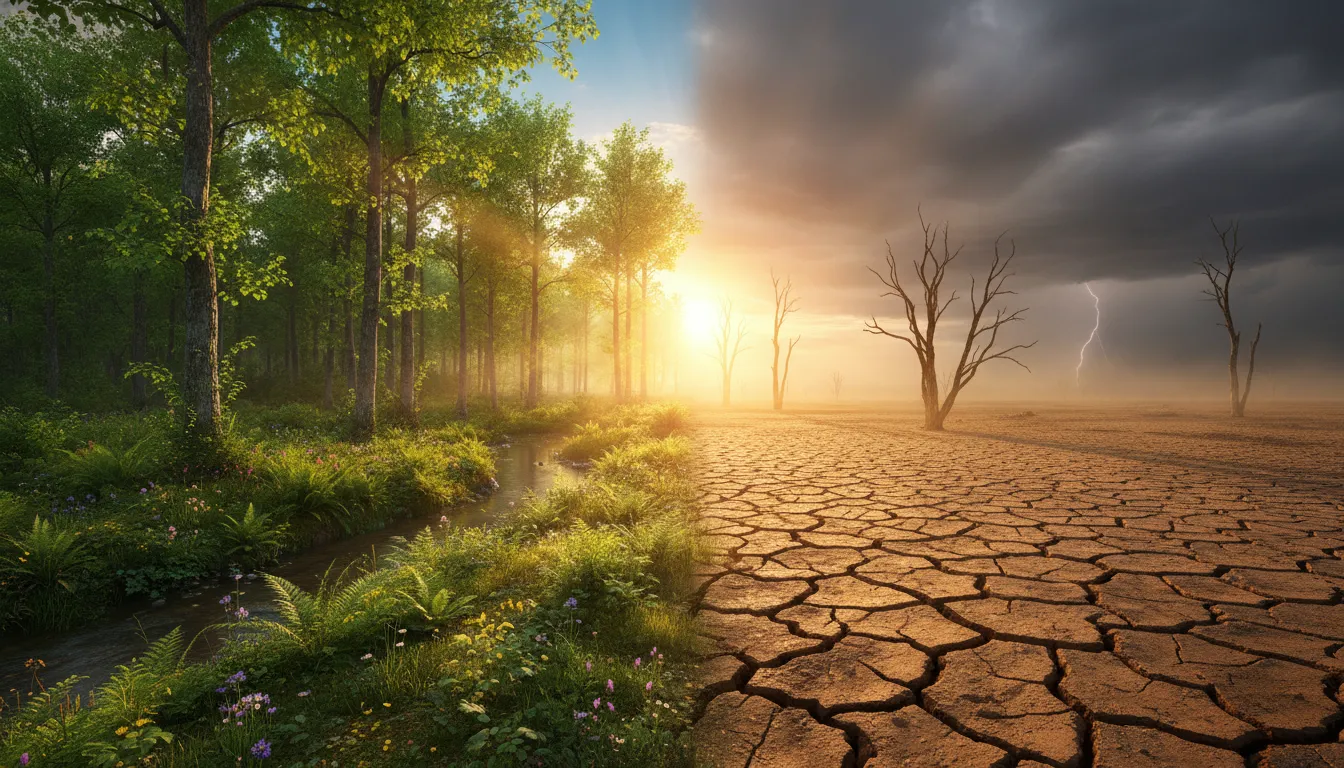
The difference between global warming and climate change isn’t a technical detail reserved for scientists. It’s a distinction that helps us see the problem more clearly, avoid misinterpretations, and act more effectively — whether in daily choices or when demanding accountability from companies and governments.
The scenario is challenging, but it’s far from hopeless. In 2026, we have technologies, scientific knowledge, and concrete examples that the transition to a more sustainable world is possible — and is happening. What’s often missing is quality information and the perception that each person is part of this transformation.
You don’t need to solve global warming alone. But you can start today, one step at a time. And that already makes a difference.
