Climate Change in Brazil: What’s Already Changing
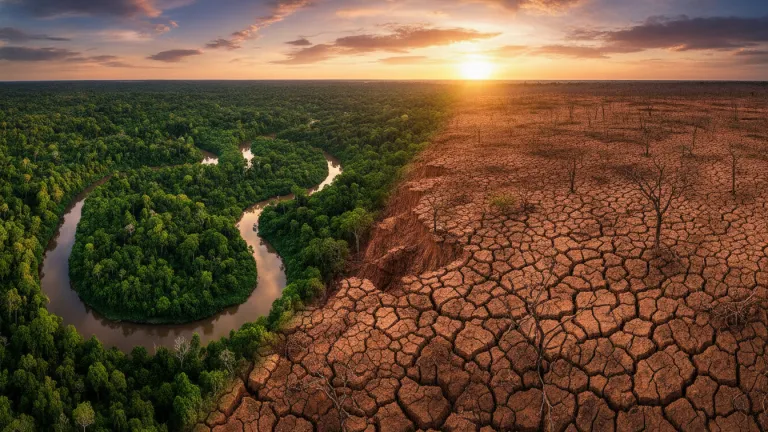
The Brazil of 2026 is no longer the same as it was a decade ago. Droughts lasting months where there was once abundant rainfall, floods that destroy cities in just hours, heat waves that break historical records — what once seemed like a distant science fiction scenario is now the daily reality for millions of Brazilians. Climate change has ceased to be a future threat and has become a present reality, felt in wallets, health, and daily life from north to south across the country.
Brazil holds a unique position in this global debate. It is simultaneously one of the most vulnerable countries to the effects of global warming — due to its incomparable biodiversity, agricultural dependence, and geographical extent — and a central actor in solutions, given that it houses the world’s largest tropical forest and has one of the greatest renewable energy potentials on the planet. Understanding what has already changed in our territory is the first step toward acting with greater awareness.
This article gathers concrete evidence of what has already transformed in Brazil’s climate, explains the mechanisms behind these changes, and points to real pathways for each person to contribute. Because information without action is just anxiety — and the planet needs directed energy.
What Climate Data Reveals About Brazil
The National Institute of Meteorology (INMET) has been recording climate behavior across Brazilian territory for decades. The most recent data confirms trends that scientists have long warned about: rising average temperatures, increasingly irregular rainfall patterns, and extreme events occurring with greater frequency and intensity.
The IPCC (Intergovernmental Panel on Climate Change) report, especially the Sixth Assessment Report (AR6), published in cycles between 2021 and 2022, indicates that tropical South America — where Brazil is concentrated — is one of the world’s regions at highest risk of combined impacts: temperature increases, rainfall reduction in some sub-regions, and intensification of extreme events.
In Brazil, average temperature has already increased noticeably throughout the 20th century and the first decades of the 21st century. The Northeast and Central-West are the regions most affected by this thermal pressure, while the South faces a paradox: more rain, but in a more concentrated and violent form, alternating with more intense drought periods.
The Water Crisis and the Transforming Semi-Arid Region
The Brazilian Semi-Arid region, which spans parts of nine Northeastern states and northern Minas Gerais, is one of the country’s most impacted regions by climate change. Embrapa Semi-Arid has been documenting changes in precipitation patterns that directly affect family farming and access to drinking water.
The El Niño phenomenon, which returned strongly in 2023 and left traces well beyond its official cycle, demonstrated how natural climate events, amplified by global warming, can devastate crops, dry up reservoirs, and force populations to migrate to urban centers. The Cisterns Program, maintained by the federal government, is an example of adaptation public policy — but demand has historically exceeded supply.
In the Southeast, the water crisis that affected São Paulo in 2014 and 2015, when the Cantareira System reached critical levels, was a warning sign that many chose to forget. Since then, experts from ANA (National Water and Sanitation Agency) have warned that the combination of urban growth, deforestation of springs, and altered rainfall patterns makes the risk of new crises increasingly high.
The Amazon, Cerrado, and “Flying Rivers” at Risk
Talking about climate in Brazil without mentioning the Amazon is impossible. The Amazon rainforest functions as a moisture pumping system that feeds rainfall across much of the South American continent — the so-called “flying rivers,” water vapor currents that travel thousands of kilometers and irrigate Central-West, Southeast, and even Southern Brazil.
The problem is that this system depends on a living, dense forest. Deforestation in the Amazon weakens this water pump. Researchers from the National Institute for Amazon Research (INPA) and the University of São Paulo (USP) have been studying so-called “tipping points” of the forest — thresholds beyond which parts of the biome may enter an irreversible process of savanization.
The Cerrado, Brazil’s second-largest biome, has already lost more than half of its original vegetation cover, according to MapBiomas data. Considered the “birthplace of waters” in Brazil — as it harbors the headwaters of major river basins such as the São Francisco, Araguaia, and Tocantins — a degraded Cerrado means rivers with less water and agriculture increasingly dependent on artificial irrigation.
Extreme Events: Floods, Droughts, and Heat Waves
Recent years have left deep marks on Brazil. The floods in Rio Grande do Sul in 2024 were considered the largest climate disaster in the state’s history, affecting hundreds of municipalities and displacing hundreds of thousands of people. Researchers from the National Center for Monitoring and Early Warning of Natural Disasters (Cemaden) point out that events of this type tend to become more frequent as the global climate warms.
At the other extreme, the historic drought that affected the Amazon and Pantanal in 2023 and 2024 resulted in devastating fires, drastic drops in river levels, fish deaths, and difficulties in river transportation — essential for riverside communities. The Pantanal, considered the world’s largest tropical wetland, has been suffering from the combination of extreme drought and fires of historic proportions.
Heat waves have also become more intense. INMET has recorded temperature records in various Brazilian cities in recent years, with heat index values exceeding 50°C in metropolitan areas, disproportionately impacting low-income populations living in areas with little tree cover and no access to air conditioning.
Brazil in the Global Climate Agenda
Brazil is a signatory to the Paris Agreement and has submitted its Nationally Determined Contributions (NDCs), commitments to reduce greenhouse gas emissions. The country has an important structural advantage: its electricity matrix is predominantly renewable, with emphasis on hydropower, wind energy, and solar photovoltaic — sectors closely monitored by ANEEL and EPE (Energy Research Company).
Solar energy, in particular, has been growing significantly in Brazil, with distributed generation — panels in homes and businesses — advancing at an accelerated pace. Brazil’s solar potential is among the highest in the world, representing a concrete opportunity for decarbonization.
However, Brazilian emissions are still strongly associated with deforestation and agriculture. According to data from SEEG (Greenhouse Gas Emissions and Removals Estimation System), organized by the Climate Observatory, these two sectors account for the largest share of national emissions — meaning that protecting forests and transforming agricultural practices are indispensable pathways.
How Each Person Can Act Today
The feeling of powerlessness in the face of such large numbers is understandable but misleading. Individual choices, when combined, shape markets, pressure public policies, and create cultures. Here are concrete actions anyone can start today:
- Reduce food waste: the production, transportation, and disposal of food account for a significant portion of global emissions. Planning purchases, reusing leftovers, and composting organic waste make a real difference.
- Choose protein sources with lower impact: reducing beef consumption, especially from deforested areas, is one of the individual actions with the greatest proven climate impact.
- Plant something: a home garden, even a small one, reduces transportation, reconnects us with natural cycles, and can be the beginning of a larger transformation. See how to start with a herb garden at home.
- Use public or active transportation whenever possible: cars powered by fossil fuels are significant sources of emissions in Brazilian cities.
- Save water consciously: turning off the tap, fixing leaks, and collecting rainwater are simple habits with real impact in water-stressed regions.
- Get informed from reliable sources and share: combating climate misinformation is an act of citizenship. Sources like IPCC, MapBiomas, Climate Observatory, and INPE offer open and accessible data.
- Engage politically: vote for representatives who take environmental issues seriously, follow Congressional votes on environmental legislation, and participate in public consultations when available.
Adaptation Is the New Watchword
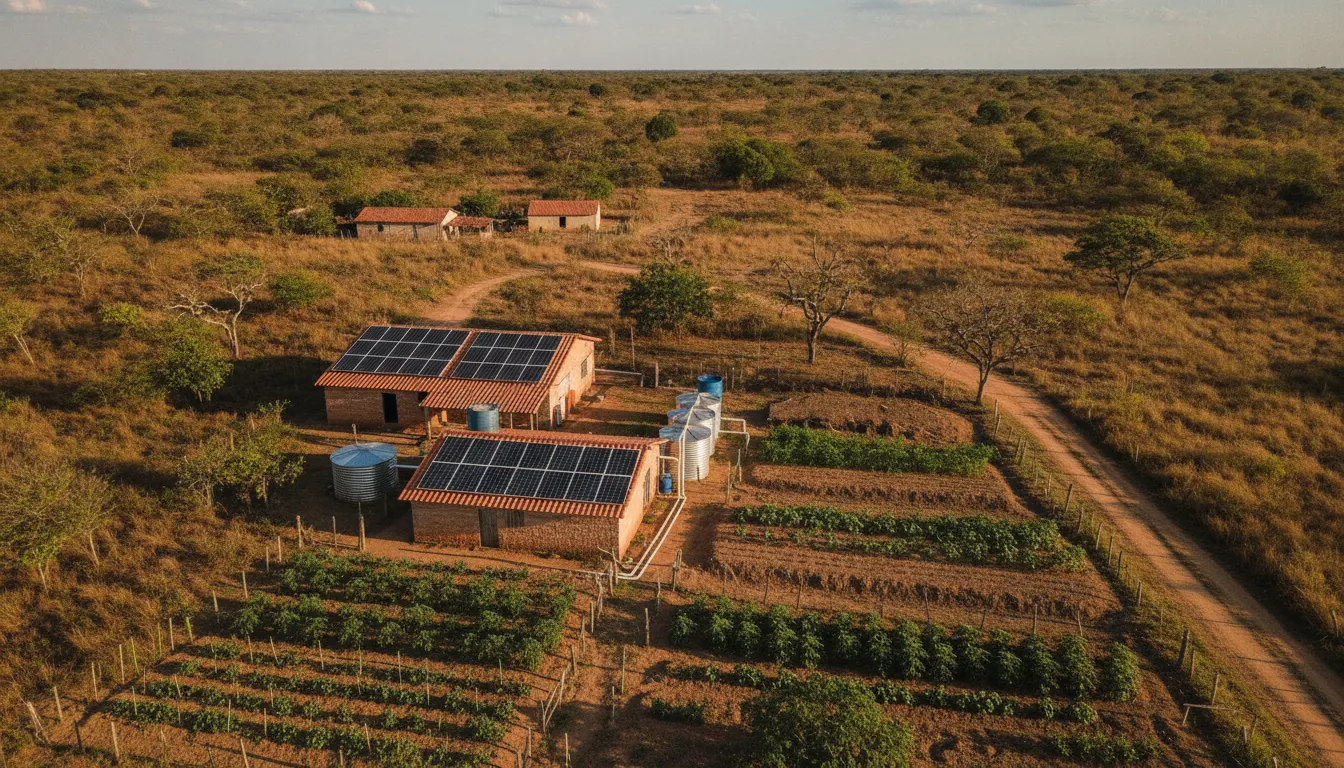
Mitigating climate change — that is, reducing emissions to prevent the worst — remains urgent and necessary. But science has made it clear: some of the ongoing changes are irreversible in the short term, and adaptation has become as important as mitigation. Cities need to redesign their infrastructure to cope with floods and extreme heat. Farmers need varieties more resistant to drought. Coastal communities need to prepare for rising sea levels.
Brazil has the technical capacity, biological diversity, and cultural creativity to lead this adaptation process. What is often lacking is the combination of political will, adequate funding, and an informed and engaged society.
Climate change in Brazil is not a problem for tomorrow — it is today’s reality. But reality is not destiny. Every protected forest, every solar roof installed, every urban garden planted, every conscious vote is a small victory in the right direction. The planet doesn’t need perfection: it needs millions of imperfect people making slightly better decisions every day. And that, fortunately, is within everyone’s reach.
