Reforestation: What It Is and Why It Matters So Much
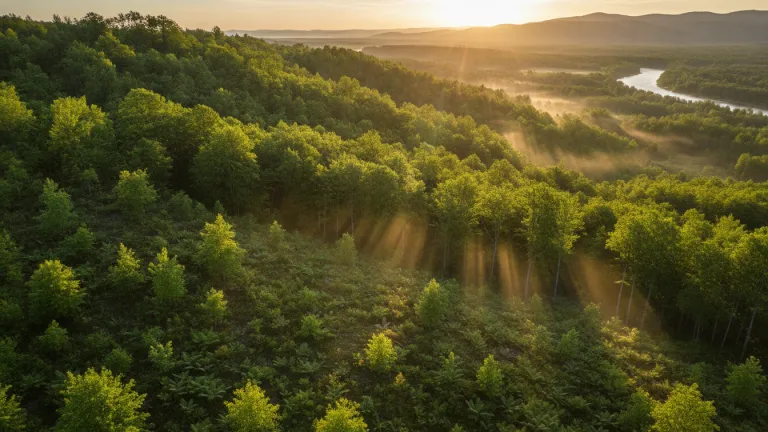
Imagine walking into a dense forest, hearing birdsong, feeling the cool, humid air fill your lungs, and knowing that just a few decades ago, this place was degraded pastureland or a burned area. This isn’t fiction — it’s the concrete result of well-executed reforestation. At a time when climate change dominates headlines and everyday conversations, reforestation emerges as one of the most powerful, accessible, and visible responses humanity has at its disposal.
Brazil holds a unique position in this story. Home to the world’s largest tropical forest and unparalleled biodiversity, the country also bears the weight of decades of intense deforestation, especially in the Cerrado and Amazon regions. But it also carries an enormous capacity for reversal. Communities, businesses, governments, and ordinary citizens have participated in reforestation initiatives that are literally bringing life back to the soil.
In this article, we’ll explore what reforestation truly is — beyond common assumptions —, why it matters so much for climate, biodiversity, and people, and what each of us can do to support this process. Because yes: you also have a role in this story.
What Reforestation Is (and What It Isn’t)
Reforestation is the process of replanting trees in areas that were previously covered by forests and have been degraded or destroyed by human activities such as agriculture, livestock farming, mining, or urbanization. The central goal is to restore the ecological functions of that environment — not just to “fill” the space with any tree.
Here lies an important distinction: reforestation is not the same as planting trees in monoculture. Planting hectares of eucalyptus or pine, for example, may serve legitimate commercial purposes, but it doesn’t restore biodiversity or rebuild the ecosystem services of a native forest. Quality reforestation works with native species from the region, respecting the original vegetation composition and promoting the gradual return of associated wildlife.
There’s also the concept of ecological restoration, which is broader: it includes not only replanting but also assisted natural regeneration — when a degraded area is protected and allowed to recover on its own, with some targeted interventions. In many cases, this approach is as effective or more effective than active planting.
Why Forests Are Irreplaceable
To understand why reforestation matters, we must comprehend what is lost when a forest disappears. Forests are not merely collections of trees: they are complex living systems that regulate climate, filter water, stabilize soil, store carbon, and sustain countless species of plants, animals, fungi, and microorganisms.
According to data from the Intergovernmental Panel on Climate Change (IPCC), deforestation and forest degradation account for a significant portion of global greenhouse gas emissions — IPCC estimates indicate that land use, including deforestation, corresponds to approximately 23% of global net greenhouse gas emissions (Special Report on Land Use, 2019). This places forest protection and recovery at the center of any serious climate strategy.
In Brazil, the Amazon regulates the so-called “hydrological cycle” of South America, influencing rainfall that supplies rivers and reservoirs from the Central-West to the southern part of the continent. Progressive loss of forest cover directly affects water availability for human consumption and agriculture — a consequence that goes far beyond the environment and impacts the economy and food security.
Reforestation and Climate: The Carbon Equation
One of the most debated functions of reforestation is carbon sequestration. Trees absorb CO₂ from the atmosphere during photosynthesis and store carbon in their biomass — trunk, roots, leaves — and in the surrounding soil. Tropical forests are especially efficient in this process, given their rapid growth and biomass density.
Reforestation projects with native species in biomes like the Atlantic Forest and the Amazon have high carbon sequestration potential. However, it’s important to be honest: reforestation alone is not enough to offset current emissions. It must go hand in hand with drastic reductions in fossil fuel use and other structural changes in the global economy.
What reforestation does competently is contribute measurably and relatively quickly to removing carbon from the atmosphere, especially in tropical regions. And unlike some carbon capture technologies still under development, planting native trees is an already tested solution, relatively low-cost, and with immense co-benefits for biodiversity and local communities.
Biodiversity: The Forest as Home
When a forest is restored, it doesn’t just recover trees. Over time, insects, birds, mammals, reptiles, amphibians, and a myriad of organisms that depend on that habitat return. The International Union for Conservation of Nature (IUCN) classifies habitat loss as the main threat to global biodiversity, and reforestation is one of the direct tools to reverse this situation.
In Brazil, initiatives like the Atlantic Forest Restoration Pact program bring together hundreds of organizations with the goal of restoring millions of hectares of Atlantic Forest — one of the most threatened and biodiverse biomes on the planet. The Atlantic Forest has already lost more than 85% of its original cover over the centuries, but remaining fragments and areas under restoration still harbor endemic species found nowhere else on Earth.
Ecological restoration also has a cascading effect: when native plant species return, they attract animals that disperse their seeds, which in turn help other plants establish themselves — creating a virtuous cycle of natural recovery.
How a Reforestation Project Works in Practice
Understanding how a reforestation project works helps evaluate its quality and support reliable initiatives. Here are the main stages:
- Area assessment: Evaluation of soil, land use history, remaining vegetation, and local fauna. This phase defines which species will be used and which restoration method is most appropriate.
- Species selection: Priority for native species from the region and biome. Serious projects use species diversity, combining pioneer species (fast growth) and climax species (slow growth but structuring for mature forest).
- Seedling production: Seedlings are produced in nurseries, often with participation from local communities and family farmers — generating income and social engagement.
- Soil preparation and planting: Includes control of invasive species, soil correction if necessary, and planting in patterns that favor seedling survival.
- Continuous monitoring: Seedling survival is regularly tracked. Maintenance, irrigation during dry periods, and replanting of seedlings that didn’t survive are part of the process.
- Results evaluation: Indicators such as ground cover, species diversity, and wildlife return are monitored over the years to confirm restoration success.
What You Can Do: Practical and Accessible Actions
The good news is that supporting reforestation doesn’t require you to be an agronomist or own a farm. There are concrete ways to contribute, regardless of where you live or your budget.
If you have outdoor space (backyard, small farm, rural property):
- Plant native trees from your biome. Consult regional nurseries and the Flora do Brasil app to identify suitable species.
- Allow areas of your land to regenerate naturally by reducing mowing and avoiding herbicide use.
- Install feeders and water sources for birds — attracting seed dispersers accelerates natural regeneration.
If you live in an apartment or urban area:
- Financially support certified restoration projects, such as those from Instituto Terra or the Atlantic Forest Restoration Pact.
- Adopt a tree through platforms that fund planting and allow you to track the seedling’s development.
- Pressure local government for more urban tree planting with native species.
- Reduce your consumption of products linked to deforestation — beef of dubious origin, soy without traceability, illegal timber.
In any situation:
- Share reliable information about reforestation and ecological restoration.
- Participate in planting events organized by NGOs and local governments.
- Buy products from companies with verifiable reforestation commitments.
- Read more about how your daily choices impact forests — this article about forest preservation starts with small actions can be a good starting point.
Reforestation and People: Social and Economic Benefits
An often underestimated aspect of reforestation is its impact on human communities. Well-structured projects create jobs in nurseries, planting, and monitoring. Indigenous and quilombola communities, when included in the process, become guardians of restored areas — often with results superior to purely technical projects.
Restoration of riparian forests — the forests along rivers and streams — protects water sources and improves water quality for human supply and agricultural irrigation. This represents real savings for municipalities and rural producers.
Additionally, recovery of degraded soils through agroforestry systems — where native trees coexist with food crops — allows farmers to produce more with fewer inputs, increasing the resilience of their properties against droughts and extreme weather events.
Conclusion: Every Tree Counts, Every Choice Matters
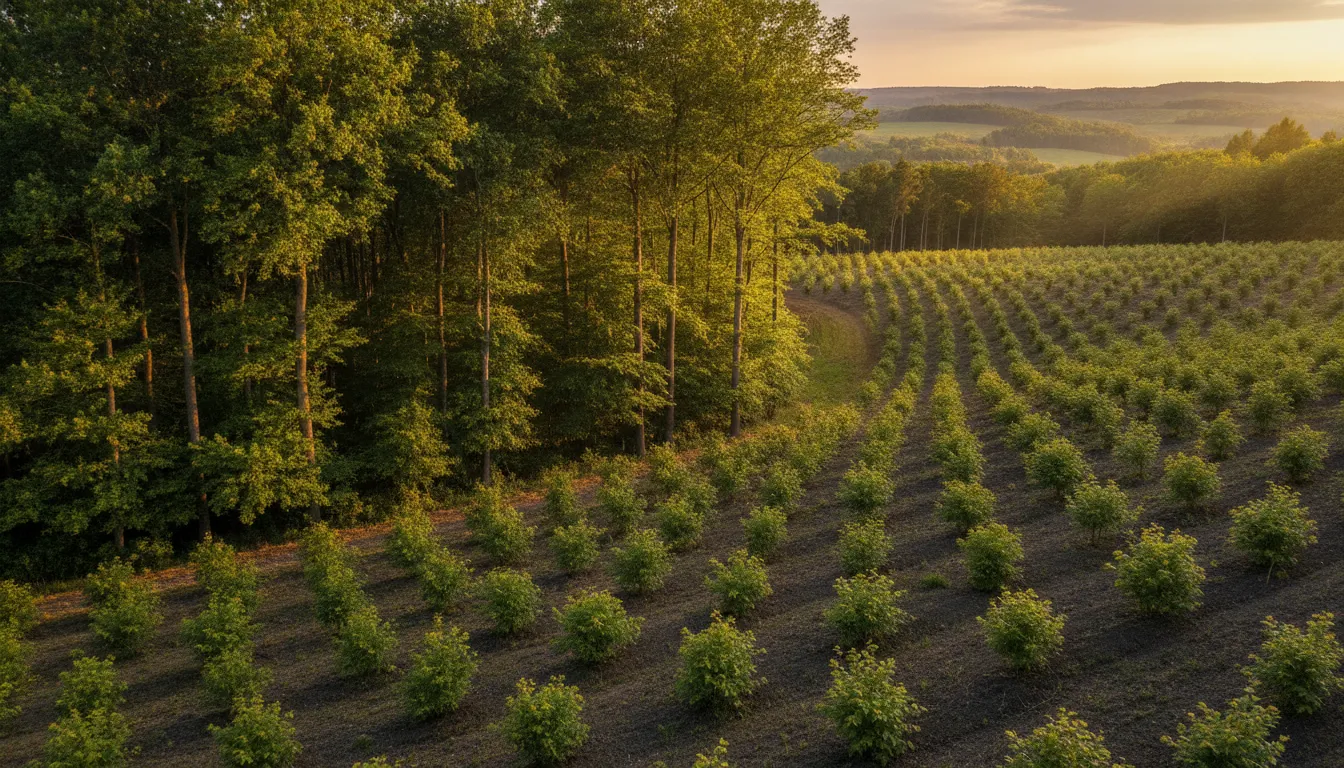
Reforestation is simultaneously a science, an art, and an act of hope. It reminds us that nature has an extraordinary capacity to recover — as long as we give it space, time, and support. This isn’t about romanticism: it’s about climate strategy, water security, biodiversity, and quality of life for future generations.
You don’t need to wait for major public policies or miraculous technologies to act. Planting a native tree in your backyard, supporting a reliable restoration project, or simply changing consumption habits that pressure forests are already real contributions. And if you want to go further, explore other sustainable habits you can adopt today — because sustainability is built through small decisions, made daily, by people like you.
Forests have been ambassadors of life on this planet for millions of years. Now, it’s our turn to be ambassadors for the forests.
