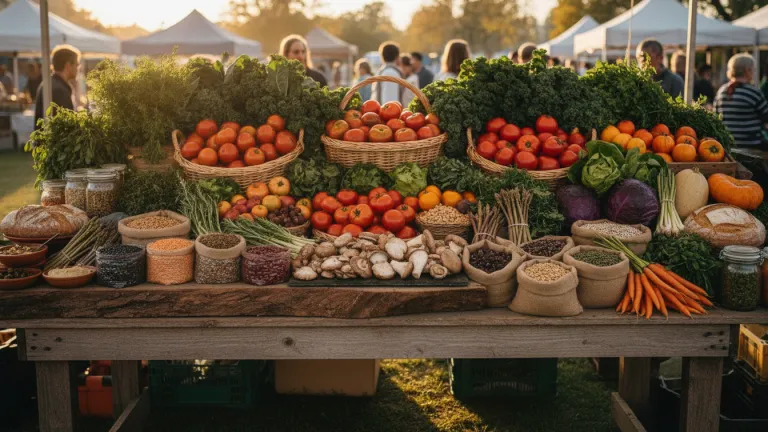
How to Reduce Meat Consumption Without Suffering
Have you ever stopped to think that one of the most powerful decisions you can make for the planet happens three times a day, sitting at the table? Food is one of the central pillars of individual environmental impact — and meat production, especially beef, is among the human activities with the highest carbon footprint, water use, and pressure on natural ecosystems. But before you close this tab thinking “here comes someone telling me to go vegan overnight,” take a deep breath: that’s not the path we’re proposing here.
The good news is that reducing meat consumption doesn’t have to be an experience of deprivation, guilt, or ideological imposition. Small gradual changes, made with awareness and planning, have real impact — both for the planet and for your health and wallet. And best of all: these changes fit into anyone’s routine, whether you’re a weekend barbecue enthusiast or someone who already enjoys a well-prepared salad.
In this article, we’ll explore why it’s worth rethinking your plate, how to do it in a light and enjoyable way, and what concrete steps you can take to start today. No drama, no extremism — just more conscious choices, one meal at a time.
Why Reducing Meat Matters for the Planet
Livestock production is one of the main sources of greenhouse gas emissions on a global scale. According to the FAO (Food and Agriculture Organization of the UN) report, the livestock sector accounts for a significant portion of global methane emissions — a gas with much higher warming potential than carbon dioxide in the short term. Methane released from cattle enteric fermentation and manure management is one of the central concerns highlighted by the IPCC in its assessment reports.
In Brazil, the scenario carries even more weight. The country is one of the largest producers and exporters of beef in the world, and much of the deforestation in the Amazon and Cerrado has historically been associated with pasture expansion. The Cerrado, a biome that harbors headwaters of rivers fundamental to Brazil, has already lost a significant portion of its original vegetation cover — and extensive cattle ranching is one of the main drivers of this pressure. Understanding what causes global warming in simple terms helps connect the dots between what we put on our plate and what happens to the climate.
Beyond emissions, beef production demands large volumes of water and vast expanses of land to produce relatively few calories — especially when compared to plant proteins like beans, lentils, and chickpeas. This doesn’t mean all meat is equal: the environmental footprint varies considerably between cattle, pigs, poultry, and fish, with beef cattle topping the list in terms of impact per kilogram produced.
Flexitarianism: The Middle-Ground Strategy That Works
Flexitarianism is exactly what the name suggests: a predominantly vegetarian diet, but with room for occasional meat consumption. There are no rigid rules — it’s a philosophy of progressive reduction, not absolute exclusion. And research in nutrition and eating behavior suggests that this gradual approach tends to be more sustainable in the long term than abrupt cuts.
The central idea is simple: you don’t need to stop eating meat tomorrow. You just need to eat a little less than you eat today. If you currently eat meat at seven meals a week, try reducing to five. Then to three. Over time, your palate adapts, you discover new flavors, and the process stops feeling like a sacrifice.
European countries have observed consistent growth in this trend. In Brazil, the movement is also advancing: the market for plant-based protein products has grown significantly in recent years, with increasingly accessible offerings in supermarkets and restaurants of different profiles. The Brazilian food industry has already noticed the signal.
How to Start: Step by Step Without Radicalism
If you want to reduce meat consumption in a practical and painless way, follow this progressive roadmap:
- Make an honest assessment of your current consumption. For one week, write down how many meals contain meat and what type. This provides clarity on where there’s room for change without major emotional impact.
- Choose one or two days per week to be “meat-free.” The “Meatless Monday” campaign (known internationally as Meatless Monday) has existed for years and is based on accessible communication. Starting with one or two days is psychologically easier and already produces real effects.
- Substitute, don’t just remove. The secret to not feeling deprived is finding satisfying substitutes, not leaving a hole on your plate. Beans, lentils, chickpeas, tofu, eggs, mushrooms, and cheeses are valuable allies. See below for a list of practical substitutions.
- Explore Brazilian cuisine — it’s already rich in plant-based options. Vegetable feijoada, plantain moqueca, cassava escondidinho with mushrooms, couscous with eggs, black-eyed pea acarajé. Brazilian culinary tradition has much to offer without needing meat.
- Reduce beef before other meats. From an environmental standpoint, beef has a much greater impact per serving than chicken or fish. If the goal is to reduce environmental footprint, prioritize decreasing beef and, in a second phase, other meats.
- Plan your weekly menu in advance. Much of meat consumption happens out of habit and convenience — “it’s what’s available.” Having minimal planning reduces decision-making at hunger time, when the tendency is to automatically repeat what’s already familiar.
- Be gentle with yourself when you slip up. Reduced meat consumption by 30% and then had a barbecue week? Great — you’re still at a reduced average. Progress is not perfection.
Protein Substitutes That Really Work
The most common concern for those thinking about reducing meat is: “But what about protein?” It’s a legitimate concern, but well-resolved when you know the alternatives. Here are practical and accessible options:
- Beans and lentils: Pillars of Brazilian cuisine, rich in plant protein, fiber, and iron. The classic combination of rice and beans forms a complete protein.
- Chickpeas: Versatile, can become hummus, be roasted with seasoning, or go into stews. Has good protein content and is filling.
- Eggs: For non-vegans, they’re one of the most complete and practical protein sources available.
- Tofu and tempeh: Soy derivatives that absorb seasonings easily. Tempeh is fermented and has an even more interesting nutritional profile.
- Mushrooms: Not rich in protein, but have texture and umami that fill the plate satisfyingly. Shimeji, shiitake, and button mushrooms are affordably priced.
- Cheeses and yogurts: For diets that include dairy, they’re easy allies to incorporate.
- Peanuts and nuts: Source of protein and healthy fats for snacks and meal complements.
The Real Impact of Small Individual Choices
It’s tempting to think that one individual’s choice makes no difference given the scale of environmental problems. But collective logic is different: when millions of people make similar choices, the aggregate effect is immense — and that’s exactly what moves markets, public policies, and production chains.
Reducing meat consumption also has direct and immediate benefits for those who make the choice: impact on the household budget (plant proteins tend to be cheaper per serving than meats), dietary diversification, and, in many cases, improvement in health indicators like cholesterol and blood pressure — as widely documented by medical literature and the guidelines of the Dietary Guidelines for the Brazilian Population, from the Ministry of Health.
Just as choosing public transportation reduces emissions and saves resources, choosing a bean dish instead of a steak a few times a week accumulates real benefits over time. Sustainability is, at its core, a sum of habits — not a single grand gesture.
Tips to Keep the Joy at the Table
Reducing meat doesn’t mean eating with less joy. It often means discovering flavors that were hidden by habit. Some strategies to maintain pleasure:
- Invest in seasonings and aromatic herbs. A well-seasoned vegetable dish surpasses any bland protein. Garlic, onion, smoked paprika, cumin, turmeric, rosemary, and thyme make an enormous difference.
- Try a new recipe every week. Put it on the calendar. One unfamiliar dish per week, over a year, completely transforms your culinary repertoire.
- Don’t try to imitate meat — create dishes that stand on their own. A good mushroom risotto doesn’t need to pretend to be chicken. It’s delicious being what it is.
- Explore cuisines that already have vegetarian traditions. Indian, Arab, Mediterranean, and Japanese cuisines offer a universe of meatless dishes that are festive and satisfying.
- Share the journey. Inviting friends and family to try a vegetarian dinner is lighter than trying to convince them with arguments. The food speaks for itself.
Conclusion: Start Today, at Your Own Pace

Reducing meat consumption is one of the most accessible, impactful, and enjoyable changes anyone can make for the planet — and for themselves. It doesn’t require a large financial investment, doesn’t need special equipment, and doesn’t have to happen all at once. The only requirement is curiosity and willingness to experiment.
Start with one different meal this week. Just one. Explore a new bean, try a lentil recipe, order the vegan dish at that restaurant you always pass by. Notice how you feel. And then, if you want, take another step.
The planet doesn’t need perfection. It needs many people making better choices with consistency. You can be one of them — today, at lunch, at dinner, at the grocery store. Every plate counts.
