
Fashion Industry and Environment: What is the Impact?
Have you ever wondered what happens to a piece of clothing once it goes out of style? Or how much water was needed to produce the jeans you wear today? The fashion industry is one of the most creative and expressive sectors of the global economy — but also one of the most impactful on the environment. And this impact goes far beyond what most people imagine.
In recent decades, the model known as fast fashion — fast, cheap, and disposable fashion — has radically transformed the way we produce and consume clothes. If there used to be two seasons a year (summer and winter), today some chains launch dozens of different collections in 12 months. The result is an avalanche of production, consumption, and disposal that the planet is increasingly struggling to absorb.
The good news is that as the problem gains visibility, concrete solutions are also emerging — both from the industry and consumers. In this article, we will understand where the main impacts of fashion on the environment come from and what each of us can do to change this scenario.
The Environmental Weight of the Global Fashion Industry
The textile and apparel industry is often cited among the most polluting sectors in the world. According to the United Nations Environment Programme (UNEP), fashion is responsible for a significant share of global greenhouse gas emissions, as well as being one of the largest consumers of freshwater in the world.
To get an idea of the scale, producing a single pair of jeans can require about 7,500 liters of water — an amount equivalent to the average water consumption of a person for several years, according to widely cited estimates by the UN. This number reflects the entire cycle, from cotton cultivation to fabric dyeing and finishing.
In addition to water, the fashion production chain involves:
- Carbon emissions throughout the chain: fiber production, transportation, manufacturing, and retail
- Intensive use of chemicals in fabric dyeing and treatment, which often contaminate rivers and groundwater
- Massive generation of solid waste, as much of the clothing produced ends up in landfills or is incinerated
- Microplastics: synthetic fibers like polyester and nylon release microparticles with each wash, reaching the oceans and the food chain
The Problem of Synthetic Fibers and Microplastics
One of the less visible — but highly concerning — aspects of fashion’s impact is contamination by microplastics. Much of the clothing produced today is made from synthetic fibers derived from petroleum, such as polyester, nylon, and acrylic.
Scientific studies have documented that each wash cycle of synthetic clothes can release thousands of plastic microfibers. These particles are so small that they pass through wastewater treatment plant filters and reach rivers, lakes, and oceans. Once in the aquatic environment, they are ingested by marine organisms and enter the food chain — potentially reaching the human table.
The UNEP and various scientific organizations have emphasized the urgency of this problem. In 2026, the issue of textile microplastics is already on the agenda of international negotiations on plastic pollution, with debates around requirements for filters in washing machines and certification standards for fabrics.
Clothing Disposal: A Growing Problem in Brazil and Worldwide
Brazil is one of the largest producers and consumers of fashion in the world. According to data from the IEMI (Institute of Industrial Studies and Marketing), the country ranks among the largest textile markets in Latin America. With this volume of production and consumption comes a significant volume of disposal.
It is estimated that tons of clothes are discarded annually in Brazil — most ending up in landfills or dumps, where synthetic fabrics can take decades or centuries to decompose. Cotton decomposes more quickly, but when mixed with synthetic fibers (which is very common), the process becomes much slower.
The disposal problem is exacerbated by consumer behavior driven by fast fashion: cheaper clothes encourage shorter use and quicker disposal. It is a cycle that pressures both the environment and the working conditions of workers at the base of the production chain.
Sustainable Fashion: What is the Industry Doing?
Faced with pressure from consumers, regulators, and investors, part of the fashion industry has been seeking more sustainable alternatives. Some relevant initiatives include:
- Use of recycled fibers: brands that use recycled PET bottles or recovered fabrics to produce new pieces
- Environmental certifications: labels like GOTS (Global Organic Textile Standard) ensure that cotton was produced organically, without pesticides, and with social responsibility
- Take-back programs: some companies accept used clothes back for recycling or donation
- Circular economy in design: creating pieces with recyclability or biodegradability in mind from the start
- Dry dyeing and water-reducing processes: technologies that drastically reduce water use in fabric processing
In Brazil, movements of circular fashion and upcycling (transforming old pieces into new ones) have been gaining ground, especially among independent brands and designers committed to more responsible practices.
What You Can Do: Practical Guide to Conscious Fashion Consumption
The most powerful change starts with individual choices. Here is a practical step-by-step guide to making your fashion consumption more sustainable:
- Buy less and buy better. Before acquiring a new piece, ask yourself: do I need this? Do I already have something similar? A quality piece that lasts for years has a smaller impact than several cheap pieces replaced quickly.
- Choose brands with verifiable environmental commitments. Research certification labels like GOTS, Fair Trade, or Bluesign. Be wary of “greenwashing” — vague sustainability claims without concrete evidence.
- Explore the second-hand market. Physical thrift stores and digital resale platforms are excellent options for finding unique pieces with a lower environmental impact.
- Take good care of the clothes you already have. Washing in cold water, avoiding the dryer when possible, and making simple repairs greatly extend the life of pieces.
- Use microfiber bags in washes. There are special bags (like Guppyfriend) that retain microfibers during the washing of synthetic clothes, reducing water contamination.
- Donate or swap what you no longer use. Before discarding, consider donating to social institutions, swapping with friends, or selling in thrift stores.
- Research textile collection points. Some cities already have specific collectors for used clothes — check what exists in your region.
Just like the disposal of other special waste — a topic we covered in our Battery and Electronics Disposal: Practical Guide — the correct destination of what we no longer use makes a real difference for the environment.
Comparison: Fast Fashion vs. Conscious Fashion
Characteristic Fast Fashion Conscious Fashion Life cycle of pieces Short (weeks to months) Long (years) Cost per use Generally higher Generally lower Environmental impact High Reduced Working conditions Often precarious Greater attention to the production chain Materials Predominantly synthetic Mix of organic, recycled, and natural Disposal High waste generation Encourages repair and reuse Trends for 2026 and Beyond: The Future of Sustainable Fashion
The scenario in 2026 shows an industry in transition — still far from ideal, but with clear movements towards more responsible practices. Some trends gaining strength:
- Increasing regulation: the European Union is advancing with policies that require greater product durability and transparency in the textile supply chain. This tends to influence global markets, including Brazil.
- Textile biotechnology: research with fibers produced from fungi, algae, and agricultural waste promises alternatives to conventional cotton and synthetic fibers.
- Digital product passport: initiatives that allow consumers to trace the origin and environmental impact of each piece of clothing they buy.
- Clothing rental and subscription: business models based on use rather than ownership are gaining followers in Brazilian urban centers.
The fashion of the future does not need to be gray or dull — it can be creative, accessible, and at the same time, much more aligned with the planet’s limits.
Conclusion: Your Choice Matters
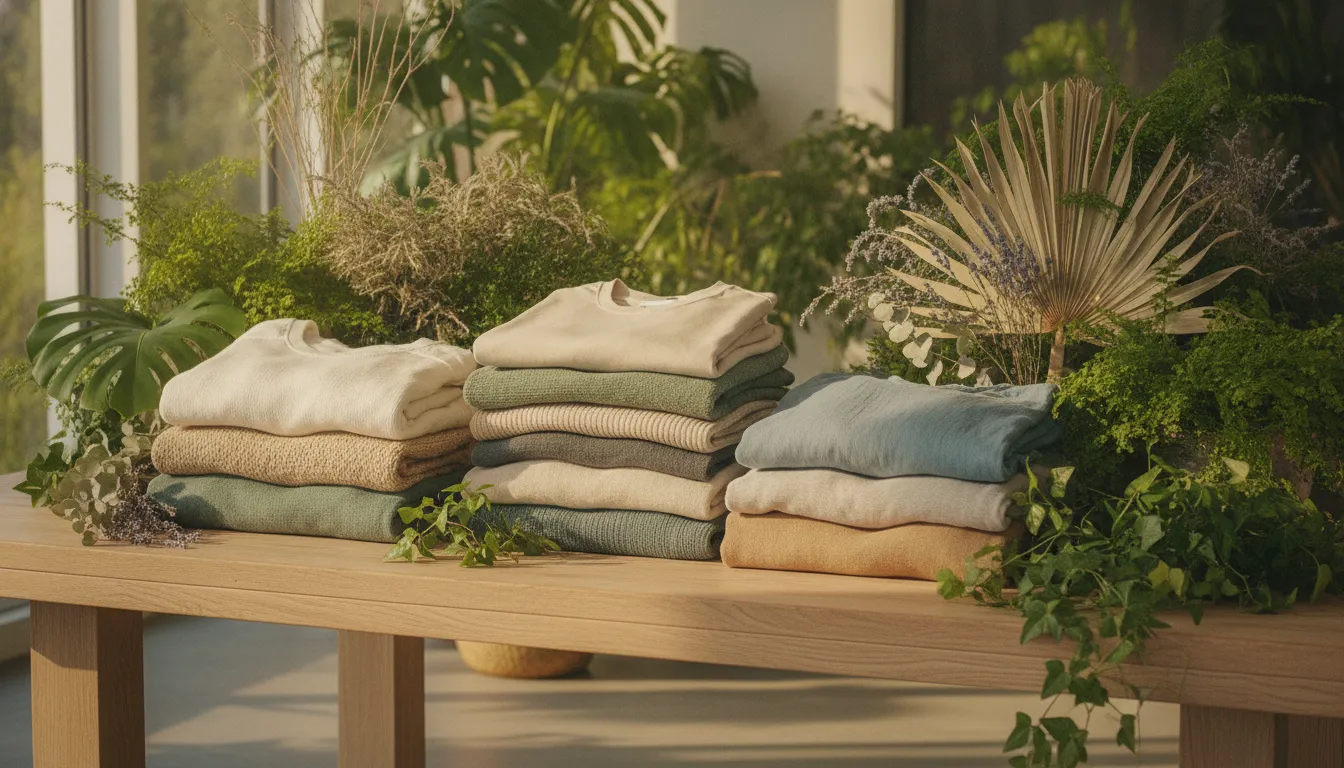
The fashion industry has a considerable environmental impact, but the narrative doesn’t have to be one of despair. Every consumption choice is a vote for the type of industry we want to see exist. By buying more consciously, taking better care of what we already have, and properly disposing of what we don’t use, we contribute to a more just and sustainable production chain.
Small habit changes, when multiplied by millions of people, have the power to transform entire markets. You don’t need to be perfect — just start. How about taking the first step today?
If you want to deepen your conscious consumption journey, also check out our Beginner’s Guide to Sustainable Living and discover more simple and practical ways to make a difference in your daily life.
Back To Top - Textile biotechnology: research with fibers produced from fungi, algae, and agricultural waste promises alternatives to conventional cotton and synthetic fibers.
- Increasing regulation: the European Union is advancing with policies that require greater product durability and transparency in the textile supply chain. This tends to influence global markets, including Brazil.
- Research textile collection points. Some cities already have specific collectors for used clothes — check what exists in your region.
- Donate or swap what you no longer use. Before discarding, consider donating to social institutions, swapping with friends, or selling in thrift stores.
- Use microfiber bags in washes. There are special bags (like Guppyfriend) that retain microfibers during the washing of synthetic clothes, reducing water contamination.
- Take good care of the clothes you already have. Washing in cold water, avoiding the dryer when possible, and making simple repairs greatly extend the life of pieces.
- Explore the second-hand market. Physical thrift stores and digital resale platforms are excellent options for finding unique pieces with a lower environmental impact.
- Choose brands with verifiable environmental commitments. Research certification labels like GOTS, Fair Trade, or Bluesign. Be wary of “greenwashing” — vague sustainability claims without concrete evidence.
- Environmental certifications: labels like GOTS (Global Organic Textile Standard) ensure that cotton was produced organically, without pesticides, and with social responsibility
- Intensive use of chemicals in fabric dyeing and treatment, which often contaminate rivers and groundwater
