The faucet running while you brush your teeth. The shower that lasts fifteen minutes. The washing machine running with half a load. Small daily habits that, when multiplied by millions of households, represent an impressive volume of water going down the drain — often unnecessarily. On a planet where freshwater availability is finite and climate change intensifies droughts and rainfall irregularities, reusing water at home has become an intelligent choice rather than an eccentricity.
Brazil is a paradoxical country when it comes to water: it holds one of the largest reserves of surface freshwater in the world, yet faces periodic water crises in metropolitan regions, the semi-arid Northeast, and even the South. This paradox has an explanation: water is not evenly distributed, and the supply infrastructure has not yet reached all areas with quality. According to data from the National Sanitation Information System (SNIS), a significant portion of the Brazilian population still lacks adequate sanitation, making conscious use and water reuse even more relevant from a social and environmental perspective.
The good news is that you don’t need major renovations or a lot of money to start reusing water at home. With some simple adaptations, you can reduce consumption, lower your monthly bill, and contribute to a more resilient water system. This guide gathers practical strategies, organized by complexity level, for those who want to take action now.
Why Domestic Water Reuse is So Important
The pressure on water resources is one of the most visible aspects of climate change. The IPCC (Intergovernmental Panel on Climate Change) points out that extreme events like prolonged droughts and intense rains are likely to become more frequent and severe with the advance of global warming — and Brazil is already feeling these effects. To better understand the relationship between warming and climate, check out Global Warming and Climate Change: Are They the Same Thing?.
In the domestic context, water reuse means using the same water for more than one purpose, maximizing its potential before discarding it into the sewer. This does not mean drinking water of dubious origin: most applications involve uses that do not require potable water, such as watering plants, washing sidewalks, flushing toilets, or cleaning the yard.
The benefits are concrete:
- Reduction in water bills, as less volume is drawn from the public network
- Relief on the supply system during scarcity periods
- Less sewage generation, reducing the load on treatment plants
- Domestic resilience in situations of rationing or supply interruptions
Understanding the Types of Water That Can Be Reused
Before setting up any system, it’s crucial to understand that not all water discarded at home has the same profile. The most practical classification divides household waters into two groups:
Greywater: The Most Accessible Potential
Greywater comes from sinks, showers, bathtubs, and washing machines (excluding rinse water with feces, when applicable). It contains soap, detergent, and light dirt but is not contaminated by fecal matter. This makes it relatively simple to treat and reuse for non-potable purposes.
Blackwater: Restricted Use and Specialized Treatment
Blackwater comes from toilets and kitchen sinks with food residues. It contains pathogens and requires more robust treatment — usually beyond the reach of simple residential systems. For domestic use, the focus is almost always on greywater and rainwater.
Rainwater: An Underutilized Natural Resource
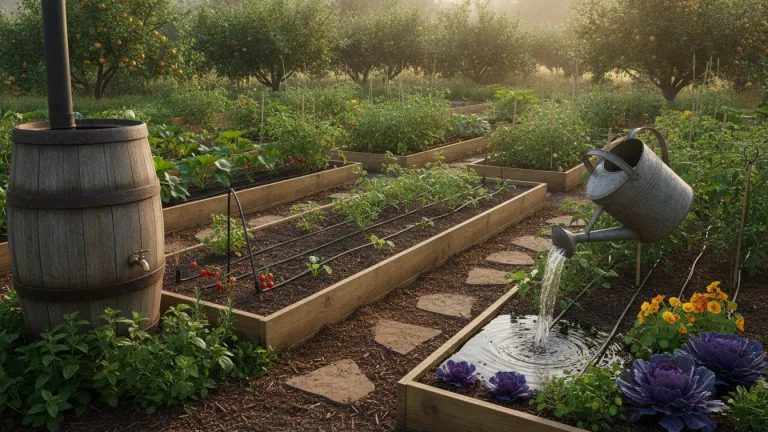
Rainwater harvesting is one of the oldest and most effective reuse strategies. Depending on the region and time of year, a residential roof can capture significant volumes with each rainfall — all you need is a simple system of gutters, filters, and a reservoir.
How to Create a Simple Rainwater Harvesting System
This is one of the most accessible projects to start. With materials found in any hardware store, you can set up a functional system in a weekend.
- Evaluate the roof and existing gutters. Ensure gutters are clean and directed to a collection point. Ceramic tile, fiber cement, or metal roofs are suitable. Avoid using water collected from roofs painted with lead-based or asbestos paints.
- Install an inlet filter (first flush diverter). The first rains carry leaves, bird droppings, and roof particles. A simple diverter — a tube with a calculated volume to discard the first liters — greatly improves the quality of the captured water.
- Choose the appropriate reservoir. Polyethylene water tanks, plastic barrels, or masonry cisterns work well. Keep the reservoir covered and in a shaded area to prevent algae and mosquito proliferation, including the Aedes aegypti.
- Connect an outlet tap or pump. For garden and cleaning use, a simple tap at the base of the reservoir suffices. For hose or drip distribution, a small pump may be useful.
- Perform periodic maintenance. Clean the filter and reservoir at least every six months, or after long periods without rain.
Recommended uses for domestically captured rainwater: garden and vegetable irrigation, sidewalk and vehicle washing, toilet flushing (with hydraulic adaptation), general external cleaning.
Reusing Greywater from the Bathroom and Laundry
The bathroom is one of the largest water consumption points in a household. Shower and sink water, once used, goes directly to the sewer — but much of it could have a second life.
Simple Reuse: The Bucket in the Shower
The most immediate and cost-free strategy is to place a 10 to 15-liter bucket in the shower during bathing to capture the water that flows while heating occurs or while you soap up. This water can be used immediately for flushing, watering plants, or cleaning the bathroom.
Greywater Reuse Systems with Pipe Diversion
For those seeking something more structured, it’s possible to install a diversion in the shower drain or washing machine that directs the water to a separate reservoir instead of sending it all to the sewer. These systems require some plumbing work but are increasingly available in the Brazilian market.
Important note: The Brazilian Association of Technical Standards (ABNT) has technical standards regulating water reuse in buildings. NBR 13969 deals with treatment and disposal of effluents, and NBR 15527 addresses rainwater harvesting. Consulting a qualified professional before making hydraulic adaptations is always advisable.
Practical Reuse Habits You Can Adopt Today
Not everything requires installation or investment. Many reuse actions are purely behavioral and can start now:
- Water from cooking vegetables and greens (without or with little salt): excellent for watering plants, as it contains nutrients
- Water from washing fruits and vegetables: use it to water the garden or clean the yard
- Water from aquarium partial changes: rich in nitrogen, it acts as a natural fertilizer for plants
- Water used to boil eggs (after cooling): can be used for irrigation
- Last rinse water from hand-washed clothes: suitable for cleaning the bathroom or garage
- Water from dehumidifiers or air conditioners: condensed water, relatively pure, good for ironing and irrigation
- Reuse pet water: when changing the water in pet bowls, use the discarded water to water plants
How Much Can Be Saved with Domestic Reuse
It’s challenging to state a single percentage of savings without knowing each household’s profile, but some data guide expectations. According to the Ministry of Cities, toilet flushing represents a significant portion of domestic water consumption — and replacing it with greywater or rainwater can significantly reduce the volume drawn from the public network.
Families combining rainwater harvesting + greywater reuse + low-consumption habits can achieve, according to documented reports in water efficiency projects, reductions that positively impact the monthly bill and reduce pressure on local supply. The concrete result depends on family size, regional climate, and investment in systems.
System Complexity Approximate Cost Recommended Uses Bucket in the shower Very low Zero Flushing, watering, cleaning Simple rainwater harvesting Low R$ 200 to R$ 800 Garden, sidewalk, flushing Greywater diversion Medium R$ 500 to R$ 2,000 Flushing, general cleaning Integrated system with filtration High R$ 3,000 or more Multiple non-potable uses Water Reuse and the Home of the Future
The concept of a sustainable home is no longer a utopia: it is present in new condominiums, urban retrofit projects, and even in municipal public policies that encourage the installation of cisterns and reuse systems. Cities integrating decentralized water solutions — such as residential reuse — tend to be more resilient during scarcity periods. You can delve deeper into this topic in Less Polluted Cities Start with These Actions.
In 2026, with the debate on water security increasingly present on global and local climate agendas, adopting reuse practices at home is a concrete way to be part of the solution — without waiting for major public policies or future technologies. The tools already exist. The knowledge is available. The next step is yours.
Conclusion: Every Reused Drop Counts
Reusing water doesn’t require you to become a hydraulic engineer or undertake an expensive renovation. It starts with a bucket in the bathroom, watering plants with vegetable cooking water, installing a gutter to direct rain to a barrel in the yard. These are simple gestures, but they gain strength when multiplied.
Choose one or two actions from this list to implement this week. Share with neighbors, friends, or in the family group. Small habit changes, when they become collective culture, produce real impacts on supply, the environment, and your wallet. The water you save today may be the water that won’t be missing tomorrow.
Back To Top - Water from washing fruits and vegetables: use it to water the garden or clean the yard
- Water from cooking vegetables and greens (without or with little salt): excellent for watering plants, as it contains nutrients
- Perform periodic maintenance. Clean the filter and reservoir at least every six months, or after long periods without rain.
- Connect an outlet tap or pump. For garden and cleaning use, a simple tap at the base of the reservoir suffices. For hose or drip distribution, a small pump may be useful.
- Choose the appropriate reservoir. Polyethylene water tanks, plastic barrels, or masonry cisterns work well. Keep the reservoir covered and in a shaded area to prevent algae and mosquito proliferation, including the Aedes aegypti.
- Install an inlet filter (first flush diverter). The first rains carry leaves, bird droppings, and roof particles. A simple diverter — a tube with a calculated volume to discard the first liters — greatly improves the quality of the captured water.
- Relief on the supply system during scarcity periods
