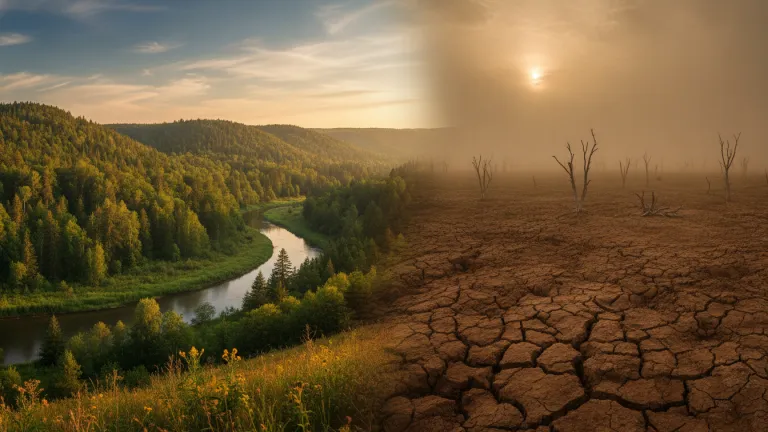
You may have heard the terms “global warming” and “climate change” used interchangeably in news, conversations, and even official documents. But do they really mean the same thing? The short answer is: not exactly. Understanding the difference between them is not just a matter of vocabulary — it’s essential for grasping what’s happening to our planet and what we can do about it.
The confusion between the two terms is understandable. They describe deeply interconnected phenomena, and the media often uses them interchangeably. But this imprecision can create a distorted view of the climate crisis, leading people to underestimate its complexity or, worse, feel that the problem does not affect them directly — especially when winter arrives colder than expected.
In this article, we will clearly break down each concept, show how they relate, and — most importantly — demonstrate how this understanding can guide real actions in your daily life.
Global Warming: What It Really Means
Global warming specifically refers to the increase in the Earth’s average surface temperature caused by the intensification of the greenhouse effect due to human activities. In simple terms: the planet is getting warmer, and the burning of fossil fuels, deforestation, and intensive livestock farming are the main culprits.
Greenhouse gases — like carbon dioxide (CO₂), methane (CH₄), and nitrous oxide (N₂O) — form a kind of blanket around the Earth, trapping heat that should be radiated back into space. The more these gases accumulate in the atmosphere, the thicker this “blanket” becomes, and the more the planet warms.
According to the Intergovernmental Panel on Climate Change (IPCC), in its Sixth Assessment Report (AR6), the global average temperature has already increased by approximately 1.1°C compared to pre-industrial levels (before 1850). This number may seem small, but its effects are enormous: melting glaciers, rising sea levels, and changes in weather patterns worldwide.
Climate Change: A Broader Concept
While global warming describes a specific phenomenon — the increase in temperature —, climate change is a broader term. It encompasses all long-term changes in Earth’s climate patterns, including:
- Temperature increase (global warming itself)
- Changes in rainfall and drought patterns
- Greater frequency and intensity of extreme weather events
- Changes in winds, ocean currents, and seasons
- Rising sea levels
- Ocean acidification
In other words, global warming is one of the causes of climate change, but climate change is the sum of all the effects that this warming causes in the global climate system. It’s like saying that a high fever (global warming) can cause a series of symptoms in the body (climate change): chills, aches, disorientation — each different, but all originating from the same problem.
The IPCC itself adopts this distinction in its publications, using “climate change” to refer to the set of climate transformations caused by human interference, and “global warming” to specifically discuss the temperature increase.
Why the Confusion Between Terms Matters
It may seem like a semantic detail, but linguistic imprecision has practical consequences. When people hear “global warming” and then experience a harsh winter or a cold spell, they mistakenly conclude that the problem doesn’t exist or was exaggerated. This type of reasoning has been exploited by groups that deny the climate crisis.
The reality is that a warmer planet does not mean that every place will be warmer all the time. Global warming destabilizes the climate system, making extreme events — whether heatwaves or cold spells — more frequent and intense. In Brazil, this translates to:
- More severe droughts in the Northeast and Pantanal regions
- More intense and concentrated rains in the South and Southeast
- Increased frequency of extratropical cyclones on the southern coast
- Shifts in rainy seasons in various regions
Understanding that “climate change” is not synonymous with “everywhere will get warmer” helps to have a more realistic and less denialist view of the problem.
How Brazil Is Being Affected: A Current Portrait
Brazil is one of the countries most vulnerable to climate changes, precisely because of its biodiversity, territorial extension, and dependence on climate-sensitive activities such as agriculture and hydroelectric energy generation.
In recent years, extreme events have intensified noticeably. The floods in Rio Grande do Sul in 2024 were considered the largest climate disaster in the state’s history, impacting over 400 municipalities. The Pantanal, on the other hand, faced historic droughts and large-scale fires. The Northeast continues to experience long periods of drought that affect the water and food security of millions of people.
Embrapa has been warning for years about the impacts of climate change on Brazilian agriculture, with scenarios that include reduced productivity of crops like coffee, corn, and beans in various regions if current trends continue.
From a climate perspective, Brazil is also part of the problem: it is one of the largest emitters of greenhouse gases in the world, mainly due to deforestation in the Amazon and extensive livestock farming. At the same time, it has the potential to be one of the greatest solutions, given its enormous forest carbon stock and its energy matrix with a high share of renewable sources.
Global Warming vs. Climate Change: Comparative Chart
Characteristic Global Warming Climate Change What it describes Increase in global average temperature Set of changes in climate patterns Scope Specific Broad Main cause Emission of greenhouse gases Includes global warming and its effects Examples of impact Glacier melting, sea level rise Droughts, floods, hurricanes, ocean acidification Relation between the two Is one of the causes Is the result of multiple factors, including warming What Each of Us Can Do: Real and Accessible Actions
Understanding the concepts is the first step. The second — and most important — is to act. And the good news is that you don’t have to wait for big public policies to start. Here are concrete actions that anyone can adopt today:
- Reduce meat consumption, especially beef. Livestock farming is one of the largest sources of methane, a greenhouse gas much more potent than CO₂ in the short term.
- Prefer public transport, cycling, or walking whenever possible. Individual vehicles are responsible for a significant share of urban emissions.
- Avoid food waste: about a third of everything produced worldwide is wasted, generating unnecessary emissions throughout the chain.
- Support and buy from companies with verified sustainable practices. Conscious consumption sends a clear signal to the market.
- Save energy at home: turn off appliances on standby, use LED, choose appliances with better energy efficiency.
- Plant trees or support reforestation projects. Brazil has initiatives like the Atlantic Forest Restoration Pact that accept support from civil society.
- Stay informed and share accurate information. Combating climate misinformation is one of the most powerful actions any citizen can take.
If you want to go further and understand how your urban choices impact your city’s climate, check out Less Polluted Cities Start with These Actions.
Language Matters: How to Talk About Climate with Precision
One of the most powerful ways to contribute to the solution is to use the right terms. This is not pedantry — it’s communicative responsibility. When you use “climate change” to describe the set of phenomena and “global warming” to talk specifically about the temperature increase, you help those around you understand the problem better.
Moreover, avoid so-called “doomism” — the narrative that “it’s too late” and “nothing helps.” Climate science shows that each tenth of a degree we can prevent from additional warming represents lives saved, ecosystems preserved, and communities protected. We are not at the irreversible tipping point — there is still time to act, and today’s actions make a real difference tomorrow.
Using precise language also means resisting sensationalist headlines that distort data or, conversely, downplay the urgency. Reliable sources such as IPCC reports, publications from the Ministry of the Environment, and the IUCN (International Union for Conservation of Nature) are excellent references for those who want to stay well-informed.
Conclusion: Understand to Act Better
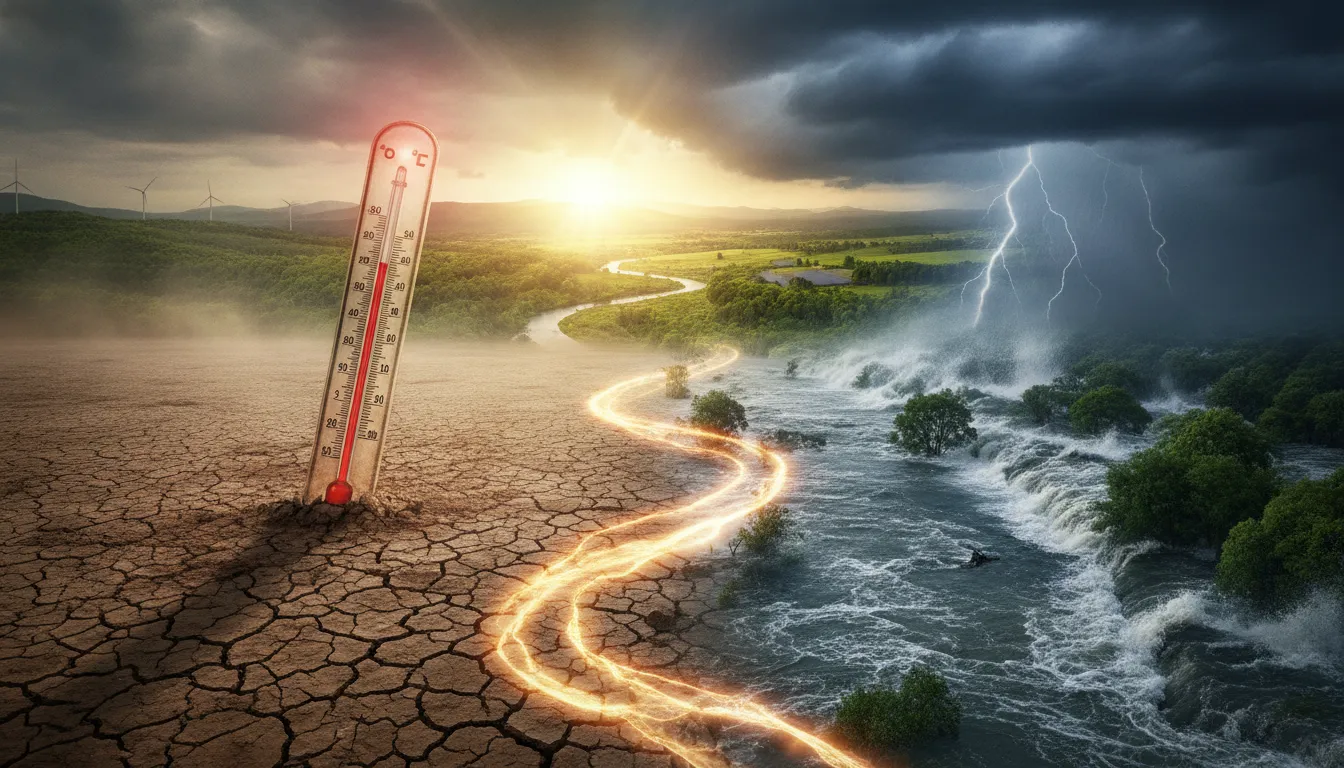
Global warming and climate change are not the same thing — but they are deeply connected. The first is the fever; the second is the set of symptoms that this fever causes in the entire planetary organism. Understanding this distinction is not just an academic curiosity: it’s a tool for thinking more clearly, communicating more precisely, and acting more effectively.
The climate crisis is real, urgent, and already affecting Brazil in concrete ways. But it is also a challenge that humanity has the capacity to face — especially when each person assumes their share of responsibility. Quality information, conscious choices in everyday life, and active citizen participation are the pillars of this transformation.
Want to take another step? Explore how sustainable habits you can start today can become part of your routine in a simple and accessible way. The planet thanks you — and you’ll feel better about it too.
Back To Top - Prefer public transport, cycling, or walking whenever possible. Individual vehicles are responsible for a significant share of urban emissions.
- Reduce meat consumption, especially beef. Livestock farming is one of the largest sources of methane, a greenhouse gas much more potent than CO₂ in the short term.
