Beginner’s Guide to Growing Herbs at Home
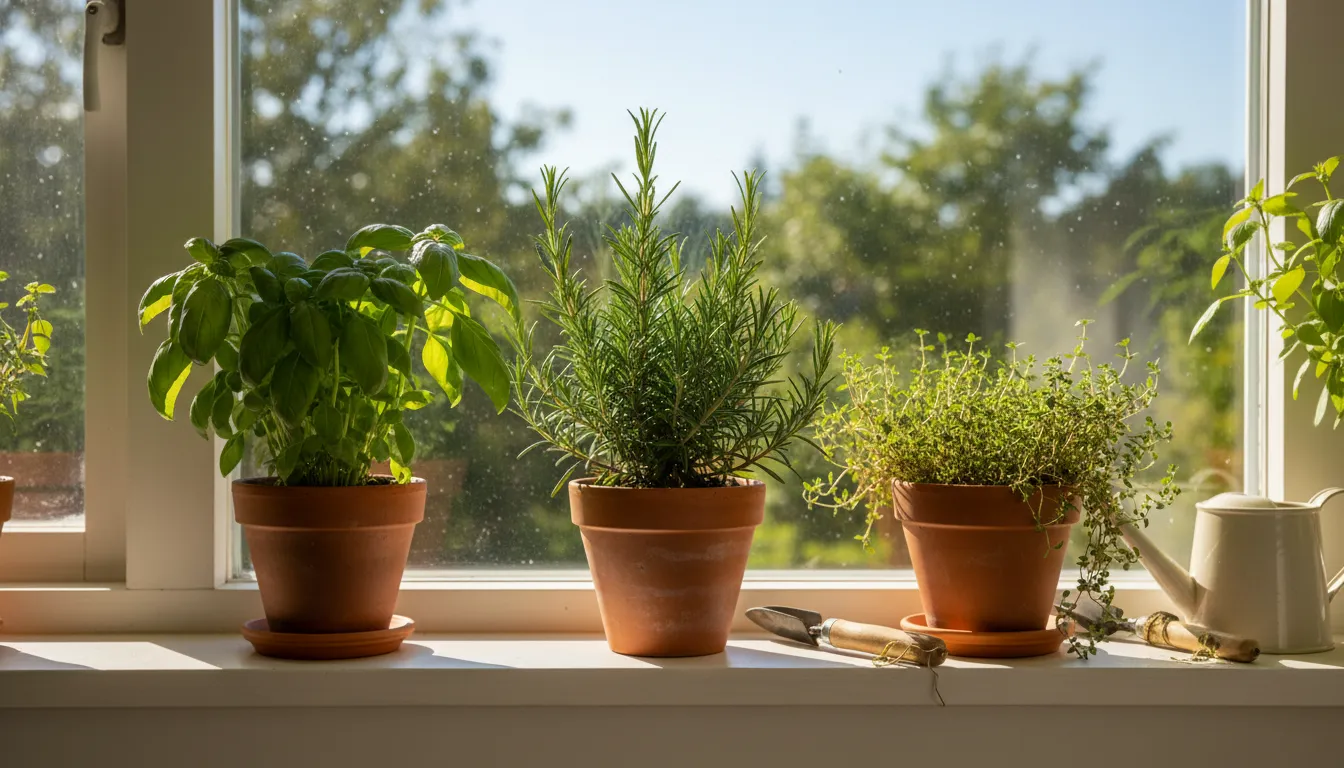
Imagine opening the fridge to prepare dinner and, instead of finding a wilting bunch of parsley in the drawer, walking to the window to pick exactly what you need, fresh, aromatic, and grown with your own hands. This simple scene represents a powerful shift in how we relate to food, the space we live in, and the planet. Growing an herb garden at home is one of the most accessible and rewarding practices anyone can adopt, whether you have a backyard or just a windowsill.
Beyond the immediate pleasure, there is a real environmental impact to this choice. Many of the herbs sold in supermarkets travel long distances to reach the consumer, generating transportation emissions and producing plastic packaging waste—often non-recyclable. When you grow your own basil, rosemary, or chives, you directly reduce this chain of impacts. And, as you will see in this guide, the process is surprisingly simple.
In the following sections, we will cover everything you need to know to set up your first herb garden at home: which plants to choose, how to prepare the space, daily care, and how to make the most of each harvest. If you’ve already taken steps toward a more sustainable lifestyle—perhaps exploring sustainable habits that transform your daily life—an herb garden is the next natural and concrete step.
Why Growing Herbs at Home is a Sustainable Choice
Growing aromatic herbs at home is not just a charming hobby: it is a decision with measurable environmental implications. The global food system is responsible for a significant portion of greenhouse gas emissions, and part of this impact comes from the transportation, refrigerated storage, and distribution chain of fresh products—including the herbs that appear packaged in plastic on shelves.
When you grow at home, you also reduce food waste. Supermarket-bought herbs have a short shelf life and often end up in the trash before being fully used. In a home garden, you harvest only what you need, at the right time. This simple gesture combats food waste, a serious problem: according to the United Nations Food and Agriculture Organization (FAO), approximately one-third of all food produced worldwide is wasted globally.
Moreover, home gardens, even small ones, contribute to urban biodiversity, attract pollinators like bees and butterflies, and help create a connection with the natural cycles of life—something increasingly rare in cities.
Which Herbs to Choose: The Best for Beginners
Choosing the right plants makes all the difference for beginners. Some herbs are extraordinarily resilient and tolerant to mistakes, making them perfect for a first encounter with cultivation.
| Herb | Light Needed | Watering | Difficulty |
|---|---|---|---|
| Basil | Full sun | Frequent | Easy |
| Chives | Sun to partial shade | Moderate | Very easy |
| Parsley | Sun to partial shade | Moderate | Easy |
| Mint | Partial shade | Moderate | Very easy |
| Rosemary | Full sun | Sparse | Easy |
| Thyme | Full sun | Sparse | Easy |
| Cilantro | Sun to partial shade | Moderate | Intermediate
Tips for different spaces:
|