
Imagine opening a trash can at the end of the week and finding only a small handful of waste—or almost nothing. Does it sound like utopia? For thousands of people around the world, this scenario is already a reality. The Zero Waste movement proposes exactly this: rethinking our relationship with consumption and waste in such a profound way that virtually nothing needs to go to landfill or incineration.
In Brazil, the generation of urban solid waste is a monumental challenge. According to the Panorama of Solid Waste in Brazil, published by the Brazilian Association of Public Cleaning and Special Waste Companies (Abrelpe), the country generates tens of millions of tons of waste per year, and a significant portion still ends up in dumps or inadequate landfills. At the same time, the pressure on natural resources is growing, and the impacts of climate change make it urgent to review our daily habits.
The good news is that the Zero Waste lifestyle does not require perfection. It is, above all, a journey of conscious choices—and every small step counts. In this article, you will understand what the movement is, its logic, and how to start adopting it today, without radicalism and with real results.
What is the Zero Waste Movement
The concept of Zero Waste goes far beyond recycling more. It starts with a critique of the linear system of production and consumption—the model where we extract resources from nature, manufacture products, use, and discard them. Instead, Zero Waste proposes a circular system, where materials return to the production cycle or nature without causing harm.
The Zero Waste International Alliance (ZWIA) defines Zero Waste as “the conservation of all resources through responsible production, consumption, reuse, and recovery of products, packaging, and materials, without burning and without discharges to land, water, or air that threaten the environment or human health.” It is a broad definition that involves both individual behavior and public policies and corporate responsibility.
In the domestic and individual context, the movement became very well known thanks to activist and writer Bea Johnson, whose book Zero Waste Home (2013) popularized the so-called 5 Rs, a hierarchy of practical actions that guide those who want to start.
The 5 Rs of Zero Waste: The Foundation of the Lifestyle
The 5 Rs form the backbone of any Zero Waste journey. They should be applied in this order, as the sequence matters:
- Refuse: Do not accept what you do not need—plastic bags, disposable freebies, unnecessary packaging, printed flyers. Refusing is the most powerful step because it prevents waste from being generated.
- Reduce: Consume less. Evaluate what you really use, avoid impulse buying, and prioritize quality over quantity.
- Reuse: Give new life to objects before discarding them. Prefer durable products, shop at thrift stores, repair what is broken.
- Recycle: Only what cannot be refused, reduced, or reused should be recycled. Recycling is important, but it is not the final solution—it still consumes energy and is not always possible.
- Rot: Compost organic waste. In Brazil, organic waste represents a very significant part of household waste—some studies indicate more than half of the volume generated in homes.
This hierarchy shows that recycling is not the first step, but the penultimate one. It is a fundamental change in perspective.
Why Adopting Zero Waste Goes Beyond the Individual
It is tempting to treat Zero Waste only as a matter of personal choices, but the movement has a very important collective and systemic dimension. When consumers consistently refuse plastic packaging, they send a signal to the market. When municipalities adopt Zero Waste policies—such as efficient selective collection, community composting incentives, and reverse logistics—the results are amplified.
Cities like San Francisco in the USA and Kamikatsu in Japan have become world references by achieving high landfill diversion rates thanks to structured programs. In Brazil, municipal initiatives for selective collection and partnerships with waste picker cooperatives have advanced, although unevenly across regions.
The link between waste and climate is also direct. The decomposition of organic matter in landfills generates methane, a greenhouse gas much more potent than carbon dioxide in the short term, as pointed out by reports from the IPCC (Intergovernmental Panel on Climate Change). Reducing the sending of organics to landfills—through composting—is, therefore, also a concrete climate action.
How to Start: Step-by-Step Guide to Adopting Zero Waste
The transition to Zero Waste does not need to happen overnight. Here is a practical path to start:
- Conduct a waste audit: Before changing anything, observe what you discard during a week. What are the most frequent items? This diagnosis will guide your priorities.
- Start in the kitchen: It’s where most household waste is generated. Swap plastic packaging for glass jars, use cloth bags for shopping, and plan meals to reduce food waste.
- Create a Zero Waste kit for going out: Reusable water bottle, eco-bag, metal or bamboo cutlery, and reusable cup eliminate a significant amount of disposables in daily life.
- Start a compost bin: Even in apartments, it is possible to compost with worm bins (vermicomposting) or countertop composters. The compost generated is an excellent fertilizer for plants.
- Explore bulk stores and zero waste shops: More and more Brazilian cities have stores that sell in bulk (grains, legumes, spices, cleaning products) without packaging. Research options in your area.
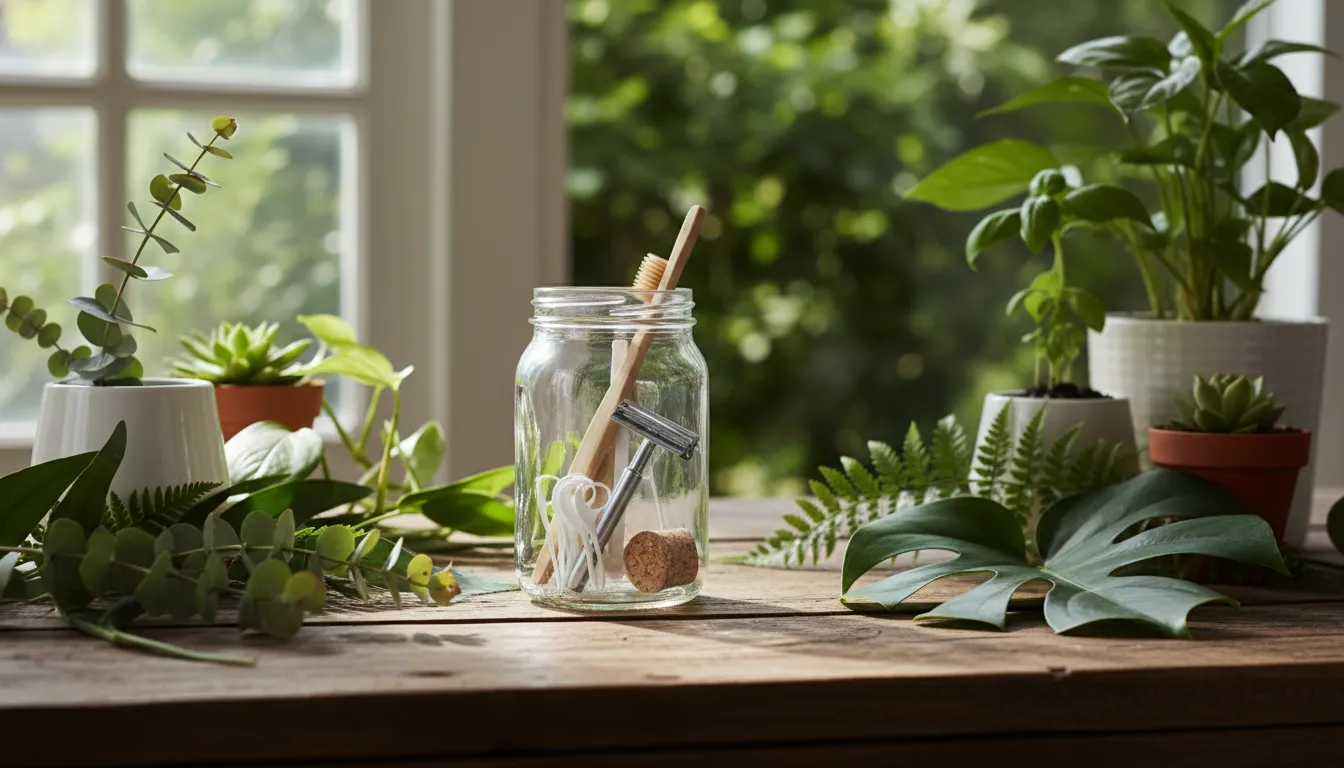
- Rethink the bathroom: Solid shampoo bars, solid soaps, bamboo toothbrushes, and reusable pads or menstrual cups are consolidated and accessible alternatives.
- Connect with the community: Exchange groups, thrift markets, community composting collectives, and solidarity economy networks make the journey easier and more fun.
Practical Swaps: From Disposable to Durable
The table below presents simple substitutions that anyone can start making:
Disposable Item Durable or Sustainable Alternative Plastic bag Cotton or jute eco-bag PET bottle Glass or stainless steel bottle Disposable cup Reusable cup or mug Aluminum foil / plastic wrap Glass container with lid or beeswax wrap Disposable pad Cloth pad or menstrual cup Plastic bottle shampoo Shampoo bar Synthetic dish sponge Cellulose or sisal fiber sponge Disposable batteries Rechargeable batteries These swaps, in addition to reducing waste, often save money in the medium and long term, as durable products are used for much longer.
Zero Waste and Food: A Powerful Combination
One of the largest sources of household waste is directly linked to what we eat—not only because of packaging but also due to food waste. Planning menus, making shopping lists, and learning to use food leftovers creatively are habits that make a real difference.
Additionally, choosing a more plant-based diet and buying from local producers or at farmers’ markets helps reduce packaging and the overall environmental footprint of the diet. If you want to delve deeper into this topic, check out our content on Sustainable Diet: What It Is and Why It Matters.
The combination of Zero Waste and conscious food choices is one of the most effective ways to reduce a family’s environmental impact in daily life.
Real Challenges and How to Deal with Them
Being honest about the difficulties is important so that no one gives up before starting. Some common obstacles include:
- Lack of local infrastructure: Not every city has efficient selective collection, voluntary drop-off points, or bulk stores. In these cases, prioritize the Rs you can apply and push for collective improvements.
- Initial cost: Some substitutions (like glass containers or the compost bin) require an initial investment. Start with what you have and gradually replace, prioritizing items that pay off quickly.
- Family resistance: Habit changes are easier when the whole household is engaged. Start by example, without imposing, and celebrate each collective achievement.
- Perfectionism: Zero Waste is not about perfect zero waste—it’s about reducing as much as possible within each person’s real possibilities. Progressing is better than being paralyzed in the pursuit of perfection.
Conclusion: Every Choice Matters
The Zero Waste lifestyle is an invitation to consume with more intention, value what already exists, and create less impact on the planet. It does not require you to change everything at once, nor to give up comfort—it does require you to be willing to question habits and experiment with alternatives.
Start with a small swap this week. Maybe it’s carrying an eco-bag, setting up a countertop composter, or simply refusing the plastic straw next time. Each individual gesture, added to those of thousands of people, has the power to transform markets, influence policies, and relieve the pressure on the ecosystems that sustain life on Earth.
The planet thanks you. And you will thank yourself too—for a more organized home, a more efficient budget, and the satisfaction of knowing you are doing your part.
Back To Top - Initial cost: Some substitutions (like glass containers or the compost bin) require an initial investment. Start with what you have and gradually replace, prioritizing items that pay off quickly.
- Start in the kitchen: It’s where most household waste is generated. Swap plastic packaging for glass jars, use cloth bags for shopping, and plan meals to reduce food waste.
- Reduce: Consume less. Evaluate what you really use, avoid impulse buying, and prioritize quality over quantity.
