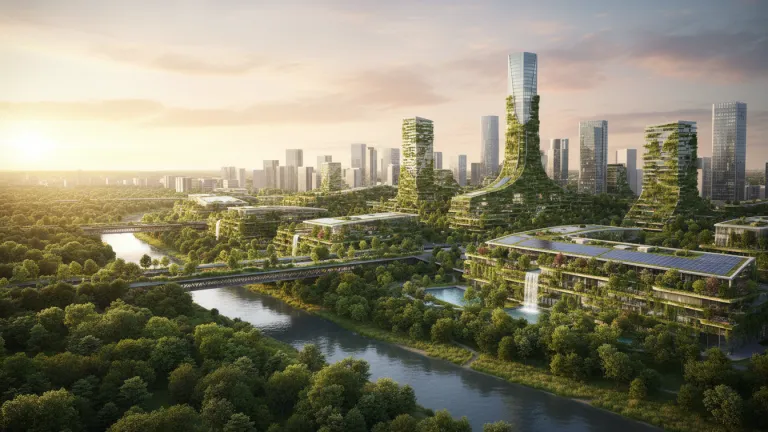
Smart and Sustainable Cities: Defining Characteristics
Imagine waking up in a city where buses arrive on time because sensors monitor passenger flow in real-time, where street lighting adjusts automatically based on pedestrian presence, and where waste is collected only when containers are truly full—without unnecessary routes. Does it sound like science fiction? It’s not. By 2026, this model is already a reality in dozens of cities worldwide and is rapidly advancing in Brazil.
The concept of a smart and sustainable city has gained momentum in recent decades as a response to an urgent challenge: more than half of the world’s population now lives in urban areas, and this number continues to grow. According to the UN, by 2050, about 68% of humanity will be concentrated in cities. This densification brings enormous pressures on energy, water, mobility, waste, and quality of life—and it’s precisely here that technology combined with sustainability can make a transformative difference.
But what exactly defines a city as “smart and sustainable”? The answer goes far beyond technological gadgets or solar panels on the city hall’s roof. It involves governance, citizen participation, resource efficiency, social equity, and a long-term vision for the territory. In this article, we will unveil the pillars that build this concept—and show how you can recognize (and help build) such a city where you live.
The Two Pillars: Intelligence and Sustainability Are Inseparable
It’s tempting to think of “smart city” as synonymous with technology and “sustainable city” as synonymous with nature. But these two dimensions are deeply interdependent.
Urban intelligence refers to the use of data, connectivity, and technology to make city systems more efficient and responsive. Meanwhile, urban sustainability concerns a city’s ability to meet present needs without compromising future generations—a concept that dates back to the classic definition of sustainable development established by the UN in the Brundtland Report of 1987.
When these two pillars meet, something powerful emerges: a city that uses data to consume less energy, monitors air quality to protect residents’ health, and plans land use to preserve green areas and reduce flooding. In other words, technology serving the collective and environmental good—not just economic efficiency.
Sustainable Urban Mobility: The Heart of the Smart City
No topic is more central to urban life than how people move around. Transportation accounts for a significant portion of greenhouse gas emissions in cities and is also responsible for much of the air pollution, accidents, and wasted time.
A smart and sustainable city radically rethinks mobility. This means:
- Prioritizing quality public transport that is integrated and powered by clean energy
- Expanding bike lanes and sidewalks, encouraging active, carbon-free commuting
- Adopting electric vehicles in the municipal fleet and creating accessible charging infrastructure
- Using real-time data to optimize routes, traffic lights, and line frequencies
- Integrating modes—bus, subway, shared bicycles, and walking—into a single fluid system
Cities like Oslo, Norway, and Curitiba, Brazil, are historical references in this field. Curitiba, in particular, developed a Bus Rapid Transit (BRT) system decades ago that is still studied as a global model of low-cost sustainable mobility.
Clean Energy and Energy Efficiency in Cities
The way a city produces and consumes energy is one of the most objective criteria for assessing its sustainability. Smart cities pursue two simultaneous goals: reducing consumption through efficiency and shifting to renewable sources.
Public lighting is a clear example. Replacing conventional lamps with LEDs with presence and light sensors can significantly reduce urban lighting energy consumption—and such projects are already underway in several Brazilian cities. Additionally, public buildings with solar panels, smart air-conditioning management, and energy certifications help reduce the municipal administration’s footprint.
For citizens, the energy transition also happens at the individual level. If you want to understand how solar energy can work in your home within this broader context, it’s worth reading How Residential Solar Energy Works in Practice.
Smart grids are another essential element. They allow real-time balancing of supply and demand, integrate distributed generation—such as residential solar panels—and prevent waste. In Brazil, ANEEL has regulated and encouraged the expansion of micro and mini distributed generation, which has grown considerably in recent years.
Waste Management, Water, and Natural Resources
A sustainable city treats its natural resources as what they are: finite and precious.
Smart Urban Water Management
Water waste in distribution networks is a serious problem in many Brazilian cities. Monitoring systems with sensors can identify leaks in real-time, reducing losses before the problem worsens. Moreover, smart cities promote:
- Rainwater harvesting and reuse in public and private buildings
- Decentralized sewage treatment systems
- Progressive tariffs that encourage rational use
Intelligent Solid Waste Management
Smart selective collection uses sensors in containers to optimize collection routes, saving fuel and time. But the foundation remains the same: reduce, reuse, and recycle. Cities that close the loop—turning organic waste into biogas or compost, and recyclable waste into raw material—advance toward urban circular economy.
Green Infrastructure and Biodiversity
Parks, ecological corridors, green roofs, and permeable pavements are not just aesthetics. They regulate urban temperature (combating the heat island effect), absorb rainwater (reducing flooding), filter the air, and increase population well-being. The IUCN recognizes so-called nature-based solutions as fundamental strategies to make cities more resilient to climate change.
Governance, Data, and Citizen Participation
Technology without democracy does not make a smart city—it makes a city of control. This is a critical point often overlooked in smart city debates.
A truly smart and sustainable city places the citizen at the center. This implies:
- Transparency in public data: information about air quality, municipal spending, and services should be accessible to all
- Digital participation channels: platforms where residents can report problems, vote on investment priorities, and track projects
- Digital inclusion: ensuring that technology does not deepen inequalities—people without internet access also need to be served
- Protection of personal data: cameras, sensors, and apps collect vast amounts of information; data governance is a matter of civil rights
The Brazil Smart Cities Index, published by Connected Smart Cities, evaluates municipalities in various dimensions—mobility, environment, energy, education, health, security, and governance. In 2026, cities like São Paulo, Curitiba, Florianópolis, and Campinas rank among the best, but there is much room for improvement, especially in medium and small cities.
How You Can Contribute to Making Your City More Sustainable
Urban transformation doesn’t just happen from the top down. Informed and engaged citizens are the engine of any real change. Here’s a practical guide on what you can do today:
- Get to know your city’s Master Plan—it’s the document that defines how the territory will grow. Participate in public review hearings when available.
- Use and advocate for public transport—the more people use it, the more resources are invested in improving the system.
- Reduce car use whenever possible: walking, cycling, or using public transport are choices that have a collective impact.
- Separate your waste correctly and find out about selective collection and voluntary drop-off points in your area.
- Monitor air quality in your neighborhood—there are apps and public platforms that show this data in real-time.
- Report environmental irregularities to the competent authorities (IBAMA, municipal environmental departments).
- Talk to your neighbors—condominiums that implement selective collection, composting, and shared solar energy multiply the impact.
- Demand from candidates and managers concrete commitments to clean mobility, green areas, and energy efficiency.
And remember: the choices we make at home also build the city. Adopting a sustainable lifestyle in everyday life is the first step to being an active part of this urban transformation.
What Differentiates a Smart City from a Merely Technological One
It’s worth highlighting an important distinction. Having surveillance cameras everywhere, municipal service apps, and sensors scattered throughout the city is not enough to characterize a city as smart and sustainable.
| Merely Technological City | Smart and Sustainable City |
|---|---|
| Uses technology for control | Uses technology for collective well-being |
| Focus on economic efficiency | Focus on quality of life and environment |
| Centralized and opaque data | Open data and participatory governance |
| Ignores digital inequalities | Inclusion as a principle |
| Isolated and disconnected projects | Systemic and integrated vision |
What truly defines a smart and sustainable city is the intention behind the choices: technology serving people and the planet, with equity, transparency, and a long-term vision.
Conclusion: Every City Begins with Its People
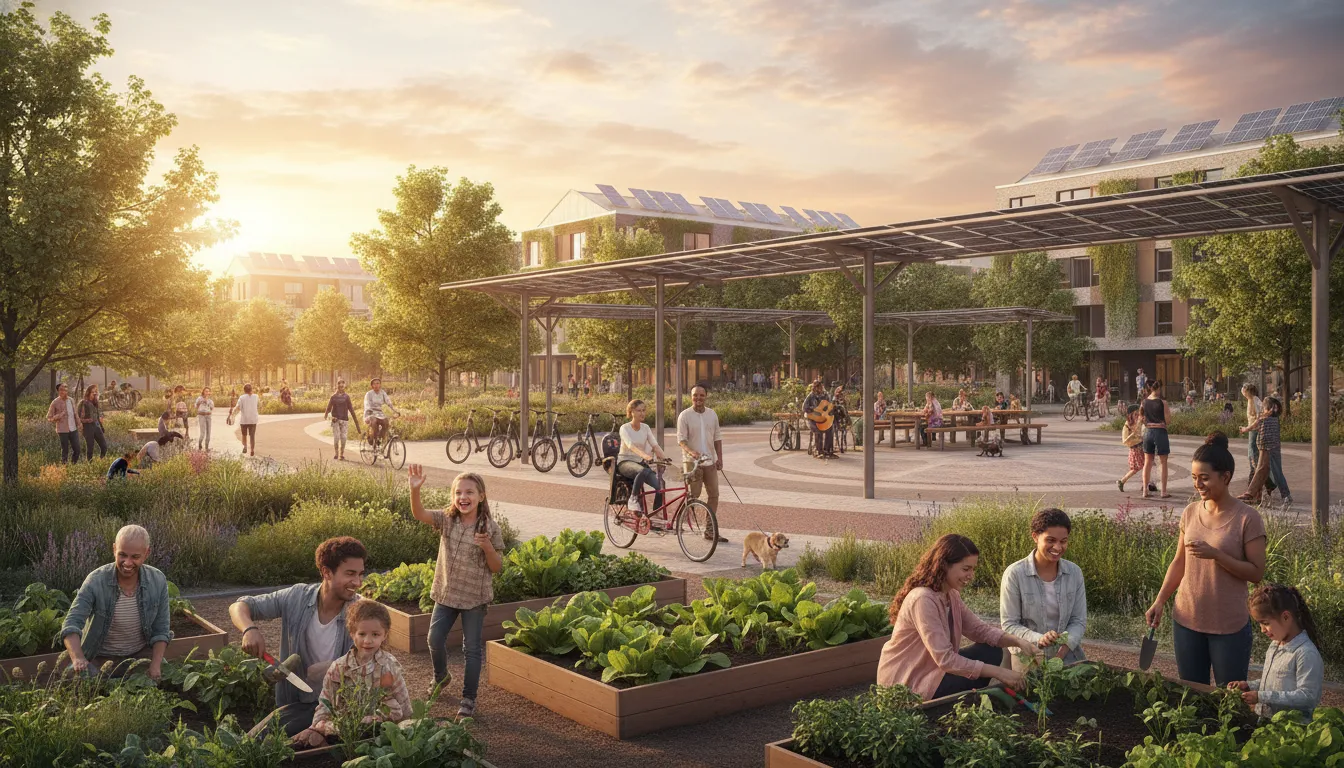
There is no single formula for the ideal smart and sustainable city. Each territory has its characteristics, culture, resources, and specific challenges. What exists is a set of principles—energy efficiency, clean mobility, smart resource management, citizen participation, and inclusion—that, when applied consistently, transform any city towards a better future.
The good news is that this future is already being built, at different paces and forms, in Brazilian cities and around the world. And you are part of it. Whether by holding your representatives accountable, making more conscious mobility choices, sorting waste, or simply staying informed—every action contributes to the whole.
The city we want to live in is ultimately a reflection of the values we choose to practice. Start with your street, your neighborhood, your condominium. Urban transformation happens right there.
