Wind Energy: Understanding How It Generates Electricity
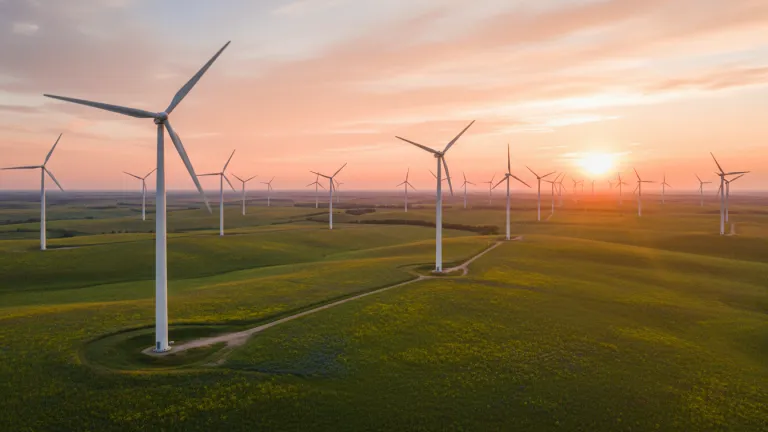
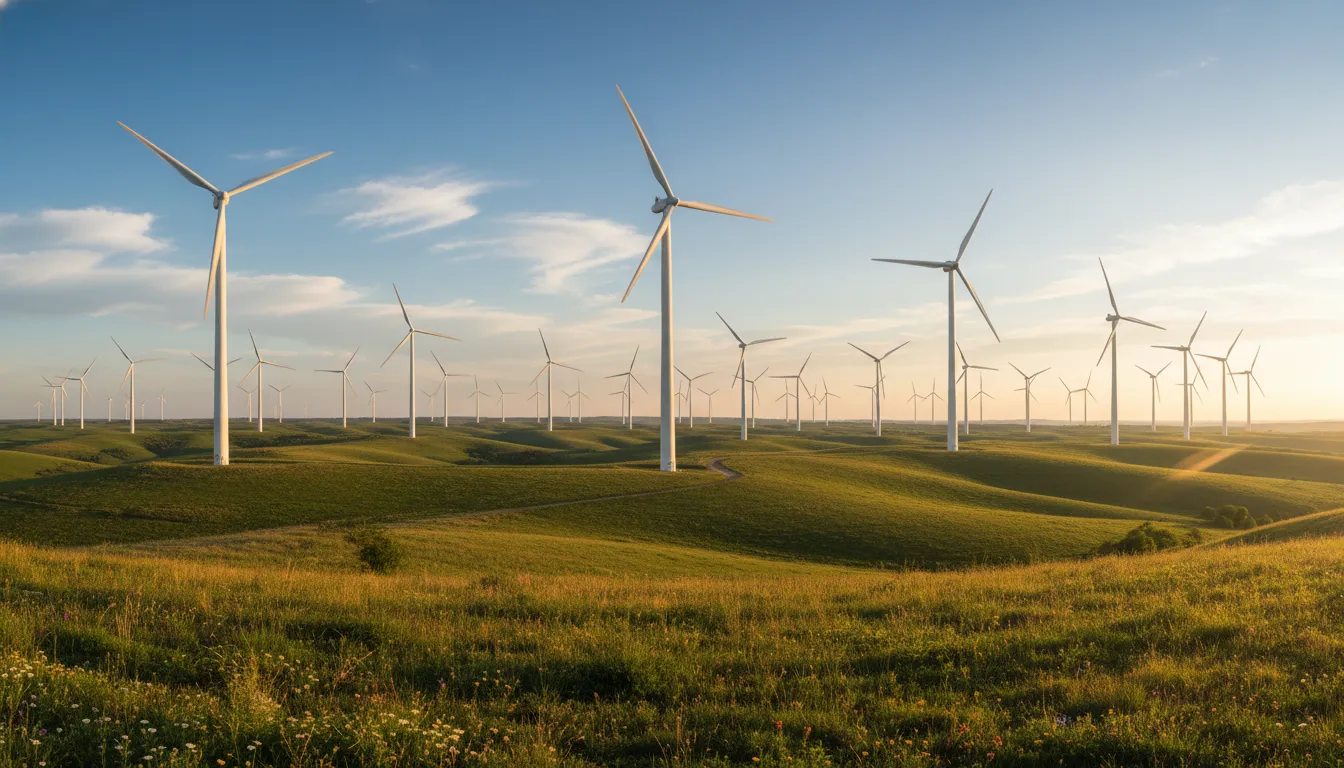
Imagine looking at the horizon and seeing those enormous white blades gently spinning against the blue sky. It seems almost magical: the wind, something you can’t see or touch, being harnessed and transformed into electricity capable of lighting up homes, schools, and hospitals. Wind energy is no longer a technology of the future—it’s here now, growing rapidly and playing an increasingly central role in the global energy transition.
Brazil is one of the most privileged countries in the world when it comes to wind. With consistent winds, especially in the Northeast region, and an extensive coastline, Brazil’s wind potential is enviable. According to data from ANEEL (National Electric Energy Agency), wind energy already represents a significant portion of Brazil’s electric matrix, placing the country among the world’s largest producers of this renewable source.
But how exactly does wind become electricity? What are the advantages and limitations of this technology? And what can you, as a citizen, do with this knowledge? In this article, we will explain everything clearly and practically—because understanding where our energy comes from is the first step to making more conscious choices.
What is Wind Energy and Why It Matters
Wind energy is the energy obtained from the movement of air—in other words, from the wind. It is a form of kinetic energy: moving air has mass and velocity, and this combination generates force. Humans have harnessed this force for millennia, from windmills used to grind grain in ancient Persia to modern turbines that generate megawatts of electricity.
The fundamental difference between historical windmills and modern turbines is in scale and efficiency. Today, a single large wind turbine can generate enough energy to power hundreds of homes. When grouped into wind farms, these turbines form power plants that compete in capacity with traditional energy generation sources.
What makes wind energy especially relevant in the current context is its environmental profile. It does not burn fuel, does not emit greenhouse gases during operation, and has a much lower carbon footprint than fossil sources throughout its lifecycle. For a planet urgently seeking to reduce its emissions, wind is a powerful ally.
How a Wind Turbine Works: From Wind to Outlet
The basic principle: transformed kinetic energy
The process begins when the wind hits the turbine blades. These blades are carefully designed in an aerodynamic shape—similar to airplane wings—so that air flows differently above and below them, creating a pressure difference. This difference generates lift, causing the blades to rotate.
The rotational movement of the blades drives a central shaft. This shaft is connected to an electric generator located inside the nacelle (the “cabin” at the top of the tower). Inside the generator, mechanical movement is converted into electrical current through the principle of electromagnetism—the same one described by James Clerk Maxwell in the 19th century.
The generated electricity then passes through a transformer that adjusts the voltage so it can be transmitted through the conventional power grid. After traveling through transmission lines, it reaches substations and, finally, homes and businesses.
Main components of a wind turbine
Blades: Usually three, made of fiberglass or carbon, with lengths that can exceed 80 meters in larger turbines.
Nacelle: Houses the generator, gearbox, and control systems. It sits atop the tower and can weigh dozens of tons.
Tower: Tubular steel or concrete structure that supports the entire assembly and positions the blades at heights where winds are stronger and more consistent.
Control system: Computers that rotate the nacelle so the blades always face the wind and adjust the blade angle (pitch control) as wind speed varies.
Foundation: Onshore, these are buried concrete foundations. Offshore, they can be fixed structures or floating platforms.
Types of Wind Farms: Onshore and Offshore
Onshore wind: on solid ground
Onshore wind farms are the most common in Brazil. They are installed in regions with good wind incidence—in Brazil, the Northeast stands out, especially states like Ceará, Rio Grande do Norte, Bahia, and Piauí. The installation cost is lower than at sea, logistics are simpler, and maintenance is more accessible.
An interesting feature of onshore farms is that the towers are installed at a distance from each other, allowing the land between them to continue being used for agriculture or livestock. It is a form of shared land use that benefits rural producers, who often receive royalties for land leasing.
Offshore wind: at sea
Offshore wind farms are installed in the ocean, where winds are usually stronger and more consistent than on land. Although installation costs are considerably higher, energy generation tends to be more stable and predictable.
Brazil is in the early stages of offshore wind development, with studies and projects underway, but still without large-scale commercial operation by 2026. Countries like the United Kingdom, Denmark, and China already have extensive and expanding offshore farms. It is a sector that is expected to grow significantly in the coming years in national territory, given the potential of the Brazilian coast.
Wind Energy in Brazil: A Current Overview
Over the past two decades, Brazil has built a prominent position in the global wind energy scene. The country has one of the best wind regimes on the planet for onshore generation: winds in the Northeast are predominantly unidirectional and constant throughout the year, resulting in capacity factors (the proportion of time the plant operates near maximum capacity) far superior to the global average.
The Brazilian Wind Energy Association (ABEEólica) monitors the sector and regularly publishes data on the expansion of installed capacity in the country. The growth of wind energy directly contributes to reducing Brazil’s dependence on thermal power plants—especially during drought periods when hydroelectric generation falls.
Another relevant point is the socioeconomic impact. The installation of wind farms in historically less developed regions of the Northeast has generated jobs, municipal tax revenue, and local infrastructure development, creating benefits that go beyond clean energy generation.
Advantages and Limitations of Wind Energy
Why wind energy is a good choice
Renewable and inexhaustible source: Wind is a natural resource that does not deplete with use.
Very low emissions during operation: A wind turbine does not release CO₂, methane, or other pollutants while generating energy.
Competitive generation cost: In recent decades, the cost of wind energy has dropped dramatically, making it one of the cheapest sources of electricity generation in many regions of the world.
Compatibility with other land uses: Onshore farms allow the land to continue being used for agriculture.
Decentralized generation: Wind farms can be installed in remote areas, bringing energy to distant communities.
Challenges and limitations to consider
Intermittency: The wind does not blow consistently and predictably. Wind generation needs to be complemented by other sources or energy storage systems.
Visual and noise impact: Turbines alter the landscape and produce noise, which can cause conflicts in certain locations.
Impact on wildlife: Birds and bats can be affected by moving blades. Environmental impact studies and mitigation measures are essential before any installation.
Manufacturing and disposal logistics: Blades are difficult to recycle. The industry is investing in solutions, but disposal remains a real environmental challenge.
Need for suitable winds: Not every region has sufficient wind potential to justify installation.
How You Can Support and Benefit from Wind Energy
You don’t need to be an engineer or investor to play an active role in the expansion of clean energy. Here are concrete actions anyone can take:
Choose energy suppliers with renewable origin certification: In Brazil, the Renewable Energy Certificate (REC) system allows consumers to choose electricity from clean sources.
Support favorable public policies: Engage with political representatives and movements advocating for the expansion of renewables in the energy matrix.
Reduce your energy consumption: Less consumption means less pressure on the entire electric matrix. Switch to LED bulbs, turn off standby equipment, and use efficient appliances.
Invest in sector funds and companies: The financial market offers investment options in renewable energy, including infrastructure funds linked to wind energy.
Stay informed and share: Knowledge is the foundation of any change. Share articles like this with people around you.
Wind energy is one of the most elegant answers humanity has found for one of its greatest challenges: generating electricity without destroying the planet. Using what nature already offers—the movement of air—to power our cities is both an act of ingenuity and humility in the face of natural systems.
Brazil has extraordinary wind potential, and the country is gradually learning to harness it more broadly and strategically. Each installed turbine represents not only megawatts of clean energy but also jobs, regional development, and a concrete reduction in climate-warming emissions.
You don’t need to build a turbine to make a difference. Understanding how wind energy works, supporting policies that favor it, and making more conscious consumption choices are already real contributions. The wind is already blowing in the right direction—it’s up to us to set the sails.
Para fornecer as melhores experiências, usamos tecnologias como cookies para armazenar e/ou acessar informações do dispositivo. O consentimento para essas tecnologias nos permitirá processar dados como comportamento de navegação ou IDs exclusivos neste site. Não consentir ou retirar o consentimento pode afetar negativamente certos recursos e funções.
Funcional
Always active
O armazenamento ou acesso técnico é estritamente necessário para a finalidade legítima de permitir a utilização de um serviço específico explicitamente solicitado pelo assinante ou utilizador, ou com a finalidade exclusiva de efetuar a transmissão de uma comunicação através de uma rede de comunicações eletrónicas.
Preferências
O armazenamento ou acesso técnico é necessário para o propósito legítimo de armazenar preferências que não são solicitadas pelo assinante ou usuário.
Estatísticas
O armazenamento ou acesso técnico que é usado exclusivamente para fins estatísticos.O armazenamento técnico ou acesso que é usado exclusivamente para fins estatísticos anônimos. Sem uma intimação, conformidade voluntária por parte de seu provedor de serviços de Internet ou registros adicionais de terceiros, as informações armazenadas ou recuperadas apenas para esse fim geralmente não podem ser usadas para identificá-lo.
Marketing
O armazenamento ou acesso técnico é necessário para criar perfis de usuário para enviar publicidade ou para rastrear o usuário em um site ou em vários sites para fins de marketing semelhantes.