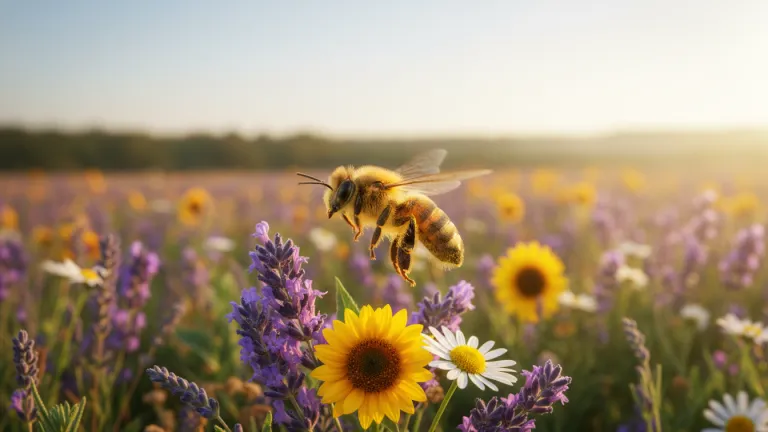
Imagine a world without apples, coffee, strawberries, or almonds. Without the golden honey that sweetens your morning tea. This seemingly dystopian scenario is a real possibility if we continue to ignore the decline of one of the planet’s most important creatures: bees. Small, silent, and often underestimated, they are essential cogs in the machine that keeps terrestrial ecosystems running.
Bees have existed for over 100 million years, according to fossil records, and during this time they have become indispensable for the reproduction of many flowering plants. More than just honey producers, they are professional pollinators — and this role has direct consequences for human food security, biodiversity, and climate balance. It is no exaggeration to say that the fate of bees is deeply intertwined with our own.
In this article, we will understand why bees are so vital to the environment, what is threatening their existence, and, more importantly, what each of us can do — now, wherever we are — to help protect them.
The Role of Bees in Pollination: How They Feed the World
Pollination is the process by which pollen is transferred from one flower to another, enabling plant reproduction. Bees are the main agents of this process globally. As they visit flowers in search of nectar and pollen to feed their hives, they inadvertently transport pollen grains that fertilize new plants.
According to the Food and Agriculture Organization (FAO) of the United Nations, about 75% of the world’s food crops depend, to some extent, on animal pollination — and bees account for most of this service. This includes essential crops like fruits, vegetables, oilseeds, legumes, and spices.
In Brazil, Embrapa has documented the importance of native bees — such as stingless bees of the genus Meliponini — for the pollination of species in the Atlantic Forest, Cerrado, and Amazon. Many of these plants rely exclusively on specific pollinators, making the loss of a bee species potentially irreversible for that ecosystem.
Biodiversity and Ecosystems: Bees as Nature’s Architects
The impact of bees goes far beyond agriculture. They are key players in maintaining plant biodiversity in natural environments. By pollinating wild plants, they ensure the reproduction of species that provide food and shelter for other animals — from birds to mammals, including insects and reptiles.
Think of a forest: the fruit trees that feed monkeys, toucans, and tapirs often depend on bee pollination. If bees disappear, these trees stop reproducing. Without the trees, the animals that depend on them also weaken. It is a chain reaction that can destabilize entire biomes.
Furthermore, bees indirectly contribute to carbon sequestration. Healthy and diverse plants absorb CO₂ from the atmosphere. Forests pollinated by bees grow with more diversity and vigor, becoming more efficient carbon sinks — which plays a direct role in combating climate change documented by the IPCC.
The Decline of Bees: What Is Happening?
Despite their importance, bee populations are declining in various parts of the world. The International Union for Conservation of Nature (IUCN) has classified several bee species as threatened with extinction in its most recent assessments. The phenomenon known as “Colony Collapse Disorder”, observed mainly in managed bee hives, continues to be studied but already has well-identified causes:
- Pesticide use: Neonicotinoid pesticides are associated with disorientation, reduced reproductive capacity, and bee deaths. The European Union has restricted several of these compounds since 2018 due to their impact on pollinators.
- Habitat loss: Deforestation and urban expansion reduce the availability of flowers and nesting sites.
- Agricultural monocultures: Vast areas planted with a single crop offer food for short periods and lack the floral diversity needed to maintain healthy colonies throughout the year.
- Diseases and parasites: The Varroa destructor mite is one of the main vectors of diseases in Apis mellifera hives worldwide.
- Climate change: Changes in flowering patterns, extreme temperatures, and severe weather events desynchronize the cycle of bees with the plants that depend on them.
In Brazil, the situation of native bees is especially worrying. The destruction of the Cerrado — one of the biomes with the greatest diversity of pollinators in the country — continues to advance, according to data from the National Institute for Space Research (INPE).
Native Bees of Brazil: A Little-Known Treasure
Brazil is one of the countries with the greatest diversity of bees in the world. It is estimated that there are over 3,000 species of native bees in Brazilian territory — a number that represents a significant portion of the global diversity of the family Apidae. Among them, stingless bees (meliponines) deserve special mention.
These bees, which do not have functional stingers and are completely harmless to humans, produce honey with recognized medicinal properties and are fundamental pollinators of native plants. Meliponiculture — the rational breeding of stingless bees — is a practice that combines environmental conservation, income generation for rural and indigenous communities, and the production of high-quality food.
Embrapa Amazônia Oriental and other Brazilian research centers have been dedicated to studying and promoting the sustainable breeding of these species, recognizing their strategic role for both biodiversity and family agriculture.
Native Species Region of Occurrence Main Characteristic Melipona quadrifasciata (mandaçaia) South and Southeast High-quality honey, threatened Melipona scutellaris (uruçu) Northeast Cultural and medicinal importance Tetragonisca angustula (jataí) Throughout Brazil Widely distributed, urban Scaptotrigona postica (mandaguari) Central Brazil Pollinator of tropical crops What You Can Do to Help Bees
The good news is that protecting bees does not require large resources or radical lifestyle changes. Small actions, when multiplied by millions of people, have a real impact. Here’s what you can do today:
Practical Actions to Protect Bees in Daily Life
- Plant native flowers: Species like lavender, sunflower, basil, rosemary, and regional wildflowers attract and feed bees. Even in pots on a balcony, you make a difference.
- Avoid or reduce pesticides: Prefer natural pest control methods in the garden. If you need to use a product, apply it at night when bees are inactive.
- Create an “insect hotel”: Simple structures made with bamboo, wood, or drilled logs provide nesting sites for solitary bees. Tutorials are available online for free.
- Leave a “wild” corner in the garden: An area with spontaneous plants, dry leaves, and branches can serve as a habitat for pollinators.
- Buy products from local and organic farmers: By choosing foods produced without synthetic pesticides, you economically reinforce practices that protect bees.
- Support meliponiculture: Buy honey from stingless bees from local producers. Besides being tasty, this consumption encourages the preservation of native species.
- Do not kill bees: If a bee lands on you, stay calm and wait. They rarely sting when they do not feel threatened.
These choices also connect to a more conscious lifestyle overall. If you want to deepen this journey, check out our article on Conscious Consumption: What It Is and Practical Examples — a complete guide to making decisions that benefit the planet.
Public Policies and Science: What Is Being Done
In addition to individual actions, it is important to follow and demand collective measures. In different parts of the world, governments and organizations have advanced in protecting pollinators:
- The European Union maintains restrictions on the use of neonicotinoids in outdoor crops, a measure adopted after robust scientific evidence of their harm to bees.
- Brazil has specific legislation for the protection of stingless bees in some states, such as São Paulo and Minas Gerais, which prohibit the destruction of native hives.
- The FAO has maintained the International Pollinator Platform since 2018, which articulates research, public policies, and conservation actions on a global scale.
- Researchers from the University of São Paulo (USP) and UNICAMP have published relevant studies on the impact of deforestation and pesticide use on native Brazilian bees.
Engaging with these initiatives — whether by signing petitions, participating in public consultations, or simply sharing qualified information — is also a way to protect bees.
Conclusion: Small Wings, Big Responsibility
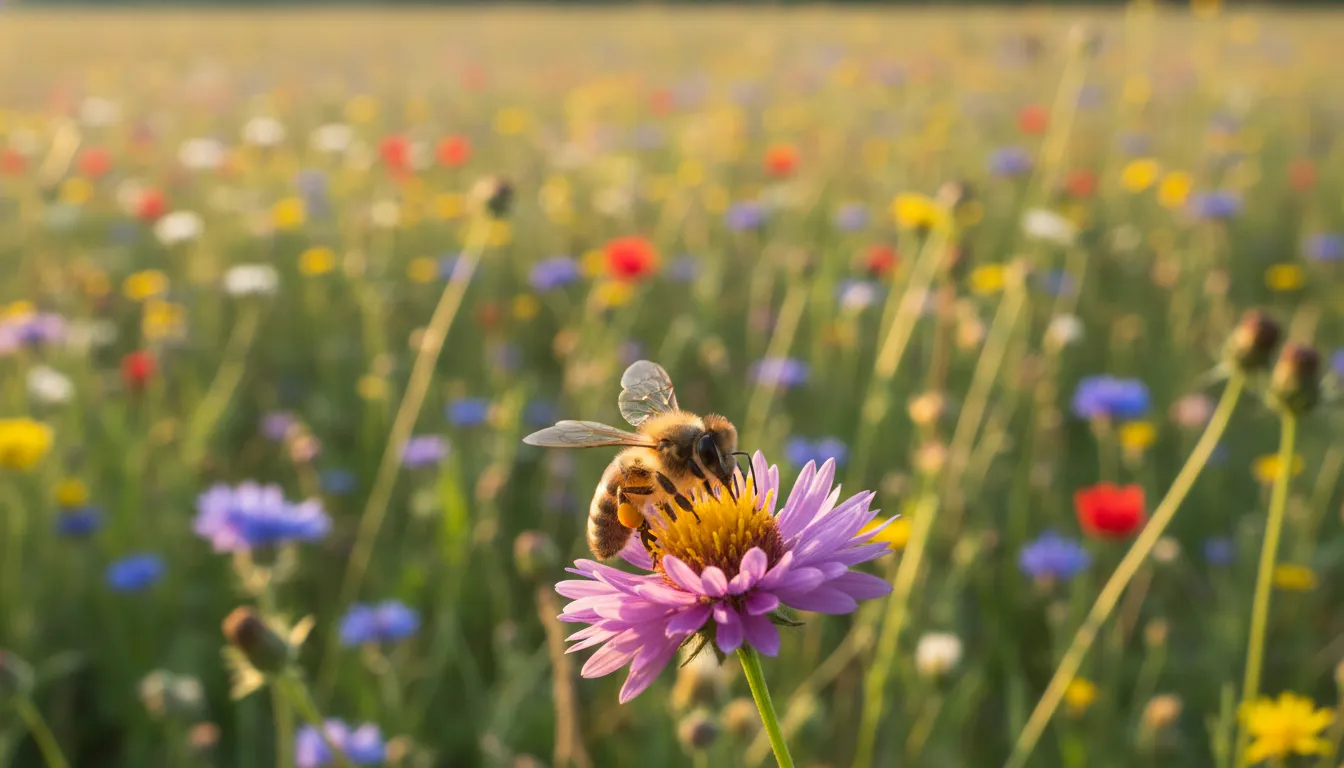
Bees do not need us to treat them as heroes or mythologize them. They just need an environment where they can exist: flowers to visit, healthy soil to nest, clean water to drink, and air free of substances that disorient and sicken them. Ultimately, what is good for bees is good for us.
Every flowered garden, every choice for organic products, every conversation you have about this topic contributes to a future where bees continue doing what they have always done — silently, with extraordinary precision, sustaining life on Earth.
You do not need to be a beekeeper or biologist to be part of this solution. Start small: plant a flower. Buy a jar of native bee honey. Tell someone what you learned today. These are real actions, within anyone’s reach — and together, they matter greatly.
Back To Top - Brazil has specific legislation for the protection of stingless bees in some states, such as São Paulo and Minas Gerais, which prohibit the destruction of native hives.
- Avoid or reduce pesticides: Prefer natural pest control methods in the garden. If you need to use a product, apply it at night when bees are inactive.
- Habitat loss: Deforestation and urban expansion reduce the availability of flowers and nesting sites.
