Why Growing Food in the City Makes All the Difference
Imagine picking a handful of fresh basil straight from the pot on your window, or grabbing a lettuce from the planter on your balcony before lunch. This is not a privilege reserved for those living in the countryside—it’s an increasingly accessible reality for apartment dwellers, homes with small backyards, and even entire communities in urban neighborhoods. Urban farming is shifting from a niche trend to a concrete practice of sustainability, food security, and well-being.
Cities today house more than half of the world’s population, and this percentage keeps growing. Producing at least some of your own food within the urban environment reduces reliance on long distribution chains, decreases plastic packaging waste, and reconnects people with the natural cycle of food. It’s no exaggeration to say that a home garden transforms how you view what you put on your plate.
In this article, you’ll find a practical and comprehensive guide to start—or enhance—your urban food production, regardless of the space you have available.
Urban Farming: What It Is and Why It’s Growing
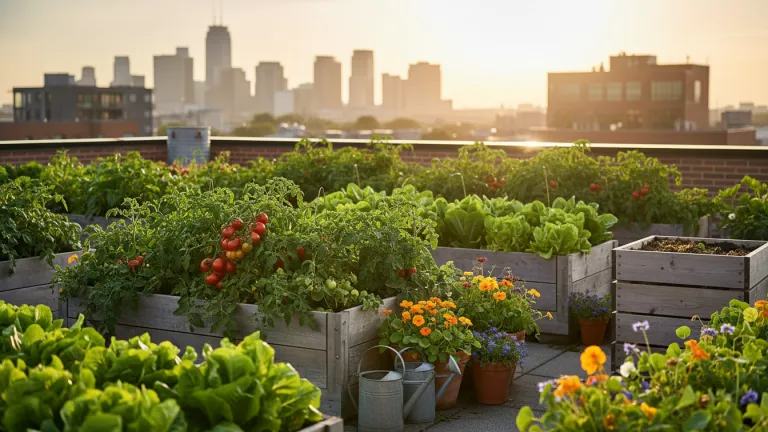
Urban farming encompasses all forms of food production conducted within or immediately around urban areas. This includes home gardens in pots and planters, community gardens in parks and vacant lots, productive rooftops, aquaponics systems in apartments, and even integrated production in commercial buildings.
The movement has gained momentum over the last decade for reasons beyond trendiness. The Covid-19 pandemic, between 2020 and 2022, exposed the fragility of supply chains and spurred genuine interest in local food production. In Brazil, Embrapa and various municipalities have invested in programs promoting urban farming as a strategy for food and nutritional security, especially in urban peripheries.
From an environmental perspective, local production reduces emissions associated with food transportation, decreases the need for prolonged refrigeration, and can be integrated into home composting practices—closing cycles that would typically end in landfills.
How Much Space Do You Really Need for an Urban Garden
One of the biggest barriers people report is the lack of space. But the good news is that almost any space is enough to start.
Options by type of residence
- Apartment without a balcony: small pots on the windowsill, indoor shelves with artificial lighting (such as suitable spectrum LED lights), or vertical gardens mounted on the wall
- Apartment with a balcony: hanging planters, vertical systems, modular planters in metal or wooden structures
- House with a small backyard: raised beds, large pot compositions, integration with composters
- Terrace or rooftop: larger planters, simple drip irrigation systems, family-scale production
Vertical production is one of the most efficient solutions for compact urban environments. A shelf 1 meter long by 1.5 meters high can easily accommodate aromatic herbs, lettuces, arugula, and enough seasonings for the regular consumption of a family of two to three adults.
What Foods to Grow in the City: Best Choices for Beginners
Not everything that grows in the countryside adapts well to pots or environments with partial lighting. The right choice at the start greatly increases the chances of success—and the enthusiasm to continue.
Recommended foods for beginners
| Food | Difficulty | Space required | Time to harvest |
|---|---|---|---|
| Basil | Easy | Small pot (1 L) | 30–45 days |
| Lettuce | Easy | Medium pot or planter | 35–50 days |
| Arugula | Very easy | Shallow planter | 25–35 days |
| Chives | Very easy | Any pot | 30 days |
| Cherry tomato | Medium | Large pot (10–15 L) | 70–90 days |
| Pepper | Easy | Medium pot | 60–80 days |
| Cilantro | Easy | Small pot | 30–45 days |
| Strawberry | Medium | Medium pot | 60–90 days |
Important tip: Aromatic herbs like basil, chives, and mint are excellent for starting because they grow quickly, are frequently used in cooking, and respond well to partial harvests—meaning you can pick some and the plant keeps growing.
How to Set Up Your First Urban Garden: Step by Step
Here’s how to take the first steps practically and without needing sophisticated equipment.
- Assess the available light. Observe how much sun your space receives per day. Most vegetables need at least 4 to 6 hours of direct sunlight. If the lighting is insufficient, invest in grow lights with the appropriate spectrum.
- Choose the right containers. Recycled plastic pots, large PET bottles, treated wooden boxes, reused tires—almost any container works, as long as it has drainage holes at the base.
- Use a good substrate. Mix garden soil, organic compost (or worm humus), and coarse sand or perlite in an approximate ratio of 60%, 30%, and 10%. Avoid using only garden soil, which is often too compacted for pots.
- Plant seeds or seedlings. For beginners, seedlings purchased from nurseries or supermarkets are more practical. Seeds are cheaper and offer more variety but require a bit more attention during germination.
- Water regularly—but not excessively. The most common mistake beginners make is overwatering. Check the substrate’s moisture by inserting your finger about 2 cm into the pot: if it’s still moist, wait to water.
- Add periodic fertilization. In pots, nutrients deplete faster than in the soil. Use organic compost, worm humus, or slow-release fertilizers every 30 to 45 days.
- Observe and adjust. Yellow leaves may indicate a lack of light, excess water, or nitrogen deficiency. Wilted leaves even with moist soil indicate rotting roots. Learn to read the plant.
Home Composting: The Indispensable Partner of Urban Gardening
A truly sustainable urban garden is completed with composting. By composting fruit scraps, vegetable peels, eggshells, coffee grounds, and other organic waste, you turn what would go to waste into high-quality fertilizer—and significantly reduce the volume of waste your home sends to landfills.
Types of composting for apartments
- Layered home composter: Stacked plastic boxes with worms (vermicomposting). Odorless, takes up little space, and produces humus and liquid leachate, excellent for plants.
- Bokashi: Accelerated fermentation of organic waste with inoculated bran. Fast, odorless, and even accepts small amounts of meat and dairy waste.
- Community composting: Many condominiums and neighborhood parks have community composting points—it’s worth researching in your city.
Integrating composting into the garden creates a virtuous cycle: you produce food, use the waste to generate fertilizer, and return that fertilizer to the plants. It’s sustainable living in everyday life in the most concrete way possible.
Collective Urban Farming: Community Gardens and Their Social Importance
Urban farming doesn’t have to be an individual practice. In various Brazilian cities—from São Paulo to Recife, from Porto Alegre to Belém—there are initiatives of community gardens in vacant lots, parks, rooftops of public facilities, and school spaces.
Besides producing fresh food for communities that often have limited access to quality fruits and vegetables, community gardens fulfill important social functions:
- Create spaces for community interaction and knowledge exchange among neighbors
- Introduce children to the food production process
- Generate work and income for urban farmers in socially vulnerable contexts
- Contribute to the revitalization of degraded urban spaces
- Encourage biodiversity in urban environments by attracting pollinators
If you don’t have space at home, research if there’s a community garden in your neighborhood. And if there isn’t—maybe it’s time to propose one to your building manager or neighborhood association.
Practical List: Checklist to Start Your Garden Today
You can start with very little. Here’s the essential:
- [ ] Identify the space with the best light exposure in your home
- [ ] Set aside 2 or 3 pots (new or reused) with drainage holes
- [ ] Buy suitable substrate for pots (garden soil + organic compost)
- [ ] Choose 2 to 3 plants to start with (suggestion: chives, arugula, and basil)
- [ ] Set a simple watering routine (usually every 1–2 days, depending on the season)
- [ ] Set up or acquire a small composter for kitchen organic waste
- [ ] Note the planting date to track development
Conclusion: Your Window Can Be the Start of a Real Change
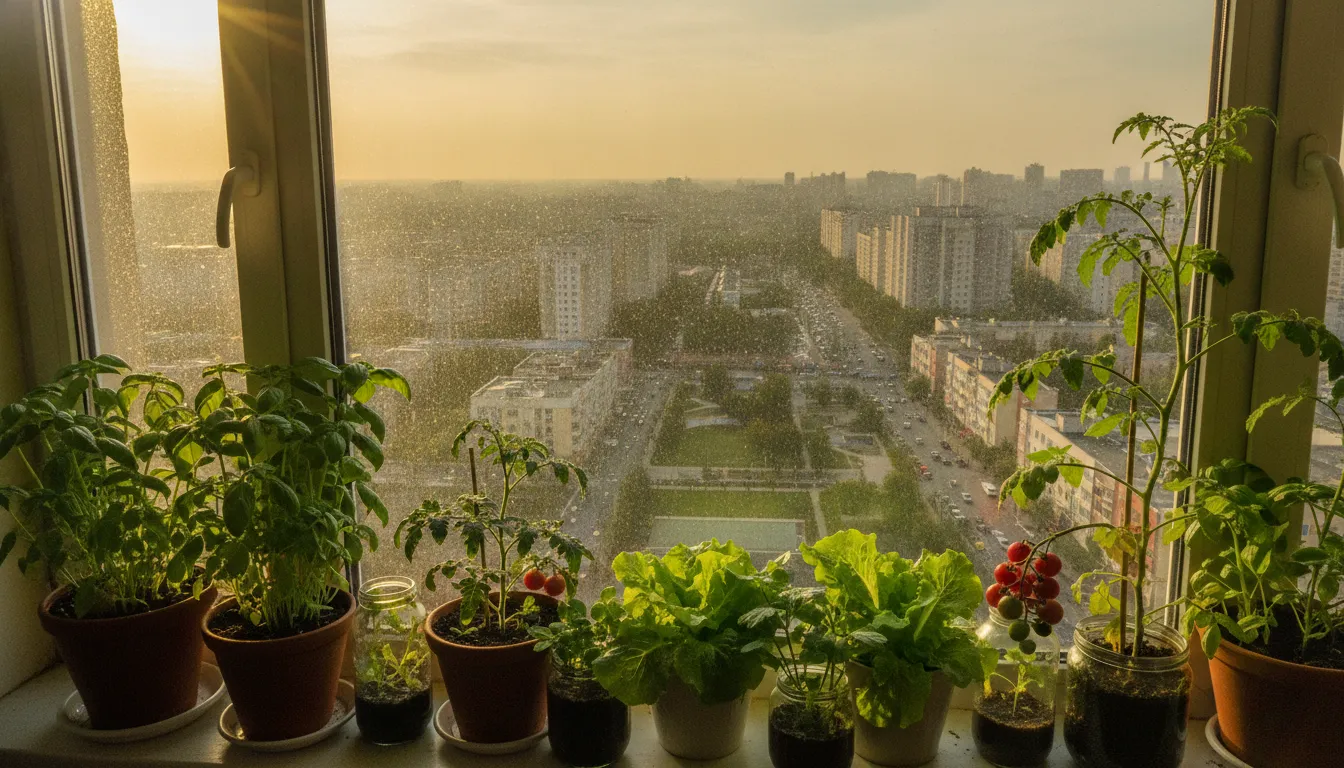
Urban farming won’t single-handedly solve all the challenges of our food system—but it is a genuine and powerful piece of this puzzle. Each pot of lettuce on the balcony represents less plastic packaging at the supermarket, fewer kilometers traveled by a refrigerated truck, and more connection between you and what you eat.
In 2026, with the cost of living putting pressure on household budgets and environmental awareness increasingly present in people’s daily lives, growing part of your own food is a gesture that is both practical, economical, and political. It’s saying, with your own hands, that you want to actively participate in building a fairer and less impactful food system.
Start small. Start today. A pot of chives on the window is the first step toward a completely different relationship with food—and with the planet. If you want to delve even deeper into your sustainable journey, check out our guide on how to start a sustainable life in everyday life and discover other simple changes with a big impact.
