Why the way we move matters so much for the planet
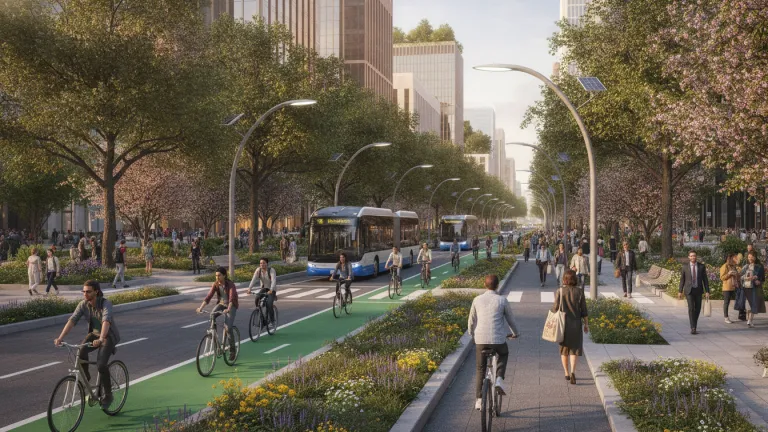
Every time we start a combustion engine, a quantity of carbon dioxide is released into the atmosphere. It seems simple, almost invisible — but, added to billions of daily trips around the world, this habit represents one of the planet’s largest sources of greenhouse gas emissions. According to the IPCC, the transport sector is responsible for about 16% of global GHG emissions, with most coming from vehicles powered by fossil fuels. In Brazil, road transport accounts for a significant portion of national emissions, according to data from the Ministry of Environment and Climate Change.
The good news is that, unlike many environmental challenges that seem distant from our daily reality, transportation is an area where each person can act concretely and immediately. Replacing a car trip with a walk, choosing the subway instead of a ride-sharing app, or considering an electric bike to get to work are choices within reach of many — and, together, they make a real difference.
In this article, we’ll explore the main sustainable transportation options available today, with practical tips to adapt your commute routine without sacrificing comfort or convenience. The goal is not perfection, but progress — one sustainable trip at a time.
Why transportation is one of the biggest urban climate challenges
Urban transportation is, structurally, a collective choice problem. Our cities were planned, in large part, around the automobile — and this created a dependency that goes beyond individual habit. Traffic congestion, air pollution, sedentary lifestyles, and carbon emissions are direct consequences of a model that prioritized the private car for decades.
In the Brazilian context, metropolises like São Paulo and Rio de Janeiro face serious mobility challenges. But solutions are also emerging: expansion of cycling lanes, growth of rail-based public transportation, incentives for electric vehicles, and ride-sharing apps are gradually changing the landscape.
Understanding this context helps you make more conscious choices. When you know the real impact of each transportation mode, it becomes easier to prioritize alternatives — not out of guilt, but out of conviction. If you want to better understand how your trips affect your carbon footprint, check out the article Carbon footprint in transportation: reduce now.
Walking and cycling: the most sustainable transportation options that exist
There is no transportation mode more sustainable than those that emit nothing — and two of them are available to most people: walking and cycling.
Walking generates no emissions, doesn’t occupy significant road space, improves cardiovascular health, and strengthens people’s connection to their neighborhoods. For trips up to 2 kilometers, it’s often faster than driving — especially during rush hour.
Cycling significantly extends this range. For trips up to 10 to 15 kilometers in flat cities, it’s practical, economical, and efficient. In Brazil, cities like São Paulo, Recife, and Fortaleza have expanded their cycling networks in recent years, making this mode safer and more accessible.
How to start cycling in your daily routine
- Evaluate your route: use apps like Google Maps or Strava to identify cycling routes between your home and your most frequent destination.
- Start small: you don’t need to start with 15 km. Replace one or two trips per week and gradually increase.
- Invest in safety: helmet, front and rear lights, and a quality lock are essential items.
- Check local infrastructure: municipalities usually provide maps of cycling lanes and paths on their websites.
- Consider an electric bike: for those with longer trips or living in cities with many hills, the e-bike is an excellent alternative with even lower impact compared to cars.
Public transportation: the underestimated ally of sustainable mobility
A full bus removes dozens of cars from the streets. A subway car can transport hundreds of people with a fraction of the emissions that would be generated if each passenger came in their own vehicle. Collective public transportation is, in essence, one of the most powerful tools for sustainable mobility we have — and also one of the most underestimated.
In Brazil, the challenge is the quality and coverage of service. But in many cities, especially in capitals, the subway, urban trains, and BRT (Bus Rapid Transit) corridors offer fast and accessible alternatives. Using these systems when available is not just an environmental choice — it’s also a smart economic decision.
Tips to get more out of public transportation
- Plan before you leave: apps like Moovit, Google Maps, and official transportation company apps help optimize routes and schedules.
- Combine transportation modes: use a bike or walk to cover the “last mile” to the stop or station.
- Make good use of your time: public transit frees your hands — you can read, listen to podcasts, or simply rest.
- Check passes and benefits: many cities offer reduced fares for students, workers, and low-income people.
Electric vehicles: a transition underway
Electric cars have stopped being a novelty to become a growing market reality in Brazil. In 2025, Brazil recorded record registrations of electrified vehicles — both pure electric and hybrids — a trend that should continue intensifying in 2026 with the expansion of charging infrastructure and federal and state tax incentives.
An electric vehicle is not zero emissions in its entirety — the production of the battery and the energy source used to charge it matter greatly. In Brazil, however, we have a structural advantage: our electricity matrix is predominantly renewable, with highlights for hydroelectric, wind, and solar. This means charging an electric car in Brazil tends to have a significantly lower carbon footprint than in countries with a predominantly fossil fuel matrix.
What to consider before buying an electric vehicle
- Range vs. actual use: evaluate how many kilometers you drive per day and whether the range of the chosen model meets your routine.
- Charging infrastructure: check the availability of electric charging stations on your route and the possibility of installing a charger at home or in your building.
- Total cost of ownership: the purchase price may be higher, but maintenance and fuel costs tend to be lower in the long run.
- Available incentives: check the IPVA, IPTU, and IPI exemptions that states and municipalities offer for electric vehicles.
Ride-sharing and conscious app use
It’s not always possible to give up the car completely — and that’s okay. What we can do is use the automobile more efficiently, and one of the most practical ways to do this is through ride-sharing.
Platforms like BlaBlaCar, ride-sharing groups in messaging apps, and corporate shared van programs help reduce the number of cars in circulation without requiring people to completely give up comfort. When four people share a car, the per capita emissions for that trip drop dramatically.
As for on-demand transportation apps (like Uber and 99), the ideal is to prefer shared trip options, when available, instead of individual trips — and always compare if public transportation wouldn’t be faster and cheaper for that specific trip.
How to build a sustainable mobility routine
There’s no one-size-fits-all formula. The best sustainable transportation strategy is one you can maintain — and that depends on where you live, your work, your health, and the options available in your city. What works is starting with small changes and expanding gradually.
Step-by-step guide to review your mobility
- Map your usual routes: list the trips you make most frequently during the week.
- Evaluate the current mode: for each trip, note how you travel today and why.
- Identify viable alternatives: is there a subway, bus, cycle lane, or quality sidewalk on this route?
- Run a week-long test: choose one trip and try a more sustainable alternative.
- Calculate the impact and cost: compare time, money, and well-being — often, the sustainable alternative is also the most economical.
- Adjust and expand: once one habit becomes established, move on to the next trip.
List of practical actions you can start today
- Replace a car trip with walking or cycling at least once a week
- Download a public transportation route planning app
- Join a ride-sharing group at work or school
- Research if your building accepts electric charging station installation
- Use bike-sharing (like Bike Itaú or municipal systems) for the last mile
The role of companies and public policies
Individual change is important, but not sufficient on its own. Companies have a growing role in this transition: well-structured transit benefits, incentives for employees who bike, electrified fleets, and home office policies that reduce commutes are concrete corporate actions. To understand how companies can act more broadly for sustainability, it’s worth reading about ESG in companies: what it is and why it matters.
On the public policy side, the expansion of cycle lanes, improvement of public transportation, electrification of urban bus fleets, and tax incentives for low-emission vehicles are measures that create the environment necessary for sustainable individual choices to become easier and more accessible.
Conclusion: each trip is a choice, and each choice matters
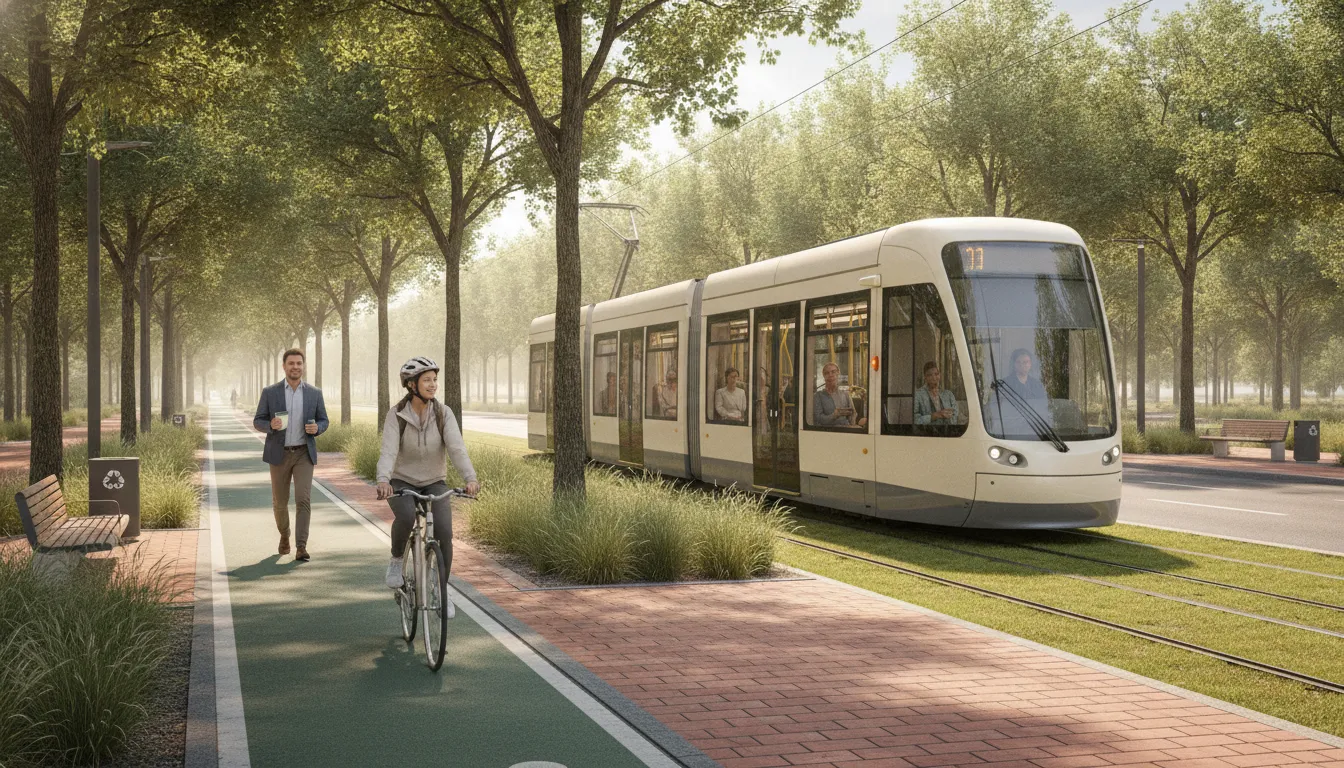
Transforming our relationship with transportation is one of the most direct paths we have to reduce our impact on the climate — and, at the same time, improve our quality of life. Less time in traffic, more physical activity, savings in your wallet, and real contribution to cleaner air in cities: the benefits are concrete and immediate.
You don’t need to do everything at once. Start with a different trip this week. Try biking on a sunny morning. Discover which subway or BRT line passes near your home. Small decisions, made consistently, create new habits — and new habits, at scale, change cities.
The planet thanks every step — literally.
