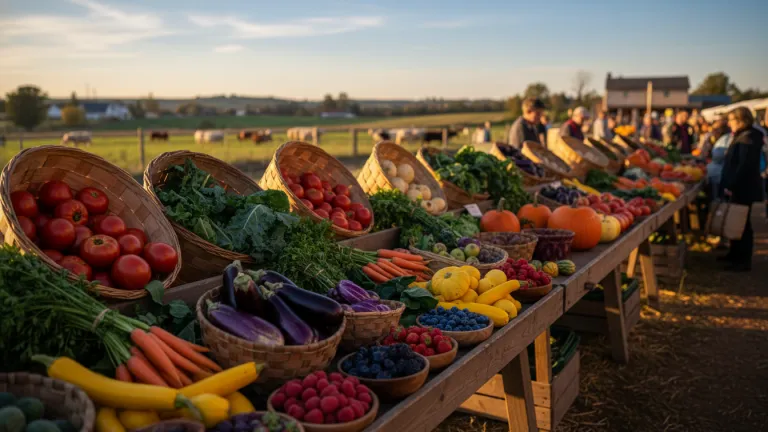
Imagine arriving at your neighborhood’s farmers’ market on a Saturday morning, greeting by name the farmer who grows the carrots you’ll cook for dinner, and knowing exactly where each item in your bag came from. It seems simple—and it is. But this everyday gesture carries far greater consequences than it might appear at first glance.
Buying from local producers is one of the consumer choices with the most significant simultaneous positive impact: it benefits your health, strengthens your city’s economy, preserves food cultures, and reduces carbon emissions associated with transportation and food waste. At a time when climate change demands concrete responses from all sectors of society, this is an action anyone can take—today, without needing special equipment or significant investments.
In this article, we will explore why this choice makes such a difference, what the proven environmental and human benefits are, and how you can take the first steps to transform your shopping habits.
Why Food Origin Matters for the Climate
The global food system is responsible for a significant share of greenhouse gas emissions. The IPCC (Intergovernmental Panel on Climate Change) points out that the food system as a whole—including production, transportation, processing, and waste—accounts for about one-third of global GHG emissions. A considerable part of this impact lies in the so-called “food miles”: the distance food travels from its origin to your plate.
A tomato sold in a large chain supermarket may have traveled hundreds or even thousands of kilometers—passing through distribution centers, cold storage, and multiple transport modes—before reaching your hand. Each stage consumes energy and emits carbon. A tomato bought directly from a farmer 30 kilometers from your city virtually eliminates this chain.
Besides transportation, large-scale production for export and national distribution often relies on plastic packaging for preservation during the long journey. Local products arrive fresher, often without packaging or with minimal packaging, generating less waste.
Health on the Plate: Nutrition and Freshness That Make a Difference
From a nutritional standpoint, there are solid reasons to prefer fresh local foods. Food science research shows that several nutrients—especially water-soluble vitamins like vitamin C and folic acid—degrade progressively after harvest. A food harvested two or three days ago and sold directly to the consumer has a very different nutritional profile from a product harvested green, artificially ripened, and sold weeks later.
Embrapa has published studies on the nutritional quality of fresh foods in Brazilian family farming, reinforcing the importance of short supply chains to ensure access to more nutritious foods, especially for low-income populations served by programs like PNAE (National School Feeding Program), which requires public schools to purchase part of their meals from local family farming.
Another important point: local producers, especially small ones, tend to use fewer pesticides than industrial monoculture—not necessarily due to formal organic certification, but due to economic logic and diversified production. This is not an absolute rule, so it’s worth talking to whom you buy from and asking about cultivation practices.
Local Economy: Your Money Circulating Near You
When you buy at a national or international chain supermarket, most of the profit flows out of your community. When you buy from a local producer or regional cooperative, that money tends to circulate within the local economy, generating employment, income, and driving other nearby businesses.
This phenomenon is called by economists the local multiplier: every dollar spent locally can generate more economic impact in the region than the same dollar spent in a global chain. Studies in the field of solidarity economy and regional development document this effect in different Brazilian contexts.
In Brazil, family farming is responsible for a significant portion of the food production that reaches Brazilians’ tables. According to data from the IBGE Agricultural Census, family farming represents the backbone of the production of essential items such as beans, cassava, vegetables, and fruits in the country. Strengthening this sector with your consumer choices is also a way to support Brazil’s food sovereignty.
How to Find Local Producers in Your Area
You might be thinking: “but I don’t even know where to find local producers near me.” This is the most common barrier—and the easiest to overcome. Here’s a practical step-by-step:
- Research farmers’ markets and organic markets in your municipality. Most Brazilian cities have at least one weekly market. Municipal governments and agricultural departments usually publish calendars.
- Look for consumer groups and CSAs (Community Supported Agriculture). In this model, you subscribe to a weekly or biweekly basket delivered directly by the producer. Search Google for “CSA + your city” or check the Rede CSA Brasil website.
- Use direct selling apps and platforms. In recent years, several Brazilian platforms have emerged connecting rural producers directly to urban consumers. It’s worth researching which ones operate in your region.
- Visit municipal markets and supply centers (CEASAs) with space for small producers. Many CEASAs have sections dedicated to direct sales to consumers.
- Ask in neighborhood groups and social networks. Local communities on WhatsApp or Facebook often have recommendations for reliable producers in the region.
- Talk to local restaurants that value regional ingredients. They often know suppliers who also sell to the general public.
- Explore solidarity economy fairs and regional gastronomy events. These are great opportunities to meet producers, taste products, and build a trust relationship before buying regularly.
Biodiversity on the Plate: Rediscovering Forgotten Varieties
One of the less obvious benefits of buying from local producers is the contact with agrobiodiversity. Modern industrial agriculture focuses on a few high-yield, good-looking varieties for shelves. Small farmers often grow ancient, regional, or heirloom varieties—seeds passed down through generations, adapted to local climate and soil.
In Brazil, this means having access to dozens of varieties of corn, cassava, beans, squash, and tropical fruits that rarely appear in supermarkets. These varieties are part of the country’s genetic and cultural heritage. Embrapa maintains germplasm banks precisely to preserve this diversity, but the best way to keep a variety alive is by cultivating and consuming it.
When you buy a purple yam from a farmer in the Atlantic Forest or a beefsteak tomato from a gaucho producer, you are, without exaggeration, contributing to the preservation of Brazilian agricultural biodiversity.
Food Waste: A Problem That Starts Before Your Refrigerator
Food waste is a serious environmental and social problem. FAO (Food and Agriculture Organization of the United Nations) estimates that about one-third of all food produced in the world is lost or wasted along the production chain. In Brazil, losses occur at all stages—from harvest to plate.
Long supply chains increase losses: foods that don’t survive transportation, are discarded for not meeting retail aesthetic standards, or spoil on shelves. The short chain, between local producer and consumer, structurally reduces this waste.
Moreover, when you have a direct relationship with the producer, you tend to value the food more—and this changes your behavior at home. It’s harder to throw away a carrot when you know the name of the person who planted it.
This type of connection between conscious consumption and environmental impact reduction fits well with the principles of circular economy, where the goal is to reduce waste at all stages of the product life cycle.
Practical List: What You Can Do This Week
Transforming consumption habits doesn’t have to happen all at once. Here are concrete and immediate actions:
- Replace one weekly supermarket trip with a visit to the nearest farmers’ market.
- Choose three items you regularly buy (tomatoes, lettuce, eggs, seasonal fruits) and try buying them from a local source for a month.
- Research if there is a CSA or consumer group in your neighborhood and consider subscribing to a basket.
- Ask the market vendor how the product was grown—you’ll be surprised by the stories you’ll hear.
- Prioritize seasonal fruits and vegetables in your region: besides being cheaper, they are produced with fewer inputs and have a lower carbon footprint.
- Avoid out-of-season foods that came from afar or were in cold storage for months.
- Share with friends and family where you found good local producers—word of mouth is still the best marketing tool for small farmers.
Conclusion: Every Purchase is a Vote for the World You Want
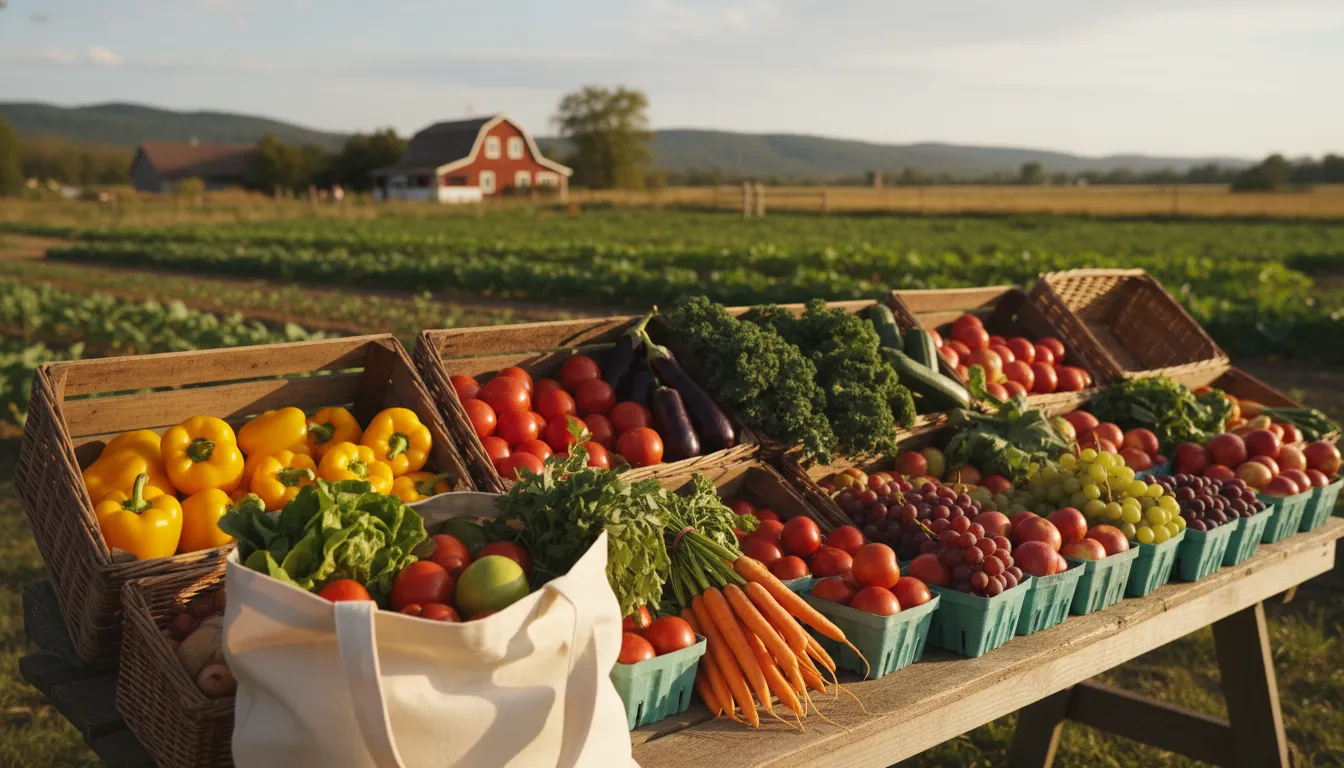
There is no single solution to the environmental challenges we face in 2026. But there is a set of everyday choices that, when combined, make a real difference—and buying from local producers is among the most accessible and powerful of them.
You don’t need to change everything at once. Start small: a market, a basket, a conversation with a farmer. Over time, these habits consolidate, create connections, and transform not only your consumption but also how you relate to food, the land, and your community.
Each purchase is, in a way, a vote for the type of food system you want to support. And the good news is, in this case, what is good for the planet is also good for you, your health, and those around you.
If you want to continue exploring practical ways to reduce your environmental impact in daily life, also check out our article on circular economy and practical examples—another powerful lens to rethink our consumption habits with intelligence and care.
- Choose three items you regularly buy (tomatoes, lettuce, eggs, seasonal fruits) and try buying them from a local source for a month.
- Replace one weekly supermarket trip with a visit to the nearest farmers’ market.
- Explore solidarity economy fairs and regional gastronomy events. These are great opportunities to meet producers, taste products, and build a trust relationship before buying regularly.
- Talk to local restaurants that value regional ingredients. They often know suppliers who also sell to the general public.
- Ask in neighborhood groups and social networks. Local communities on WhatsApp or Facebook often have recommendations for reliable producers in the region.
- Visit municipal markets and supply centers (CEASAs) with space for small producers. Many CEASAs have sections dedicated to direct sales to consumers.
- Use direct selling apps and platforms. In recent years, several Brazilian platforms have emerged connecting rural producers directly to urban consumers. It’s worth researching which ones operate in your region.
- Look for consumer groups and CSAs (Community Supported Agriculture). In this model, you subscribe to a weekly or biweekly basket delivered directly by the producer. Search Google for “CSA + your city” or check the Rede CSA Brasil website.
