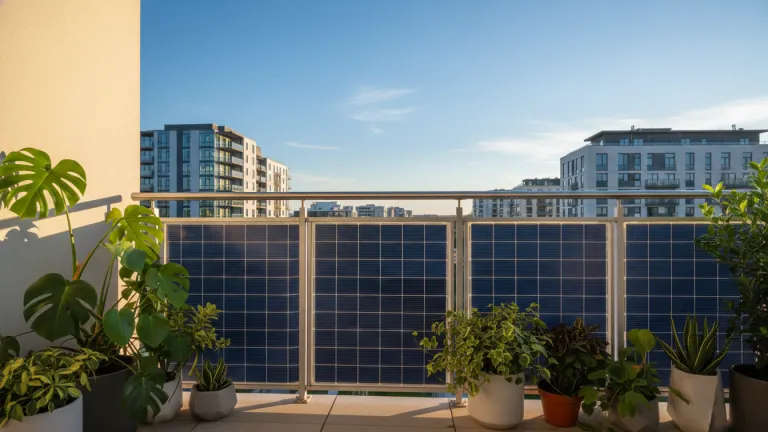
Imagine receiving your electricity bill at the end of the month and seeing a much lower amount than usual — or even credits in your favor. For those living in houses, this has been a reality for years with solar panels installed on the roof. But what about those living in apartments? This is an increasingly common question, especially in Brazil, which is becoming one of the largest solar energy markets in the world. The good news is that living in a building is no longer an obstacle to enjoying the benefits of solar generation.
The photovoltaic solar energy sector has grown significantly in Brazil over the past decade, driven by the reduction in equipment costs, incentive policies, and a population seeking alternatives to escape ever-increasing energy tariffs. According to ANEEL (National Electric Energy Agency), Brazil accumulates dozens of gigawatts of installed capacity in distributed generation, and residential condominiums represent one of the segments with the greatest potential for expansion in the coming years.
In this article, you will understand how solar energy works specifically for those living in apartments, what options are available, what Brazilian legislation allows, how to convince your condominium to adopt it, and how much you can save in practice. If you ever thought solar was “only for homeowners,” get ready to change your mind.
How Photovoltaic Solar Energy Works in Apartments
Before discussing the specifics of apartments, it’s worth understanding the basic mechanism. Photovoltaic solar energy works by converting sunlight into electricity through panels composed of semiconductor cells, usually silicon. This generated electric current is direct (DC) and passes through an inverter that transforms it into alternating current (AC), the type used in household appliances and the electrical grid.
In individual residences, the panels are on the roof, and the generated energy directly supplies the house, with the surplus being injected into the distributor’s grid and converted into credits — the so-called energy compensation system, regulated in Brazil.
In the case of apartments, the logic is the same, but the physical space is shared. This means that the installation needs to be thought of collectively, involving the entire condominium. This is where specific modalities come into play, making solar viable for those living in buildings.
Solar Energy Options for Condominiums
Shared Generation in the Condominium Itself
The most common modality for apartments is the installation of solar panels on the condominium’s roof or common areas. In this model, the system is installed on the roof or elevated structures in the building, and the generated energy can be used in two ways:
- Supply to common areas: lighting of corridors, halls, garages, elevators, water pumps, and other condominium equipment. This is the simplest option and does not require individual changes in the units.
- Distribution among units: with proper regulation, the generated credits can be distributed among the apartments, reducing each resident’s individual electricity bill.
The Law 14,300/2022, which established the Legal Framework for Microgeneration and Mini-generation Distributed in Brazil, consolidated important rules for condominiums, including the possibility of distributing credits among units. This paved the way for syndics and residents to plan more robust systems with direct benefits for each apartment.
Remote Solar Plants and Subscription Energy
Another growing option — especially for those living in apartments without the possibility of installing anything in their own building — is the solar energy subscription. In this model, you contract a portion of the generation from a solar plant installed elsewhere (it can be outside the city), and the generated credits are transferred to your electricity bill monthly.
Companies like Órigo Energia, Solfácil, and others in the sector already offer this service in Brazil. The advantage is that there is no initial investment or construction: you sign up for a plan, and the discount appears directly on the distributor’s bill. For apartment dwellers who cannot modify the building, this may be the most practical solution available today.
What Brazilian Legislation Says
The Legal Framework for Solar Energy (Law 14,300/2022) was a turning point for the sector. Before it, rules for condominiums were less clear, and bureaucracy greatly hindered projects. With the law in force, some fundamental points were established:
- Condominiums can install photovoltaic systems and distribute credits among units and common areas.
- The energy compensation system (net metering) ensures that energy injected into the grid generates credits that can be used for up to 60 months.
- Microgeneration corresponds to systems of up to 75 kW of installed capacity; mini-generation ranges from 75 kW to 5 MW.
- The law established a gradual transition in compensation rules, with greater stability for those who installed or will install systems within certain deadlines.
It is essential for the condominium to consult a licensed electrical engineer and the local distributor to verify the specific technical and contractual conditions of the region. Each distributor may have different procedures for system connection and registration.
Step-by-Step: How to Bring Solar Energy to Your Condominium
If you want to be the change agent in your building, this guide will help:
- Gauge interest from neighbors: informally talk to other residents and the syndic about the idea. An initial support base greatly facilitates approval in the assembly.
- Request an energy diagnosis: ask the syndic for the energy consumption history of the common areas. This data is essential for system sizing.
- Hire a technical project: seek companies certified by ABSOLAR (Brazilian Association of Photovoltaic Solar Energy) or with professionals registered with CREA to develop a suitable project for the building.
- Request comparative quotes: ask for at least three detailed quotes, comparing installed power, equipment brand, warranties, and investment return time (payback).
- Bring it to the condominium assembly: according to Law 4,591/1964 and the Civil Code, works that alter the building’s structure generally require approval by a qualified majority. Consult your condominium’s convention.
- Register the system with the distributor: after installation, it is necessary to request connection to the grid with the local distributor, following ANEEL’s procedures.
- Monitor the results: most modern inverters have real-time monitoring apps. Track generation and credits monthly.
Cost and Return on Investment
The cost of a solar system for a condominium varies widely depending on the building’s size, common area consumption, region of Brazil, and chosen equipment. Generally:
- Systems aimed only at common areas of medium-sized buildings can range from tens to hundreds of thousands of reais, depending on the required power.
- The payback (investment return time) in condominiums usually ranges from 4 to 7 years, considering current electricity tariffs — but this calculation depends heavily on the local tariff and consumption profile.
- After the payback, the panels’ lifespan is 25 to 30 years with efficiency guarantees (manufacturers generally guarantee that the panels will maintain at least 80% of the original capacity after 25 years).
For those opting for remote solar energy subscription, there is no initial cost. The discount on the electricity bill usually ranges from 10% to 20%, depending on the contracted plan and the distributor. It’s a more accessible entry for those who want to start now without relying on condominium approval.
You can delve deeper into these calculations in our article Solar Energy: How to Reduce Your Electricity Bill, which provides a complete guide on savings and sizing.
Real Environmental Benefits of Solar Energy in Apartments
Besides financial savings, the environmental impact of solar energy is concrete and measurable. Photovoltaic generation does not emit greenhouse gases during operation, unlike coal, gas, or oil-fired thermal power plants that still make up part of Brazil’s electrical matrix — especially during drought periods when hydroelectric plants reduce their generation.
Brazil has one of the most renewable electrical matrices in the world, with strong hydropower, wind, and increasingly solar participation. Even so, the expansion of distributed generation in condominiums contributes to:
- Reducing pressure on the electrical system during peak hours, especially between 6 pm and 9 pm.
- Reducing transmission losses, as energy is generated and consumed locally.
- Diversifying the energy matrix, making the system more resilient to drought periods.
When we think about reducing our carbon footprint daily, solar energy is one of the most impactful actions. Just as consumption choices — like avoiding fast fashion and its environmental impacts — make an individual difference, the collective energy transition in condominiums multiplies this effect.
Practical Checklist: Are You Ready for Solar?
Before taking the next step, check these points:
- [ ] Does your condominium have a roof or area with good solar exposure (preferably facing north in the southern hemisphere)?
- [ ] Is there significant shading from trees or neighboring buildings that could hinder generation?
- [ ] Does the building’s roof structure support the weight of the panels? (Structural verification is mandatory)
- [ ] Are the syndic and at least some of the residents open to discussion?
- [ ] Does the condominium have financial reserves or access to credit for the initial investment?
- [ ] Have you considered the alternative of solar energy subscription if the condominium does not move forward?
Conclusion: Your Apartment Can (and Should) Be Part of the Solar Revolution
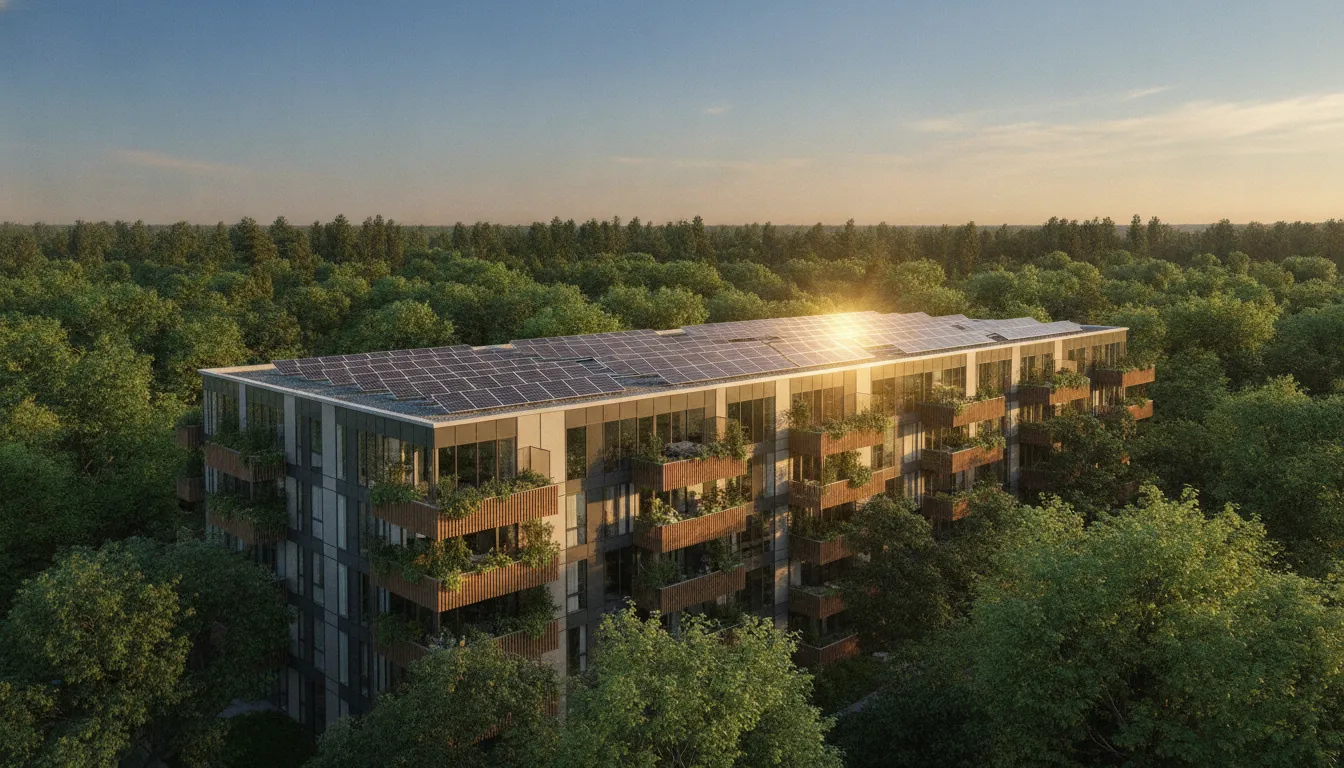
Living in an apartment is no longer an excuse to stay out of the energy transition. With clearer Brazilian legislation, solar energy subscription options, and the increase in companies specializing in systems for condominiums, the barriers that existed a few years ago have significantly decreased.
The first step can be simple: a conversation with the syndic, a search for certified companies in your city, or signing up for a remote energy plan. Every kilowatt-hour generated cleanly is a real contribution to a more sustainable energy system — and to a lighter electricity bill at the end of the month.
The transformation of the energy sector doesn’t just happen in large plants or government decisions. It also happens on the roofs of buildings, in condominium assemblies, and in the individual choices of each resident. And you, what are you waiting for to be part of this change?
- Reducing transmission losses, as energy is generated and consumed locally.
- After the payback, the panels’ lifespan is 25 to 30 years with efficiency guarantees (manufacturers generally guarantee that the panels will maintain at least 80% of the original capacity after 25 years).
- Request an energy diagnosis: ask the syndic for the energy consumption history of the common areas. This data is essential for system sizing.
- Gauge interest from neighbors: informally talk to other residents and the syndic about the idea. An initial support base greatly facilitates approval in the assembly.
- Distribution among units: with proper regulation, the generated credits can be distributed among the apartments, reducing each resident’s individual electricity bill.
