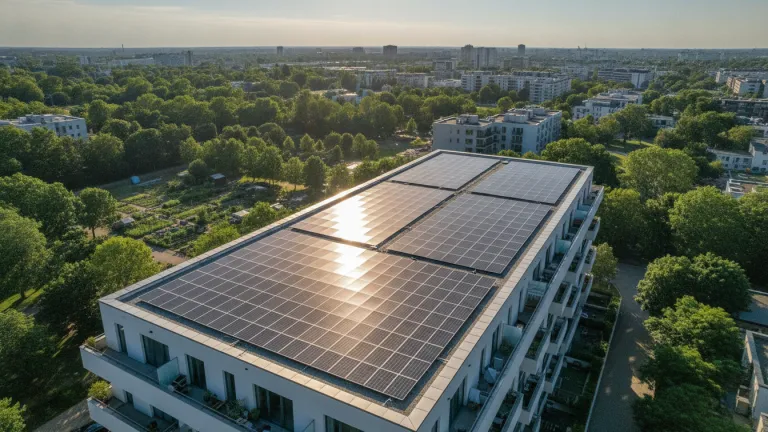
Do you live in an apartment and have thought about installing solar panels, but wondered if it’s really possible — or viable? You’re not alone. With electricity bills hitting record highs and environmental awareness growing among people, solar energy is no longer an exclusive topic for houses with their own rooftops. More and more condo residents and building managers are discovering that apartments can also harness the sun to generate clean, affordable, and efficient electricity.
The Brazilian solar market is experiencing significant expansion. According to data from ANEEL and ABSOLAR, Brazil has surpassed historic milestones in installed solar photovoltaic capacity in recent years, establishing itself as one of the largest solar markets in the world. And legislation has advanced: Law No. 14,300/2022, known as the Legal Framework for Distributed Micro and Mini Generation, came into effect and brought clearer rules specifically for situations like apartment dwellers who want to generate their own energy.
But ultimately, is installing solar energy in an apartment worth it? The honest answer is: it depends — and this article will help you discover if it makes sense for your situation. We’ll explain how the system works, what options are available, what the law allows, how much it costs, how much you save, and what practical steps to take to get started.
How Solar Energy Works in Apartments
Unlike a single-family home, where the owner installs panels on their own roof and generates energy directly for their unit, apartments require a collective or alternative approach. This is because the roof and common areas of the building belong to the condominium, not to individual residents.
There are basically two paths for apartment dwellers:
- Shared generation system in the condominium: panels are installed on the building’s roof or common areas, and the generated energy is distributed among units according to the allocation ratio defined in a residents’ meeting.
- Solar energy subscription (or remote generation): the resident signs up for a plan with a solar photovoltaic plant installed outside the condominium and receives energy credits on their electricity bill, without needing to install anything in the building.
Both modalities are regulated by ANEEL and the sector’s Legal Framework (Law 14,300/2022). The choice between them depends on the condominium’s interest, available space, consumption profile, and how much you’re willing to involve other residents in the process.
Solar Energy in Condominiums: How It Works in Practice
When a condominium decides to install solar panels, the project needs approval at a residents’ assembly — usually by simple or qualified majority, depending on what the condominium bylaws specify. Once approved, the installation can serve both common areas (lighting, elevators, water pumps) and private units, depending on the system’s size.
Advantages of the collective system for solar energy in apartments
- Reduction in electricity bills for common areas, which is usually one of the condominium’s largest expenses
- Possibility of distributing energy credits among apartments, reducing each resident’s individual bill
- Property appreciation: studies from the Brazilian real estate sector indicate that properties with solar generation tend to have higher market value
- Investment cost shared among all condo owners, which dilutes the initial outlay
Challenges of the collective system
- Requires collective engagement and approval, which can be a slow process
- Installation requires the roof to have available space, adequate structure, and good solar exposure
- Credit allocation needs to be well-defined to avoid conflicts among residents
Solar Energy Subscription: The Independent Option
If convincing the entire condominium seems like an impossible mission at the moment, there’s an alternative you can adopt on your own: solar energy subscription, also called remote distributed generation or solar energy quota rental.
In this model, specialized companies install solar plants in rural or peri-urban areas and sell or rent production quotas to urban consumers. You receive energy credits directly on your electricity bill, without installing absolutely anything in your apartment.
The operation is simple:
- You contract a plan with an ANEEL-accredited company
- The company allocates a production quota from a solar plant to your ID or tax number
- Energy credits appear monthly on your local utility bill
- You pay a subscription generally lower than the amount you save on your electricity bill
This model is especially interesting because it requires no construction, doesn’t depend on condominium approval, and can be canceled with prior notice, depending on the contract. It’s worth carefully reading the loyalty and adjustment clauses before signing.
How Much Does It Cost and How Much Do You Save with Solar Energy in an Apartment
Costs vary considerably depending on the chosen modality, the region of Brazil, and the apartment’s monthly consumption. Some general references (without inventing numbers that may be outdated):
Collective system in the condominium:
- Installation cost depends on the system size and number of units
- Return on investment (payback) in residential and condominium systems in Brazil usually varies between 4 and 8 years, according to national solar sector data
- After payback, energy generation represents net savings for decades (panel lifespan is typically 25 to 30 years)
Solar energy subscription:
- Generally there’s no installation cost for the subscriber
- Savings on electricity bills vary according to the plan, but many companies promise discounts between 10% and 20% on conventional rates
- Important: always compare the subscription value with the actual discount obtained on the bill
| Modality | Requires construction? | Depends on condominium? | Initial cost | Estimated savings |
|---|---|---|---|---|
| Collective system in building | Yes | Yes (assembly) | Medium to high (shared) | High long-term |
| Subscription energy | No | No | Zero or low | Moderate |
What Brazilian Legislation Allows in 2026
Law 14,300/2022 was an important advancement for the sector. It regulated the electricity compensation system and brought legal certainty for consumers and companies. Some relevant points for apartment dwellers:
- Remote self-consumption: allows the holder of a generating unit (such as a quota in a solar plant) to offset credits in a different consuming unit, as long as both are in the same utility group
- Shared generation: allows a consortium of consumers to use credits from the same plant, which opens space for condominiums and groups of residents
- The local utility is required to accept credits and apply them to the bill according to ANEEL rules
If you want to better understand the environmental impact of energy choices in daily life, it’s worth reading about how to calculate your carbon footprint and reduce your impact.
Step by Step: How to Start Using Solar Energy in Your Apartment
If you’re convinced it’s worth exploring the topic, here’s a practical roadmap:
- Analyze your electricity bill — check your average monthly consumption in kWh. The higher the consumption, the greater the savings potential.
- Decide on the modality — do you want to involve the condominium or prefer to act independently with a subscription?
- If you opt for the collective system: talk to the building manager, present the idea at a residents’ meeting, and if there’s interest, request quotes from ANEEL-accredited installation companies.
- If you opt for subscription: research solar energy subscription companies operating in your local utility area, compare plans, and read the contract carefully (especially loyalty, adjustment, and cancellation clauses).
- Check with your local utility — not all utilities process remote generation credits with the same efficiency. Inquire about deadlines and procedures.
- Monitor your bill — after joining, monthly check if credits are being applied correctly.
- Inform the condominium (if it’s an individual subscription) — it’s not mandatory, but keeping the building manager informed about sustainable initiatives can inspire other residents.
Practical Checklist: What to Verify Before Contracting Solar Energy
Before closing any contract or approving an installation, check the following points:
- Is the installation or subscription company accredited with ANEEL?
- Does the contract clearly specify the discount percentage or the amount of guaranteed credits?
- Is there an adjustment clause? What index and with what frequency?
- What is the loyalty period and the penalty for early cancellation?
- In case of collective system: was the structural roof report done by a licensed engineer?
- Do the panels have INMETRO certification?
- Is there manufacturer warranty for equipment (inverters and modules)?
- Does the company offer remote system monitoring after installation?
Understanding the environmental implications of our energy matrix also helps make more conscious decisions. Learn more about the greenhouse effect and how it affects the climate to get a more complete view of clean energy’s role in this context.
Conclusion: It’s Worth It — and You Can Start Now
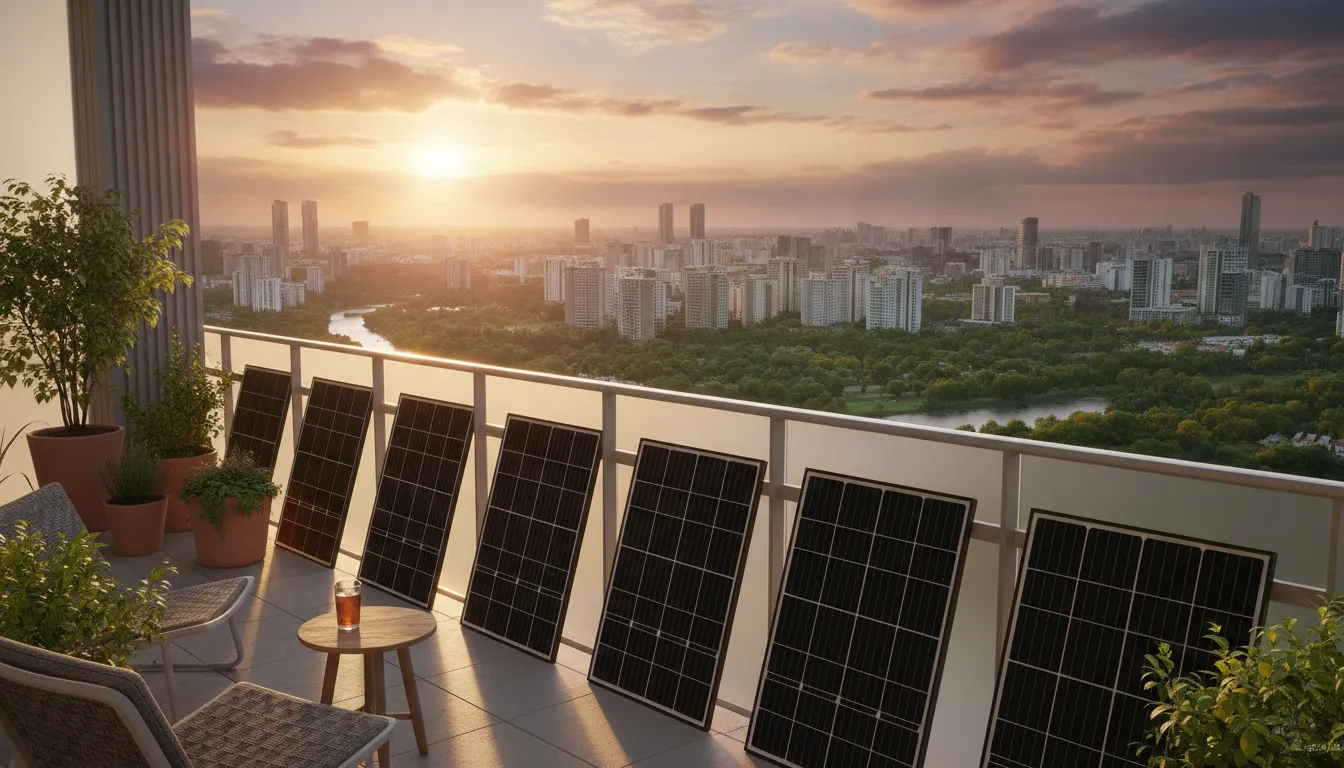
Installing solar energy in an apartment isn’t as simple as putting a panel on your house roof, but it’s far from impossible. With the options available today — especially solar energy subscription — any resident can start generating clean energy and saving on electricity bills without needing to convince the entire condominium or do any construction.
The collective path, when possible, is even more powerful: it reduces costs for everyone, increases property value, and transforms your building into an active agent of energy transition. In 2026, with clear legislation, a mature market, and increasingly accessible technology, the question is no longer “is this possible?” but rather “where do I start?”
Start with your electricity bill. Understand your consumption, research the options available in your city, and take the first step — whether by talking to the building manager or signing up for a remote solar energy plan. Every kilowatt-hour generated by the sun is one step less in dependence on polluting sources and one step more toward a more balanced planet.
