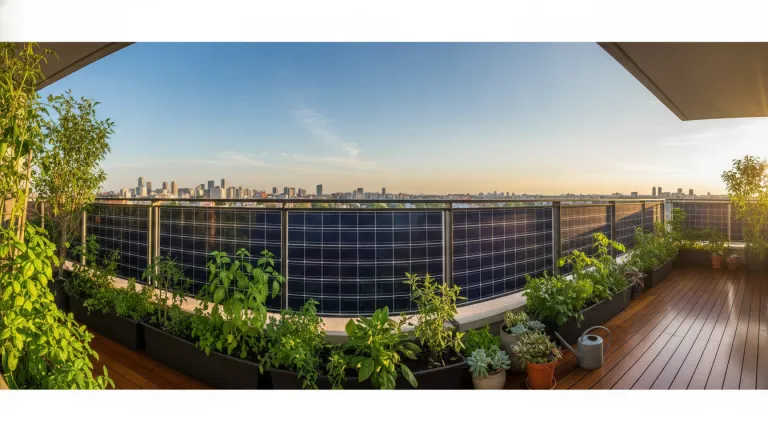
Solar Energy in Apartments: Yes, It’s Possible and Worth It
Living in an apartment and wanting solar energy seems like a contradiction — after all, you don’t have your own roof, you don’t control common areas, and you depend on collective decisions from the condo association. But this perception is increasingly outdated. In 2026, the Brazilian solar energy market already offers concrete and legally supported paths for those living in residential buildings, both through systems installed in the building itself and alternatives like solar energy subscriptions and shared generation systems.
Brazil currently holds a prominent position in the global renewable energy landscape. The average solar irradiation across Brazilian territory is among the highest in the world, surpassing that of European countries that consolidated their solar matrix decades ago. This means that regardless of where you live — in São Paulo, Recife, Porto Alegre, or Manaus — the potential for harnessing solar energy is real and significant. The problem was never the sun. For a long time, it was access.
That access is exactly what’s changing. In this article, we’ll explain how apartment dwellers can indeed switch to solar energy, what options are available today, what Brazilian legislation allows, and how to take the first practical steps. No outlandish promises, no made-up numbers — just useful information for those who want to take action.
Why Solar Energy in Apartments Was Difficult (and Why That Changed)
For a long time, photovoltaic solar generation in Brazil was almost exclusively associated with single-family homes with available roof space. The model was simple: install panels on the roof, connect to the home’s electrical system, inject the surplus into the grid, and receive credits on your electricity bill. This system, regulated by ANEEL, works very well for those who have this structure.
Apartment dwellers were left out for practical reasons: they don’t have their own roof, common areas belong to the condo association, and individual installation is technically unfeasible in most cases. The scenario began to change more structurally with Law No. 14,300, from January 2022, known as the Legal Framework for Distributed Micro and Mini Generation. This law regulated, among other points, shared generation systems and remote self-consumption, creating a legal basis for groups of consumers — including condo residents — to share energy generated at a single point.
In practical terms, this means a condominium can install solar panels on the rooftop or other common areas and distribute the generated energy among units, in a regulated manner with credit compensation. The law also favored the growth of the solar energy subscription market, accelerating an alternative that requires no construction work in the building.
The Three Real Options for Apartment Dwellers
Not every apartment dweller is in the same situation. Therefore, it’s important to know the three main alternatives available in the Brazilian market in 2026:
1. Condominium Solar System (Shared Generation)
This is the most robust option and generates the greatest savings in the long term. The condominium installs solar panels in common areas — rooftop, parking with shaded structure, facades — and the generated energy can be used in common areas (lighting, elevators, water pumps) and, depending on the configuration, distributed among residential units.
For this, you need:
- Approval at a condominium meeting (usually with a specific quorum defined in the bylaws)
- Technical feasibility study by a certified company
- Project approved by the local utility company
- Shared generation contract registered with the energy distributor
2. Solar Energy Subscription (or Solar Farm)
In this model, you don’t install anything. A company builds a solar plant elsewhere, and you sign a contract to receive energy credits proportional to your share in the plant. The credits appear directly on your electricity bill, reducing the amount paid.
It’s the most accessible option for individual apartment dwellers, without depending on condo decisions. The actual discount varies according to the contract and company, so it’s important to compare proposals and read the terms carefully — especially clauses about commitment periods and rate adjustments.
3. Individual Installation on Balcony or Window (Small-Scale Generation)
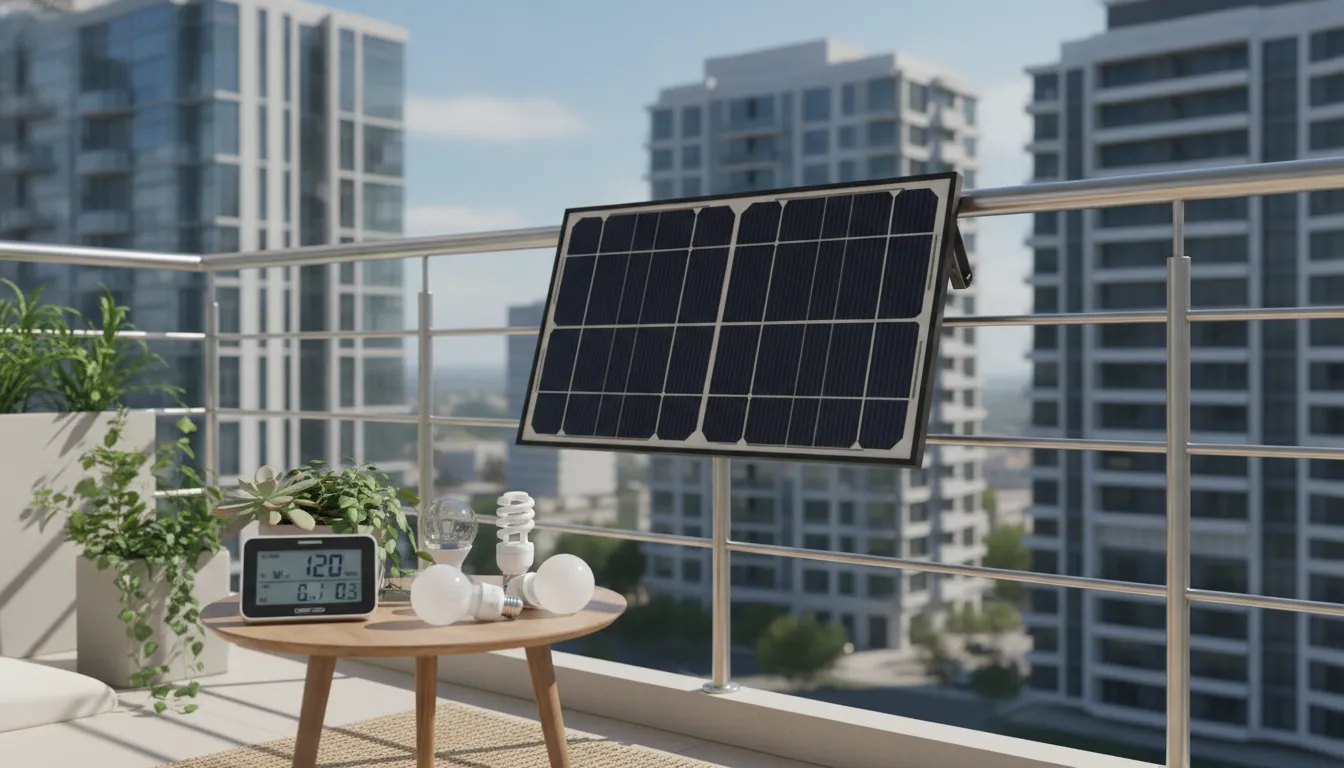
In specific cases, it’s possible to install small solar panels on balconies or windows with good sun exposure. These very low power microgeneration systems are suitable for charging devices, powering small appliances, or supplementing hot water systems. They don’t replace the unit’s total consumption but represent a real step toward energy autonomy.
This option requires checking the condo rules and, depending on the power, may need approval from the local distributor.
How to Propose Solar Energy in Your Condo: Step by Step
If you want to bring the idea to your condominium, the path may be simpler than it seems. Here’s how to structure the proposal:
- Gather the condo’s consumption data — ask the building manager for electricity bills from the last 12 months for common areas.
- Request a feasibility analysis — certified installation companies offer this study, often at no initial cost. The document should show generation potential, estimated savings, and payback (return on investment time).
- Research local solar irradiation potential — the Brazilian Solar Energy Atlas, developed by INPE in partnership with other institutions, offers free public data by region.
- Prepare a presentation for the assembly — highlight financial savings, property appreciation, and emission reductions. Use data from the feasibility study itself.
- Check the condo bylaws — understand what quorum is required for approval of improvements or large investments.
- Evaluate financing options — there are specific credit lines for solar energy in Brazil, including options from BNDES and private banks aimed at condominiums.
- After approval, hire an ANEEL-certified company — verify registration and ask for references from similar projects.
What to Expect in Terms of Savings and Return
Here it’s important to be honest: the numbers vary greatly depending on system size, region, local energy rates, chosen financing model, and how energy is distributed in the condo. Therefore, we’ll avoid citing generic percentages that can be misleading.
What we can affirm based on market functioning:
- Electricity rates in Brazil have shown an upward trend over the years, making investments in own generation progressively more advantageous.
- The cost of photovoltaic panels has dropped significantly over the past decades globally, making projects that were unfeasible ten years ago perfectly accessible today.
- The investment return period (payback) for condominium systems varies and should be calculated case by case by a qualified professional based on actual local data.
- Property appreciation is a real factor: apartments in condos with solar energy tend to be more attractive in the real estate market, according to sector evaluations.
The best way to know what to expect in your specific case is to request a personalized feasibility study — and this is free at most companies in the sector.
Solar Energy and Sustainability: The Context That Matters
Beyond financial savings, the migration to solar energy has a concrete environmental impact. Photovoltaic generation emits no greenhouse gases during operation, unlike fossil sources that still make up part of Brazil’s electrical matrix — especially during periods when thermoelectric plants are activated.
To better understand why reducing these emissions matters so much, it’s worth knowing what the greenhouse effect is and how it works: global warming is not a distant phenomenon, and every individual or collective energy choice carries weight.
Brazil has an electrical matrix with significant hydroelectric participation, which is positive. However, exclusive dependence on one source — especially in a context of climate change affecting rainfall patterns — reinforces the importance of diversifying with sources like solar.
Precautions When Choosing a Solar Energy Company and Contract
Market growth has also attracted less serious companies. Some important points to watch:
- Verify if the company is accredited with your region’s energy distributor and if professionals have technical certification (engineer responsible for the project).
- Read the contract carefully, especially in subscription models: observe commitment periods, adjustments, what happens in case of address change, and guarantees offered.
- Be wary of very high savings promises without technical study — the actual discount depends on specific variables in your case.
- Ask about equipment warranty — quality photovoltaic panels usually have long-term performance warranties, but you need to verify who is responsible for this in Brazil.
- Check Procon or Reclame Aqui to verify the company’s history before signing any contract.
Start Today: Practical Actions for Apartment Dwellers
You don’t need to wait for assembly approval or complete system installation to take the first step. Here’s what you can do now:
- Research solar energy subscription companies available in your city or state — many operate 100% online.
- Talk to your building manager about the possibility of a free feasibility study for the condominium.
- Reduce your unit’s energy consumption while working on the transition — lower consumption means greater impact from solar credits when they arrive.
- Actively participate in condo meetings and put the topic on the agenda.
- Share information with neighbors — changes in condominiums depend on engaged people.
- Consult the Brazilian Solar Energy Atlas (INPE) to understand your region’s solar potential.
The energy transition isn’t something that happens only at national scales or in large power plants. It also happens in condominiums, on balconies, in subscription contracts signed by ordinary residents who decided they wanted to be part of the solution.
Living in an apartment is no excuse to be left out. It’s actually an opportunity to demonstrate that clean energy can — and should — reach all housing formats. The sun shines for everyone. The question is deciding to harness it.
