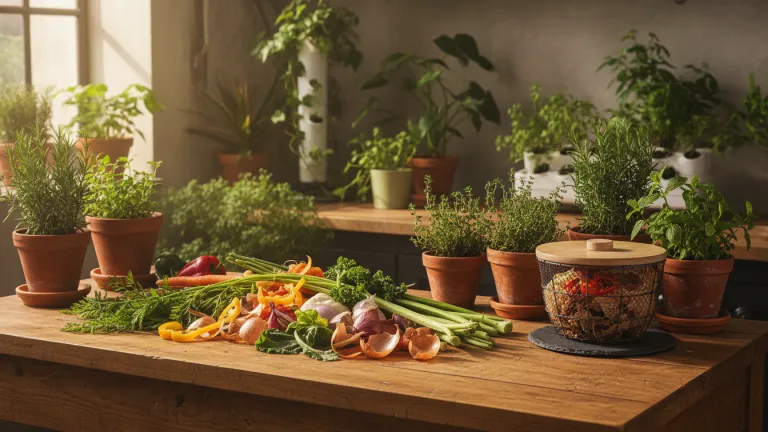
Why Throwing Away Food Is a Bigger Problem Than It Seems
Have you ever stopped to think about what happens to the banana peels that go in the trash, the head of lettuce that wilted in the fridge drawer, or that leftover rice from dinner that was forgotten? For most people, the destination is immediate: the garbage. But this everyday gesture, repeated millions of times a day across Brazil and worldwide, carries a cost that goes far beyond food waste.
Food waste is one of the biggest environmental and economic challenges of our time. According to the Food and Agriculture Organization of the United Nations (FAO), approximately one-third of all food produced in the world is lost or wasted — enough to feed every hungry person on the planet. In Brazil alone, food waste throughout the entire production chain reaches tens of millions of tons per year, with direct impacts on family budgets and the environment.
The good news is that much of this loss happens at home — and can be reversed with simple, creative, and accessible choices. Reusing food scraps isn’t just an economical practice: it’s a concrete act of sustainability that anyone can adopt today, regardless of kitchen size or budget.
The Real Impact of Food Waste in Brazil and Around the World
When we throw food away, we’re not just discarding the food itself. We’re throwing away all the energy, water, land, labor, and inputs used to produce, transport, and sell it. And when that food ends up in landfills — the most common destination for household waste in Brazil — it decomposes under anaerobic conditions and releases methane, a greenhouse gas with global warming potential far greater than carbon dioxide in the short term, according to IPCC data.
The Brazilian Institute for Applied Economic Research (Ipea) has documented that Brazil wastes food in significant volumes throughout the entire chain — from production to final consumption. At the household level, fruits, vegetables, greens, and leftovers from prepared meals are among the most discarded items. For Brazilian families, this waste represents a real and recurring financial loss: money that left their pockets, went into the pot or the fridge, and ended up in the trash.
Reusing food scraps, therefore, is not a matter of “frugality” or deprivation. It’s economic intelligence combined with environmental awareness — and it’s within anyone’s reach.
What Can Be Reused (And You Probably Didn’t Know)
The first barrier for many people is not knowing what can actually be reused. The answer is surprising: much more than we imagine.
- Fruit and vegetable peels: apple, beet, carrot, chayote, zucchini, and sweet potato peels can become baked chips, teas, or be incorporated into soups and broths.
- Stems and leaves: kale, broccoli, and parsley stems, carrot and beet greens are nutritious and can go into stir-fries, omelets, breadcrumb toppings, and spreads.
- Stale bread: transforms into homemade breadcrumbs, croutons, toast, bread pudding, or a base for seasoned crumbs.
- Cooked rice and beans: a base for fritters, soufflés, thick soups, and even vegetarian burgers.
- Vegetable cooking water: rich in nutrients, it can be used as broth for soups and risottos.
- Used cooking oil: should never go down the drain — it can be taken to collection points for recycling or transformed into homemade soap.
- Coffee grounds: excellent for fertilizing plants, exfoliating skin, or repelling insects in the garden.
- Eggshells: crushed, they work as natural calcium for garden soil.
This list shows that, with a different perspective on the kitchen, trash can shrink considerably — and the menu can become richer and more varied.
How to Reuse Food Scraps in Practice: Step by Step
You don’t need to turn your kitchen into a laboratory. With organization and creativity, reusing leftovers becomes a natural habit. Here’s how to start:
- Diagnose your trash for one week. Before changing anything, observe what you discard most. Fruits that spoil? Lunch leftovers? Peels that go straight to the trash? Identifying the pattern is the first step.
- Organize your fridge intelligently. Place foods closest to expiration in front and newer ones in back. Store leftovers in transparent containers labeled with the date. What’s visible is what gets consumed.
- Set aside one day a week for “fridge cleanout.” Once a week, use what’s left over to create an improvised meal: soup, omelet, baked rice casserole, stir-fry. This ritual greatly reduces waste.
- Create a “universal broth” with vegetable scraps. Store clean peels and stems in a bag in the freezer. When it’s full, cook everything with water, salt, and seasonings for 30 minutes. Strain and freeze in ice cube trays. You’ll have homemade broth ready to use in any recipe.
- Freeze before it spoils. Ripe fruits can be frozen and used in smoothies or jams. Bread can go directly to the freezer sliced. Fresh herbs, chopped and covered with olive oil in ice cube trays, last for months.
- Learn 2 or 3 “go-to” recipes for leftovers. Ripe banana cake, rice fritters, and mixed vegetable soup are simple, delicious recipes that solve most household leftovers.
- Compost what cannot be consumed. Even with all the reuse, some organic waste will remain. Home composting — using a worm bin, composter, or bokashi — transforms this material into rich fertilizer for plants, closing the cycle sustainably.
How Much You Can Save by Reusing Food
The financial impact of household food waste is significant. When a family manages to reduce food disposal, savings naturally appear in the grocery bill — because less food needs to be replaced.
Think of it this way: if a family buys a bunch of kale every week and discards half because they don’t use the stems, they’re paying full price for something they only half use. Multiplied by weeks, months, and years, this pattern represents a real and avoidable loss.
Additionally, recipes made with scraps and peels are usually prepared with ingredients already at home, without the need for additional purchases. This means the same food budget yields more meals when full utilization is practiced. In a scenario of food inflation — which strongly affected Brazil in recent years — this kind of kitchen efficiency has a direct impact on the family budget.
Home Composting: The Right Destination for What’s Left Over
Even in the most efficient kitchen, there will be unavoidable organic waste: very hard peels, spoiled food, fruit scraps. For this material, composting is the most sustainable solution.
Home composting can be done in apartments with compact worm bins or bokashi systems — a fermentation technique of Japanese origin that uses bran inoculated with effective microorganisms. It doesn’t generate bad odors when properly managed, fits on small balconies, and produces fertilizer and liquid biofertilizer in just a few weeks.
For those with a backyard or garden, a simple composter made with stacked plastic boxes works well. The compost generated can be used directly on plants, gardens, and of course, home vegetable gardens. If you don’t have a garden yet, know that growing plants in an apartment is simpler than it seems — and homemade fertilizer makes everything even more sustainable and economical.
Food Reuse as Part of a Sustainable Lifestyle
Reusing food scraps is not an isolated habit: it naturally connects to other practices that reduce the environmental impact of daily life. Those who start paying attention to kitchen waste often expand this awareness to other areas — packaging consumption, excessive shopping, cleaning habits.
This is the principle of small sustainable habits that create real big impact: simple changes, made consistently, accumulate significant results over time. Reducing food waste at home is one of those changes — accessible, immediate, and with benefits that appear both in the grocery bill and in the health of the planet.
The logic is the same that guides movements like zero waste, circular economy, and conscious consumption: before discarding, ask yourself if that item can be reused, transformed, or reintegrated into the natural cycle.
Conclusion: Your Kitchen Can Be a Space for Real Change
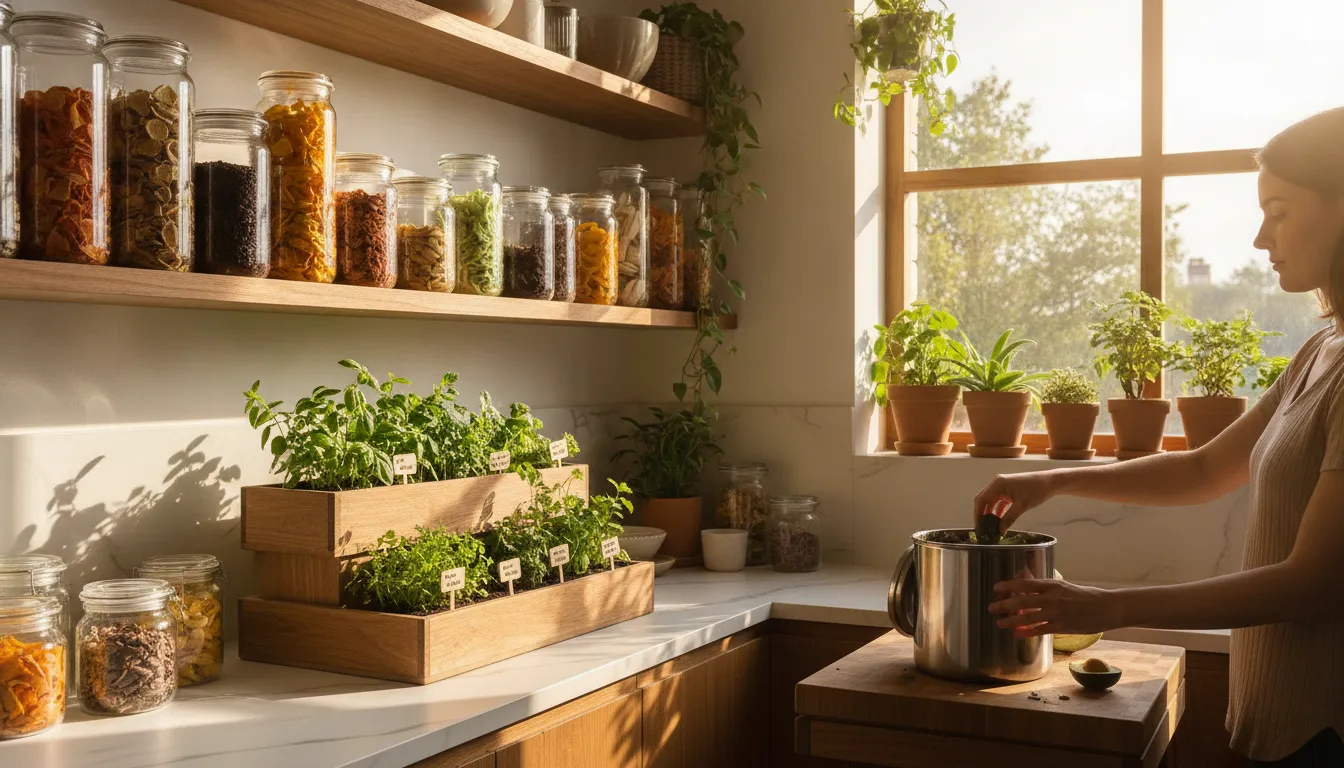
No major environmental transformation starts with mega-projects. Many of the greatest changes happen in simple places — and the home kitchen is one of them. Every peel used, every leftover transformed into a new meal, and every organic waste that becomes fertilizer represents a small victory that multiplies when practiced by thousands of people.
You don’t need to do everything at once. Start with one habit: the vegetable scrap broth, the organized fridge, the Sunday rice fritters. Watch the trash decrease, feel your budget respond, and notice how these simple gestures change your relationship with food — making it more conscious, less disposable, and much more flavorful.
The planet thanks you. Your wallet does too. And your kitchen has never been more creative.
