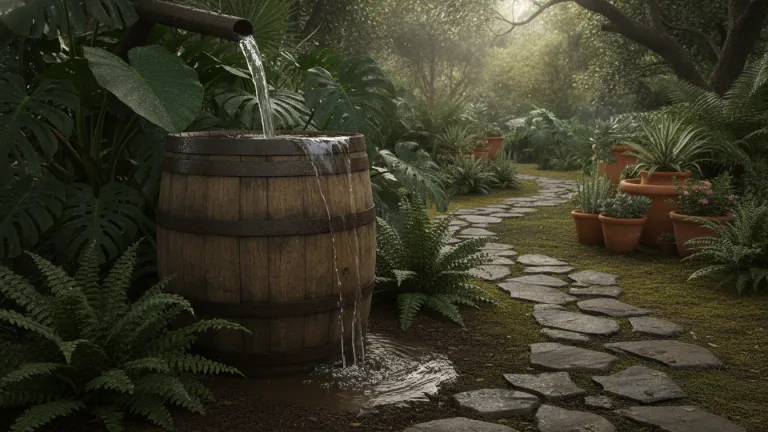
Water is one of the planet’s most precious resources — and also one of the most wasted. While billions of liters fall from the sky for free with each rain, most of us simply watch this resource go down the drain, literally. In many regions of Brazil, where prolonged droughts and water rationing have become increasingly frequent, utilizing rainwater has shifted from an alternative idea to a real and practical necessity.
Rainwater harvesting is one of humanity’s oldest techniques — used for millennia in Middle Eastern, Asian, and pre-Columbian American civilizations. What was once tradition has regained strength as a modern and accessible solution to the water challenges of the 21st century. The good news is that you don’t need a farm or large investments to start.
In this article, you’ll understand how this system works from start to finish, what the essential components are, how much it costs to install, what you can use the harvested water for, and how to take the first step today.
What is Rainwater Harvesting and Why Does It Matter
Rainwater harvesting — also known as rainwater utilization — is the process of collecting, storing, and using water that falls on impermeable surfaces, like roofs, for domestic, agricultural, or industrial purposes. Instead of letting this water go into the often-overloaded urban drainage system, it is directed, filtered, and stored for later use.
In Brazil, the pressure on water resources is increasing. According to data from the National Water and Basic Sanitation Agency (ANA), the country has one of the largest water availabilities in the world in absolute terms, but this water is very unevenly distributed. The Northeast, for example, faces structural water deficits, while large urban centers like São Paulo have experienced severe supply crises.
Harvesting rainwater doesn’t solve all these problems alone, but it’s an important piece in a larger puzzle. For the individual consumer, it represents a reduction in the water bill, greater water autonomy, and a concrete contribution to a more sustainable consumption model.
How a Harvesting System Works: An Overview
The principle is simple: rain falls on the roof, runs down the gutters, passes through a filter, and ends up in a reservoir. From this reservoir, the water can be pumped or flow by gravity to the points of use.
In practice, a basic system has four stages:
- Collection – The roof acts as a collection surface. The larger the roof area, the greater the volume collected.
- Conveyance – Gutters and pipes carry the water to the filtration and storage system.
- Filtration and initial water disposal – The first millimeters of rain carry dust, leaves, and contaminants from the roof. A device called a “first flush diverter” eliminates this dirtier water before directing the rest to the reservoir.
- Storage and distribution – The clean water goes to a cistern or water tank, from where it can be pumped for use.
The quality of the harvested water depends greatly on the cleanliness of the roof, the material of the tiles, and the efficiency of the filters. Therefore, this water, without additional treatment, is not suitable for direct human consumption — but it is very useful for various other purposes.
Essential Components of a Residential System
Understanding the components helps to size the project and choose the best options for your situation. Here are the main ones:
- Roof (collection area): Ceramic, metal, and fiber cement tiles are the most common. Asbestos tiles should be avoided for health reasons.
- Gutters and pipes: They should be kept clean and unobstructed. Gutters with protective screens prevent leaves from entering.
- First flush diverter: A device that automatically discards the first liters of rain, which are the most contaminated. It is inexpensive and essential for water quality.
- Filter: It can be simple (fine mesh) or more elaborate (sand and gravel filter). It retains solid particles before storage.
- Cistern or reservoir: The heart of the system. It can be made of polyethylene, fiberglass, or concrete. It should be covered, dark (to prevent algae), and ventilated.
- Pump (optional): Necessary if the reservoir is at ground level and the points of use are higher. Gravity systems do not require a pump if the cistern is elevated.
- Overflow: An outlet for excess water when the reservoir is full, preventing overflows.
How to Calculate How Much You Can Harvest
The volume of water harvested depends on two main factors: the roof area and local precipitation. The basic formula is:
Volume (liters) = Roof area (m²) × Precipitation (mm) × Utilization coefficient
The utilization coefficient varies between 0.7 and 0.9 (meaning 70% to 90% of the water that falls, discounting losses due to evaporation, first flush disposal, and infiltration in the gutters). For ceramic roofs, 0.8 is generally used.
Practical example:
- 80 m² roof
- Monthly precipitation of 100 mm (common in many Brazilian cities during the rainy season)
- Coefficient: 0.8
80 × 100 × 0.8 = 6,400 liters per month
To find the average precipitation in your city, consult the National Institute of Meteorology (INMET) website, which provides free historical data.
What You Can Use the Harvested Water For
Rainwater harvested in residential systems, without special treatment, is suitable for non-potable uses. This already represents a significant portion of daily domestic consumption. Here are the main uses:
- Toilet flushing – One of the largest uses of potable water in the house, which can be completely replaced by rainwater.
- Washing sidewalks, yards, and vehicles
- Irrigation of gardens, orchards, and plants – In fact, plants often respond very well to rainwater, which is naturally slightly acidic and chlorine-free.
- Laundry washing (with adequate filtration)
- General house cleaning (floors, windows)
- Swimming pool use (volume replacement)
- Animal husbandry (with basic filtration)
- Agricultural uses and small rural properties
For human consumption, the harvested water would need to undergo additional treatment — such as multi-stage filtration, chlorine or UV disinfection, and periodic quality testing. This is technically possible but requires greater investment and constant monitoring, and is not recommended without specialized technical guidance.
Step-by-Step: How to Install a Basic System at Home
If you want to start with a simple and functional system, follow this guide:
- Evaluate your roof: Check the material, available area, and condition of the gutters. Clean gutters and tiles before installing.
- Choose the reservoir location: Close to the gutters and, if possible, elevated to allow gravity distribution.
- Install the first flush diverter: It can be purchased at building supply stores or made with PVC pipes. Check tutorials from Embrapa Semiárido, which provides free manuals on cisterns.
- Install the filter: A fine mesh at the reservoir entrance already solves most solids. For higher quality, add a sand and gravel filter in a separate chamber.
- Install the cistern: Follow the manufacturer’s instructions. Ensure it is covered, light-sealed, and with an overflow connected to the drainage network.
- Connect the points of use: For toilets and external faucets, an independent plumbing from the public network is ideal. A plumber can make this installation.
- Test the system: Wait for the first rain, check for leaks, if the diverter works, and if the water reaches the reservoir clean.
- Maintain regularly: Clean the reservoir every six months, check filters and gutters before the rainy season.
Costs, Regulation, and Incentives
The cost of a basic residential system varies greatly depending on size and materials. A 5,000-liter polyethylene cistern can cost between R$ 1,500 and R$ 4,000, depending on the region and supplier. With other components and installation, a simple system can range from R$ 3,000 to R$ 8,000. More robust systems, with advanced filtration and automation, cost more.
In the regulatory field, Federal Law No. 13.501/2017 includes rainwater utilization as one of the objectives of the National Water Resources Policy. Some Brazilian municipalities and states also have specific legislation that encourages or even requires harvesting systems in new constructions — check your municipality’s legislation.
Programs like the Rural Cistern (part of the Federal Government’s Cisterns program, aimed at the semi-arid Northeast) have already benefited millions of rural families with access to water. For those seeking more sustainable consumption more broadly, integrating rainwater harvesting with other practices — like saving electricity at home and reducing waste — creates a truly more conscious lifestyle.
Conclusion: Every Drop Counts — And You Can Start Now
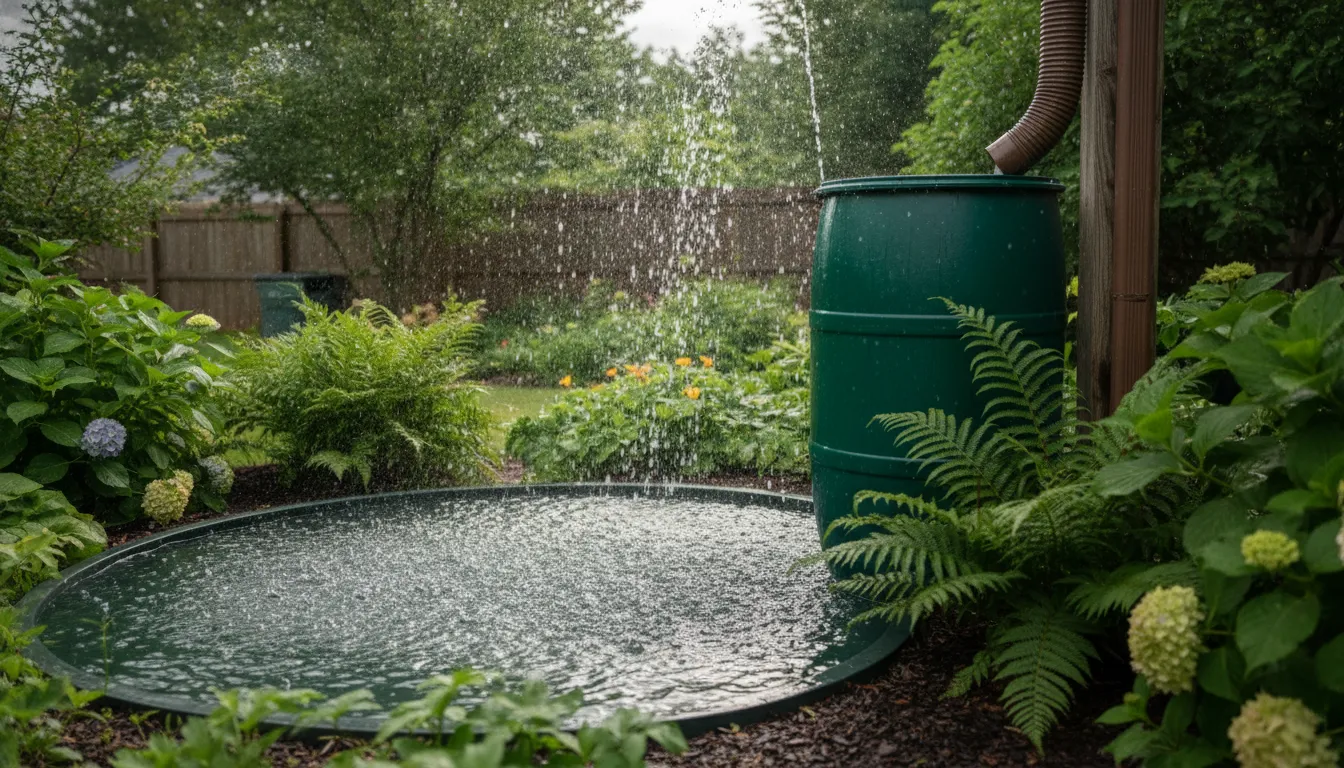
Harvesting rainwater is not a magic solution nor does it require you to become an expert in hydraulic engineering. With basic planning, accessible materials, and a bit of willingness, anyone with a roof can install a functional system and start seeing concrete results — both in the water bill and in the feeling of contributing to something bigger.
If you live in an apartment or can’t install a complete system now, you can start small: a barrel collecting water from a gutter for watering the garden is already a real step. The important thing is to take the first step and understand that sustainable solutions are often more within reach than they seem.
Want to go further in your sustainable living journey? Check out our complete guide for beginners in sustainability and discover other practical changes that make a difference in daily life. The planet thanks you — and so does your wallet.
- Choose the reservoir location: Close to the gutters and, if possible, elevated to allow gravity distribution.
- Washing sidewalks, yards, and vehicles
- Toilet flushing – One of the largest uses of potable water in the house, which can be completely replaced by rainwater.
- Gutters and pipes: They should be kept clean and unobstructed. Gutters with protective screens prevent leaves from entering.
- Conveyance – Gutters and pipes carry the water to the filtration and storage system.
