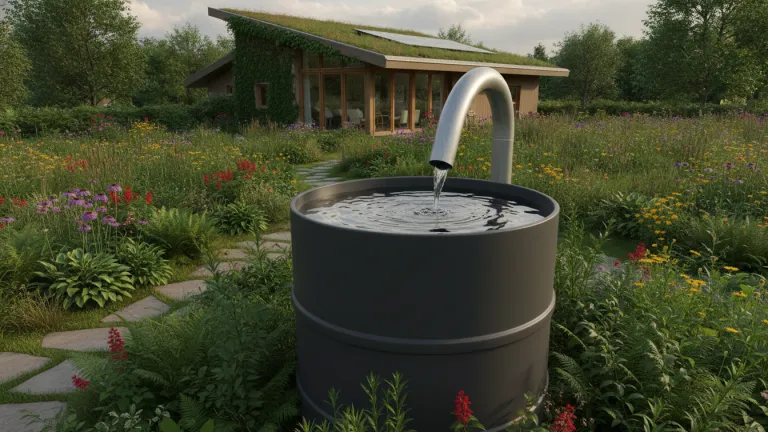
What is Rainwater Harvesting and Why It Matters Now
Fresh water is one of the planet’s most precious resources — and also one of the most threatened. With climate change altering precipitation patterns worldwide, droughts becoming more intense, and urban demand growing continuously, learning to capture and reuse rainwater has shifted from an alternative practice to a smart and increasingly necessary strategy. In many regions, the rain that falls on your rooftop simply runs down the drain — and is gone forever.
The good news is that you don’t need a rural farm or a massive investment to get started. Rainwater harvesting systems can be simple, affordable, and installed in urban homes, condominiums, schools, and small businesses. And the benefits go beyond your water bill: they reduce pressure on water sources, decrease surface runoff in cities, and help tackle those moments when the tap starts to fail.
In this article, you’ll understand how these systems work from start to finish, what types are available, what legislation says about the subject, and how to take the first practical steps at your home or community.
How a Rainwater Harvesting System Works
At its core, the concept is simple: collect water that falls on a surface, filter it, and store it for later use. But within this basic logic, there’s engineering that must be respected to ensure safety, efficiency, and quality of the captured water.
The process follows a logical path:
- Rain falls on the catchment surface — usually the building’s roof.
- Gutters and downspouts direct the water into the system.
- The first flush diverter eliminates the initial flow of water, which carries dust, leaves, bird droppings, and other contaminants accumulated on the roof.
- Filters retain larger solid particles.
- Water stored in the tank becomes available for use.
- A pump or gravity system distributes the water to points of use.
This flow can be simpler or more sophisticated depending on the intended use. To irrigate the garden, a barrel under the gutter works fine. To use in a home’s toilets, a more structured system with proper filtration and storage is needed.
Catchment Surfaces and Potential Volumes
The most common catchment surface is the home’s roof. The volume of water that can be collected depends on two main factors: the roof area and the region’s rainfall index.
The basic formula is:
Volume (liters) = Catchment area (m²) × Precipitation (mm) × Runoff coefficient
The runoff coefficient varies according to the roofing material. Ceramic and fiber cement tiles typically have a coefficient between 0.8 and 0.9, meaning 80% to 90% of the falling water is effectively captured — the rest is lost to evaporation and absorption.
Some practical examples:
- A house with 100 m² of roof in a city receiving 1,400 mm of rain per year (close to São Paulo’s average) can capture approximately 112,000 liters per year — over 300 liters per day on average.
- In regions with lower precipitation, such as parts of Brazil’s semi-arid Northeast, the volume is smaller, but harvesting becomes even more strategic.
It’s worth remembering that not all captured water is suitable for all uses. Proper destination makes all the difference when sizing your system.
Appropriate Uses for Harvested Rainwater
Before setting up any system, it’s essential to understand that rainwater harvested from rooftops is not considered potable without proper treatment. It may contain bacteria, fine particles, and contaminants from urban air.
This doesn’t mean it’s useless — quite the opposite. Non-potable uses represent a significant share of household water consumption:
- Toilet flushing — responsible for about 30% of residential water consumption, according to historical data from water utilities and sanitation studies
- Irrigation of gardens, vegetable patches, and lawns
- Washing sidewalks, patios, and vehicles
- Cleaning outdoor floors
- Swimming pool refilling
- Industrial processes and laundry use (with specific treatment)
For potable uses — drinking, cooking, brushing teeth — complete treatment including fine filtration, disinfection (with chlorine, UV, or ozone), and quality monitoring would be necessary, which considerably raises the system’s cost and complexity. In most urban contexts, it’s not recommended without a technical report.
Essential Components of a Residential System
A basic and functional home system consists of the following elements:
Gutters and Downspouts
These are the starting point. They must be clean, free of leaves or debris, and directed toward the collection system. Regular gutter maintenance is one of the simplest and most neglected steps.
First Flush Diverter
This component is often ignored in amateur installations — and that’s a serious mistake. The first flush automatically discards the first millimeters of rain, which are the most contaminated. Ready-made models are available on the market, or you can build one with PVC pipes.
Filters
Coarse mesh filters retain leaves and insects. Finer filters can retain smaller sediments. For toilet and irrigation use, basic filters are sufficient.
Storage Tank
This can be a conventional water tank, an underground cistern, polyethylene barrels, or even masonry reservoirs. The tank should be closed, protected from direct sunlight (to prevent algae growth), and easily accessible for periodic cleaning.
Distribution System
This can work by gravity (if the tank is elevated) or by pump. For simple irrigation systems, gravity is sufficient. To feed toilets, a pump or secondary elevated tank is usually necessary.
Legislation on Rainwater Harvesting
Many countries have important regulatory frameworks in this area. Various municipalities and states have their own legislation that encourages or even requires the installation of harvesting systems in new constructions. Cities worldwide have implemented incentive programs or requirements for certain building types — it’s worth checking specific local legislation before planning your installation.
Technical standards regulate rainwater harvesting for non-potable purposes in urban areas. They define requirements for design, installation, operation, and maintenance of systems, serving as the reference document for any professional installation.
If you’re planning a more robust system — especially for commercial properties or condominiums — consulting a civil or sanitary engineer is highly recommended to ensure compliance with standards.
Step by Step: How to Set Up a Simple System at Home
For those who want to start practically and economically, a basic system for irrigation and washing can be assembled with few materials:
- Assess your existing gutters — check if they’re in good condition and if there’s a downspout near where the water will be used.
- Install a diverter in the downspout — an overflow or diverter with a valve allows you to redirect water to the tank when desired.
- Set up the first flush device — a vertical tube closed at the end, with volume proportional to 2 mm of rain per m² of roof, which fills first and only then overflows to the tank.
- Install a mesh filter at the tank entrance to block leaves and insects.
- Choose and position the tank — this can be a 55-gallon drum or a 130-gallon water tank. The higher it is, the better the pressure for gravity-fed irrigation.
- Cover the tank to prevent mosquitoes and light entry.
- Install a tap at the base to connect a hose or drip system.
- Do the first tank cleaning before use and repeat every six months.
The cost of such a basic system can range from a few hundred dollars depending on tank capacity and materials chosen — but savings on the water bill begin in the first months of use.
Rainwater Harvesting and Climate Change
Climate change is making water extremes more frequent: when it rains, it pours heavily and concentrated; when it’s dry, the drought prolongs. In this context, capturing water during rainy periods for use during dry spells is a water resilience strategy that makes sense both for individuals and the community.
At an urban scale, distributed harvesting systems also help reduce surface runoff — one of the major causes of flooding in cities. When rainwater is retained on properties before reaching the streets, pressure on drainage systems decreases significantly.
Combining rainwater harvesting with other sustainable practices — like installing solar panels to power the system’s pump or composting organic garden waste — creates a cycle of household sustainability that reduces both environmental impact and monthly costs.
Conclusion: Every Roof Can Be a Water Source
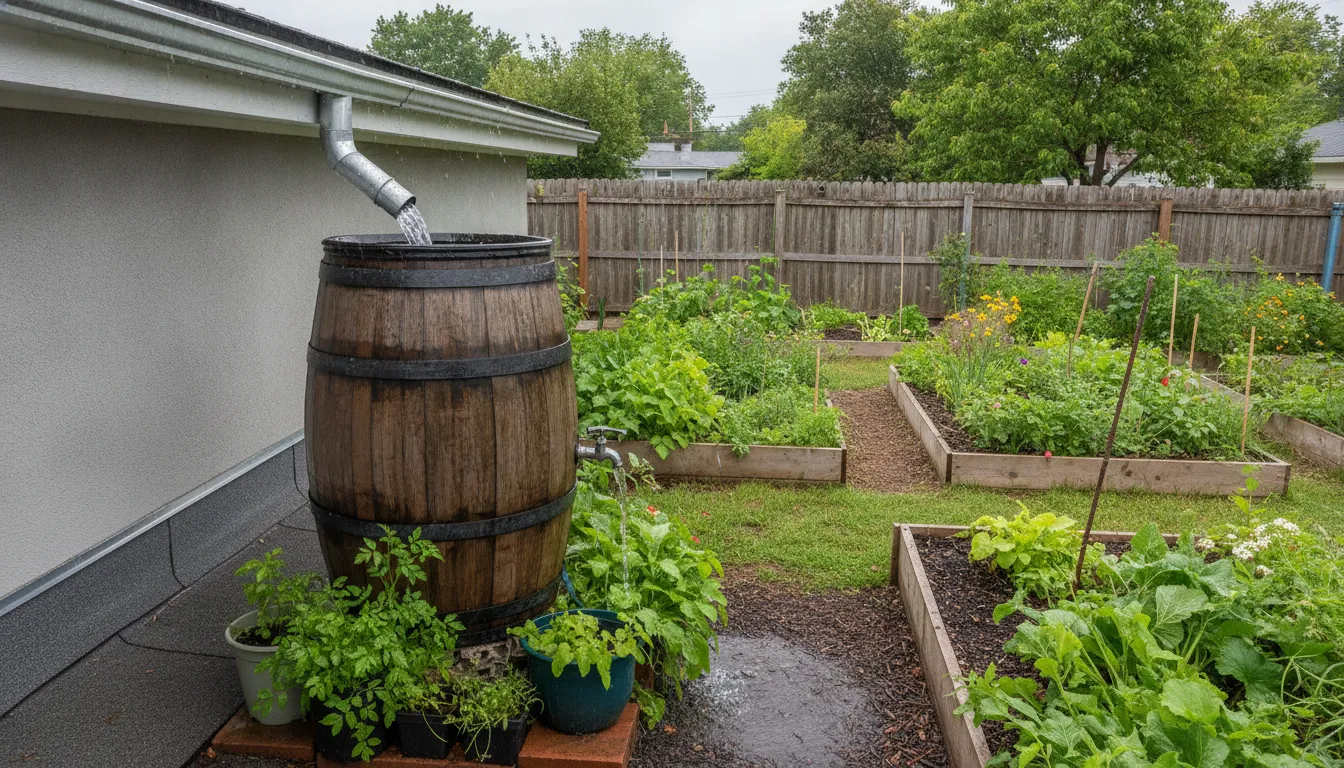
Harvesting rainwater isn’t a magic solution to the water crisis, but it’s a real, practical contribution within anyone’s reach. Whether it’s a simple barrel under the gutter or an integrated system with filtration and underground storage, every liter of captured water is a liter that doesn’t need to be taken from water sources — and a liter available when the tap runs dry.
Start with the simplest option. Observe your gutter, evaluate your roof, research materials available in your area. The biggest barrier to adopting this practice isn’t cost or technique — it’s the habit of imagining that water will keep coming the same way forever.
Act now: choose a spot in your home where the gutter drains well, research your city’s rainfall index, and calculate how much you could capture per month. This first mental step is already the beginning of real change.
