Why Planting Technique Matters as Much as the Tree You Choose
Planting a tree seems simple: dig a hole, place the seedling, cover with soil, and water. But anyone who’s tried knows reality can be quite different. Seedlings that wilt within weeks, roots that don’t take hold, plants that grow crooked or simply don’t develop — these problems are far more common than they should be, and almost always have a preventable cause.
The good news is that forestry science and agronomy have clearly mapped out what separates successful planting from failure. It’s not about miraculous techniques or expensive inputs. Most of the time, it’s basic care — executed with attention and in the right order — that ensures a seedling transforms into a healthy tree capable of capturing carbon, providing shade, sheltering wildlife, and improving the microclimate around it.
In this article, you’ll find a practical, science-based guide on how to plant trees the right way, from choosing the species to caring for them in the first months. Every step makes a difference — and the planet thanks you when you do it right.
Choosing the Right Species: The First and Most Important Step
Before buying any seedling, the most important question is: which tree makes sense for this specific location? Native species from your region have a much better chance of thriving because they’re adapted to the soil, rainfall patterns, and local fauna. Additionally, they directly contribute to the ecological chain of the biome where they’re planted.
Brazil has extraordinary tree biodiversity. In the Cerrado, for example, species like the pequi tree (Caryocar brasiliense), yellow ipê (Handroanthus albus), and buriti palm (Mauritia flexuosa) are ecologically appropriate and withstand dry season water stress well. In the Atlantic Forest, Brazilian peppertrees, jequitibás, and cedars play structural roles in the ecosystem. In the Amazon, the list is even more extensive.
Embrapa Florestas and forestry nurseries at state universities are reliable sources for identifying which native species are recommended for each region. Many municipalities also have free native seedling distribution programs — it’s worth checking with your local government before going to a store.
Why to Avoid Exotic Species in Natural Vegetation Areas
Species like eucalyptus and pine are widely used in commercial plantations, but present serious problems when introduced in native vegetation areas or transition zones. Eucalyptus, for example, can reduce water availability in the soil and hinder regeneration of other plants around it — a characteristic that has generated technical debates and restrictions in forest restoration projects in Brazil. For urban backyards with ornamental or shade purposes, there’s more flexibility, but preference for native species remains the predominant technical recommendation.
How to Choose a Healthy Seedling
A weak seedling will rarely become a vigorous tree. When choosing, observe:
- Root system: roots shouldn’t be excessively growing out of the container’s drainage holes (a sign that the seedling has passed the ideal planting time)
- Stem: should be upright and firm, without lesions or dark spots
- Foliage: uniform coloring, without widespread yellowing or visible pests
- Height: seedlings between 30 cm and 60 cm generally have better survival rates, depending on the species
- Origin: prefer certified nurseries or those with good reputation; be wary of very cheap seedlings without identified origin
Soil Preparation: The Foundation of Growth
Soil is the foundation of everything. Planting done in compacted soil, without organic matter or with inadequate pH will produce a tree that struggles to survive instead of growing vigorously.
How to Properly Prepare the Planting Hole
- Size the hole appropriately. The most widespread technical recommendation is that the hole should be at least twice the diameter of the seedling’s root ball and deep enough to accommodate the entire root system without bending it. For most medium-sized seedlings in 2 to 5-liter bags, a hole of 40 cm × 40 cm × 40 cm is a good starting point.
- Separate the surface soil (the first 20 cm) from the deeper soil. The top layer is richer in organic matter and should be used to mix with compost or fertilizer.
- Add organic matter. Mix the surface soil with mature organic compost, aged manure, or worm castings. This addition improves soil structure, water retention, and nutrient availability. If you compost at home, this is the perfect time to use the final product — check out how to set up your inexpensive homemade compost bin if you don’t have one yet.
- Check drainage. Fill the hole with water and observe. If it takes more than an hour to drain completely, the location has waterlogging problems and you may need to choose another spot or work on drainage before planting.
- Avoid quick-release chemical fertilizers at the bottom of the hole. They can burn young roots before the seedling establishes itself.
The Planting Itself: Step by Step to Get It Right
With the hole prepared and healthy seedling in hand, it’s time for the main event. Execute calmly:
- Remove the seedling from the container carefully. Avoid pulling by the stem; invert the container and gently squeeze the walls to release the entire root ball.
- Don’t break the root ball. The fine roots in contact with the substrate are responsible for water and nutrient absorption in the first weeks. Preserving them is essential.
- Position the seedling in the center of the hole. The base of the stem (the plant’s “crown,” where the stem ends and roots begin) should be at soil level — neither buried too deep nor exposed above the surface. Burying the crown is one of the most common mistakes and can cause rotting and plant death.
- Fill with the soil and compost mixture. Do this gradually, pressing lightly around the roots to eliminate air pockets, but without over-compacting.
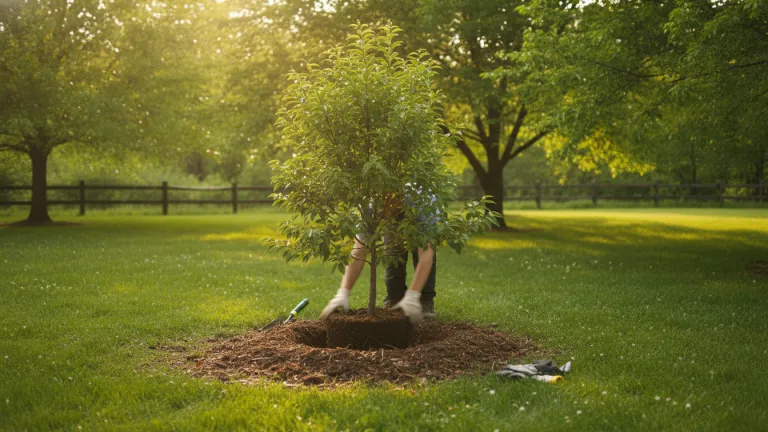
- Form a basin around the plant. A small “dike” of soil around the seedling helps concentrate irrigation water directly over the roots.
- Water abundantly right after planting. The first watering should be generous to ensure complete contact between roots and surrounding soil.
- Apply mulch. A layer of 5 to 10 cm of dry leaves, straw, or bark around the seedling (without touching the stem) conserves moisture, regulates soil temperature, and reduces competition with weeds.
Ideal Timing and Conditions for Planting
In Brazil, the most recommended time for planting tree seedlings is the beginning of the rainy season — which varies by region but generally occurs between October and December in the Southeast and Central-West, and between April and June in parts of the Northeast and North. Planting during this period takes advantage of natural rainfall to reduce irrigation needs and significantly increase seedling survival rates.
Avoid planting on very hot days or with strong winds, as the seedling loses water rapidly through transpiration before it can absorb from the soil. Late afternoon is the best time of day for planting when there’s no choice of season.
If you live in an urban area and depend on artificial irrigation, combining planting with a rainwater harvesting system can greatly reduce drinking water consumption in the seedling’s first months.
Essential Care in the First Months
The critical adaptation period for a seedling in the field generally lasts between 60 and 120 days after planting. During this time, care makes all the difference:
- Regular irrigation: in the first weeks, water every two or three days. After establishment, gradually reduce as the plant shows vigor
- Weed control: regularly clear the area around the seedling; competition for water and nutrients is one of the main mortality factors in young plantings
- Staking: for fast-growing species or windy locations, a stake (bamboo or wooden pole) can help keep the stem upright in the first weeks
- Pest monitoring: regularly inspect leaves and stem; early identification of leaf-cutter ants or caterpillars allows control before damage becomes severe
- Avoid unnecessary pruning: the seedling needs all possible foliage to photosynthesize and establish itself; only remove clearly dead or diseased branches
The Real Impact of Planting the Right Way
There’s an enormous difference between planting a tree and having an established, growing tree. Forest restoration studies in Brazil demonstrate that mortality rates in poorly executed plantings can be very high — meaning waste of time, money, and most importantly, environmental opportunity.
A healthy adult tree fulfills functions far beyond aesthetics: it sequesters carbon from the atmosphere over decades, offers habitat for birds, insects, and mammals, contributes to the local hydrological cycle, reduces the immediate surrounding temperature, and improves air quality. For all this to happen, it first needs to survive and grow vigorously — and that starts on planting day.
Planting a tree the right way isn’t bureaucracy: it’s respect for your own effort and for the planet you want to help.
Start Today: Every Tree Counts
You don’t need a large plot of land or special equipment. A backyard, a plaza with city permission, a community urban tree planting project — there are many ways to start. What matters is that when you plant, you plant well.
Choose the right species for your location, prepare the soil carefully, respect the seedling’s crown, cover the soil with mulch, and monitor the first months. These simple steps multiply your chances of success and transform a symbolic gesture into real, lasting environmental contribution.
If every person who reads this article plants a tree — and does it right — the collective result is genuinely significant. Start with your next one, and make it grow.
