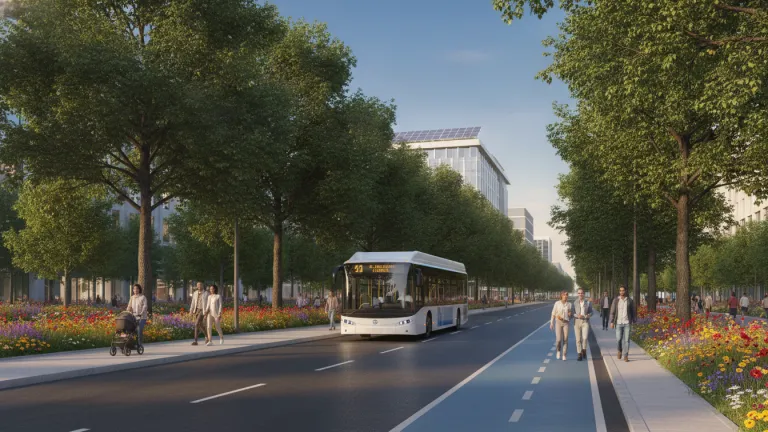
Why public transportation is one of the greatest allies of the climate
Imagine the following scenario: it’s seven in the morning and thousands of cars leave the garages of a large Brazilian city at the same time. Each one carrying, on average, only one person. Traffic jams, the air thickens, and tons of CO₂ silently rise into the atmosphere — before the workday even begins. Now imagine that half of these people decided to take the bus, subway, or train. The impact would be immediate: less congestion, less pollution, less fuel burned per passenger transported.
This is not a distant utopia. It is a choice that anyone with access to public transportation can make today. And, at a time when scientific evidence on climate change is more urgent than ever — the IPCC reinforced in its most recent reports that we need to drastically reduce global emissions in the coming decades — every mobility decision counts. The transportation sector is responsible for a significant share of greenhouse gas emissions worldwide and in Brazil, making it a priority area for action.
In this article, we will explore why public transportation is a powerful tool for the planet, what its real benefits are, and — most importantly — how you can incorporate this choice into your routine in a practical way without sacrificing quality of life.
The weight of transportation in carbon emissions
The transportation sector ranks among the largest emitters of greenhouse gases in both the global scenario and in Brazil. According to data from the Climate Observatory and the System of Estimations of Greenhouse Gas Emissions (SEEG), transportation represents one of the country’s main sources of emissions when considering the use of fossil fuels — especially gasoline and diesel consumed by individual vehicles.
In the global context, the International Energy Agency (IEA) points out that road transport is responsible for a significant part of emissions from the world’s energy sector. Cars powered by internal combustion engines are the major culprits in this account: they emit CO₂ for each kilometer traveled, and do so while transporting, most of the time, only the driver.
Public transportation, on the other hand, dilutes these emissions across a much larger number of passengers. A crowded urban bus can transport dozens of people with a fraction of the per capita emissions of an individual vehicle. Electric trains and subways go even further: when powered by energy from renewable sources — as is partly the reality of Brazil’s electrical matrix, composed in significant proportion by hydroelectric dams and, increasingly, by solar and wind — their operational emissions can be minimal.
Public transportation versus car: the comparison that matters
To understand the real impact, it is worth looking at the logic of collective efficiency. It’s not just about emissions: the equation involves use of urban space, resource consumption, and quality of life in cities.
| Factor | Individual car | Public transportation (crowded bus) |
|---|---|---|
| Road space occupied per passenger | High | Much smaller |
| CO₂ emissions per passenger/km | High | Significantly lower |
| Fuel consumption per person | High | Spread among passengers |
| Monthly financial cost to user | High (fuel, insurance, maintenance) | Generally lower |
| Impact on congestion | Contributes to the problem | Part of the solution |
This comparison makes it clear that the switch is not just environmental — it makes economic and urban sense. Cities that invest in quality public transportation tend to have less congestion, cleaner air, and greater mobility for all segments of the population, including those without access to cars.
Real benefits of public transportation for the environment
The environmental benefits of public transportation go beyond reducing CO₂ emissions. Check out the main ones:
- Reduction of local air pollution: Fewer individual vehicles on the streets means lower concentrations of particulate matter, nitrogen oxides, and other pollutants that directly affect human health — especially in large urban centers like São Paulo, Rio de Janeiro, and Belo Horizonte.
- Lower pressure on urban space: Parking lots, expressways, and garages occupy enormous areas that could be green spaces, housing, or public use. Cities less dependent on cars have more space for trees, squares, and sidewalks.
- Conservation of natural resources: Producing fewer cars means consuming less steel, aluminum, rubber, plastic, and lithium — all with high environmental costs in extraction and processing.
- Synergy with active mobility: Public transportation goes hand in hand with cycling and walking. Those who use the subway or bus frequently walk parts of their journey, which also contributes to personal health.
- Potential for electrification at scale: Electrifying an urban bus fleet has a much greater multiplier impact than electrifying individual cars, as each vehicle serves dozens of people daily.
The Brazilian scenario: advances and challenges in 2026
Brazil has one of the largest urban public transportation networks in Latin America, with subway systems, metropolitan trains, BRT (Bus Rapid Transit), and extensive bus networks. Cities like São Paulo and Porto Alegre have integrated systems that allow complex trips with a single fare.
In recent years, there has been growing debate and investment in electrification of bus fleets. São Paulo, for example, has made progress in incorporating electric buses into its municipal fleet — a trend that other Brazilian capitals are also beginning to follow. This electrification, combined with the country’s renewable energy matrix, represents a real opportunity to make urban public transportation almost zero in operational emissions.
On the other hand, the challenges are significant. In many medium-sized cities and suburbs of metropolitan areas, public transportation is still precarious, overcrowded, and unreliable. This makes many people prefer cars — not out of environmental ignorance, but out of practical necessity. Improving service quality is therefore a legitimate and urgent demand that should be made of public managers.
How to adopt public transportation in your routine: step by step
If you want to start using more public transportation — or use it more intelligently — here is a practical path:
- Map your usual trips. Identify which routes you take most frequently (work, school, shopping) and research the public transportation options available using apps like Google Maps, Moovit, or official operator apps.
- Start with the easiest routes. You don’t need to change everything at once. Choose the route where public transportation works best in your city and start there.
- Calculate how much you save. Add up your monthly expenses with fuel, parking, insurance, and car maintenance and compare them with the cost of public transportation. In many cases, the difference is significant — and that money can go to other priorities.
- Use integrated cards and apps. Most Brazilian cities offer transportation cards with integration benefits. Set up automatic payments to avoid lines and unexpected issues.
- Combine with active mobility. For short distances to the bus stop or station, consider walking or using a bike (yours or a shared one). This combination is efficient and also benefits your health.
- Plan ahead on busy days. Use real-time monitoring apps to avoid extreme peak hours and arrive at work or appointments without stress.
- Share the experience. Invite colleagues or neighbors to adopt similar routes. The collective impact of small individual choices is much greater than it seems.
Other sustainable choices that complement conscious transportation
Adopting public transportation is an important piece of a more sustainable lifestyle, but you don’t have to stop there. Every area of daily life offers opportunities to reduce environmental impact. The way we eat, for example, has enormous weight in our carbon footprint — and adopting a sustainable diet is another powerful change that anyone can start making today.
Similarly, the correct disposal of electronics and batteries — which are often improperly thrown in regular trash — is an important environmental responsibility. If you don’t yet know how to do this the right way, the practical guide to battery and electronics disposal from Help the Planet can help. Small actions added together make a real difference.
What you can demand from government and businesses
Individual change is powerful, but quality public transportation also depends on collective and political decisions. Here is a list of what is worth demanding and supporting:
- Infrastructure investment: More exclusive bus lanes, expansion of subways and metropolitan trains, and integration between modes.
- Fleet electrification: Policies that encourage the replacement of diesel buses with electric ones, with clear and transparent targets.
- Fair and accessible fares: Public transportation must be financially viable for the entire population, including the most vulnerable.
- Safety and accessibility: Bus stops with shelter, lighting, and vehicles adapted for people with disabilities and elderly.
- Open data integration: Real-time information systems that help passengers plan their routes with confidence.
Participating in public hearings, signing petitions, voting for candidates with sustainable urban mobility proposals, and demanding transparency from municipal administrations are real ways to act beyond the individual level.
Conclusion: every bus ride is a vote for the planet
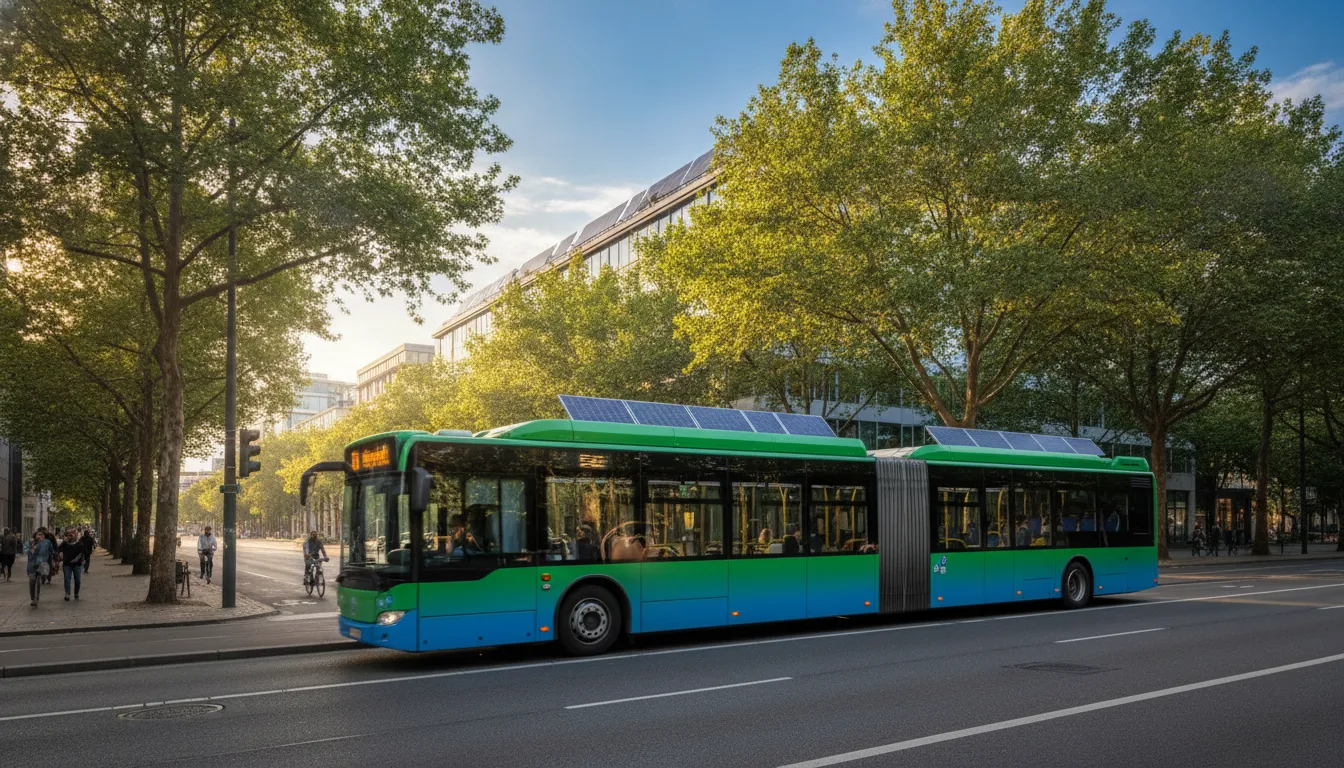
Choosing public transportation is not a sacrifice — it is a conscious decision that carries benefits for your wallet, the city, and the climate. At a time when climate change demands action on all fronts, sustainable mobility is within reach of anyone living in a city with access to public transportation.
Start small: swap one car trip per week for a bus or subway ride. Notice the difference. Invite someone to do the same. And remember that every additional passenger on public transportation is one less car on the streets — and one more step in the direction of more breathable, fair, and sustainable cities for all.
The planet doesn’t need perfection. It needs many people making better choices, consistently and with hope.
