You open the kitchen drawer and find dozens of plastic bags folded inside other plastic bags. You open the bathroom cabinet and find shampoo, conditioner, liquid soap, and lotion bottles — almost everything in plastic. You go to the grocery store and, even trying to be careful, come home with more plastic than you left with. This scene is all too familiar for most of us, and it’s not for lack of good intentions. Plastic is so deeply rooted in daily life that reducing its use seems, at first glance, like a monumental task.
But the good news is it doesn’t have to be. The transition to a home with less plastic doesn’t require perfection, nor do you need to throw away everything you have tomorrow. It happens in layers — one substitution at a time, one new habit built upon another. And the collective impact is real: plastic is now one of the planet’s greatest environmental challenges, present in oceans, soils, the air we breathe, and even in human blood, according to studies published in recent years. Acting at home is one of the most direct ways to be part of the solution.
In this article, you’ll find a practical and honest path to start — or continue — this journey. Without guilt, without radicalism, focused on what really works in everyday life.
Why Plastic Is So Problematic
Plastic itself isn’t a villain for existing. The problem lies in the scale of production, the disposable model that dominated the 20th century and still persists, and the waste infrastructure that, globally, can’t handle the volume generated.
Most of the plastic produced globally is single-use — created to be used once and thrown away. This material can take hundreds of years to decompose in the environment. In the process, it doesn’t disappear: it fragments into microplastics, tiny particles that contaminate rivers, soils, and food chains. Researchers have already detected microplastics in fish, sea salt, drinking water, and more recently, in human tissues, including lungs and placenta.
Solid waste management still faces significant structural challenges in many regions. Although policies have established relevant guidelines, effective recycling coverage remains uneven across different areas. This means that much of the plastic we think we’re recycling doesn’t necessarily reach that destination. Reducing consumption at the source — before generating the waste — remains the most effective strategy.
Make a Diagnosis: How Much Plastic Enters Your Home
Before changing anything, it’s worth understanding what’s happening. This step is simple and revealing.
How to map the plastic in your daily life
- Separate your trash for a week — save everything that would normally go to regular trash or recycling in a separate corner and observe the proportion of plastic.
- Categorize by origin — kitchen, bathroom, household cleaning, miscellaneous purchases. Where is the highest concentration?
- Identify the recurring culprits — yogurt containers, grocery bags, margarine tubs, snack wrappers, shampoo bottles? The champions vary by household.
- Note what’s replaceable now — not all plastic has a practical, accessible alternative yet. But many do. This mapping shows where to start with the most impact.
This exercise usually surprises people. Many realize that an enormous amount of the plastic they generate comes from just a few products, which makes planning changes much easier.
The Kitchen: The Biggest Battleground (and Victory Zone)
The kitchen is usually the largest entry point for plastic in the home. It’s also where practical substitutions are most abundant.
Substitutions that work in everyday life
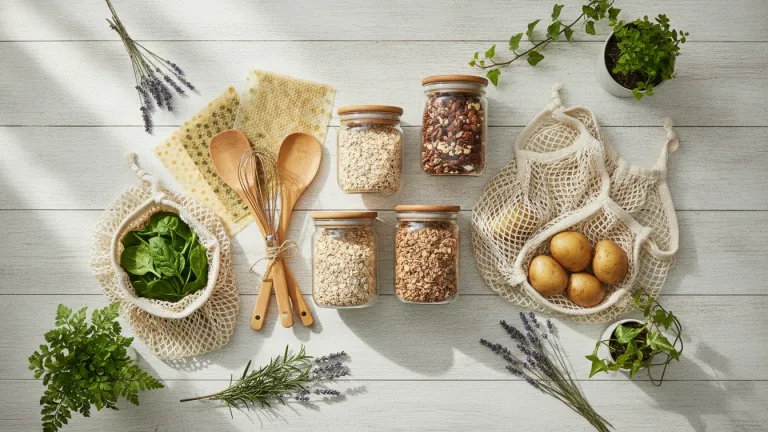
- Reusable bags — always keep some in your purse, backpack, or car. Cotton or jute bags last for years and prevent hundreds of plastic bags over time.
- Glass or stainless steel containers for storing food instead of plastic wrap, zip bags, and disposable plastic containers.
- Beeswax or soy wax wraps as a substitute for plastic wrap — already available in sustainable product stores and markets.
- Bulk shopping — cereals, grains, flours, nuts. Many cities have bulk stores and markets that sell products this way, allowing you to bring your own container.
- Fruits and vegetables without packaging — prefer farmers’ markets where you choose items without styrofoam trays and plastic wrapping.
- Cellulose or sisal sponges instead of synthetic sponges.
It’s also worth thinking about processed food packaging. It’s not about eliminating everything at once, but gradually preferring products with glass, paper, or metal packaging when the option exists and fits your budget.
The Bathroom: Small Space, Big Impact
The bathroom is the second largest generator of household plastic. Shampoo, conditioner, liquid soap, toothpaste, deodorant, moisturizer bottles — the list is long.
Simple swaps for a bathroom with less plastic
- Shampoo and conditioner bars — the quality of these products has improved greatly in recent years. There are options for different hair types, available in pharmacies, natural product stores, and even large retail chains.
- Bar soap instead of liquid soap in plastic bottles — the oldest and simplest option.
- Toothpaste powder or tablets — alternatives to toothpaste in plastic tubes, still little known but increasingly accessible.
- Deodorant sticks without plastic packaging or in paper/aluminum packaging.
- Reusable pads or menstrual cups — besides eliminating a lot of plastic, they generate significant savings over time.
- Safety razor with replaceable steel blades (classic shaving) instead of plastic disposables.
- Bamboo toothbrush — now widely available.
The tip here is not to throw away what you already have. Use it until it’s finished and, when it runs out, make the switch to the more sustainable alternative.
Household Cleaning: Concentrates and Refills Are Your Allies
Household cleaning products are major generators of plastic packaging — dish soap, bleach, disinfectant, multi-purpose cleaner, fabric softener. Here, two strategies stand out:
Concentrated products — they yield much more per package. One liter of concentrate can equal several liters of ready-to-use product, proportionally reducing the plastic generated.
Refill systems — many brands now offer refills in smaller packages or more sustainable formats. Additionally, some stores and cooperatives sell bulk cleaning products, where you bring your bottle from home.
Homemade recipes also work well for some uses:
- A mixture of diluted white vinegar in water works as a multi-purpose cleaner for kitchen and bathroom surfaces.
- Baking soda is effective for cleaning sinks, toilets, and removing odors.
- Bar soap dissolved in hot water substitutes liquid dish soap for many tasks.
You don’t need to make everything from scratch — just incorporate what’s practical for your routine.
Conscious Shopping: How to Change the Plastic Intake
Much of the plastic that arrives at home starts with purchasing decisions. Some changes at this point can have a huge long-term effect.
Checklist for shopping with less plastic
- Bring reusable bags — always
- Prefer glass, paper, or metal packaging when there’s an equivalent option
- Buy larger sizes when it makes sense for your family’s consumption (fewer packages per unit of product)
- Give preference to local products and bulk items
- Avoid kits with excessive individual packaging
- Question items with unnecessary double or triple packaging
It’s also worth considering the carbon footprint of your consumption choices — plastic and carbon emissions often go hand in hand, and small daily decisions add up significantly over time.
What to Do with the Plastic You Already Have
A common question is: what about the plastic already at home? Throwing it away would be wasteful and generate even more waste. The answer is: use it until the end, consciously.
- Plastic containers you already have can last for years as organizers, storage containers, or small pots for seedlings.
- Received plastic bags can become trash bags — avoiding the purchase of other plastic bags.
- Clean and dry packaging should go to selective collection, when available in your area.
- Some supermarkets and retail chains have specific collection points for plastic film and bags, which are not accepted in conventional selective collection.
And if you want to go further, reducing plastic at home combines very well with other sustainable habits, like reusing food scraps — which also helps avoid unnecessary packaging from processed foods.
Conclusion: Start Small, Keep Going
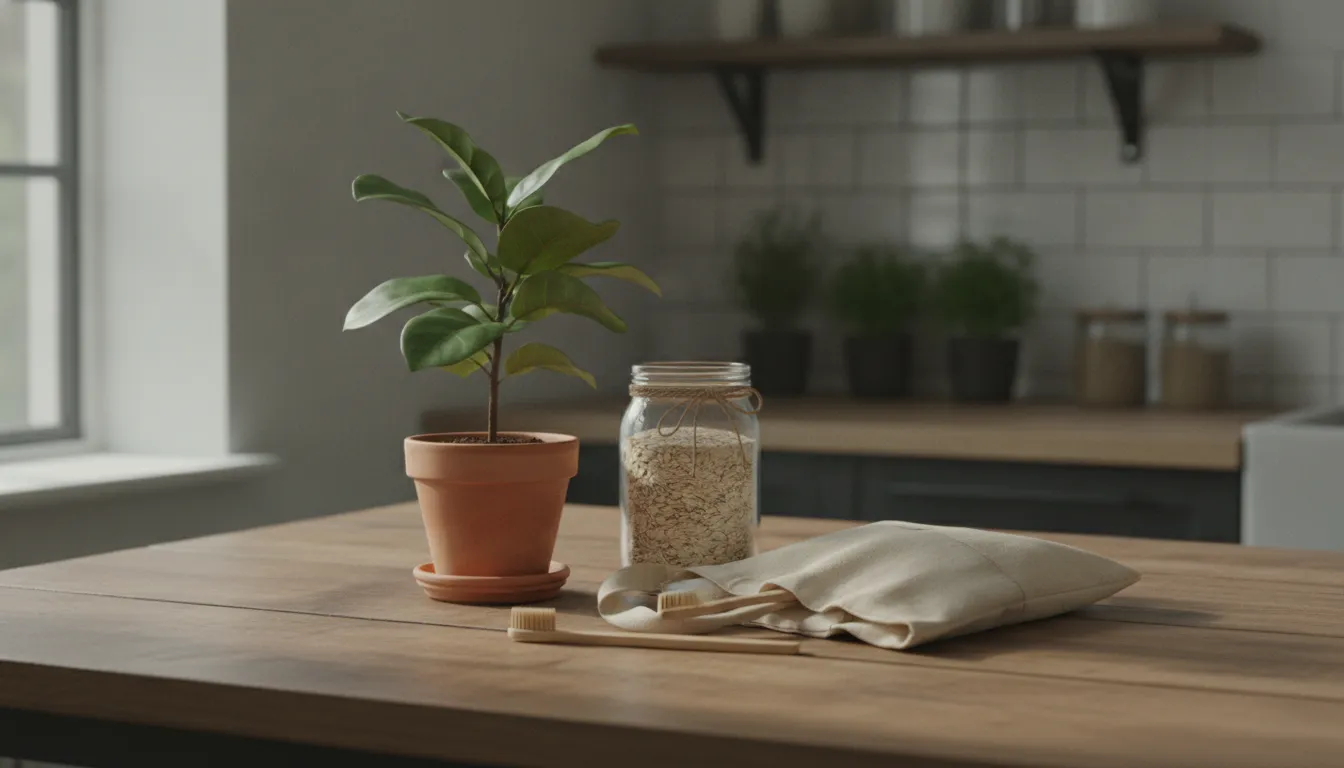
Reducing plastic at home isn’t about being perfect. It’s about being more conscious, making better choices when possible, and expanding those choices over time. Every substitution counts — the bamboo toothbrush, the shampoo bar, the reusable bag in your purse. Individually, they seem like modest gestures. Collectively, they represent real pressure on the market and on the volume of plastic waste generated.
Start with the room that bothers you most. Make one swap per week. Share what you’ve discovered with those around you. Habit change is contagious, and the feeling of taking action — of having control over your own impact — is genuinely motivating.
The planet doesn’t need a few people living sustainability perfectly. It needs many people doing what’s possible, with consistency and creativity. And you, clearly, are already on the right path.
