The plastic you don’t even notice using
Open your refrigerator right now. Most likely, you’ll find a container of cheese spread, a butter package, a bag of vegetables, and maybe a soda bottle. Go to the bathroom and count: shampoo, conditioner, liquid soap, toothpaste with a plastic cap, a disposable toothbrush. All this before breakfast. Plastic is so integrated into Brazilian routine that it has become invisible, and that’s precisely where the problem lies.
According to the United Nations Environment Program (UNEP), the world produces over 400 million tons of plastic per year, and a huge portion of this ends up in oceans, rivers, and landfills without any treatment. In Brazil, Abrelpe points out that the generation of urban solid waste continues to grow, and plastic is one of the most difficult fractions to properly direct through selective collection. The National Solid Waste Policy Law, the PNRS (Law 12.305/2010), provides for shared responsibility between manufacturers, distributors, and consumers, but practice still depends heavily on individual choices in the shopping cart.
The good news: you don’t need to become zero waste overnight or spend a fortune on imported sustainable products. This article shows concrete, cheap substitutions compatible with real Brazilian life, whether in an apartment or house, in São Paulo or in a small city in the interior.
Why so much plastic ended up in our homes
Brazil is a tropical country with great variety of fresh products available in markets and fairs. Still, the consumption of disposable plastic packaging has grown a lot in recent decades, driven by the convenience of supermarkets and the advance of app-based deliveries.
A significant part of household plastic is single-use: grocery bags, cookie wrappers, disposable cups, straws, plastic utensils that come with delivery orders. These items last minutes or hours in use, but can take hundreds of years to decompose in the environment, especially in landfill conditions where sunlight and oxygen are scarce.
The additional challenge is that much of this plastic is not practically recyclable. Packages with mixed materials, flexible films, and very thin bags are rarely accepted by Brazilian recycling cooperatives. That is, even if you correctly separate your trash, a significant portion still goes to the landfill. Reducing what enters your home remains more effective than recycling later.
How to make the transition without stress: a path by room
The most functional strategy is not to throw everything away at once (that would be wasteful in itself). The principle is simple: when an item runs out or breaks, replace it with a more durable version. This way you use what you already have and don’t generate unnecessary waste out of anxiety to change everything quickly.
Kitchen: where most plastic passes through
The kitchen concentrates the highest density of disposable plastic in the house. Some substitutions that make a real difference:
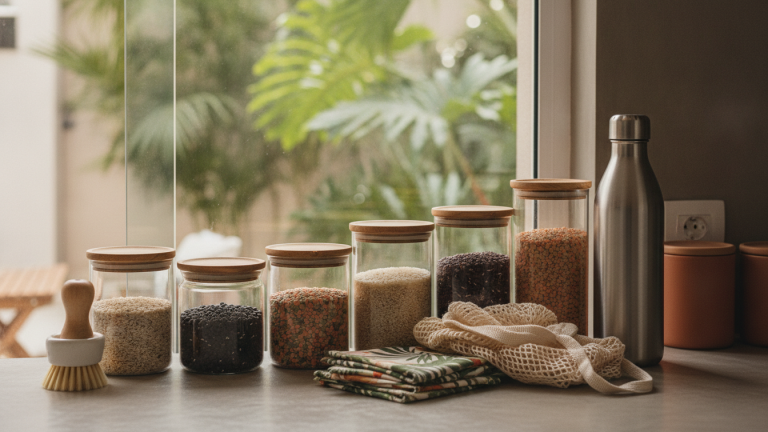
- Plastic bags with raw cotton eco-bags for shopping at the market. An eco-bag lasts years and costs less than R$ 20 at craft fairs or utility stores.
- Plastic wrap (PVC) with reusable silicone lids or simply an inverted plate over the bowl. They work the same way.
- Disposable containers used for margarine with glass containers with lids. Glass doesn’t absorb odors, goes in the microwave (without the metal lid), and lasts decades.
- Synthetic dishwashing sponge with vegetable scrubber, produced from the loofah fruit, which is grown in various regions of Brazil and found in markets for less than R$ 5.
- Detergent in plastic bottle with bar detergent or bulk refill, available in natural product stores and some supermarket chains.
Bathroom: the second largest entry point
The bathroom is the space where substitutions are usually most noticeable and, at first, seem more expensive. But the calculation changes when you look at usage time.
- Solid shampoo bar replaces the plastic bottle. A good quality bar equals two or three bottles of liquid shampoo. Found in manipulation pharmacies and natural cosmetics stores.
- Bamboo toothbrush with nylon bristles. The handle is compostable; the bristles need to be removed before disposal. Average cost in 2025 was close to conventional brand toothbrushes.
- Liquid soap in bottle with bar soap. In addition to eliminating plastic packaging, bar soap lasts longer because you better control the amount used.
- For those who use straws, the substitution is well worth it. There are options in stainless steel, bamboo, glass, and silicone, each with different characteristics. If you want to understand which makes more sense for your daily life, the page Reusable straws: which to choose for everyday life explains the differences in a practical way.
Grocery shopping: the battle of packaging
Part of the plastic that enters your home you don’t even choose: it already comes packaged that way on the shelf. Some ways to get around this:
- Prefer fruits, vegetables, and greens in bulk instead of trays with plastic wrap. In most Brazilian street fairs, this is already the standard.
- Bring cloth bags to the grains, cereals, and nuts section in markets that offer this option.
- Buy products in larger packaging when consumption justifies it. A 1 kg yogurt container generates less plastic per serving than four 250 g individual containers.
- Notice which brands are using less packaging or recyclable packaging. This sends a signal with your wallet.
How much you can save with these changes
Sustainability and savings go hand in hand more often than people imagine. See an approximate cost comparison per use between disposable and reusable items:
| Disposable item | Average cost | Reusable item | Initial cost | Estimated savings in 1 year |
|---|---|---|---|---|
| Toothbrushes (4/year) | R$ 40 | Bamboo toothbrush | R$ 25 | Close to zero after 1 year |
| Grocery bags (2/week) | R$ 60/year | Cotton eco-bag | R$ 20 | R$ 40 or more |
| Synthetic sponge (1/month) | R$ 60/year | Vegetable scrubber (1/month) | R$ 5/unit | Similar cost, but no microplastics |
| Plastic wrap (2 rolls/year) | R$ 30 | Silicone lid (kit) | R$ 50 | Savings from year 2 onwards |
Values are approximate and vary by region and store. The main point: most substitutions pay for themselves in less than a year.
Common mistakes for those just starting out
Those who decide to reduce plastic in their home often fall into some pitfalls that are worth knowing about first.
Buying everything at once. The excitement leads a person to purchase a complete kit of sustainable items, many in plastic packaging from abroad. The result is more plastic entering the house, not less. Go slow.
Throwing away what still works. Discarding functional plastic containers to buy new glass doesn’t make environmental or financial sense. Use it to the end, then replace it.
Neglecting proper disposal. Some packaging, such as electronics, batteries, and cooking oils, have specific collection points. In Brazil, supermarket chains, pharmacies, and building material stores usually have voluntary drop-off points. Throwing these items in regular trash negates part of the effort.
Forgetting about delivery. Requesting less packaging in the order comments, choosing stores that use paper packaging, or asking before buying already helps. Some delivery platforms already offer the option “no disposable utensils”.
Frequently asked questions about reducing plastic at home
Does recyclable plastic solve the problem?
Not completely. Recycling consumes energy and water, and in Brazil the recycling infrastructure is still limited. According to Abrelpe, only a small fraction of waste generated in the country undergoes effective recycling. Reducing consumption remains the most efficient step, and recycling comes after.
Are natural and sustainable products always more expensive?
It depends on the product. Bar soap, vegetable scrubbers, and eco-bags usually cost less or the same as disposable versions when you compare cost per use. Some items, like bamboo toothbrushes from imported brands, may have a higher price, but there are more affordable domestic options.
What about those who live in small apartments? Is it possible to apply these tips?
Yes. Most of the substitutions described here don’t require extra space. Glass containers take up the same space as plastic containers. Eco-bags fold into any drawer. Bar shampoo takes up less space than a bottle. A small apartment is, in fact, an incentive to have fewer things and less trash.
How do I deal with selective collection in my neighborhood?
The quality of selective collection varies greatly among Brazilian municipalities. The ideal is to check with the local city hall which materials are accepted, what days the truck passes, and if there are eco-points nearby. When selective collection is weak in the region, reducing what you generate becomes even more important.
Start with one swap today
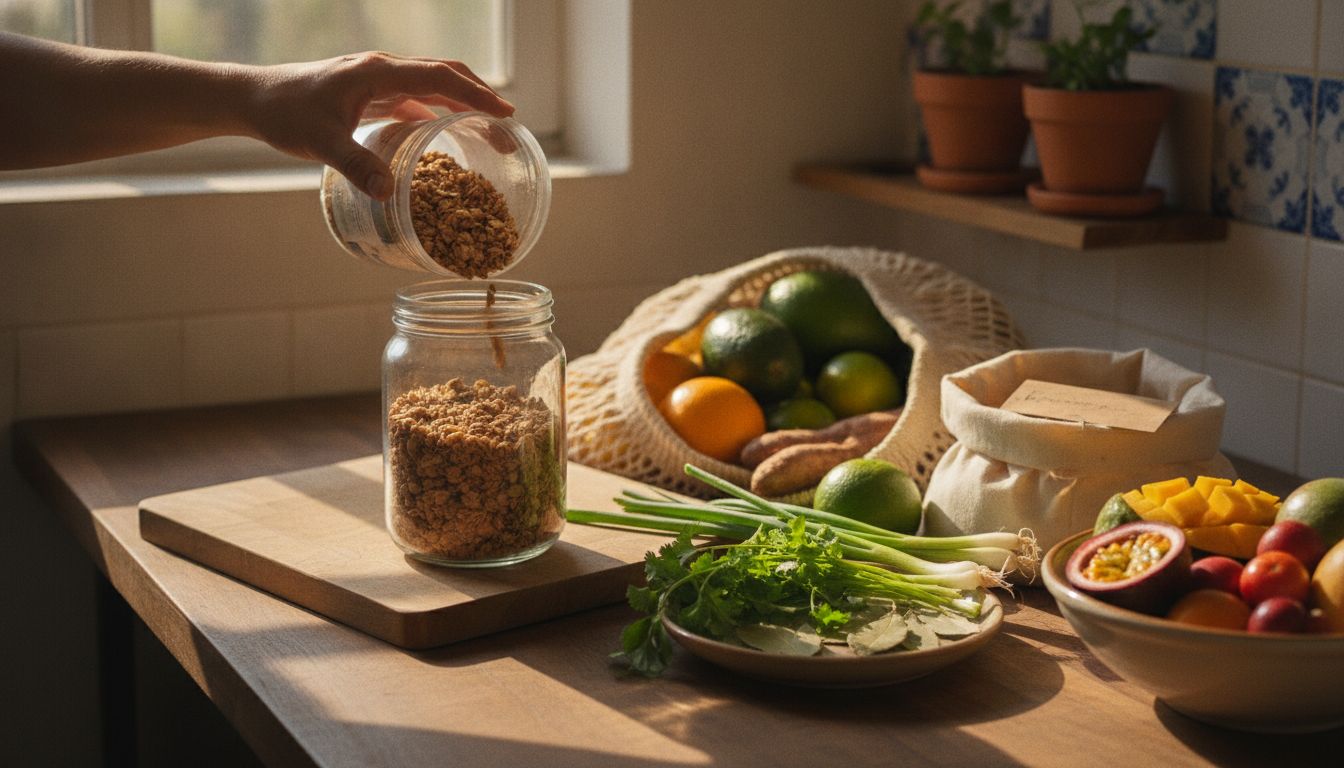
You don’t need to transform your home into a zero waste laboratory to make a difference. Choose a substitution from this list, the one that seems easiest or most urgent for your routine, and put it into practice when the current item runs out. That’s it.
Over time, each swap becomes a habit, and what once seemed like effort becomes automatic. If you want to start with the bathroom, choosing a reusable straw may seem small, but it’s a great first step to train your eye for unnecessary plastic in everyday life. A home with less plastic doesn’t need to be perfect, it just needs to be a little better than yesterday.

2 thoughts on “Less Plastic at Home: Simple Changes That Work”