Why Community Cleanups Matter More Than You Think
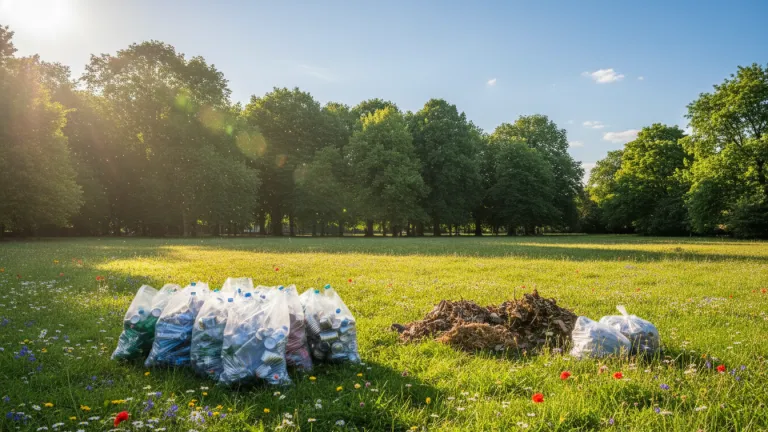
Have you ever noticed the amount of litter scattered around your neighborhood, favorite park, or city shoreline? Improper waste disposal is one of the most visible and impactful environmental problems in Brazil and worldwide. Beaches, rivers, trails, and urban areas accumulate tons of plastics, packaging, and waste that degrade ecosystems, contaminate soil and water, and harm both wildlife and human health.
Community cleanups emerge as a direct and powerful community response to this scenario. More than just simple trash collection activities, they are spaces for environmental education, strengthening community bonds, and a concrete demonstration that collective action transforms realities. When dozens or hundreds of people gather with gloves, bags, and determination, the result goes beyond filled bags: a sense of belonging to the environment is born.
If you’ve ever wanted to do something concrete for the planet but didn’t know where to start, this article is for you. We’ll explain how community cleanups work, how to find or organize one, what to bring, how to maximize impact, and how this action connects to broader societal changes.
The Problem of Improper Waste Disposal in Brazil and Worldwide
Brazil is one of the largest generators of solid waste in the world. According to data from the National Sanitation Information System (SNIS), the country collects over 80 million tons of urban solid waste per year — and there is still a significant portion that does not reach formal collection, being discarded in inappropriate places such as vacant lots, riverbanks, and environmental preservation areas.
Plastic is the most persistent villain. Once in the environment, it fragments into microplastics that contaminate water bodies, soil, and even living organisms — including humans. Scientific studies have already documented the presence of microplastics in fish, seabirds, corals, and even human blood. This material can take hundreds of years to decompose completely, meaning that every bottle discarded today will have consequences for generations.
Brazilian rivers also suffer acutely. Improper disposal on their banks contributes to the clogging of drainage systems, urban flooding, and degradation of riparian forests — vegetation essential for the protection of the watercourses themselves. The environmental impact of improper waste is, therefore, a systemic problem that goes far beyond “visual dirt.”
What Are Community Cleanups and How Do They Work
A community cleanup is a collective organized action, usually voluntary, aimed at collecting waste from public or environmental areas. They can take place on beaches, parks, rivers, trails, peripheral neighborhoods, mangroves, slopes, or any space that needs intervention.
They can be organized by:
- NGOs and environmental associations with local or national reach
- Community groups and neighborhood collectives
- Municipal governments and public agencies, in partnership with civil society
- Companies as part of socio-environmental responsibility programs
- Independent volunteer groups organized through social media
- Schools and universities as part of educational projects
Typically, cleanups follow a basic flow: action promotion, defined meeting point, distribution of materials (bags, gloves, tongs), organized collection by teams, waste separation by type (recyclable, organic, refuse), proper disposal of collected materials, and often a moment of collective reflection and celebration at the end.
Correct separation of collected waste is a critical step. It is useless to collect tons of material if it all ends up in the landfill. Therefore, well-organized cleanups establish prior partnerships with recycling cooperatives, reverse logistics companies, or voluntary drop-off points.
How to Find a Community Cleanup Near You
Joining an existing cleanup is the simplest way for beginners. Here’s how to find opportunities:
- Social media: Search for terms like “community cleanup + your city name” on Instagram, Facebook, and WhatsApp. Local groups usually announce actions in advance.
- Volunteering platforms: Sites like Atados (atados.com.br) gather environmental volunteering opportunities across Brazil, including cleanups.
- Municipal environmental departments: Many city halls promote or support cleanup actions and announce them on their official channels.
- Local environmental NGOs: Organizations like SOS Mata Atlântica, Instituto Arayara, Movimento Muda Mundo, among others, regularly organize or announce cleanups.
- University groups: If you study or have contact with a university, look for the academic directory or extension groups with an environmental focus.
- Cicloverde app and similar: Some urban mobility and environmental apps also announce collective actions.
Upon finding a cleanup, confirm your presence in advance and inquire about the necessary materials, meeting point, and destination of collected waste.
How to Organize Your Own Cleanup: Step by Step
If there are no cleanups in your area or you want to create something from scratch, know that organizing such an action is more accessible than it seems. Here’s a practical guide:
- Choose the location and assess the need: Identify an area with visible waste accumulation — it could be a square, river stretch, trail, or neighborhood street. Make a preliminary visit to understand the problem’s scope.
- Form an organizing team: Even if small, a team of 3 to 5 people facilitates task division (communication, materials, partners, day logistics).
- Communicate with the public authorities: Notify the city hall or the environmental department. Besides being a requirement in some municipalities, it can ensure support with a collection truck, bags, and equipment.
- Seek partnerships for waste: Contact local recycling cooperatives to arrange the correct disposal of collected material.
- Promote in advance: Use social media, WhatsApp groups, church, school, and business bulletin boards. The more people know, the greater the impact.
- Prepare the necessary materials: Gloves (ideally reusable or nitrile), sturdy trash bags, collector tongs, sunscreen, water, bags separated by waste type, and, if possible, registration forms for quantification.
- On the day: organize teams and give a quick briefing: Explain safety risks (do not touch syringes or broken glass with hands), waste separation method, and delivery point at the end.
- Document and share results: Record the collected volume, number of participants, and waste destination. This values the action and encourages others and future editions.
- Hold a collective closure: A conversation circle, shared snack, or thank you reinforces the community sense and retains volunteers for future actions.
Practical List: What to Bring and How to Prepare
Before heading out, ensure you are well-equipped and prepared:
- Sturdy gloves (avoid thin disposable ones; prefer nitrile or rubber)
- Closed shoes and clothes that can get dirty
- Sunscreen and insect repellent
- Reusable water bottle
- Extra trash bags (the organizer provides, but having a reserve helps)
- Collector tongs, if available (avoids direct contact with waste)
- Protective mask in areas with organic waste accumulation or strong odors
- Camera or cellphone to document before and after
- Team identification (badge or vest, if available)
- Basic first aid: band-aid, antiseptic, for minor cuts
What NOT to do: do not handle syringes, shattered glass, or sharp materials with your hands. Always have a rigid container (like a cut PET bottle) to safely store these items.
How to Amplify the Impact Beyond Cleanup Day
A community cleanup is a starting point, not an end in itself. For the impact to be lasting, some strategies make a difference:
- Connect the action to education: Invite schools and families with children. Experiential learning is one of the most effective ways to educate for the environment.
- Document and share data: Recording the weight and type of collected waste generates data that can be used for local political pressure — for more trash bins, awareness campaigns, or improved selective collection.
- Establish regularity: One-time cleanups are great, but regular actions (monthly or bimonthly) create environmental culture and keep spaces clean longer.
- Link to broader agendas: Cleaning a river can connect to the basic sanitation agenda. Cleaning a trail can open doors for reforestation projects that transform landscapes and protect life.
- Reflect on consumption: Encouraging participants to think about their own consumption choices extends the action’s reach. Understanding your ecological footprint is a valuable exercise in this regard.
Conclusion: Your Effort Makes a Difference — Start This Weekend
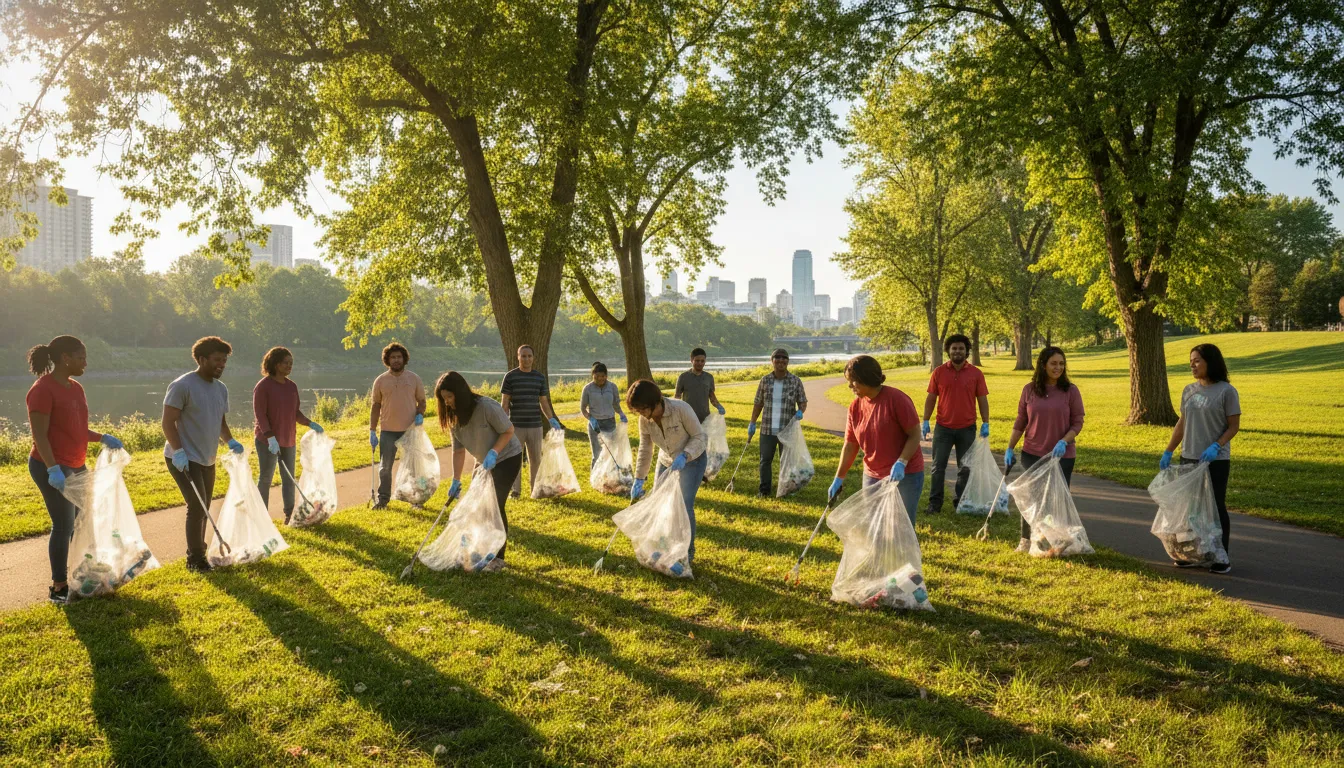
Community cleanups are both an act of care for the present and an investment in the future. Each bag of trash collected is a quantity of plastic that won’t reach the ocean, a riverbank that breathes better, a public space that becomes more dignified for those who live there.
The good news is that you don’t need extensive resources, endless free time, or technical training to participate. You need determination, gloves, and an afternoon. The rest — the impact, the connections, the sense of belonging — comes naturally.
If there’s no cleanup near you, create one. Start small: invite three friends, choose a space, promote on social media. What begins as a modest initiative can grow and become a community reference.
The planet doesn’t need perfection — it needs people who act. And you are one of them.
