Is Solar Energy Worth It? Real Pros and Cons You Need to Know
Brazil is one of the countries with the highest solar irradiance in the world. Even in less sunny regions, like the South, the irradiation index is higher than in European countries that have already consolidated solar energy as a central part of their energy matrix — such as Germany and Spain. With this enormous potential, it’s no surprise that photovoltaic energy has grown rapidly across the country in recent years, becoming one of the main sources in the Brazilian electricity matrix.
But the big question that lands in many readers’ inboxes is always the same: is it worth installing solar panels at home? The honest answer is: it depends — and this article exists precisely to help you understand what it depends on. We’ll walk through the real benefits, the actual costs, the limitations no one talks about, and the situations where solar energy makes (or doesn’t make) sense for your profile.
If you’ve already thought about taking this step, or simply want to better understand the subject before making any decision, keep reading. This guide was designed to be honest, practical, and based on verifiable information — no miraculous promises, no alarmism.
What Is Photovoltaic Solar Energy and How Does It Work
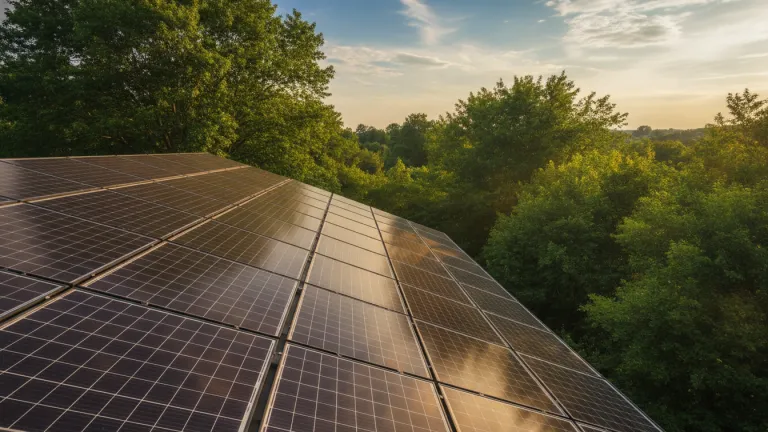
Photovoltaic solar energy is generated by converting sunlight into electricity through semiconductor cells, usually made of silicon, grouped into solar panels. These panels are installed on rooftops, facades, or open areas and connected to an inverter, which transforms the generated direct current into alternating current — the type of energy we use in our outlets.
In the most common model for residences in Brazil, the system is connected to the local utility’s power grid. When you generate more energy than you consume, the surplus is fed into the grid and you accumulate energy credits, which can be used to offset your bill during less sunny months or at night. This system is regulated by ANEEL and operates under the legal framework of Law No. 14,300/2022, which established clearer rules for micro and mini distributed generation in the country.
The Real Pros of Solar Energy
Significant reduction in electricity bills
This is the most immediate and concrete benefit. Depending on the size of the installed system, household consumption, and the region of Brazil, it’s possible to significantly reduce your electricity bill — in many cases, reaching values close to the minimum fee charged by the utility (which covers grid availability costs).
It’s important to understand that, with Law No. 14,300/2022, those who install systems after March 2023 will gradually pay the distribution network usage tariff (TUSD) even when injecting energy into the grid. This means your bill won’t necessarily go to zero, but the savings are still considerable.
Property value appreciation
Properties with installed photovoltaic systems tend to be perceived as more modern and economically efficient by the real estate market. Although the exact impact on the sale price varies by region and market conditions, it’s a factor that can be considered positive when evaluating the investment.
Concrete environmental contribution
Photovoltaic solar generation emits no greenhouse gases during operation. By replacing energy from fossil fuels or thermoelectric plants — which Brazil activates during water shortage periods — each installed system contributes to reducing CO₂ emissions. To better understand why this matters, it’s worth reading about the Greenhouse Effect: What It Is and Why It Affects Us.
Partial independence from tariffs
Electricity tariffs in Brazil undergo frequent adjustments and are impacted by factors such as water crises, tariff flags, and transmission costs. Having your own generation reduces your exposure to these variations — especially during the day, when the consumption of many appliances coincides with solar production.
Attractive payback in many regions
The return on investment (payback) time for a residential solar system in Brazil generally varies between 4 and 8 years, depending on the kit’s value, monthly consumption, and local tariff. Since panels have an estimated lifespan of 25 years or more according to manufacturers, the period after payback represents significant net savings.
The Cons and Limitations You Need to Know
High initial cost
The main obstacle is still the initial investment. In 2026, a small residential photovoltaic system (capable of meeting average consumption) can cost between R$ 15,000 and R$ 40,000 or more, depending on the power, equipment quality, and installation complexity. This amount is a real barrier for a large part of the Brazilian population.
There are financing options — such as the Casa Verde e Amarela Program and credits offered by banks like Caixa Econômica Federal and BNDES — that can make the installment investment viable. But it’s essential to calculate whether the installment amounts fit your budget and still represent savings compared to your current bill.
Intermittent production dependent on weather
Solar panels don’t generate energy at night and produce less on cloudy or rainy days. Without a battery storage system — still more expensive and less widespread in Brazil — you remain dependent on the power grid during these periods. The grid-connected system solves this via energy credits, but doesn’t offer total autonomy.
Physical space and roof orientation
An efficient system requires roof area with good solar exposure, preferably with adequate tilt and orientation (in Brazil, panels facing geographic north perform better). Roofs with heavy shading, nearby trees, or fragile structures can make installation unfeasible or more expensive.
Maintenance and component lifespan
The panels themselves are durable and require simple maintenance (periodic cleaning). However, the inverter — an essential component of the system — has an estimated lifespan of 10 to 15 years, which means it will likely need to be replaced during the system’s lifetime, generating additional costs.
Market contracting risks
The sector’s rapid growth has attracted many companies without adequate technical qualifications. Poorly sized installations or those done by uncertified professionals can cause serious problems — from undersized equipment to fire risks from electrical failures. Always require the technical report and the responsible technician with CREA registration.
Is Solar Energy Worth It for Your Profile? Check Before Deciding
Before hiring any company, answer these questions:
- What is my average monthly consumption in kWh? (Check your recent bills)
- Is my electricity bill high enough to justify the investment? Generally, bills below R$ 150/month have less attractive payback.
- Do I have a roof with good solar exposure and adequate structure?
- Do I plan to stay in the property for at least 5 to 8 years?
- Can I afford the initial cost or financing without compromising my budget?
If most answers are positive, solar energy tends to make sense. If not, it may be more strategic to wait, prioritize other ways to reduce consumption — like the tips we shared in Reduce Water Consumption in the Shower Without Sacrificing Comfort — and review your household budget.
How to Evaluate and Contract a Solar System Safely
If you’ve decided to move forward, follow these steps to avoid pitfalls:
- Gather your last 12 energy bills to have a real average of monthly consumption in kWh.
- Request quotes from at least three different companies, preferably with INMETRO certification or that use certified equipment.
- Verify if the company has ANEEL registration as a distributed microgeneration agent or works with accredited integrators.
- Request the detailed technical project, with the name and registration of the responsible technician (electrical engineer with active CREA).
- Compare not just price, but equipment quality — research the origin of the panels and inverter, which are the most critical components.
- Read the contract carefully, especially clauses about equipment warranty, installation deadline, and responsibility in case of defects.
- Request the connection project with the local utility — the installing company should handle this process, but it’s your right to follow along.
An Overview of the Solar Sector in Brazil in 2026
Brazil has made significant progress in the photovoltaic solar energy sector. The country’s installed solar generation capacity grew rapidly throughout the 2020s, driven by falling equipment prices and credit expansion. The sector has become one of the main employers in renewable energy in the country, with presence in all Brazilian states.
ANEEL maintains an updated database of distributed generation systems, where you can check the number of installations by state. The Northeast, historically with the highest average solar irradiation in Brazil, concentrates a significant portion of centralized generation (power plants), while residential distributed generation is more dispersed throughout the country.
The global trend indicated by organizations such as the International Renewable Energy Agency (IRENA) shows that solar energy costs continue to fall — which further favors the scenario for those evaluating the investment in the coming years.
Conclusion: Taking the Step with Awareness
Solar energy can indeed be very worthwhile — but the decision needs to be informed, planned, and suited to your reality. There’s no single answer for all cases: what’s excellent for a family in Fortaleza with a R$ 500/month bill may not be the immediate priority for a rented apartment in São Paulo.
The most important thing is for you to have access to real information, without exaggerations or empty promises. Before signing any contract, research, compare, and demand transparency. And if solar energy isn’t the right time for you yet, there are many other ways to reduce your environmental impact and your energy bill — and we’re here to help at every step of this journey.
The planet thanks every conscious choice — big or small. And your next one can be today.
