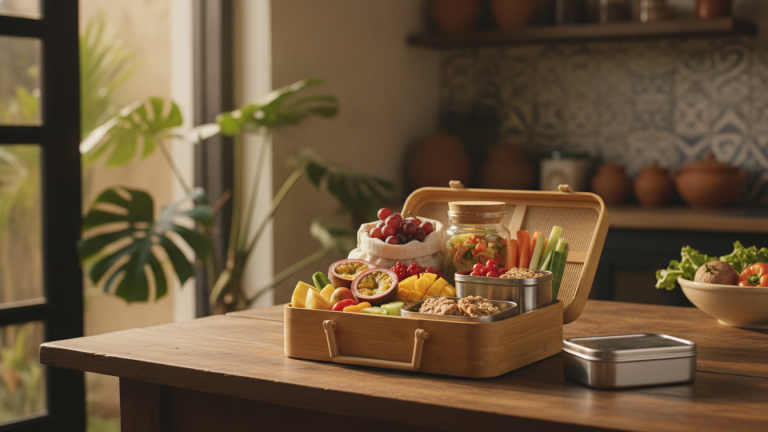
Why does your child’s lunch box still have so much disposable plastic?
You open the lunch box at the end of the day and find: crumpled plastic bags, a half-eaten cookie wrapper, a bent straw, and maybe a disposable container that became trash before even getting home. This scene repeats in millions of Brazilian homes every school day of the year. According to Abrelpe, Brazil generates over 80 million tons of solid waste per year, and a significant portion comes from single-use packaging that lasts only minutes in the hands of those who use it.
The good news is that removing disposable plastic from the lunch box doesn’t require a life overhaul or absurd spending. With a few well-chosen swaps and a new preparation routine, the lunch box becomes a place for real food, without unnecessary trash generation. By the end of this text, you’ll know exactly what to buy, what to reuse from what you already have at home, and how to set up a functional lunch box without complicating anyone’s morning.
And this applies to both children’s lunch boxes and your own backpack at work. The logic is the same, as are the containers.
The real problem with single-use plastic in school life
Single-use plastic isn’t just an abstract environmental problem. It has concrete cost to your wallet and health. Bags, straws, lidless containers, and industrialized packaging need to be bought every week, which represents a recurring expense that most families don’t notice because it’s spread throughout their budget.
The Law 12.305/2010, known as the National Solid Waste Policy, establishes that manufacturers and distributors are responsible for the life cycle of their products. But in practice, most snack packaging goes to regular trash because municipalities still have unequal coverage of selective collection. According to Abrelpe data, less than half of Brazilian municipalities had some form of regular selective collection operating in the latest available surveys.
When plastic isn’t recycled, it goes to landfills or, worse, to rivers and storm drains. In Brazil, the combination of intense rainfall and incomplete sanitation infrastructure means that discarded packaging during storms quickly reaches bodies of water. This isn’t alarmism: it’s what happens in the outskirts of any major Brazilian city in November.
What to replace first: the swaps with the best cost-benefit
Before buying everything at once, it makes more sense to prioritize substitutions that generate the most impact and cost less. The table below helps visualize the most common options:
| Disposable item | Reusable alternative | Average initial cost | Estimated durability |
|---|---|---|---|
| Plastic bag | Glass or stainless steel container | $3 to $12 USD | Several years |
| Plastic straw | Stainless steel or silicone straw | $2 to $5 USD (kit) | Years |
| Paper napkin | Cloth napkin | $1 to $3 USD (pair) | Years |
| Cookie wrapper | Airtight container with lid | $4 to $10 USD | Years |
| Disposable PET bottle | Reusable water bottle | $5 to $16 USD | Years |
Prices vary greatly depending on region and material chosen. Stainless steel items are usually more expensive upfront, but last much longer. Glass containers with plastic lids are an intermediate option and easy to find in supermarkets and farmers markets.
Start with swaps you can already make with what you have at home. That washed cream cheese container can become a fruit container tomorrow.
How to set up a lunch box without disposable plastic: step by step
There’s no one-size-fits-all formula, but there is a logical sequence to make this process simple and sustainable over time.
Useful materials:
- Containers with airtight lids (glass, stainless steel, or BPA-free reusable plastic)
- Reusable water bottle
- Cloth napkin
- Cloth bag or beeswax wrap for sandwiches
- Fabric lunch box with compartments
Adaptation time: 1 to 2 weeks to create the preparation habit.
Estimated initial cost: between $16 and $40 USD for a basic complete kit, depending on choices.
- Make an inventory of what you already have at home. Containers with lids, water bottles, washed glass jars. Many people discover they already have almost everything.
- Define what goes in the lunch box. Fruit, sandwich, snack, and water are enough for most snacks. Simple food takes up fewer containers and generates less trash.
- Prepare the night before. Sliced fruit, sandwich wrapped in beeswax wrap, container with nuts or peanut butter. Takes less than ten minutes once it’s part of your routine.
- Wash containers when you get home. This step is fundamental. Leaving it for the next day creates buildup and makes you want to quit. A quick sponge wipe solves it.
- Adjust as the week goes. If a container is bothering you (too heavy, hard-to-open lid), swap it for another. The ideal lunch box is one you can use without thinking.
- Involve children in the process. Let them choose the color of the water bottle or the shape of the container. A child who participated in the choice takes better care of the object.
Foods that don’t need extra packaging
Part of the solution lies in choosing foods that already come in an easy-to-transport format without additional wrapping.
- Whole fruits like banana, orange, tangerine, and apple don’t need containers or bags
- Natural sandwiches hold up well in a beeswax wrap or cloth bag
- Nuts, peanuts, and dried fruit travel well in any sealed container
- Homemade cakes and tapiocas wrapped in cloth stay fresh for hours
- Plain yogurt in a glass or stainless steel container with an airtight lid travels without leaking
Avoiding individually wrapped ultra-processed products helps two goals at once: reduces plastic and improves snack nutritional quality. It’s not necessary to cook anything elaborate; a banana and a handful of nuts is already a complete snack.
Common mistakes when trying to eliminate plastic
The first mistake is trying to swap everything at once. This creates high spending at once, frustration when something doesn’t work, and quick abandonment. Starting with one or two swaps per week is more efficient.
The second mistake is buying containers that are inadequate for the type of food. A container that’s too shallow for juicy fruit, a lid that doesn’t seal well for liquids. Before buying, think about the specific food you’ll be carrying.
The third mistake is not washing containers the same day. Mold and odors make people abandon the reusable item and go back to disposables. A quick wash right when you get home completely solves this problem.
Another point many people don’t consider: weight. A full stainless steel lunch box can be heavy for small children. In this case, BPA-free reusable plastic is an intermediate lighter option, without the disposable aspect.
Frequently asked questions about plastic-free lunch boxes
Does beeswax wrap really work for sandwiches?
Yes, it works well for sandwiches, fruits, and cheeses. The wrap softens with hand heat and molds around the food, sealing with pressure. It’s not recommended for raw meat or very hot food. It lasts about a year with proper care.
Can I use glass containers in a small child’s lunch box?
It’s possible, but requires evaluation. Glass breaks if dropped, which can be dangerous. For children up to six or seven years old, rigid BPA-free plastic containers or stainless steel are more practical and safe choices for school life.
How do I convince the school to accept lunch boxes without individual packaging?
Most schools have no formal restriction on this. If there’s doubt, just talk to the school administration and explain that the food is in sanitized containers. Schools that already work with environmental education tend to welcome the initiative and even incorporate it as part of a pedagogical project.
Where to buy these items in Brazil without spending much?
Open-air markets, dollar stores, popular supermarkets, and online marketplaces have affordable options. You don’t need to buy imported brands. A supermarket glass container with a lid, well washed, does the same job as an imported product with fancy design.
A first swap to make today
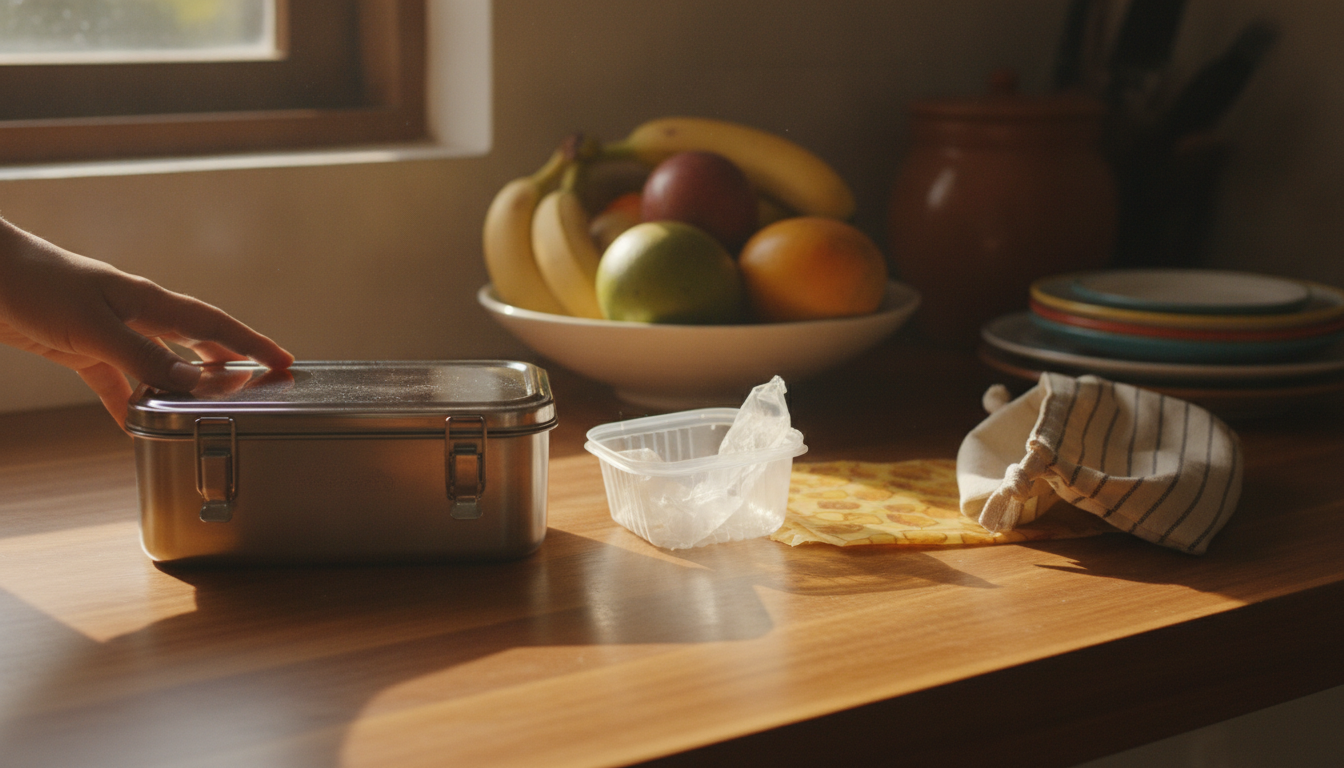
If you read this article and don’t know where to start, start with a reusable water bottle. It’s the simplest swap, with the greatest impact, and almost everyone has one at home or can buy one for less than thirty reais. Filling the bottle before leaving already eliminates one disposable per day, every day.
Just as small changes in consumption habits have a real effect on the environment, as shown in the debate about deforestation in the Amazon and what it changes in the climate, the sum of individual choices by millions of people creates a concrete result. A plastic-free lunch box doesn’t save the planet alone, but it changes the consumption pattern at home, creates habits in children, and eliminates a cost you were paying without noticing.
Start with the water bottle. Next week, swap one bag for a container. In a month, the lunch box looks completely different.
