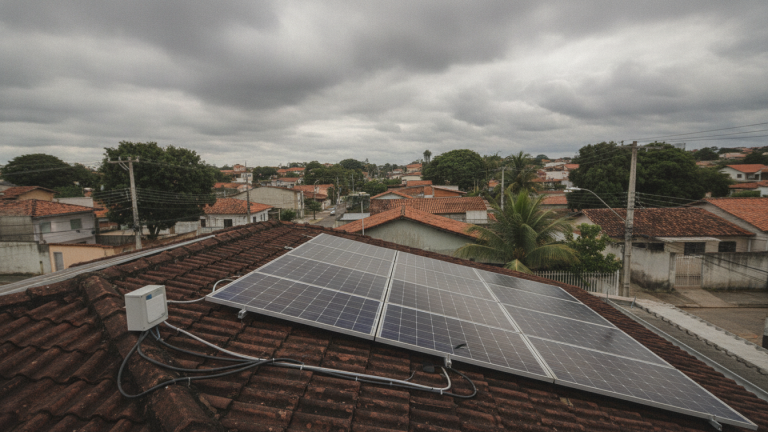
The sun disappeared, but energy keeps arriving
Have you ever looked at a gray sky on a cloudy morning and thought: “My solar panels won’t generate anything today”? This is one of the most common beliefs among those considering installing solar energy at home, and it keeps many people from a decision that could significantly reduce their electricity bill. The good news is that this belief is wrong.
Photovoltaic panels don’t need direct sunlight to work. They need light, and light passes through clouds. On overcast days, generation does drop, yes, but it doesn’t go to zero. Depending on cloud thickness, a solar system can generate between 10% and 25% of its maximum capacity on very cloudy days, and higher percentages on partially cloudy days. This is not negligible when you think about entire months of operation.
After finishing this article, you’ll understand how panels work regardless of weather, what really affects energy generation, and how to evaluate whether a solar system makes sense for your house or apartment in Brazil in 2026.
Why solar panels work even without direct sunlight
The technology behind photovoltaic panels is based on the photoelectric effect: when light photons hit the silicon cells of the panel, they release electrons, generating electrical current. The important detail is that photons reach the Earth’s surface even when clouds are present. What changes is the quantity, not the presence.
There’s also a phenomenon called diffuse radiation, which is solar light scattered by the atmosphere and clouds. On cloudy days, much of the energy reaching the panel comes from this diffuse radiation. Modern panels, especially monocrystalline technology ones, are more efficient at capturing this type of light than older models.
A fact that often surprises: Germany, one of the countries with the lowest solar irradiation index in the world, is historically one of the largest generators of photovoltaic energy per capita. Brazil, with its abundance of sun even in winter, has much superior conditions, even in the South and Southeast regions, which have more cloudy days.
What actually reduces solar generation in Brazil
Understanding what really compromises generation helps you size a realistic system and avoid frustrations after installation.
Factors affecting production:
- High temperature: paradoxically, excessive heat reduces panel efficiency. Photovoltaic cells work better on sunny days with mild temperatures than during peaks of intense heat.
- Accumulated dirt: dust, leaves, bird droppings, and soot reduce light capture. Panels without periodic maintenance lose efficiency over time.
- Partial shading: a tree growing in front of a panel, or the shadow of an antenna over a cell, can compromise an entire row of panels in systems without individual optimizers.
- Inadequate installation angle: in Brazil, panels facing geographic north, with inclination between 10 and 20 degrees depending on latitude, better utilize the sun’s path throughout the year.
- Days of heavy rain: during intense rainfall, generation drops more than on simply cloudy days. On the other hand, light rain helps clean the panels.
What doesn’t appear on this list? Isolated clouds. A partially overcast day, with alternation between sun and shade, usually still delivers quite satisfactory generation.
How Brazil performs in solar generation on low irradiation days
Brazil has one of the highest average solar irradiations on the planet. According to ANEEL data, the national average of solar irradiation is significantly higher than European countries that have already consolidated robust solar markets. Even the state with the lowest irradiation index in the country, Rio Grande do Sul, receives more annual solar energy than regions of Germany considered viable for photovoltaic generation.
This means that even in winter months in the South and Southeast, with more cloudy days, the energy balance still tends to be positive for those with a well-sized system. The calculation takes into account precisely the seasonal variation: the most productive months generate energy credits that can be used in months of lower generation, within the energy compensation system regulated by ANEEL through Normative Resolution 482.
This compensation system, which works like an “energy savings account” with the local utility, is one of the pillars that makes residential solar investment viable in Brazil. The generated credits are valid for 60 months from the generation date.
How to evaluate if a solar system is viable for your home
Before calling an installer, some practical questions help you understand your situation’s potential.
- Check your electricity bill from the last 12 months. The average monthly consumption in kWh is the starting point for sizing the system. Bills over R$ 300 monthly generally make return on investment faster.
- Evaluate available roof space. Roofs with inclination facing north, without significant shading between 9am and 3pm, are ideal. Each modern panel occupies around 1.7 to 2 square meters.
- See if there’s shading throughout the day. A technical inspection by an accredited installer (look for companies associated with ABSOLAR) identifies this point with precision.
- Research available financing lines. Banco do Brasil, Caixa Econômica Federal, and credit unions offer specific lines for solar energy. If you want to understand better how one of these options works, the article on Caixa financing for solar: how it works in practice details the criteria and conditions in an accessible way.
- Request at least three quotes. The solar installation market in Brazil has grown a lot in recent years, and prices vary greatly. Compare installed capacity, panel brand, inverter warranty, and execution timeline.
- Calculate estimated return. Most well-sized residential systems have payback between 4 and 7 years, depending on local rates, consumption, and system installation value. After that period, energy is essentially free for the rest of the panels’ lifespan, which usually lasts 25 years or more.
Apartments can also take advantage of solar energy
Living in an apartment doesn’t mean being left out. Law 14,300, from 2022, regulated the so-called remote self-consumption and solar condominiums, which allow residents of buildings to participate in collective generation systems. In many cases, a condominium can install panels on the roof and distribute credits among units.
Another growing alternative is shared solar plants, also called energy communities. In this model, you sign up for a generation share in a plant installed outside your address and receive credits directly on your electricity bill. Some utilities and energy startups already operate this model in various Brazilian cities.
If you live in an apartment and are also concerned about other aspects of sustainable consumption in your daily life, small changes help a lot. One of them is reducing disposable plastics, as shown in this guide on how to remove plastic from the lunchbox without complicating things, which applies the same logic of simple and practical substitutions.
What to do to maintain high generation over time
Installing the panels is the most labor-intensive part. Keeping the system working well is simple, but requires periodic attention.
Basic maintenance checklist:
- Wash panels with water and soft sponge every two or three months, or after extended dry periods with lots of dust
- Check in the inverter app (most modern equipment has remote monitoring) if generation is within expected for each month
- Visually check for leaves, branches, or accumulated dirt, especially after storms
- Perform technical review with accredited installer every two or three years
- Notify the utility of any system changes (adding panels, inverter replacement)
A monitored system detects performance drops quickly. If a panel breaks or a fuse blows, the app shows the anomaly before you notice it in your electricity bill.
Frequently asked questions about solar energy on cloudy days
Do panels generate energy at night?
No. Solar generation depends on light, and there’s no sunlight at night. What happens is that credits generated during the day are recorded with the utility and deducted from nighttime consumption on the monthly bill. Anyone who wants total independence from the electrical grid at night needs a system with energy storage batteries, which still has higher cost.
How long does a residential system take to pay for itself?
The timeline varies according to consumption, local rates, and investment value, but most residential systems in Brazil have returns between 4 and 7 years, according to ABSOLAR estimates. Since panels have generation guarantees for 25 years or more, the period of “free” generation after payback is long.
Does a day of heavy rain damage the panels?
No. Photovoltaic panels are designed to withstand rain, moderate hail, and temperature variations. Most equipment sold in Brazil follows ABNT technical standards and international certifications that guarantee resistance to weather conditions typical of the country.
Do I need authorization to install solar panels?
Yes. You must request approval from the local utility before connecting the system to the grid. The process is regulated by ANEEL and, although bureaucratic in some cases, is mandatory to ensure safety and have the right to compensation credits. Experienced installers usually handle all this documentation.
A first step you can take this week
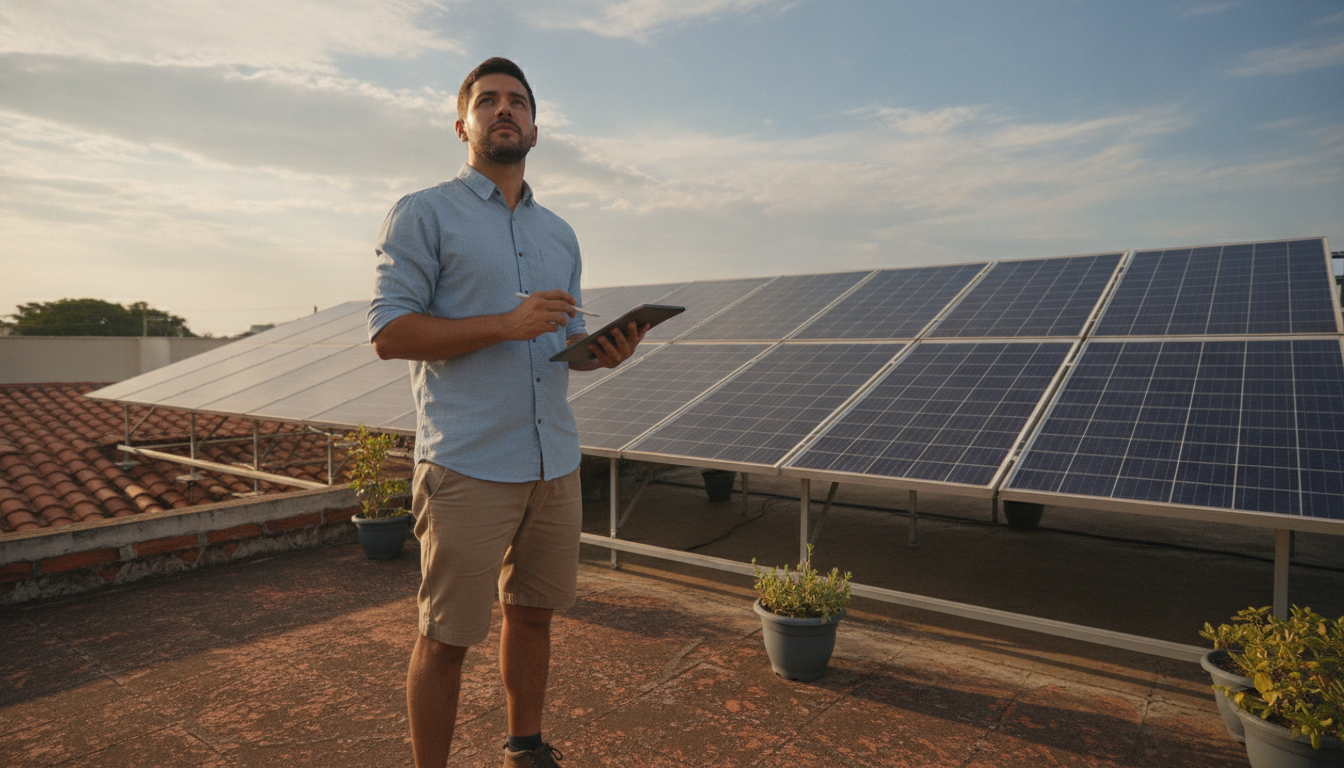
Solar energy doesn’t require you to wait for a perfect sunny day to work, and it also doesn’t require you to wait for the perfect moment to start researching. Get your last three electricity bills, calculate average consumption in kWh, and contact two or three local installers to request a free simulation.
You don’t need to decide anything now. But having the numbers in hand transforms a vague idea into a concrete decision, and often the result pleasantly surprises those who thought solar energy was something far from their reality.
