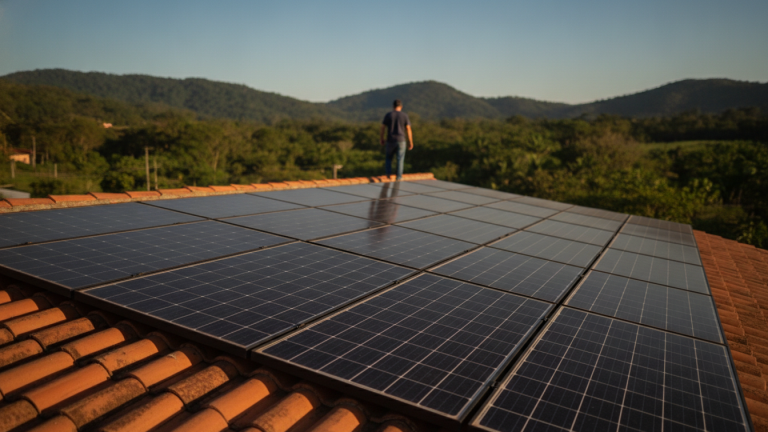
Why Your Electricity Bill Still Weighs Heavy on Your Wallet
You open your electricity bill, see the amount, and think: “Again?” This is a very common feeling for those living in Brazil, where electricity rates are among the highest in Latin America, according to ANEEL data. The good news is that photovoltaic solar energy is no longer the privilege of large companies or mansions and has firmly entered the daily life of those living in houses or apartments. By 2026, Brazil has already surpassed the 4 million mark for solar systems installed in residences and small businesses, according to ANEEL, consolidating the country as one of the world’s largest solar markets.
But when it comes time to hire, many people get stuck. There are dozens of companies promising guaranteed returns, fast installation, and 90% savings on your bill. How do you know who is legitimate? What questions should you ask before signing the contract? Which pitfalls should you avoid?
By the time you finish reading this article, you will know exactly how to evaluate a solar energy company, what to check before closing the deal, and which common mistakes are costly. No more decisions in the dark.
What Changed in the Brazilian Solar Market in Recent Years
The solar sector grew very quickly in Brazil. According to ANEEL, distributed generation, which is exactly the model where you install panels on your house and use the energy generated there, gained an important regulatory framework with Law 14.300/2022. This law defined clearer rules for energy compensation, the famous “credit” you receive when you generate more than you consume and inject the excess into the utility’s grid.
With clearer rules, more companies entered the market. And more companies in the market means both more options and more risk of choosing poorly. Today, there are installers of all sizes: from large national networks to independent electricians who created a business license and started selling solar kits. This doesn’t mean smaller ones are worse, but it requires you to know how to distinguish those with technical preparation from those improvising.
Equipment costs have also dropped significantly over the past few years. According to data from the Ministry of Mines and Energy, the average price of residential solar systems has fallen significantly over the last decade, making the investment more accessible. Most residential systems in Brazil pay for themselves between 4 and 7 years, depending on the size of the installation and the rate charged by your local utility.
How Credentialing Works and Why It Matters
Before researching companies, understand one fundamental point: in Brazil, any solar energy installer should have professionals with credentialing from INMETRO and equipment must also have INMETRO certification. Panels and inverters without certification may be cheap to buy, but represent fire risk, malfunction, and even warranty loss.
The ABSOLAR (Brazilian Association of Photovoltaic Solar Energy) maintains a registry of member companies. It’s not mandatory to be a member, but companies that are part of industry organizations tend to follow best practices more regularly. It’s worth checking if the installer appears on this list.
Another point: the company must be authorized to handle the connection to the utility’s grid. This process, called homologation, involves technical paperwork, utility approval, and installation of a bidirectional meter. A good company handles all of this for you. A bad company leaves you hanging at exactly this stage.
Step-by-Step Guide to Choosing a Solar Installer
Following a logical order prevents regret and saves time. Here’s how to do it:
- Calculate your home’s actual consumption. Get your last 12 electricity bills and calculate the average monthly consumption in kWh. This number is the starting point for any serious quote.
- Research at least three companies. Request a detailed quote from each one. A good quote specifies: brand and model of panels, inverter capacity, number of modules, estimated annual production, and investment payback period.
- Check the company’s tax ID and history. Check the Federal Revenue website to see if the tax ID is active. Search the company name on Reclame Aqui. See how many years it has been in the market. Companies with less than two years in operation require extra attention.
- Verify equipment certifications. Ask for the technical sheet of panels and inverter and confirm they have INMETRO certification. Well-known brands in the Brazilian market include manufacturers with established presence, but the certificate is what really matters.
- Check warranties in writing. Quality panels typically have a 25-year performance warranty and a 10 to 12-year product warranty. Inverters generally have 5 to 10-year warranties. Check if the warranty is offered by the manufacturer or just by the installer, because if the installer closes, the manufacturer’s continues.
- Read the contract before signing. Verify it includes: installation timeline, responsibility for utility homologation, what happens if the system doesn’t reach estimated production, and how post-installation support works.
- Compare payback period, not just price. The cheapest system may have lower efficiency panels and take longer to pay for itself. What matters is the cost per kWh generated over the system’s lifespan.
Red Flags: What Makes a Solar Company Suspicious
There are patterns that appear in problematic companies in the sector. Watch out for them:
- Quotes that promise 100% bill savings without analyzing your consumption
- Salespeople who pressure you to decide the same day or offer “exclusive discounts” that expire in hours
- Equipment without identifying brand or certification documentation
- Absence of a formal contract or contract with vague clauses about deadlines
- Companies that don’t mention the homologation process with the utility
- No on-site technical visit before quoting (dimensioning solar systems from roof photos without analyzing structure is risky)
- Prices well below market average without clear justification
If a company presents two or more of these red flags, scratch it and move to the next one on your list.
Financing and Payment Options: What Brazilians Have Available
Most people don’t buy a solar system outright, and that’s fine. There are specific credit lines for solar energy in Brazil. The Bank of Brazil and Federal Savings Bank offer financing lines with lower interest rates for distributed generation systems. The BNDES also has support programs for energy efficiency that can benefit small and medium consumers.
Another option that has grown in recent years is solar system leasing, where you don’t own the panels but pay a monthly fee lower than your current bill. In this model, the equipment owner handles maintenance. The downside is that you don’t own the system and long-term financial returns are lower than with direct purchase.
Before taking out any financing, add the total interest to the system cost and recalculate the payback period. A loan with a high rate can extend payback from 5 to 9 years, significantly changing the math.
Common Mistakes from Those Who Already Installed and Regretted It
Talking to those who have already gone through the process reveals patterns of error that appear repeatedly:
- Sizing the system based on current consumption without thinking about the future. If you plan to buy an electric car or install air conditioning in the coming years, the system needs to be larger. Discussing this with the installer beforehand prevents the frustration of insufficient generation.
- Not checking roof orientation and shading. Solar panels in Brazil generate much more when facing north. Roofs that receive shade from trees or other buildings during much of the day experience significant production loss.
- Ignoring your home’s electrical wiring condition. In older houses, it may be necessary to upgrade the main electrical service before installing the solar system. A good installer performs this analysis before closing the contract.
- Not keeping technical documentation. Keeping manuals, certificates, and the contract organized is essential for filing warranty claims years later.
If you live in an apartment and think solar energy isn’t for you, know that there is the modality of shared generation and remote consumption, provided for in Brazilian law, which allows residents of condominiums or apartments to participate in systems installed elsewhere. It’s worth asking your local utility how it works in practice.
Frequently Asked Questions About Residential Solar Energy
Do I need city permit approval to install panels on my roof?
It depends on the municipality. Some cities require approval from city hall for alterations to building roofs, especially in areas of historical interest. The first step is to consult your local public works department. An experienced installer usually knows your city’s rules.
What is the real lifespan of solar panels?
Most manufacturers guarantee that panels maintain at least 80% of original efficiency after 25 years of use. In practice, many systems installed more than 20 years ago worldwide still work well. The component most often replaced first is the inverter, with an average lifespan of 10 to 15 years.
Does the solar system work on cloudy or rainy days?
Yes, but with reduced production. Photovoltaic panels capture diffuse light, not just direct sunlight. On cloudy days, generation drops, but doesn’t go to zero. That’s why the system is sized considering the annual average solar radiation in your region, not just sunny days.
Does solar energy increase property value?
According to studies in the Brazilian real estate market, properties with solar systems tend to have higher sale and rental values, especially in regions with higher energy rates. This is a benefit that goes beyond monthly electricity bill savings.
Start Comparing Quotes This Week
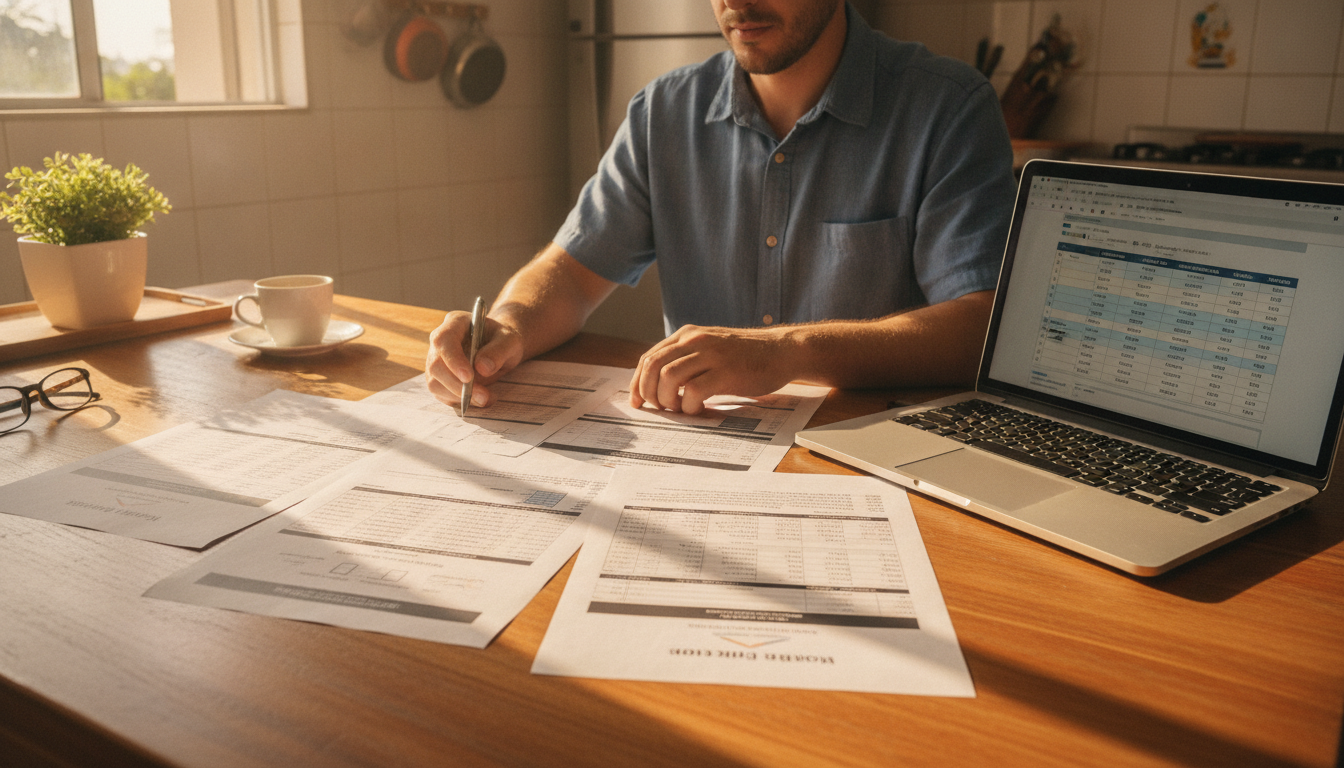
Choosing a good solar energy company doesn’t require you to become an expert on the subject. It requires attention, comparison, and the right questions. Get your last three electricity bills, calculate your average consumption in kWh, and call three installers in your city requesting detailed quotes. That’s already a concrete start.
While you research, small habits also help reduce consumption even before any panels hit your roof. Just as rethinking the use of disposable bags is a simple step for those who want to live more sustainably, as you can see in Reusable bag: which to choose for daily use, solar energy is another step toward a routine that weighs less on your wallet and the planet. The decision starts with information, and you already have much more than you needed to take the next step.
