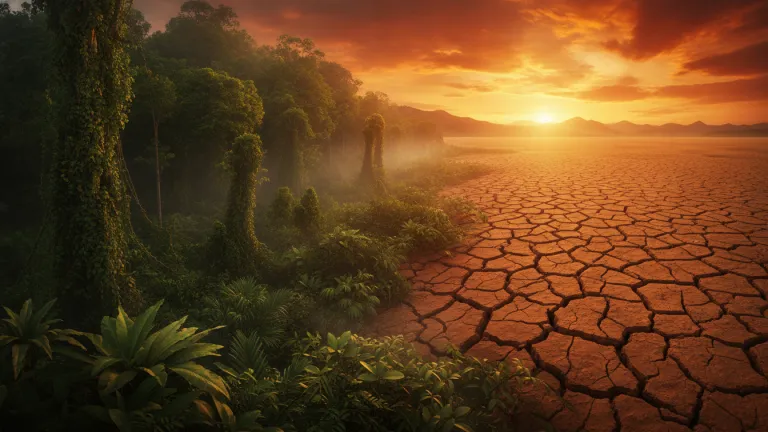
Imagine waking up one day and realizing that summers are getting longer, rainfall more unpredictable, and news about floods or extreme droughts no longer surprises anyone. It’s not a coincidence, it’s not bad weather luck, and it definitely isn’t something that “has always happened.” Global warming is real, it’s happening, and it has causes well identified by science — causes we need to understand to take action.
The good news is that you don’t need to be a scientist to understand the problem. The causes of global warming are, at their core, quite straightforward: they relate to what we burn, what we deforest, and how we produce food and energy. When we understand this, we become better equipped to make conscious choices, demand public policies, and be part of the solution.
In this article, we’ll break down the main causes of global warming in accessible language, without alarmism, and with a focus on what you can do starting today. After all, information that doesn’t lead to action is just anxiety.
What Is Global Warming and Why Does It Happen
Global warming is the gradual increase in Earth’s average surface temperature caused primarily by the accumulation of greenhouse gases in the atmosphere. These gases act like a blanket around the planet: they let sunlight in but make it harder for heat to escape back into space.
The greenhouse effect itself is a natural and essential phenomenon for life — without it, Earth would be a frozen planet. The problem arises when human activities drastically increase the concentration of these gases, intensifying this effect beyond what natural systems can absorb. If you want to better understand how this mechanism works, check out the article on Efeito Estufa: O Que É e Como Funciona na Prática.
According to the Intergovernmental Panel on Climate Change (IPCC), the global average temperature has already increased by about 1.1 to 1.2°C compared to pre-industrial levels by the mid-2020s. This number may seem small, but it represents a massive change in the planet’s climate systems — and the effects are already visible.
Cause 1: Burning Fossil Fuels
The main cause of modern global warming is the burning of coal, oil, and natural gas to generate energy, power vehicles, and fuel industries. When these fuels are burned, they release carbon dioxide (CO₂) that was stored in the Earth’s crust for millions of years — and which now enters the atmosphere rapidly.
CO₂ is the main greenhouse gas of human origin. Since the Industrial Revolution, the concentration of CO₂ in the atmosphere has increased significantly. Data from the Mauna Loa Observatory in the United States recorded concentrations above 420 parts per million (ppm) in recent years — the highest levels in at least 800,000 years, according to polar ice records analyzed by IPCC researchers.
How Transportation Contributes to Global Warming
Cars, trucks, airplanes, and ships powered by fossil fuels are responsible for a significant portion of global emissions. In Brazil, the transportation sector ranks among the largest emitters of greenhouse gases, according to data from the Greenhouse Gas Emissions and Removals Estimation System (SEEG), maintained by the Climate Observatory.
The transition to electric vehicles, the use of public transportation, and urban planning that prioritizes pedestrians and cyclists are concrete paths to reducing these emissions.
Cause 2: Deforestation and Forest Destruction
Forests are enormous carbon reservoirs: they absorb CO₂ from the atmosphere and store it in their biomass for decades. When a tree is cut down and burned or left to decompose, all that carbon returns to the air at once.
Deforestation, especially in tropical regions like the Amazon and Cerrado, is one of the largest sources of greenhouse gas emissions in Brazil. PRODES, a system from the National Institute for Space Research (INPE), monitors deforestation in the Brazilian Amazon and has provided annual data that allows tracking trends over time.
In addition to releasing carbon, deforestation eliminates the future capacity for CO₂ absorption, reduces regional humidity, and interferes with rain cycles — which already affects agriculture, water supply, and biodiversity. The connection between habitat loss and species extinction is direct: learn more at Animais Ameaçados de Extinção no Brasil em 2026.
Cause 3: Agriculture and Farming Emissions
Food production also contributes significantly to global warming, involving two important gases besides CO₂:
- Methane (CH₄): released by enteric fermentation in cattle (yes, by the gases produced during ruminant digestion) and by the decomposition of organic matter in landfills and rice paddies. Methane is a much more potent greenhouse gas than CO₂ in the short term, although it remains in the atmosphere for less time.
- Nitrous oxide (N₂O): emitted primarily from the use of synthetic fertilizers in soil. It is also a greenhouse gas with warming potential far greater than CO₂.
In Brazil, agriculture and livestock historically represent one of the largest shares of national greenhouse gas emissions, according to SEEG. This doesn’t mean we need to abolish agricultural production — but practices such as rotational grazing management, crop-livestock-forest integration, and reducing food waste make a real difference.
Cause 4: Industry and Production Processes
The production of cement, steel, aluminum, and chemical products involves processes that release large amounts of CO₂ and other greenhouse gases, often regardless of the energy source used. Cement production, for example, releases CO₂ as a chemical byproduct during limestone calcination — and cement is one of the most consumed materials in the world.
Additionally, industrial and domestic refrigeration systems use refrigerant gases, such as hydrofluorocarbons (HFCs), which have very high global warming potential, even in small quantities. The Kigali Amendment to the Montreal Protocol establishes global targets for the progressive reduction of these gases.
Cause 5: Energy Consumption in Cities and Homes
Every time we turn on an air conditioner, heat water with an electric resistance heater, or keep lights on unnecessarily, we’re consuming energy — and, depending on how that energy is generated, we’re contributing to emissions.
Brazil has a relatively clean electricity matrix compared to many countries, thanks to the predominance of hydroelectric plants. But this doesn’t mean energy consumption is neutral: expanding demand puts pressure on opening new power plants and, during drought periods, increases the activation of fossil fuel-powered thermal plants.
Investing in energy efficiency at home, adopting renewable sources like solar, and reviewing consumption habits are actions that reduce both electricity bills and carbon emissions.
What You Can Do: Practical Actions Against Global Warming
Understanding the causes is the first step. The second is taking action. Here’s a list of concrete actions you can start today:
- Reduce beef consumption at least a few days a week — this is one of the individual actions with the greatest impact on reducing emissions.
- Choose public transportation, cycling, or walking for short and medium distances.
- Avoid food waste: buy only what you need, plan your meals, and use leftovers.
- Reduce consumption of disposable products and prefer durability over short-term convenience.
- Check your home’s energy consumption: switch to LED bulbs, turn off devices on standby, and invest in thermal insulation.
- Support and demand public policies for forest protection, sustainable mobility, and energy transition.
- Talk about the topic with family, colleagues, and on social media — cultural change starts with conversations.
- Consider renewable energy sources: depending on your situation, solar energy may be a viable option — even for those living in apartments.
If you want to understand how to offset the emissions you can’t yet eliminate, it’s worth reading about Neutralidade de Carbono: O Que É e Como Funciona.
Conclusion: Knowledge Is the Beginning of Change
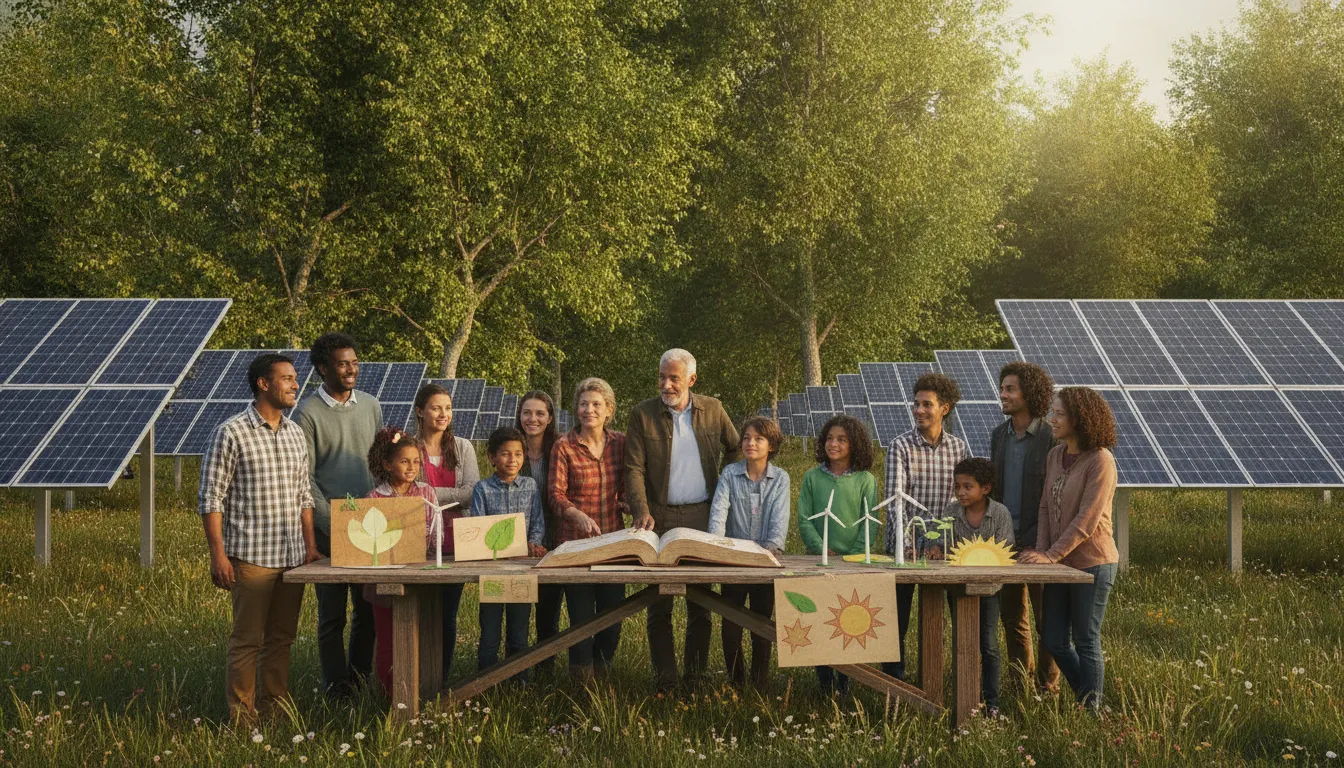
Global warming may seem like a problem too big for any single person to solve — and, in fact, it requires collective, political, and systemic action. But that doesn’t mean individuals have no role. Quite the opposite: the choices we make in daily life have real consequences, and when millions of people make more conscious choices, the impact multiplies.
You now know that the main causes of global warming are linked to burning fossil fuels, deforestation, intensive agriculture, industrial processes, and our pattern of energy consumption. This means the solutions are also distributed across these same areas — and each one has accessible entry points for individual and collective action.
It’s not about perfection. It’s about direction. Every step toward more conscious consumption, every conversation you start, every vote you cast with environmental responsibility in mind is a real contribution. The planet doesn’t need a few people living impeccably — it needs many people doing a little better, every day.
Start today. And invite someone to start with you.
