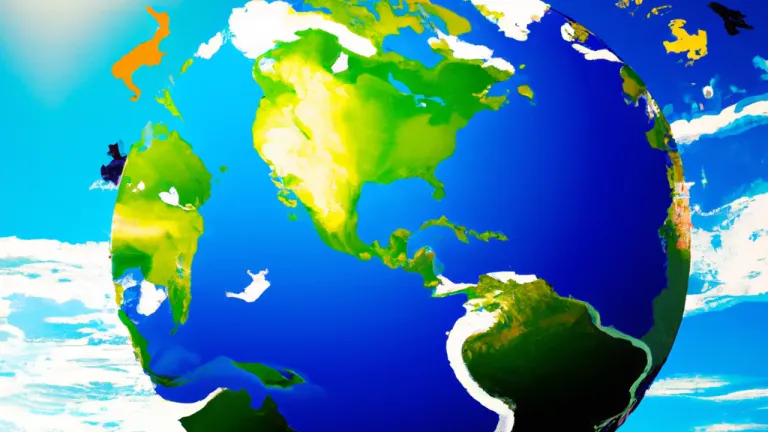
How Global Warming is Transforming Our Planet: Impacts and Possible Solutions
Introduction
Global warming is one of the greatest challenges humanity faces in the 21st century. Mainly caused by the emission of greenhouse gases into the atmosphere, the increase in Earth’s average temperature is causing a series of negative impacts on our planet. In this article, we will explore how global warming is transforming the Earth, the main impacts we are facing, and possible solutions to mitigate these effects.
Impacts of Global Warming
Rising Sea Levels
One of the most visible consequences of global warming is the rising sea levels. With the melting of polar ice caps and glaciers, ocean water is increasing, putting coastal communities and marine ecosystems at risk. According to the Intergovernmental Panel on Climate Change (IPCC), sea levels are expected to rise between 0.26 and 0.77 meters by the end of the century if greenhouse gas emissions are not significantly reduced.
Changes in Climate Patterns
Global warming is also causing changes in climate patterns worldwide. We have observed an increase in the frequency and intensity of extreme weather events, such as heatwaves, droughts, storms, and floods. These events can result in human losses, material damage, and significant economic losses.
Loss of Biodiversity
Terrestrial and marine ecosystems are suffering from climate change, leading to an accelerated loss of biodiversity. Plant and animal species are struggling to adapt to new climate conditions, resulting in mass extinctions and imbalances in ecosystems. Preserving biodiversity is essential to ensure the planet’s health and our own survival.
Possible Solutions
Reducing Greenhouse Gas Emissions
One of the most effective ways to combat global warming is to reduce greenhouse gas emissions. This can be achieved by transitioning to renewable energy sources, such as solar and wind, increasing energy efficiency, investing in public transportation, and protecting forests and natural ecosystems that absorb carbon from the atmosphere.
Adapting to Climate Change
In addition to reducing greenhouse gas emissions, it is also important to invest in measures to adapt to climate change. This includes developing resilient infrastructures, sustainable urban planning, proper water resource management, and promoting sustainable agriculture. Adaptation is essential to ensure the resilience of communities and ecosystems in the face of global warming impacts.
Education and Awareness
Education and public awareness are fundamental to tackling the challenge of global warming. It is important for people to understand the gravity of the situation, adopt more sustainable practices in their daily lives, and pressure governments and companies to act more responsibly towards the environment. Small individual actions can make a difference in combating climate change.
Conclusion
Global warming is transforming our planet in alarming ways, causing negative impacts on ecosystems, communities, and economies worldwide. To face this challenge, it is crucial to act urgently and decisively, reducing greenhouse gas emissions, adapting to climate change, and promoting environmental awareness and education. Each of us has a role to play in protecting our planet and building a more sustainable future for future generations.
For more tips on how to make your life more sustainable, check out our post 10 Simple Ways to Make Your Life More Sustainable.
To learn more about the impacts of water pollution, read our article Dirty Water, Life at Risk: The Devastating Impacts of Water Pollution.
Explore the complexity of ecosystems and biodiversity in our post Exploring Ecosystem Complexity: From Biodiversity to the Interconnection of Living Beings.
