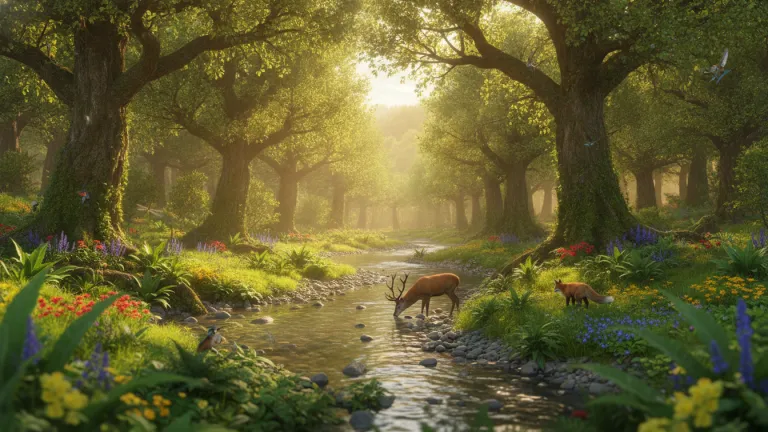
Imagine you are walking through dense woodland. Above you, tree canopies filter the sun’s light. Around you, insects pollinate flowers, fungi decompose leaves on the ground, and birds disperse seeds. Everything happens at the same time, in perfect connection. This living ensemble — with its organisms, its processes, and the physical environment that sustains them — has a name: ecosystem. And understanding this concept can completely change the way you see the world.
The word sounds technical, but the idea is surprisingly simple. An ecosystem is any system formed by the interaction between living organisms and the non-living environment around them — the soil, water, light, air. It can be a tropical forest, a coral reef, a lake, a savanna, or even a puddle on the sidewalk. What defines an ecosystem is not its size, but the web of relationships that exists within it.
At a time when discussions about climate change, biodiversity loss, and sustainability dominate the news, understanding what an ecosystem is — and why it matters — has become essential knowledge for everyone, not just biologists. It is crucial knowledge for anyone who wants to make more conscious decisions in their daily life.
What is an Ecosystem: The Concept Explained Without Complication
The term “ecosystem” was proposed by British ecologist Arthur Tansley in 1935. He wanted to describe the functional unit of nature: not just the organisms, but their relationship with the physical environment around them. Since then, the concept has become central to ecology and environmental policies worldwide.
An ecosystem has two major components:
- Biotic components (living beings): plants, animals, fungi, bacteria, viruses — everything that is alive.
- Abiotic components (the physical environment): temperature, sunlight, humidity, soil type, water pH, wind, topography.
The magic happens in the interaction between these two worlds. The soil temperature determines which plants grow. Plants determine which animals live there. Animals influence seed dispersal and pest control. Fungi decompose organic matter and return nutrients to the soil. And the cycle begins again.
How Energy Flow Works Within an Ecosystem
Every ecosystem functions based on two fundamental processes: energy flow and nutrient cycling.
Energy enters the system, most of the time, from the sun. Plants (called producers) capture this energy through photosynthesis and transform it into biomass. When a herbivore eats a plant, it absorbs part of that energy. When a predator eats the herbivore, it absorbs an even smaller fraction. This sequence is called a food chain — or, more realistically, a food web, since organisms relate to many different species at the same time.
Nutrients, on the other hand, do not disappear: they circulate. Nitrogen, carbon, phosphorus — all travel through biogeochemical cycles that keep ecosystems functioning. When an animal dies, decomposers like bacteria and fungi break down its organic matter and return the nutrients to the soil, where plants absorb them again. It is a closed recycling system that nature has perfected over billions of years.
Types of Ecosystems: From Forest to Ocean Floor
Ecosystems are classified in several ways. The most common division separates terrestrial from aquatic ecosystems.
Terrestrial ecosystems:
- Tropical forests (such as the Amazon)
- Cerrado and savannas
- Grasslands and prairies
- Deserts
- Tundra and taiga (cold regions)
- Mangroves (land-sea transition zones)
Aquatic ecosystems:
- Oceans and seas
- Rivers and lakes (freshwater)
- Wetlands (marshes, floodplains, swamps)
- Coral reefs
- Estuaries
Brazil is one of the world’s richest countries in terms of ecosystem diversity. Within the national territory alone, there are six recognized major biomes: Amazon, Cerrado, Atlantic Forest, Caatinga, Pantanal, and Pampas. Each of them harbors unique communities of species and provides irreplaceable environmental services.
Ecosystem Services: What Nature Does for You Every Day
Here is a point that few people stop to think about: ecosystems provide concrete and essential services for human life, many of them free of charge. These benefits have a technical name: ecosystem services.
They are divided into four main categories:
- Provisioning services: food, drinking water, wood, fibers, medicines derived from plants and animals.
- Regulating services: climate control, air and water purification, regulation of the water cycle, pollination of agricultural crops, pest and disease control.
- Cultural services: scenic beauty, tourism, mental well-being, cultural identity of indigenous peoples.
- Supporting services: soil formation, nutrient cycling, photosynthesis — the processes that sustain all others.
Pollination is a direct example. According to the United Nations Food and Agriculture Organization (FAO), about 75% of the world’s food crops depend, to some degree, on pollination by animals — especially bees. Without these pollinators, the production of fruits, vegetables, and oilseeds would be seriously compromised. There is no human technology capable of replacing this service on a global scale.
Why Ecosystems Are at Risk: The Main Threats
Despite their resilience, ecosystems have limits. And in many parts of the world, those limits are being exceeded.
The Intergovernmental Panel on Climate Change (IPCC) warns that global warming alters rainfall patterns, increases the frequency of extreme events, and shifts the climatic ranges in which species evolved — pressuring entire ecosystems to adapt at a much faster rate than is natural.
Beyond climate change, other direct threats include:
- Deforestation and habitat conversion: the leading cause of biodiversity loss worldwide.
- Pollution: of soils, rivers, oceans, and atmosphere by pesticides, plastics, sewage, and industrial emissions.
- Invasive species: organisms introduced outside their natural habitat that disrupt local food webs.
- Overexploitation: predatory fishing, illegal hunting, uncontrolled mineral extraction.
- Habitat fragmentation: when continuous ecosystems are cut by roads, plantations, or cities, isolating animal populations and reducing their ability to reproduce and adapt.
The International Union for Conservation of Nature (IUCN) maintains the Red List of threatened species, which in 2025 already exceeded 46,000 species classified as threatened with extinction to some degree. These numbers reflect the state of the ecosystems these species inhabit.
How Ecosystems Connect to Your Daily Consumption
You might be thinking: “All of this is important, but what does it have to do with me?” The answer is: everything.
Every product you buy has a production chain that impacts some ecosystem. The cotton in your clothes demands water and soil. The soy in the chicken feed you ate today may have come from a Cerrado area. The palm oil in many processed foods is associated with deforestation in tropical regions. Understanding ecosystems means understanding that our consumption choices have a geographic address and ecological consequences.
This does not mean guilt — it means power. When you know these connections, you can make more informed choices. Want a practical example? Knowing what ESG means in companies today helps you identify brands that are committed to preserving ecosystems in their supply chains — and value those companies with your wallet.
What You Can Do to Protect Ecosystems in Practice
Protecting ecosystems does not require you to be a scientist or professional activist. There are concrete and accessible actions that anyone can adopt:
- Reduce food waste. Wasted food represents land used, water consumed, and emissions generated without any benefit. Less waste means less pressure on agricultural ecosystems.
- Prefer products of sustainable origin. Look for seals such as FSC (for wood and paper), MSC (for seafood), and organic certifications for food.
- Dispose of your waste correctly. Cooking oil poured down the sink, for example, contaminates rivers and soils. Knowing how to properly dispose of used cooking oil is a direct way to protect local aquatic ecosystems.
- Reduce the use of household pesticides. In gardens and home gardens, prefer natural methods of pest control to avoid harming pollinators.
- Plant native species. If you have a garden, yard, or even pots on your porch, prioritizing plants native to your region attracts local fauna and contributes to urban ecological connectivity.
- Support protected areas. Visiting national parks and reserves — and paying entrance fees — generates resources for conservation. You can also support NGOs that work on ecosystem restoration.
- Consume less and better. Less consumption means lower demand for natural resources. When you buy, research the origin and impact of the product.
- Reduce the use of disposable plastic. Plastic is one of the largest pollutants of aquatic ecosystems, affecting everything from microorganisms to whales.
Ecosystem Restoration: Nature Has the Capacity to Recover
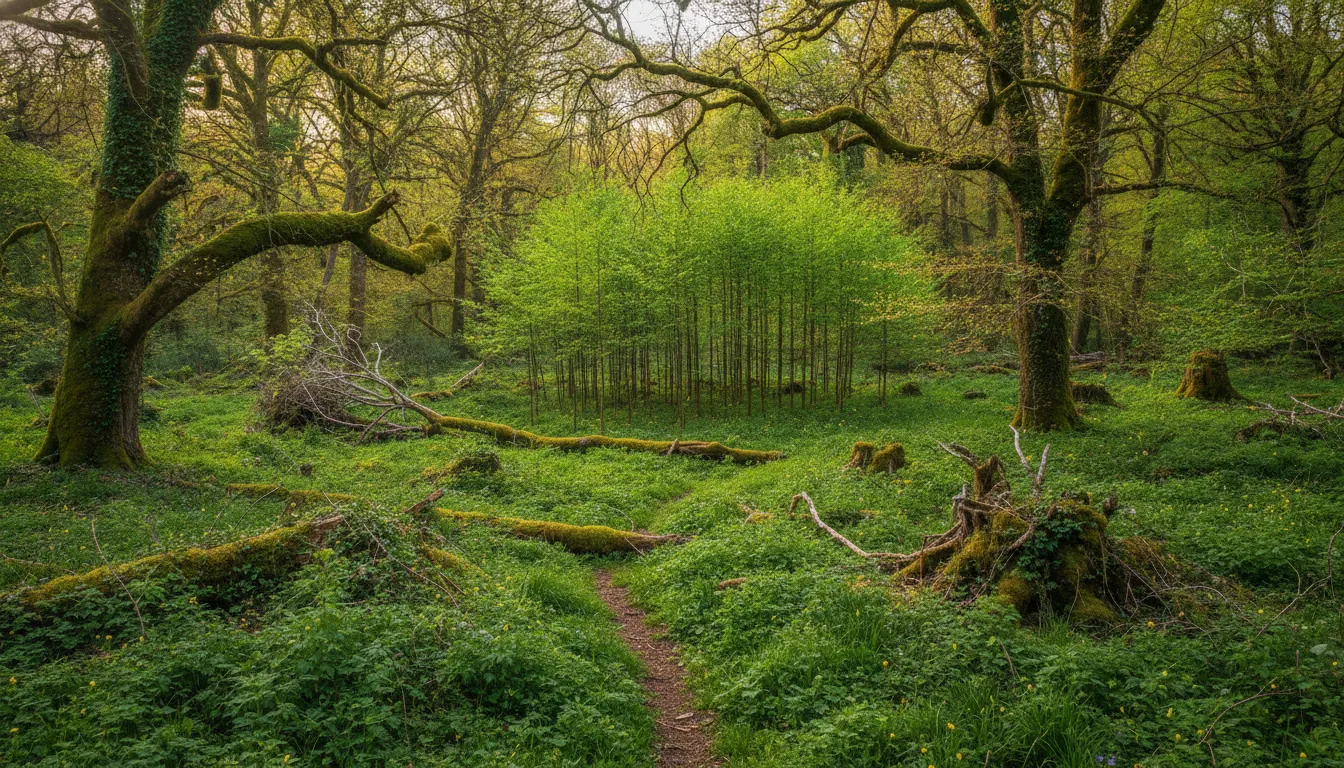
One of the most encouraging discoveries of modern ecology is that degraded ecosystems can recover — as long as the pressure on them is reduced and, when necessary, there is active restoration support.
The UN Decade on Ecosystem Restoration (2021–2030) is a global effort to recover billions of hectares of degraded lands and oceans. In Brazil, the National Plan for the Recovery of Native Vegetation (Planaveg) and initiatives such as the Restaura Brasil program work in this direction, involving governments, the private sector, and local communities.
Replanted forests once again harbor birds and mammals. Unpolluted rivers once again have fish. Coral reefs with controlled temperature show signs of recovery. This is not naivety — it is documented science. Nature wants to recover. What it needs is time and less human pressure.
Ecosystems are the foundation of everything that sustains life on the planet — including yours. Understanding this concept is the first step toward making more conscious decisions, demanding more from companies and governments, and seeing nature not as a beautiful backdrop, but as a system of which you are a part.
You do not need to change everything at once. Start with one action from this list. Talk about it with the people around you. Share this article with anyone you think could benefit from this perspective. Every person who understands the value of ecosystems is another ally in the most important task of our time: keeping the planet habitable for future generations.
