Why Conventional Cleaning Products Are an Environmental Problem
Every time we scrub the bathroom or wash the dishes, we’re making a decision that extends far beyond our home. Industrial cleaning products contain chemicals like synthetic surfactants, phosphates, artificial fragrances, and preservatives that, after use, go down the drain and reach rivers, lakes, and oceans — often without being completely treated by sanitation plants. Additionally, disposable plastic packaging accumulates more waste in a cycle that repeats week after week.
According to the United Nations Environment Programme (UNEP), household chemicals represent a significant portion of water body pollution in urban areas, contributing to reduced dissolved oxygen levels and compromised aquatic life. In Brazil, where access to basic sanitation remains unequal, this impact is even more direct: much of what goes down the drain reaches nature with little or no treatment.
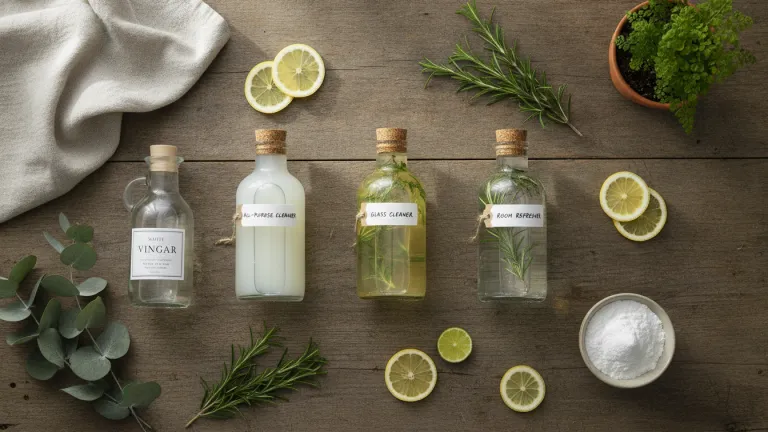
The good news is that there’s a simple, affordable, and effective alternative: making your own cleaning products at home, using natural ingredients you probably already have in your pantry. In this article, you’ll learn practical recipes, understand the science behind each ingredient, and discover how this change can benefit both the planet and your wallet.
The Base Ingredients of Eco-Friendly Cleaning Products
Before jumping into the recipes, it’s worth understanding what makes each ingredient work. You don’t need to be a chemist — just know the basic properties to combine them correctly and avoid dangerous mixtures.
Baking Soda: The Gentle Abrasive and Natural Deodorizer
Baking soda (NaHCO₃) is mildly abrasive, making it ideal for scrubbing surfaces without scratching. It also neutralizes odors by chemically reacting with acids and bases present in the environment, rather than just masking the smell. It’s biodegradable and widely available in grocery stores.
White Vinegar: The Acid That Removes Buildup and Disinfects
Common white vinegar, with about 4% to 5% acetic acid, is an effective cleaning agent against grease, limescale, and some microorganisms. It has moderate antimicrobial action — laboratory studies demonstrate it can reduce populations of common bacteria like E. coli and Salmonella, although it doesn’t replace hospital-grade disinfectants in environments requiring sterilization. For general household use, it does the job well.
Warning: don’t mix vinegar with baking soda as a final product. The reaction neutralizes both, eliminating the benefits of each. Use them separately or in different stages of cleaning.
Coconut or Castile Soap: The Natural Surfactant
Unlike petrochemical surfactants in industrial products, coconut soap and Castile soap (made from olive oil) are made from vegetable oils. They have good biodegradability and are gentle on skin. In liquid form, they’re versatile and work in various homemade recipes.
Other Useful Ingredients
- 3% Hydrogen peroxide: disinfectant and mild bleach; decomposes into water and oxygen, leaving no persistent toxic residues
- Essential oils (lavender, tea tree, eucalyptus): antimicrobial properties and natural fragrance
- Lemon: natural citric acid, removes stains and limescale
- Cornstarch: natural stiffener and useful in glass cleaners
- Coarse salt: abrasive for heavier cleaning jobs
Step-by-Step Recipes: All-Purpose Cleaner
This is the most versatile product you can have at home. It works on countertops, sinks, stovetops, and non-porous surfaces.
What you’ll need:
- 1 spray bottle (can be reused from an old product)
- 250 ml of filtered or boiled water
- 250 ml of white vinegar
- 1 tablespoon of liquid coconut soap
- 15 to 20 drops of tea tree or lavender essential oil (optional but recommended for antimicrobial action)
Preparation:
- Pour the water into the spray bottle.
- Add the white vinegar.
- Add the liquid coconut soap slowly to avoid too much foam.
- Add the essential oil of your choice.
- Close the bottle and mix gently by tilting it side to side (don’t shake vigorously to avoid excessive foaming).
- Label the bottle with the contents and preparation date.
- Use within 30 days. Store in a cool place away from direct sunlight.
How to use: spray on the surface, wait 1 to 2 minutes, and wipe with a damp cloth or sponge. For stubborn grease, apply pure coconut soap before the spray.
Heavy-Duty Cleaning Scrub Recipe: Baking Soda Paste
Ideal for bathrooms, sink edges, grout, and surfaces with caked-on dirt.
- In a small container, place 4 tablespoons of baking soda.
- Add liquid coconut soap, spoon by spoon, until you form a consistent paste (usually 2 to 3 tablespoons).
- Add 10 drops of eucalyptus or lemon essential oil to enhance cleaning power and provide a pleasant scent.
- Mix well with a spatula or spoon.
- Apply the paste with a sponge or old brush to the area being cleaned.
- Scrub in circular motions.
- Rinse well with water.
This paste can be stored in a sealed container for up to 2 weeks. If it hardens, add a few drops of water or soap.
How to Make Kitchen Degreaser
The kitchen requires something more powerful to tackle grease from the stovetop and exhaust hood.
Ingredients:
- 200 ml of hot water
- 50 ml of white vinegar
- 1 level tablespoon of baking soda (add last and carefully — it will foam)
- 1 tablespoon of liquid coconut soap
- Juice of half a lemon
Preparation:
- Mix the hot water with the coconut soap and lemon juice.
- Add the vinegar.
- Finally, add the baking soda slowly, in small portions, to control the effervescence.
- Transfer to a bottle with a lid or spray bottle once the foam subsides.
- Use within 15 days (the presence of fresh lemon juice reduces shelf life).
Homemade Laundry Powder
Making your own laundry powder is simpler than it seems and significantly reduces plastic packaging use.
Ingredients:
- 1 cup of grated natural bar soap (coconut soap, glycerin soap, or neutral soap)
- 1 cup of baking soda
- ½ cup of refined salt
- 20 drops of essential oil (optional)
Preparation:
- Grate the bar soap with a coarse grater.
- Mix all dry ingredients in a large container.
- Add the essential oil and mix well.
- Store in a dry, airtight container.
- Use 2 to 3 tablespoons per wash.
Tip: this soap works best at temperatures above 30°C. For delicate clothes or cold washes, dissolve the desired amount in warm water before adding to the machine.
Real Benefits: Health, Savings, and Environmental Impact
Making cleaning products at home isn’t just a symbolic gesture — it has concrete impacts across several dimensions.
Impact on Household Health
Many industrial products contain volatile organic compounds (VOCs) and synthetic fragrances that can irritate respiratory airways, cause allergic reactions, and accumulate in the indoor air of poorly ventilated homes. The U.S. Environmental Protection Agency (EPA) has identified that pollutant concentrations in indoor environments can be significantly higher than outdoor air, partly due to the use of cleaning products and household aerosols. By replacing these products with natural alternatives, you improve the air quality inside your own home.
Financial Savings
The basic ingredients — baking soda, vinegar, coconut soap, and water — cost a fraction of the price of industrial products. A 750 ml bottle of white vinegar and a box of baking soda last many months of cleaning when used in the recipes above. Reducing purchases of individually packaged products also means less accumulated spending throughout the year.
Less Plastic, Less Waste
Each reused bottle is one less container in the trash. If you reuse the same containers for months or years, the reduction in discarded plastic volume is significant. This is one of the most direct ways to apply the principle of circular economy in daily life — something we’ll explore in more depth in the article about conscious shopping: how to spend less and pollute less.
List of Precautions and Combinations to Avoid
Even when using natural ingredients, some combinations can be ineffective or even dangerous. Keep this list handy:
- Never mix vinegar with hydrogen peroxide in the same closed container: the combination forms peracetic acid, which can be irritating to mucous membranes.
- Don’t use vinegar on marble, granite, or natural stone surfaces: acetic acid corrodes the material over time.
- Baking soda should not be used on aluminum: it can cause oxidation and stains.
- Tea tree essential oil is toxic to cats and dogs: if you have pets, prefer lavender in small amounts or avoid essential oils in products they might contact.
- Homemade products are not substitutes for disinfection in serious infectious disease situations: in cases of contamination by viruses or pathogenic bacteria, use products with proven efficacy recommended by health professionals.
Conclusion: Small Choices, Big Difference
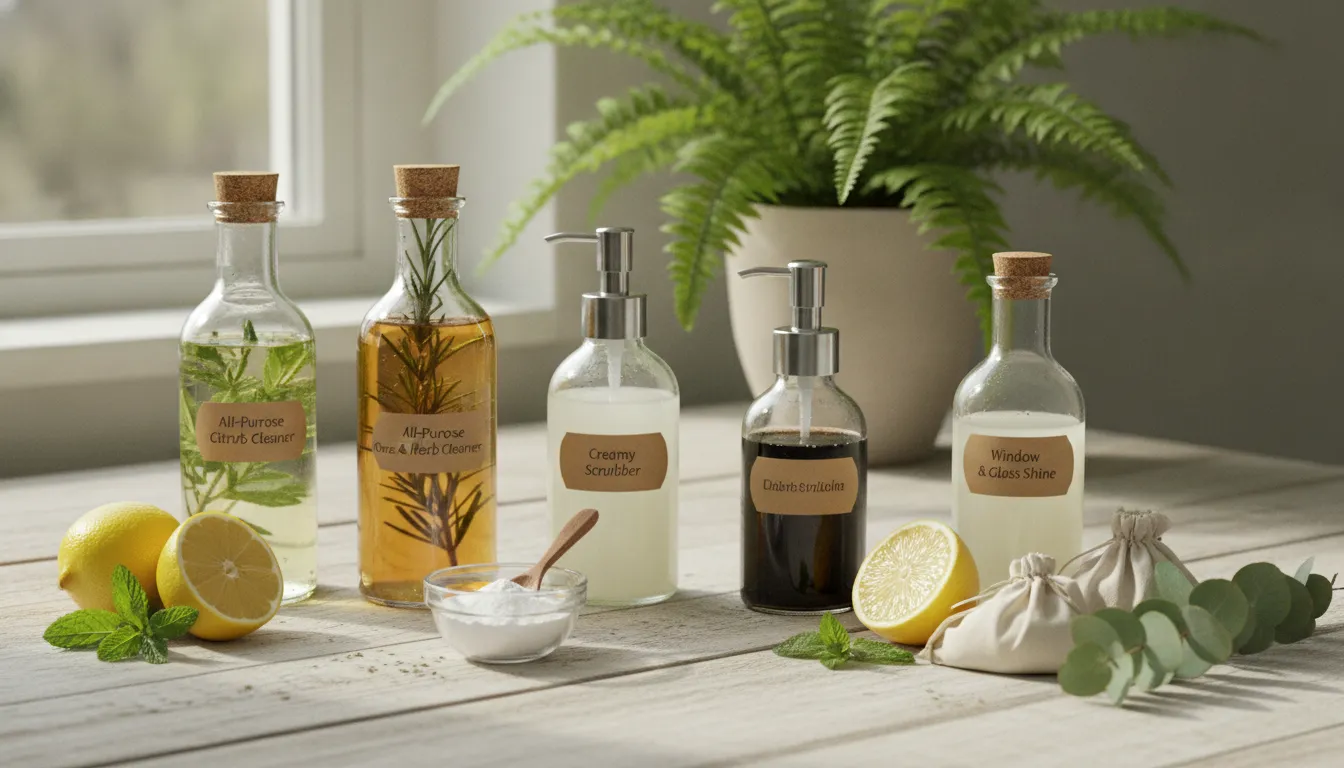
Making your own cleaning products is one of the most accessible and immediate changes anyone can adopt. It doesn’t require special equipment, doesn’t demand much time, and the ingredients are easy to find and affordable. At the same time, the impact multiplies: fewer synthetic chemicals in rivers, less discarded plastic, cleaner air inside your home, and more money in your pocket.
Start with the all-purpose cleaner — it’s the most versatile and easiest to make. Once you try it and realize it works just as well as industrial products, the confidence to try other recipes comes naturally.
If you want to go further and understand how these choices connect to a more sustainable lifestyle overall, also check out our guide on how to protect the environment with simple daily habits. Every gesture counts — and yours already is.
