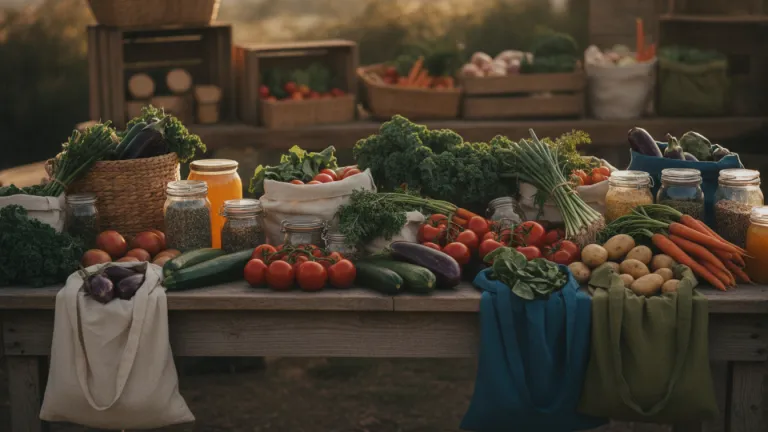
Conscious Shopping: Habits That Make Real Difference
Every time we open a shopping app, walk through a supermarket, or choose a product at the counter, we’re making a decision that goes beyond our wallet. We’re voting — with our money — for a production model, working conditions, and environmental impacts that accumulate on a global scale. In 2026, with the effects of climate change increasingly visible in daily Brazilian life, this awareness has ceased to be the privilege of experts and has become part of the daily lives of millions of people.
The good news is that shopping consciously doesn’t mean giving up comfort, paying more for everything, or turning your life upside down all at once. In practice, it means asking simple questions before consuming: Do I really need this? Who made it? How was it made? What happens when I discard it? These questions, repeated frequently, shape habits that have real impact — both on the environment and on your financial health.
This article brings together practical guidance, based on recognized sustainability criteria, to help you transform your relationship with consumption gradually, concretely, and realistically. No guilt, no perfectionism — just action.
Why Consumption Matters So Much for the Environment
The global production and consumption system is responsible for a significant share of greenhouse gas emissions and natural resource use. According to reports from the United Nations Environment Programme (UNEP), the production and consumption of food, housing, and mobility account for the largest portion of environmental impacts generated by households worldwide.
In Brazil, the scenario has its own particularities. The country is one of the largest producers and consumers of plastic per capita in Latin America, and inadequate solid waste management still affects thousands of municipalities. At the same time, Brazil has relevant environmental legislation — such as the National Solid Waste Policy (Law 12.305/2010) — and an expanding sustainable products market, which means alternatives exist and are becoming more accessible.
Shopping consciously, therefore, is not just a symbolic gesture. It’s a way to pressure the market to offer more responsible options, strengthen companies that respect the environment, and reduce demand for products that cause unnecessary damage.
How to Evaluate a Product Before Buying: The Practical Checklist
Before putting any item in the cart — physical or virtual — it’s worth going through a simple sequence of questions. Over time, this process becomes automatic.
- Do I really need this product right now? Many purchases are impulse-driven. Waiting 24 to 48 hours before finalizing an online purchase is an effective strategy to separate momentary desire from real need.
- Is there a more durable or repairable version? Higher quality products typically last longer, generate less waste, and in the long run cost less.
- Is the packaging recyclable, reusable, or reduced? Unnecessary packaging or packaging made of multiple non-recyclable materials is a warning sign.
- Does the company have verifiable environmental policies? Audited sustainability reports, recognized certifications, and transparency about the production chain are reliable indicators.
- Can I buy used, reconditioned, or secondhand? Resale platforms have grown significantly in Brazil in recent years and offer quality options at accessible prices.
- How will I dispose of it when I no longer need it? Products with difficult or toxic disposal — like electronics, batteries, and paints — require special attention from the moment of purchase.
Food: Where Impact Begins at the Table
The choice of what we put on our plate is one of the consumption decisions with the greatest environmental impact. This doesn’t mean everyone needs to become vegan overnight — but some gradual changes make a concrete difference.
Reduce Food Waste
The IPCC (Intergovernmental Panel on Climate Change) points to food waste as one of the main contributors to global greenhouse gas emissions, considering the entire chain — from production to landfill. In Brazil, it’s estimated that a significant portion of produced food is lost before even reaching the table. Planning purchases with a list, storing correctly, and using peels and stems are simple and effective attitudes.
Prioritize In-Season and Local Foods
Out-of-season foods travel greater distances and require more energy for preservation. Giving preference to farmers markets and regional producers reduces the so-called
