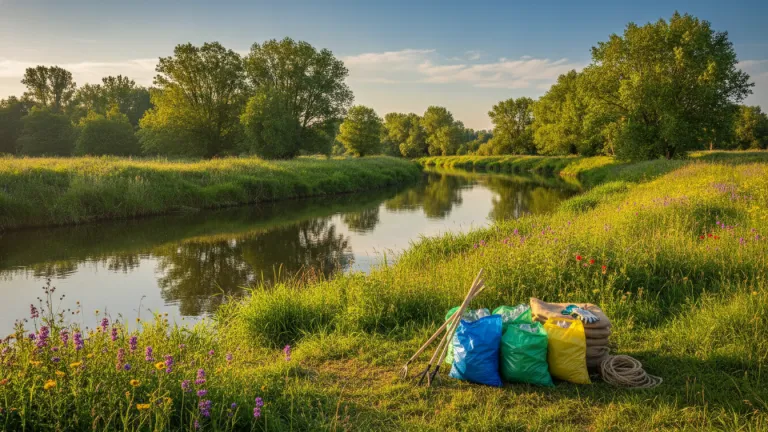
Community Cleanup Events: How to Participate and Make a Difference
Imagine arriving at a beach, square, or park you love only to find it covered with plastic packaging, cigarette butts, and waste of all kinds. The scene is frustrating — but it’s also an invitation to action. Community cleanup events are one of the most direct, concrete, and collective ways to care for the spaces we share, and the good news is that anyone can participate, regardless of age, experience, or technical knowledge.
In Brazil, the culture of environmental cleanups has been growing consistently. Civil society organizations, city governments, universities, and spontaneous neighborhood groups have been mobilizing to clean rivers, streams, beaches, trails, and urban areas. This mobilization has value not only for the environment but also socially: it creates community bonds, educates about consumption and disposal, and sends a powerful message to public officials about what the population considers important.
If you’ve ever wanted to participate in a cleanup but didn’t know where to start — or if you want to organize your own — this guide was made for you. Here you’ll find practical information, safety tips, and inspiration to take the first step today.
Why Community Cleanup Events Are So Important
Improperly discarded waste is not just an aesthetic problem. It represents a concrete threat to biodiversity, public health, and water resource quality. Solid waste dumped in rivers and streams reaches the ocean, where it fragments into microplastics that enter the food chain and are found even in human organisms, as documented by research published in scientific journals in recent years.
Plastic is one of the most persistent villains in this scenario. According to the United Nations Environment Programme (UNEP), global plastic production continues to grow, and much of the material still ends up in the natural environment, especially in countries without universal waste collection and treatment systems. Brazil, despite advances in the National Solid Waste Policy (Law 12.305/2010), still faces significant challenges in proper waste disposal in many municipalities.
Community cleanup events act directly on this problem. They remove waste that is already in the environment, prevent it from reaching more sensitive ecosystems, and most importantly, mobilize entire communities around a concrete cause. Studies on environmental behavior indicate that in-person participation in collective actions tends to strengthen individual responsibility and change consumption and disposal habits over the long term.
How to Find Cleanup Events in Your City
You don’t need to organize an event from scratch to get started. There are several ways to connect with initiatives that already exist:
- Local social media: Neighborhood groups on WhatsApp, Facebook, and Instagram often publicize cleanups in advance. Search for terms like “cleanup event + [your city name]” or “environmental volunteering.”
- City halls and environmental departments: Many municipalities organize or support regular cleanups, especially on dates like World Environment Day (June 5) and World Cleanup Day (held annually in September).
- NGOs and environmental collectives: Organizations like the Zero Waste Movement, Instituto Trata Brasil, SOS Mata Atlântica, and local river and beach protection groups host events frequently and welcome new volunteers.
- Volunteering apps and platforms: Digital volunteering platforms list in-person activities by region and allow you to sign up directly.
- Universities and schools: Many educational institutions conduct outreach activities that include environmental cleanups open to the community.
If you live in a smaller city or an area where you can’t find organized initiatives, this could be your opportunity to be the catalyst — we’ll discuss this in the next section.
Step by Step: How to Organize Your Own Cleanup Event
Organizing a cleanup doesn’t require large financial resources or complex infrastructure. The essentials are planning, communication, and a small group of committed people. Follow this roadmap:
- Choose the location: Identify an area that needs attention — a square, riverbank, trail, beach, or promenade. Visit beforehand to understand the volume and type of waste present.
- Set the date and time: Prefer weekend mornings when more people are available. Avoid days of heavy rain for safety reasons.
- Mobilize participants: Use WhatsApp groups, social media, and word of mouth. Start with a small core — five or ten people can already make a big difference. Create an event on Instagram or Facebook to expand reach.
- Notify local authorities: Inform the city hall or environmental department. Often, they can help with collecting the gathered waste or provide bags and gloves.
- Gather necessary materials: Durable gloves, trash bags (preferably reusable or large capacity), tongs or litter pickers, sunscreen, water, and if possible, identification t-shirts or vests.
- Organize sorting on-site: Separate recyclables from non-recyclable waste from the start. This simplifies proper disposal after the cleanup. Bring a container or separate area for recyclables.
- Arrange waste destination in advance: Contact voluntary drop-off points, recycling cooperatives, or municipal selective collection to ensure the collected material has a proper destination.
- Document and share: Take photos before, during, and after. Share the results on social media with the weight or volume collected. This inspires others and creates positive pressure for future actions.
- Hold a group closing: At the end, gather the group for a brief review. Celebrate the results. Schedule the next event.
What to Bring and How to Prepare Safely
Volunteer safety is fundamental. Some waste can pose health risks, and sun exposure and physical exertion also require care. Here’s what to prepare:
Essential equipment:
- Durable rubber gloves (don’t use thin medical gloves for collecting outdoor trash)
- Closed-toe, sturdy footwear
- Clothing that covers arms and legs, especially in areas with vegetation
- Sunscreen and hat
- Sufficient drinking water
- Basic first aid kit
Important precautions:
- Never collect sharp objects with your hands — use tongs or pickers
- If you find medical waste (syringes, medications), mark the area and contact municipal sanitation services
- Be careful on uneven terrain, riverbanks, and areas with dense vegetation
- Children should participate with constant adult supervision
Sorting and Proper Disposal of Collected Waste
Collecting trash is only half the job. Proper disposal is what ensures the real environmental impact of the action. Good sorting during the cleanup simplifies everything afterward.
| Waste Type | Recommended Destination |
|---|---|
| Clean plastic, paper, metal, glass | Recycling cooperative or drop-off point |
| Organic waste (fruit, food scraps) | Composting or municipal organic collection |
| Electronics and batteries | Specific collection points (manufacturers, stores) |
| Construction debris | Municipal eco-point |
| Non-recyclable waste | Regular collection for sanitary landfill |
| Hazardous waste (chemicals, syringes) | Contact specialized municipal services |
Remember: what cannot be recycled still has a proper destination. Sending it to a sanitary landfill is infinitely better than leaving it in the natural environment. To learn more about reducing plastic waste generation in daily life, check out our article How to Reduce Single-Use Plastic in Daily Life.
How to Extend the Impact Beyond Cleanup Day
A single cleanup already makes a difference — but the impact multiplies when it becomes part of a broader change. Here’s how to go further:
- Create a community: Transform the volunteer group into an active collective with regular actions and its own identity.
- Involve local schools and businesses: Companies and educational institutions can sponsor materials, publicize events, and engage larger groups.
- Push for structural improvements: Record illegal dumping spots and take the mapping to city hall. Often, installing adequate trash bins or improving selective collection begins with an organized community demand.
- Connect action to education: Organize a discussion circle after the cleanup to talk about conscious consumption, proper disposal, and alternatives to disposable plastic.
- Document over time: Photograph the same location across different cleanups. Seeing the evolution motivates the group and convinces those who haven’t participated yet.
Collective behavior change is a process — and it starts with concrete actions like this. Just as we think about the consumption choices we make daily, as discussed in our article on Conscious Shopping: A Guide to Spending Better, cleanups are a practical extension of this awareness in public spaces.
Conclusion: Your Action Has Real Weight
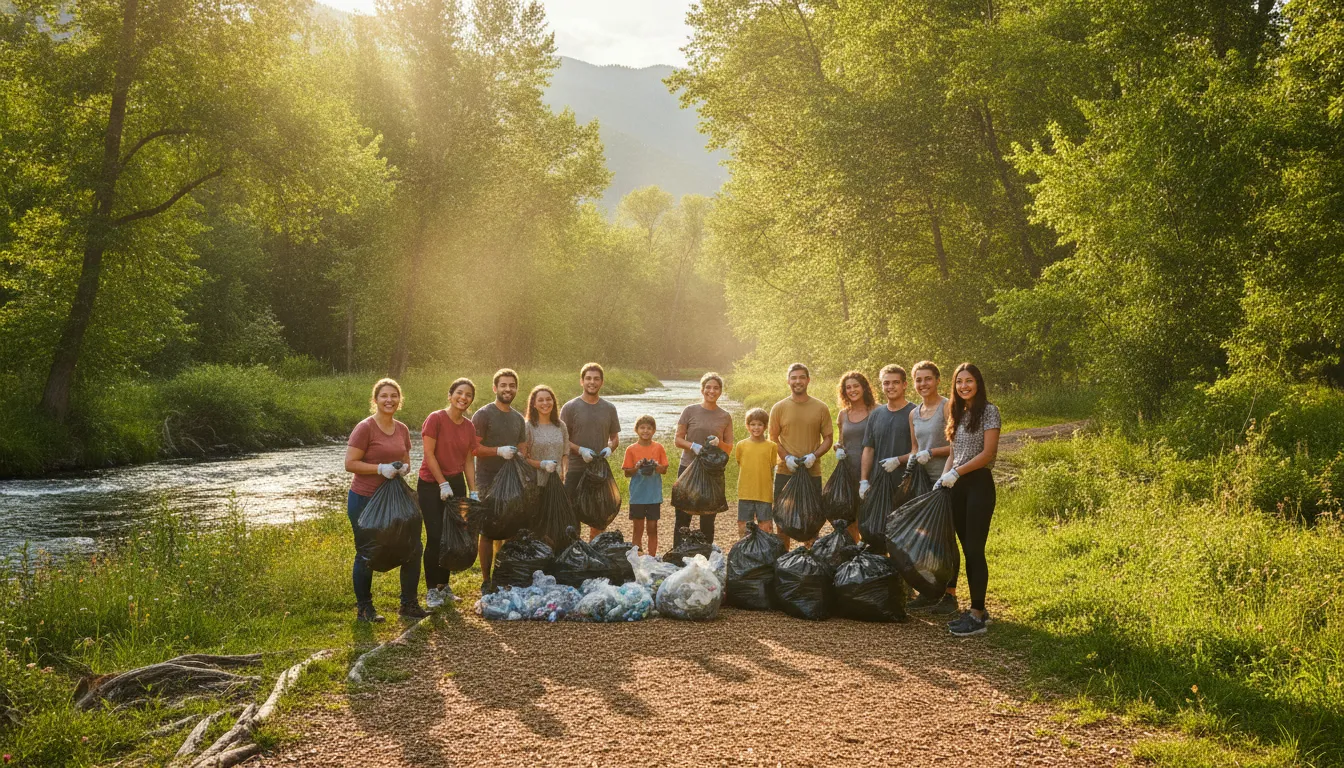
Participating in a community cleanup event is one of the most tangible ways to care for the world around you. You see the results with your own eyes, feel in your muscles the effort that was worthwhile, and go home knowing exactly what you did. This has value beyond the trash collected: it strengthens the sense of belonging, creates networks of committed people, and demonstrates in practice that collective action works.
In 2026, with environmental challenges increasingly present in the daily life of Brazilian cities, every cleanup held is also a political and cultural act — an affirmation that the community cares about its spaces and is willing to act for them.
You don’t need to wait for the perfect conditions, the ideal group, or the right moment. Start with your neighborhood, the square around the corner, the stream that runs near your home. Invite two or three people. Get the gloves ready. Pick a Saturday. The planet thanks you — and the people around you will thank you too.
