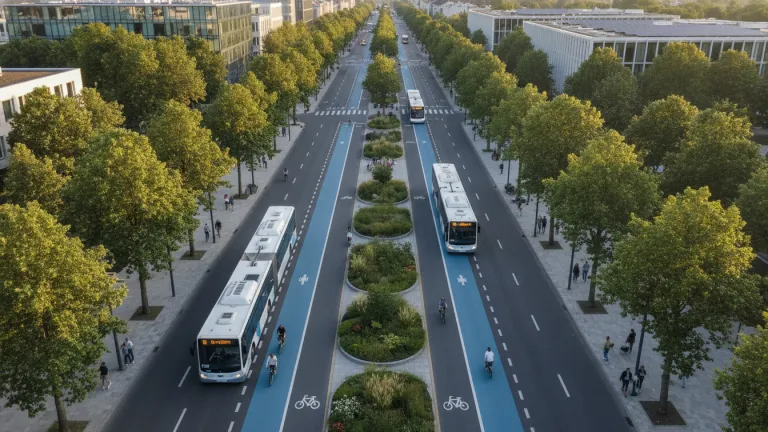
Why How You Get Around Makes All the Difference
Transportation is one of the world’s biggest culprits in greenhouse gas emissions. According to data from the Intergovernmental Panel on Climate Change (IPCC), the transportation sector accounts for about 16% of global CO₂ emissions, with most coming from vehicles powered by fossil fuels. In Brazil, the situation is even more significant: according to the Greenhouse Gas Emissions Estimation System (SEEG), transportation is one of the country’s main sources of emissions, led by road transport.
The good news is that there have never been so many sustainable alternatives available. From electric bicycles to energy-efficient trains, from renewed public transportation to vehicle sharing, options have grown significantly in the last decade. And the best part: many of them are also cheaper and more practical than they might seem at first glance — as you can discover in Eco-Friendly Living Costs Less Than You Think.
In this article, we’ll explore the best sustainable transportation options available today, with an honest look at advantages, limitations, and how each can fit into your routine. There’s no one-size-fits-all formula — but there’s definitely a combination that works for you.
Walking and Cycling: The Most Sustainable Options That Exist
Before discussing technology, it’s worth remembering that the two most sustainable ways to get around are also the oldest: walking and cycling. Both have virtually zero emissions during use, don’t depend on fuel or electricity, and bring proven benefits for physical and mental health.
Conventional bicycle and electric bicycle
The conventional bicycle remains unbeatable in terms of carbon footprint. For trips up to 10 km in urban areas, it’s often competitive even in travel time, especially in cities with heavy traffic.
The electric bicycle (e-bike) is gaining a lot of ground. It allows you to cover greater distances and overcome physical fatigue without compromising sustainability — as long as it’s charged with energy from renewable sources. Brazil’s e-bike market has grown significantly in recent years, driven by falling prices and the expansion of bike lanes in major cities.
Practical advantages of cycling:
- Very low operating costs
- Zero direct emissions
- Reduces sedentary behavior
- Easily navigates traffic
- Growing availability of parking and bike racks in public spaces and businesses
Real limitations:
- Long distances may be impractical without support
- Extreme weather conditions make daily use difficult
- Cycling infrastructure is still unequal in Brazil
Public Transportation: The Power of Collective Travel
When talking about urban sustainability, quality public transportation is one of the most powerful tools available. A full bus removes dozens of individual cars from the streets, proportionally reducing fuel consumption and emissions per passenger.
Subways and urban trains
The subway is one of the most energy-efficient motorized urban modes per passenger transported. Systems powered by electricity — especially when powered by renewable sources — have very low emissions. In Brazil, the National Electric System has a predominantly renewable energy mix, making the subway even greener in practice.
Electric buses and the transition underway
Several Brazilian cities are expanding their electric bus fleets. São Paulo, for example, is making progress in this direction as part of its climate goals. Electric buses eliminate direct emissions of local pollutants — improving air quality beyond reducing CO₂ — and have lower operating costs in the long run compared to diesel.
How to make better use of public transportation:
- Map available routes in your region using apps like Moovit or Google Maps
- Identify combinations of transportation modes (bus + subway, for example) that shorten your journey
- Get an integrated transportation card to save on fares
- Prefer off-peak times for a more comfortable experience
- Consider public transportation for at least part of the trip, even if not for all of it
Electric Vehicles: An Increasingly Accessible Option
Electric cars have stopped being a luxury novelty. Prices have fallen significantly over the past decade, and the Brazilian market for electric and plug-in hybrid vehicles has grown every year. According to the Brazilian Electric Vehicle Association (ABVE), sales of electric and hybrid vehicles have set consecutive records in the country.
Why electric vehicles are more sustainable
The advantage of electric vehicles lies mainly in the absence of tailpipe emissions and the potential to use renewable energy. Since Brazil has one of the world’s cleanest electricity grids — with strong participation from hydroelectric, wind, and solar power — charging an electric car here results in a significantly lower carbon footprint than in countries dependent on coal.
Hybrid vehicles: an interesting bridge
For those who don’t want or can’t go straight to pure electric, conventional hybrids and plug-in hybrids are a smart alternative. They consume less fuel than equivalent gasoline models and, in plug-in hybrids, allow short trips in 100% electric mode.
Points to watch:
- Battery production has relevant environmental impact in the manufacturing chain
- Charging infrastructure is still unequal outside major cities
- Initial cost is still higher than equivalent combustion vehicles
Flex-Fuel Cars and Biofuels: Brazil’s Unique Advantage
Brazil has a unique advantage in the world: flex-fuel technology and large-scale ethanol production from sugarcane. Brazilian ethanol is widely recognized as one of the most efficient and lowest-impact biofuels ever developed, with a much more favorable carbon balance than gasoline.
According to data from Embrapa and the sugarcane industry, ethanol from sugarcane can reduce greenhouse gas emissions by more than 70% compared to gasoline, considering the complete production cycle. This makes a flex-fuel car powered by ethanol a genuinely more sustainable option within the Brazilian context — especially when there’s no access to quality public transportation or electric vehicles.
Vehicle Sharing and Carpooling: Fewer Cars, Same Mobility
One of the smartest changes that occurred in urban mobility in recent decades is the growth of the sharing economy applied to transportation. Ride-sharing platforms, car rentals by the hour, and bicycle and scooter sharing have transformed people’s relationship with vehicle ownership.
Benefits of sharing
- Fewer cars circulating: one shared car replaces several private cars
- Lower emissions per km: when the vehicle is always in use, emissions per passenger drop
- Lower cost for the user: no registration, insurance, maintenance, or financing
- Flexibility: you use the right mode for each situation
Corporate ride-sharing apps, like those that connect coworkers on similar routes, are an underexplored but very efficient way to reduce emissions without radically changing your routine.
How to Build Your Personal Sustainable Transportation Strategy
There’s no one-size-fits-all solution. The key is to think about smart combinations that work for your reality. Here’s a practical guide:
Evaluate your current situation:
- What are your most frequent routes?
- What’s the average distance you travel per week?
- What transportation modes are available in your city?
Set priorities by trip type:
| Trip Type | Best Sustainable Option |
|---|---|
| Up to 5 km daily | Bicycle or on foot |
| 5–20 km urban | Electric bicycle, subway, bus |
| Long urban trips | Subway + bus, carpool |
| Inter-municipal travel | Highway bus, train (where available) |
| Need for a car | Electric, hybrid, or flex with ethanol |
Practical actions to start today:
- Test public transportation for a week and compare the cost to driving
- Identify coworkers or neighbors to share rides with
- Evaluate whether a bicycle (conventional or electric) would cover your short trips
- When refueling a flex-fuel car, prefer ethanol when the price is competitive
- Use mobility apps to discover options you might not have known existed
Conclusion: Every Choice Counts — and Many Are Easier Than They Seem
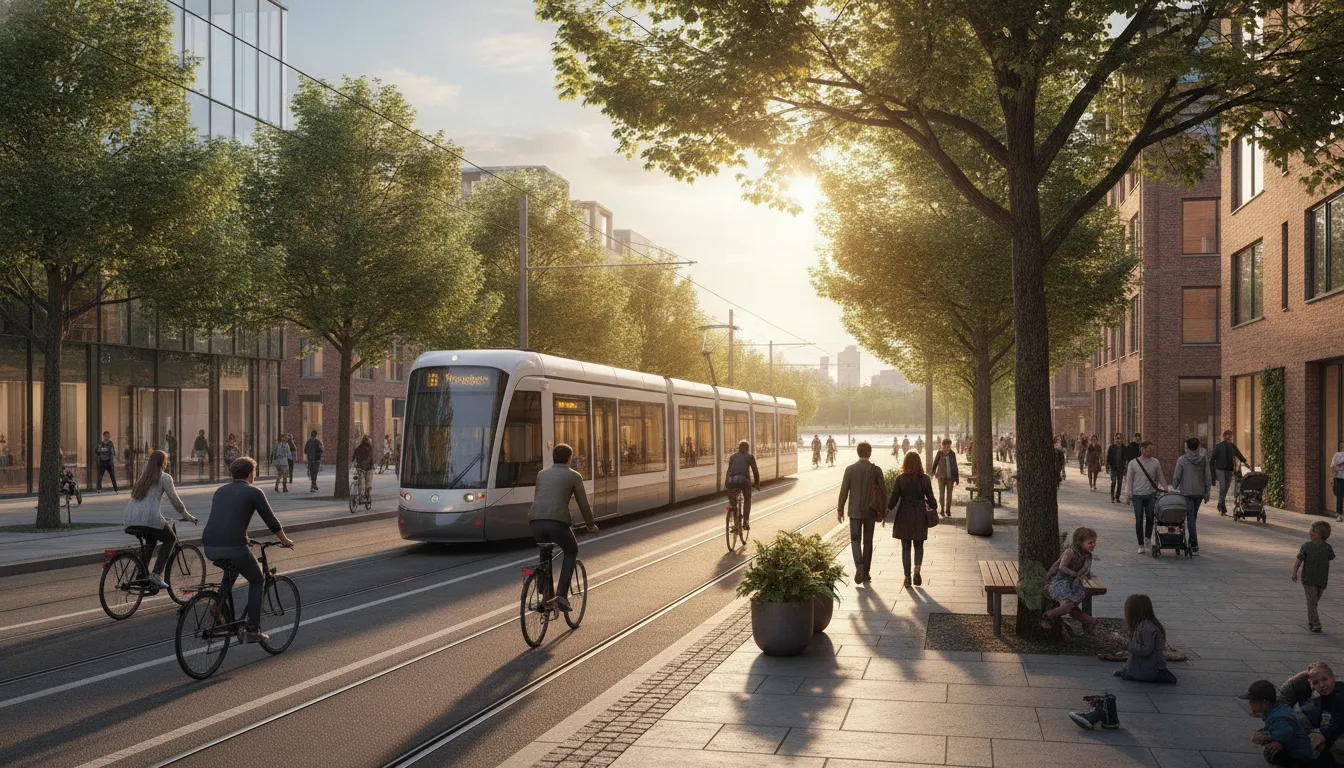
Changing how we get around doesn’t have to be a sacrifice. In most cases, the most sustainable options are also the most economical, the healthiest, or simply the most practical for the current urban context. The bicycle that cuts through traffic, the subway that saves the stress of driving, the shared ride that covers part of the fuel — all of these are concrete victories, not just environmental ones.
The transportation sector is one of the biggest climate challenges of our time, but it’s also one of the areas where solutions already exist and are within reach of many people. Each bus trip instead of a car, each bike ride, each shared ride is a real contribution — and when added to millions of similar decisions, it changes the landscape.
Start with what’s possible for you. Test, adjust, combine modes. And remember: living more sustainably rarely means giving up quality of life — often, it means just the opposite. Explore other ways to make your routine more eco-friendly in Eco-Friendly Living Costs Less Than You Think and discover that the path is more accessible than it seems.
