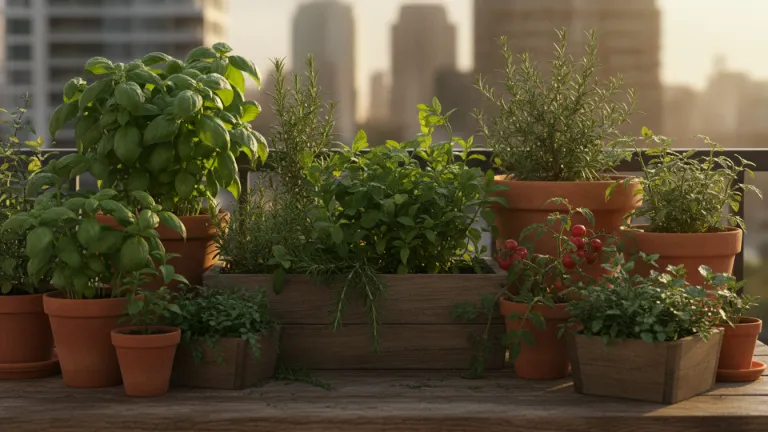
Apartment Garden: How to Grow Your Own Food Without a Backyard
Do you live in an apartment and think growing your own food is a privilege reserved for those with a backyard? That idea is quickly becoming outdated. In 2026, with advances in vertical growing techniques, specialized substrates, and a growing community of urban gardeners sharing knowledge online, having a home garden—even in a 600 square foot space—has gone from being the exception to an accessible reality for millions of city dwellers.
The motivation goes beyond the pleasure of harvesting your own food. Cities like São Paulo, Rio de Janeiro, and Belo Horizonte concentrate a huge portion of Brazil’s population in densely urbanized areas, where access to fresh, pesticide-free food can be expensive and limited. Growing at home is a way to reclaim food autonomy, reduce waste, decrease the carbon footprint associated with food transportation, and as a bonus, make your living space greener and more pleasant.
In this article, you’ll find a practical and complete guide to setting up your apartment garden—from planning to your first harvest. It doesn’t matter if you have a generous balcony, a sunny window, or just a kitchen counter: there’s a solution for your space.
Why Growing at Home Makes a Difference for the Planet
Before getting your hands dirty, it’s worth understanding why this practice matters beyond your plate. The global food system is responsible for a significant portion of greenhouse gas emissions—and part of that impact comes from the transportation, refrigeration, and packaging that food accumulates before reaching your table. When you grow herbs, greens, and vegetables at home, you eliminate that journey completely.
Additionally, home gardening naturally encourages waste reduction. You harvest only what you’ll use, at the right moment. By combining this practice with apartment composting, organic scraps become fertilizer for your own plants—creating a closed loop with almost no waste inside your home.
There’s also a collective urban benefit: plants in indoor spaces and balconies contribute to local temperature regulation, help with air humidity, and together with urban tree-planting initiatives, help mitigate the heat island effect in cities.
What You’ll Need: Essential Materials for Your Apartment Garden
The good news is that you don’t need to invest heavily to get started. Many beginners set up a functional garden with simple, affordable items.
Basic materials list:
- Pots or containers with drainage holes (can be reused: milk cartons, PET bottles, cans)
- Quality substrate—a mix of potting soil, worm castings, and perlite or coarse sand
- Water collection trays (to protect the floor and reuse excess water)
- Seeds or seedlings of species suitable for container growing
- Small watering can or spray bottle
- Organic liquid fertilizer (optional in the first weeks if the substrate is rich)
What you can skip at first:
- Automatic irrigation systems (useful but not essential)
- Greenhouses or grow lights (only necessary in low natural light environments)
- Large metal shelf structures
Choosing the Right Spot: Light Is Everything in an Apartment Garden
The most determining factor for your garden’s success isn’t the size of the space—it’s the amount of available sunlight. Most vegetables need at least four to six hours of direct light per day to grow healthily.
How to assess light exposure in your apartment
- Balcony or window facing north: receives sun during most of the day, ideal for most vegetables
- Balcony or window facing east: morning sun, good for leafy greens and herbs
- Balcony or window facing west: afternoon sun, works well for more heat-resistant plants
- Indoor space without direct light: use mirrors to redirect light or invest in full-spectrum LED grow lights
If your apartment has little natural light, don’t give up: herbs like chives, parsley, and mint tolerate partial shade conditions better than most vegetables.
What Plants to Grow: Ideal Species for Container Gardening
Not every plant adapts well to growing in small containers. Choosing the right species makes all the difference between a productive garden and a green frustration.
Best options for beginners
| Plant | Difficulty | Light needed | Pot size |
|---|---|---|---|
| Chives | Very easy | Moderate | Small (1-2L) |
| Parsley | Easy | Moderate to full | Small (1-2L) |
| Basil | Easy | Full (6h+) | Medium (2-4L) |
| Mint | Very easy | Moderate | Medium (2-4L) |
| Lettuce | Easy | Moderate | Medium (4-6L) |
| Arugula | Easy | Moderate to full | Medium (4-6L) |
| Cilantro | Easy | Full | Medium (4-6L) |
| Cherry tomato | Intermediate | Full (8h+) | Large (10-15L) |
| Pepper | Intermediate | Full (6h+) | Large (8-10L) |
Practical tip: start with chives, parsley, and lettuce. They’re the easiest, grow quickly, and are highly used in the kitchen—which guarantees motivation while you learn.
Step by Step: How to Set Up Your Apartment Garden from Scratch
Following these steps, you can have your first garden running in a weekend.
- Assess your space—identify where the most light enters your apartment during the day. Observe in the morning and afternoon.
- Choose your containers—use pots with holes in the bottom for drainage. If you want to save money, a 2-liter PET bottle cut in half or washed milk cartons work for small herbs.
- Prepare the substrate—mix approximately 60% potting soil, 30% worm castings, and 10% perlite or coarse sand. This combination ensures good drainage and nutrients.
- Fill the pots—leave about 2 cm of space between the substrate and the pot rim to make watering easier without overflowing.
- Plant the seeds or seedlings—for seeds, follow the depth indicated on the package (usually 0.5 to 1 cm for herbs). For seedlings, make a central hole and accommodate the roots without pressing too hard.
- Water carefully—after planting, water slowly until water drains through the holes. Avoid waterlogging: the ideal frequency depends on the species and temperature, but generally once a day is enough in summer.
- Position the pots in the best light—place the containers as close as possible to the light source. On balconies, use stands to raise plants to railing level and better capture sunlight.
- Monitor progress—in the first weeks, observe if leaves turn yellow (excess water or lack of light) or wilt during the day (lack of water or excessive heat). Adjust as needed.
- Feed plants regularly—starting from the third week, apply organic liquid fertilizer (such as seaweed extract or liquid humus) every two weeks, following product instructions.
- Harvest frequently—especially leafy greens and herbs grow more when harvested regularly. Never remove more than 30% of the plant at once.
Common Problems and How to Solve Them in Your Apartment Garden
Even with all the care, unexpected issues happen. Knowing the most common problems helps you act quickly before the plant is lost.
- Yellow leaves: almost always a sign of excess water or compacted substrate without drainage. Reduce watering and check if holes are unobstructed.
- Tall and thin plants (etiolation): lack of light. Move pots to a brighter location or consider grow lights.
- Aphids and mites: small insects common in dry environments. Spray a solution of water with a few drops of neutral dish soap on the leaves, or use homemade garlic and pepper spray.
- White fungus on substrate surface: excess humidity and poor ventilation. Reduce watering and improve air circulation.
- Roots coming out of holes: the plant has grown and the pot is too small. Time to transplant to a larger container.
A Truly Sustainable Garden: Close the Loop
Having an apartment garden is more sustainable when you think of the system as a whole. Some simple habits greatly amplify the positive impact of your practice:
- Reuse sink water to water plants (as long as it doesn’t contain soap or detergent)
- Compost kitchen organic waste and use the compost as fertilizer—this eliminates waste and reduces dependence on store-bought fertilizers
- Collect seeds from your own plants for the next planting, especially from tomatoes, peppers, and herbs that have flowered
- Trade seedlings with neighbors—this practice strengthens community and diversifies your garden at no cost
Adopting a zero waste mindset in the kitchen and garden is one of the most concrete and accessible ways to reduce the environmental impact of daily urban life.
Conclusion: Start Small, But Start Today
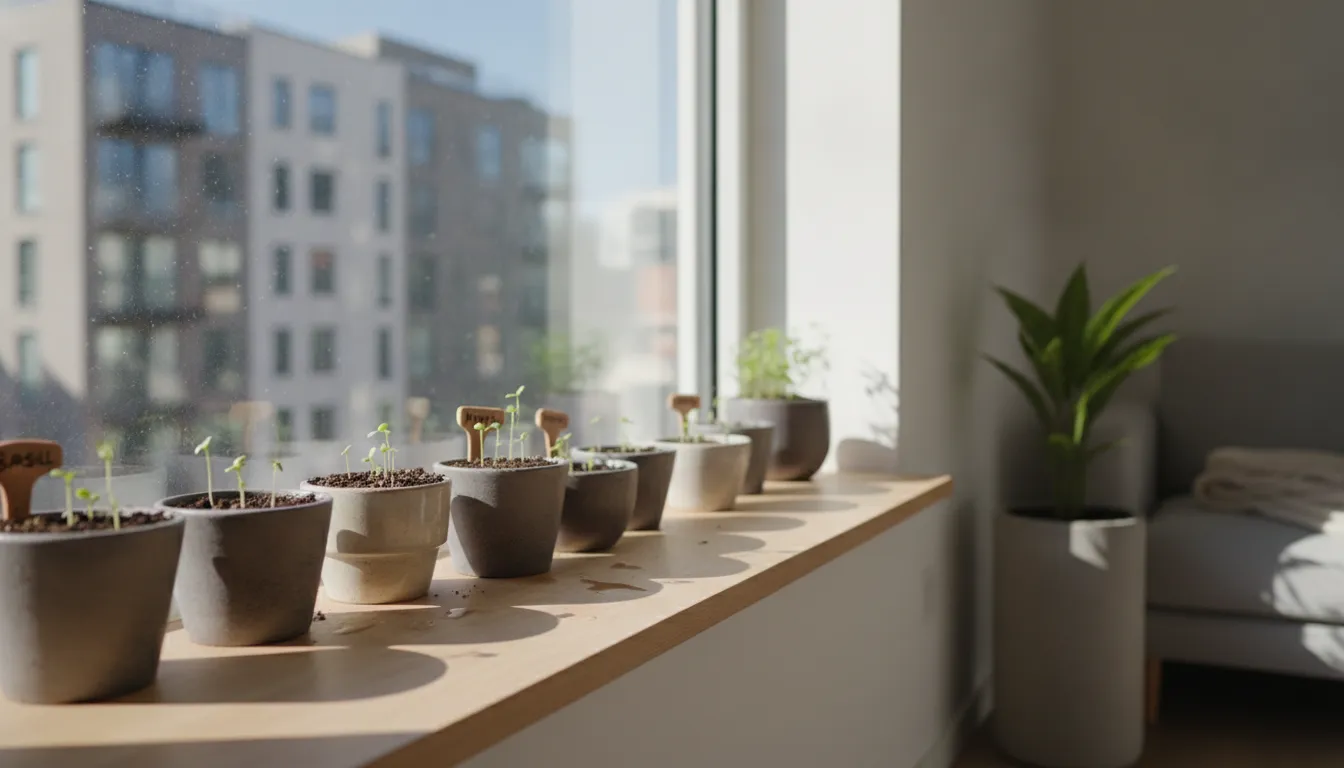
An apartment garden doesn’t need to be perfect to make sense. A small pot of chives on the windowsill is already a real start—and it’s usually enough to spark the habit. As you gain confidence, the space naturally expands: more pots, more species, more autonomy over what you eat.
In 2026, growing at home is also a gesture of belonging—to the city, to nature, and to a growing movement of people who decided it’s possible to live better by consuming less and producing more with what they already have. You don’t need a backyard. You need light, a little soil, and the will to start.
Choose an herb you use every week, buy a seedling or a packet of seeds, and plant today. The first harvest will come faster than you imagine—and the flavor, I guarantee, will be unlike anything you’ve ever bought at the store.
